

Psychology Career Path: Your UG to Professional Guide
Admission & Info Tools
Need Expert Assistance?
Our counselors can help you with fee structures, eligibility guidelines, and upcoming admission cutoffs instantly.
Direct Application Tools
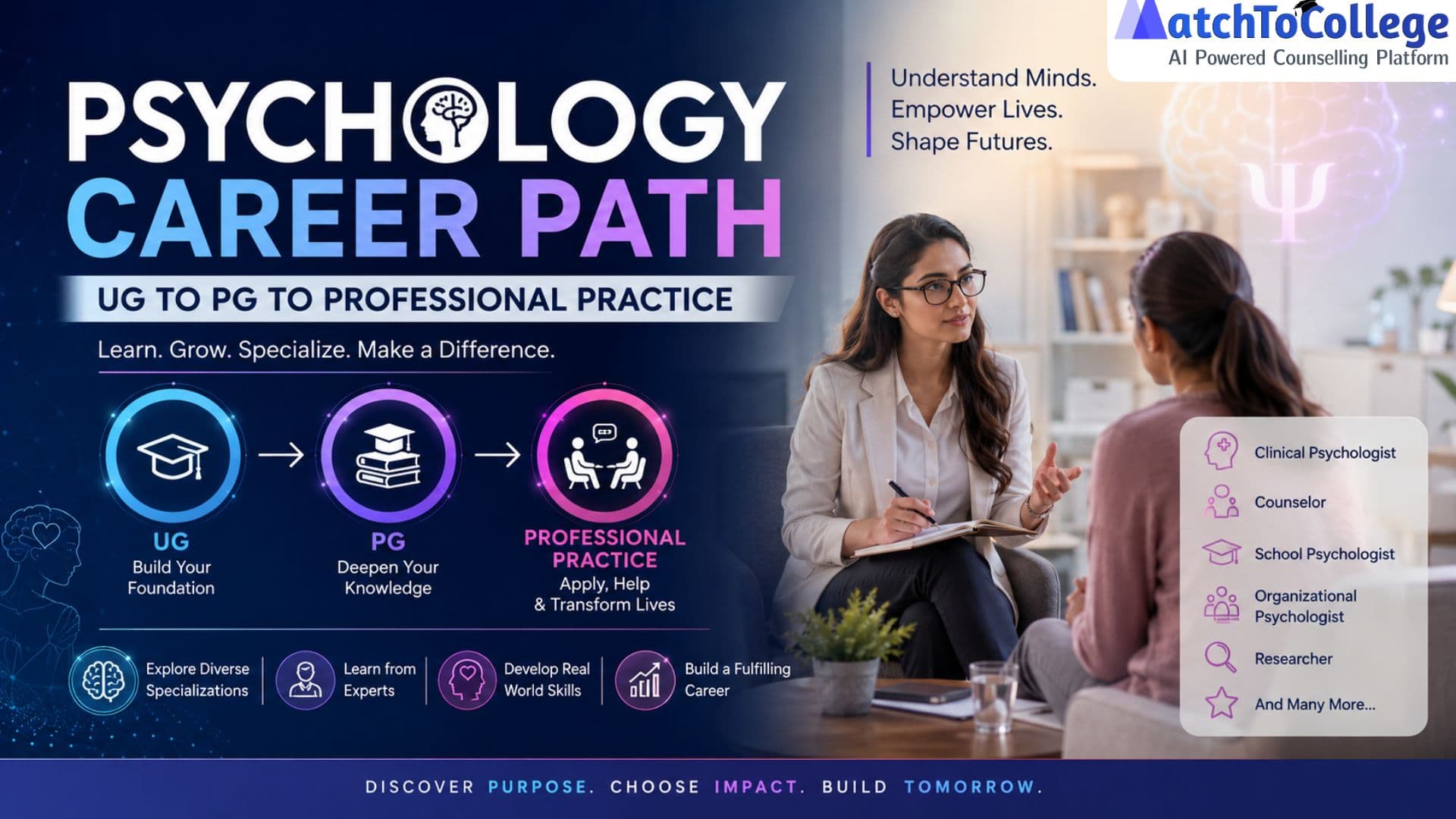
Discover psychology career paths
Psychology is a dynamic and rewarding field that focuses on understanding human thoughts, emotions, and behavior. If you are passionate about helping others, improving mental well-being, and making a meaningful impact on society, a career in psychology can be an excellent choice.
Becoming a licensed psychology professional requires a well-planned educational journey. From earning an undergraduate (UG) degree to pursuing postgraduate (PG) studies and completing professional training, each stage builds the knowledge, skills, and experience needed for a successful career.
Why Choose Psychology?
Psychology offers diverse career opportunities across healthcare, education, business, research, and community services. Professionals in this field help individuals improve mental health, solve behavioral challenges, enhance workplace performance, and contribute to scientific research.
Whether you aspire to become a clinical psychologist, counselor, researcher, or organizational psychologist, psychology provides numerous pathways to build a meaningful and impactful career.
Understanding the Psychology Career Path
Many students are interested in psychology but often have questions such as:
- Which undergraduate program should I choose?
- Do I need a master's or doctoral degree?
- What specializations are available?
- How do I become a licensed psychologist?
- Which universities offer the best psychology programs?
Understanding each stage of the educational journey helps students make informed decisions and prepare for long-term career success.
What This Guide Covers
This guide explains every stage of the psychology career journey, including:
- Choosing the right undergraduate (UG) psychology program
- Exploring postgraduate (PG) degree options
- Understanding psychology specializations
- Meeting licensing and professional practice requirements
- Exploring career opportunities in different psychology fields
- Planning your academic and professional roadmap
Whether your goal is to work in Clinical Psychology, Counseling Psychology, Industrial-Organizational Psychology, Educational Psychology, Forensic Psychology, or Psychological Research, careful planning is essential for success.
How MatchToCollege Can Help
Choosing the right university and psychology program can be challenging. MatchToCollege simplifies the process through AI-powered higher education guidance tailored to your goals and interests.
Our platform helps you:
- Discover the best psychology programs worldwide
- Compare universities based on your academic profile
- Identify the right specialization for your career goals
- Understand admission requirements and eligibility
- Build a personalized higher education roadmap
- Navigate the application process with confidence
With expert guidance and personalized recommendations, MatchToCollege empowers students to make informed decisions at every stage of their academic and professional journey.
Start Your Journey in Psychology
A successful psychology career begins with the right educational foundation and a clear career plan. By understanding the pathway from undergraduate studies to postgraduate education and professional practice, you can confidently prepare for a rewarding future in one of the world's most impactful professions.
Whether you are a high school student, a college graduate, or a parent exploring career options, this guide will help you take the first step toward building a successful career in psychology.
Ready to pursue a career in psychology?
Explore top psychology programs, discover the right specialization, and receive personalized university guidance with MatchToCollege. Start your journey today and build a successful future in psychology.
Undergraduate Journey in Psychology: Laying the Foundation
The first step toward a successful psychology career is earning a Bachelor of Arts (BA) or Bachelor of Science (BS) in Psychology. Typically completed in 3–4 years, an undergraduate degree provides the fundamental knowledge and skills required for advanced studies and professional practice.
During this stage, students develop an understanding of human behavior, psychological theories, research methods, and scientific thinking.
Core Subjects You Will Study
The undergraduate curriculum covers key areas that form the foundation of psychology.
| Subject | What You Will Learn |
| Introduction to Psychology | Overview of psychological theories, concepts, and major branches of psychology. |
| Statistics for Psychology | Statistical methods used to analyze psychological data and research findings. |
| Research Methods | Designing, conducting, and evaluating psychological research. |
| Developmental Psychology | Human growth, development, and behavior across different life stages. |
| Cognitive Psychology | Mental processes such as memory, learning, perception, language, and problem-solving. |
| Social Psychology | How social interactions, relationships, and environments influence human behavior. |
| Biological Psychology | The relationship between the brain, nervous system, and human behavior. |
Gain Practical Experience
Academic knowledge is important, but practical experience helps students develop professional skills and strengthen their university and job applications.
Consider participating in:
- Internships at counseling centers or mental health clinics
- Research projects with faculty members
- Volunteer work in hospitals, schools, or community organizations
- Psychology clubs, workshops, and seminars
- Research assistant positions in university laboratories
These experiences provide valuable exposure to real-world psychology and help students identify their areas of interest.
Essential Skills to Develop
Throughout your undergraduate studies, focus on building the following skills:
- Critical thinking
- Analytical and research skills
- Communication and interpersonal skills
- Problem-solving abilities
- Data interpretation and statistical analysis
- Teamwork and collaboration
- Ethical decision-making
These competencies are highly valued by universities, employers, and professional organizations.
Why Practical Experience Matters
Hands-on experience offers several advantages:
- Strengthens postgraduate university applications
- Builds a competitive resume
- Enhances research and professional skills
- Expands your professional network
- Helps you choose the right psychology specialization
- Demonstrates commitment to the field
Outcome of an Undergraduate Psychology Degree
By the end of your bachelor's degree, you will have:
- A strong understanding of psychological theories and principles
- Knowledge of scientific research and data analysis
- Practical experience through internships or research projects
- Essential professional and communication skills
- A solid foundation for postgraduate studies and specialized psychology careers
Your undergraduate education is the cornerstone of your psychology journey, preparing you for advanced degrees and future professional practice.
The Graduate Leap: Master's & Doctoral Programs
An undergraduate degree provides the foundation for a career in psychology, but most professional and licensed roles require postgraduate education. Pursuing a master's or doctoral degree allows you to specialize in a specific area of psychology while developing advanced clinical, research, and professional skills.
Choosing the right postgraduate program depends on your career goals, whether you want to work in counseling, research, healthcare, education, or organizational settings.
Master's Degree (MA/MS) in Psychology
A Master of Arts (MA) or Master of Science (MS) in Psychology typically takes 2–3 years to complete. It prepares students for specialized professional roles and includes both classroom learning and supervised practical training.
Popular Master's Specializations
| Specialization | Career Focus |
| Counseling Psychology | Provides therapy and mental health support for individuals, families, and groups. |
| School Psychology | Supports students' academic, emotional, social, and behavioral development in educational settings. |
| Industrial-Organizational (I/O) Psychology | Applies psychology to improve workplace performance, employee well-being, leadership, and organizational effectiveness. |
Practical Training
Most master's programs include:
- Supervised internships
- Clinical practicum
- Case studies and applied learning
- Professional skill development
This hands-on experience prepares graduates for entry into professional practice.
Doctoral Degree (Ph.D. or Psy.D.)
Students who aspire to become licensed psychologists, particularly in clinical practice or specialized fields, generally need to earn a doctoral degree.
Doctoral programs typically take 5–7 years and involve advanced academic study, research, clinical training, and supervised practice.
Ph.D. vs. Psy.D.
| Degree | Primary Focus | Best Suited For |
| Ph.D. (Doctor of Philosophy) | Research, scientific inquiry, and evidence-based clinical practice | Students interested in academic careers, research, teaching, or clinical practice with a strong research focus |
| Psy.D. (Doctor of Psychology) | Clinical assessment, diagnosis, and therapy | Students who want to work directly with clients in hospitals, clinics, or private practice |
What You'll Learn in a Doctoral Program
Doctoral students typically complete:
- Advanced psychology coursework
- Supervised clinical training
- Extensive practical experience
- Comprehensive examinations
- Research dissertation (Ph.D.) or doctoral project (Psy.D.)
These programs prepare graduates for professional licensure and independent psychological practice.
Popular Doctoral Specializations
Students can choose from a variety of advanced specializations, including:
- Clinical Psychology
- Neuropsychology
- Forensic Psychology
- Health Psychology
- Counseling Psychology
- Educational Psychology
Each specialization offers unique career opportunities across healthcare, education, research, government, and private practice.
Admission Requirements
Admission to postgraduate psychology programs is competitive. Universities typically evaluate applicants based on:
- Strong undergraduate academic performance (GPA)
- Relevant research experience
- Internship or volunteer experience
- Letters of recommendation
- Statement of purpose or personal statement
- GRE scores (required by some universities)
A well-rounded profile significantly improves your chances of securing admission to top psychology programs.
Master's vs. Doctoral Degree at a Glance
| Feature | Master's Degree | Doctoral Degree |
| Duration | 2–3 Years | 5–7 Years |
| Primary Goal | Specialization and professional practice | Independent practice, research, and licensure |
| Training | Coursework, internships, practicum | Advanced coursework, clinical training, research, dissertation/project |
| Career Opportunities | Counselor, School Psychologist, I/O Psychologist | Clinical Psychologist, Neuropsychologist, Researcher, Professor, Licensed Psychologist |
Postgraduate education is the gateway to advanced psychology careers. A master's degree provides specialized knowledge and practical experience, while a doctoral degree prepares students for independent practice, research, and professional licensure.
Selecting the right program based on your career goals is a critical step toward building a successful and rewarding career in psychology.
From Academia to Practice: Licensing & Professional Roles
Completing a master's or doctoral degree is a significant milestone, but becoming an independent psychology professional requires additional training and licensure. Before practicing independently, graduates must complete supervised clinical experience, obtain professional licensure, and commit to continuous learning throughout their careers.
Supervised Practice and Licensure
After earning a postgraduate degree, aspiring psychologists must complete supervised clinical practice under the guidance of a licensed psychologist or qualified supervisor.
This practical training helps graduates develop professional competence, apply psychological knowledge in real-world settings, and provide ethical, evidence-based care.
Common Training Settings
Students may complete supervised practice in:
- Hospitals
- Mental health clinics
- Counseling centers
- Private practices
- Rehabilitation centers
- Community health organizations
The required number of supervised hours varies by country or state, depending on local licensing regulations.
Professional Licensure
To practice independently, graduates must obtain a professional license.
The licensing process generally includes:
- Completing the required supervised clinical hours
- Passing a national licensing examination (such as the EPPP in the United States)
- Meeting state or country-specific licensing requirements
- Following professional and ethical standards
Licensure allows qualified professionals to practice independently, provide psychological services, and use protected professional titles where applicable.
Career Opportunities in Psychology
Psychology offers a wide range of career paths across healthcare, education, business, research, and public service.
| Career | Primary Responsibilities | Common Workplaces |
| Clinical Psychologist | Assesss, diagnoses, and treats mental, emotional, and behavioral disorders. | Hospitals, mental health clinics, private practice |
| Counseling Psychologist / Therapist | Provides counseling and psychotherapy to individuals, couples, families, and groups. | Counseling centers, universities, private practice |
| School Psychologist | Supports students' academic, emotional, behavioral, and social development. | Schools, educational institutions |
| Industrial-Organizational (I/O) Psychologist | Improves workplace performance, leadership, employee well-being, and organizational effectiveness. | Corporations, consulting firms, government agencies |
| Neuropsychologist | Evaluates and treats cognitive and behavioral conditions related to brain function. | Hospitals, rehabilitation centers, neuroscience clinics |
| Forensic Psychologist | Applies psychological expertise within legal and criminal justice systems. | Courts, correctional facilities, law enforcement agencies |
| Research Psychologist | Conducts psychological research to advance scientific knowledge and improve practices. | Universities, research institutes, government laboratories |
Continuing Professional Development (CPD)
Learning does not end after obtaining a license. Psychology professionals are expected to participate in Continuing Professional Development (CPD) to maintain their knowledge and professional credentials.
CPD activities may include:
- Professional workshops and conferences
- Certification and training programs
- Research and academic publications
- Continuing education courses
- Professional association memberships
Continuous learning ensures psychologists remain informed about new research, therapeutic techniques, ethical standards, and best practices.
Career Impact
A career in psychology offers the opportunity to make a meaningful difference in people's lives. Psychology professionals contribute to:
- Improving mental health and emotional well-being
- Supporting children, families, and communities
- Enhancing workplace productivity and employee wellness
- Advancing scientific research and innovation
- Improving healthcare and rehabilitation services
- Strengthening education and public policy
Professional practice in psychology extends beyond earning a degree. Completing supervised clinical training, obtaining licensure, and engaging in lifelong professional development are essential steps toward becoming a competent and successful psychologist.
With diverse career opportunities across multiple sectors, psychology offers a rewarding profession for individuals committed to improving lives and advancing mental health.
Share this Article
FAQFrequently Asked Questions
Q: Is a Master's degree essential for a psychology career?
While an undergraduate degree provides a foundation, a Master's degree is generally the minimum requirement for many client-facing roles such as licensed professional counselor or school psychologist. To become a licensed psychologist, especially in clinical practice, a doctorate (Ph.D. or Psy.D.) is almost always required.
Q: How long does it typically take to become a licensed psychologist?
After a 4-year undergraduate degree, a Ph.D. or Psy.D. program typically takes 5-7 years to complete. This is usually followed by 1-2 years of supervised postdoctoral experience and passing licensure exams. So, the entire journey from starting college to becoming a fully licensed psychologist can take 10-13 years.
Q: What are some of the highest-paying specializations in psychology?
Some of the highest-paying specializations in psychology include Industrial-Organizational Psychology (due to its application in high-paying corporate sectors), Neuropsychology (requiring highly specialized expertise), and Clinical Psychology, especially for those in private practice or specialized niches like forensic psychology or health psychology.
Q: What's the difference between a Ph.D. and a Psy.D. in psychology?
A Ph.D. (Doctor of Philosophy) in psychology typically has a stronger emphasis on research and academic contributions, preparing graduates for careers in research, academia, and clinical practice. A Psy.D. (Doctor of Psychology) focuses primarily on clinical practice and the application of psychological principles, making it ideal for those whose main goal is direct client service and therapy.
Get More Info About Psychology Career Path
Recommended Reading

Best Online MBA Specializations for High-Paying Careers 2026
Discover the most lucrative online MBA specializations for 2026-27. Compare ROI, career growth, and use our AI tools to find your perfect management path.

Top Career Opportunities After an Online MBA in 2026-27
Discover high-paying career paths and roles after an online MBA in 2026-27. Explore salary trends, ROI, and tools to navigate your future professional success.

Tax Deductions on Higher Education: 2026-27 India Guide
Maximize your savings with our guide on tax deductions for higher education fees in India for FY 2026-27. Learn about Section 80C, 80E, and upskilling benefits.