

College Money Smarts: Financial Literacy for Students
Admission & Info Tools
Need Expert Assistance?
Our counselors can help you with fee structures, eligibility guidelines, and upcoming admission cutoffs instantly.
Direct Application Tools
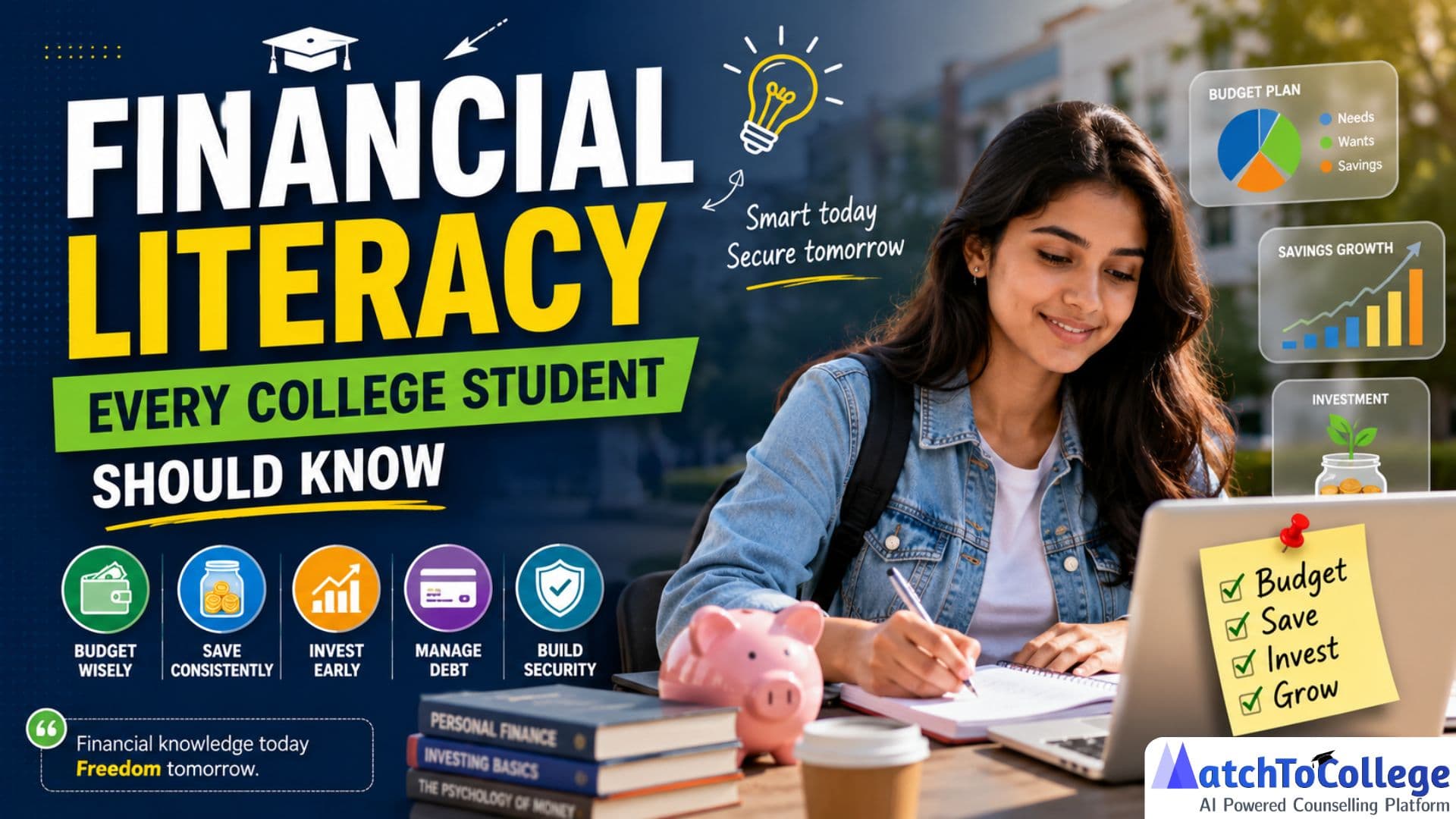
Financial Literacy for College Students
College is an exciting phase of life filled with new opportunities, friendships, and career goals. However, it also comes with important financial responsibilities. From paying tuition fees and managing daily expenses to planning for future loans and savings, students often face financial challenges that can feel overwhelming.
Financial literacy is the ability to understand and manage your money wisely. Learning this skill during college can help you avoid unnecessary debt, reduce financial stress, and make better financial decisions throughout your life.
At MatchToCollege, we believe that student success goes beyond choosing the right course or university. Whether you're planning to pursue an MBA, Engineering, Medical degree, or Study Abroad program, understanding personal finance is just as important as academic excellence. Developing smart money habits today can help you build a secure and financially independent future.
This guide covers the essential financial concepts every college student should know. You'll learn practical tips on budgeting, saving, managing student loans, building a good credit score, and making smart financial decisions. By the end of this article, you'll feel more confident about handling your finances and preparing for life after graduation.
Why Financial Literacy Matters for College Students
Financial literacy is more than just saving money. It helps you make informed decisions about spending, borrowing, investing, and planning for the future.
Students with good financial knowledge can:
- Manage monthly expenses effectively.
- Avoid unnecessary debt.
- Build healthy financial habits early.
- Reduce money-related stress.
- Prepare for future goals like higher education, travel, or buying a home.
- Become financially independent after graduation.
The earlier you start learning about money management, the greater the long-term benefits.
Create a Monthly Budget
A budget is the foundation of good financial management. It helps you understand how much money you receive and where it goes every month.
How to Create a Budget
- List all your income sources, such as pocket money, scholarships, internships, or part-time jobs.
- Write down fixed expenses like tuition fees, rent, hostel charges, and transportation.
- Include variable expenses such as food, entertainment, shopping, and travel.
- Compare your income with your expenses and adjust your spending if needed.
Budgeting Tip
A simple budgeting rule is the 50-30-20 Rule:
- 50% for essential expenses
- 30% for personal wants
- 20% for savings or investments
Even if your income is limited, following a budget helps you stay financially disciplined.
Understand the Difference Between Needs and Wants
Many students spend money on things they want instead of what they actually need.
Needs
- Tuition fees
- Books
- Food
- Rent
- Transportation
Wants
- Expensive gadgets
- Designer clothes
- Online shopping
- Entertainment subscriptions
- Frequent dining out
Before making a purchase, ask yourself:
"Do I really need this, or do I simply want it?"
This simple question can save you a significant amount of money.
Build a Habit of Saving
Saving money is not about how much you earn—it is about developing the habit.
Even saving a small amount every month can make a big difference over time.
Easy Ways to Save
- Save a fixed amount every month.
- Use student discounts whenever possible.
- Cook meals instead of ordering food regularly.
- Avoid impulse purchases.
- Track your spending using budgeting apps.
Remember, consistency is more important than the amount you save.
Understand Student Loans
Many students take education loans to finance their studies. While loans make education accessible, they also come with repayment responsibilities.
Before taking a loan, understand:
- Interest rates
- Repayment period
- Monthly EMI
- Grace period
- Total repayment amount
Borrow only what you genuinely need and create a repayment plan before graduation.
Learn How Credit Scores Work
A credit score reflects how responsibly you manage borrowed money.
A good credit score helps you:
- Get loans more easily.
- Receive lower interest rates.
- Improve approval chances for credit cards and housing loans.
Tips to Build Good Credit
- Pay bills on time.
- Avoid missing loan payments.
- Use credit cards responsibly.
- Never borrow more than you can repay.
Building a good credit history starts with responsible financial behavior.
Start Investing Early
Investing may sound complicated, but starting early gives your money more time to grow through compounding.
Students can begin by learning about:
- Mutual Funds
- Index Funds
- Fixed Deposits (FDs)
- Public Provident Fund (PPF)
- Systematic Investment Plans (SIPs)
You don't need a large amount of money to start investing. Even small monthly investments can grow significantly over time.
Create an Emergency Fund
Unexpected expenses can arise at any time, such as medical emergencies, laptop repairs, or travel costs.
An emergency fund helps you manage these situations without borrowing money.
Aim to save enough to cover three to six months of essential expenses over time.
Avoid Common Financial Mistakes
Many students make financial mistakes that can affect their future.
Common Mistakes to Avoid
- Spending more than you earn.
- Ignoring your budget.
- Taking unnecessary loans.
- Depending entirely on credit cards.
- Not saving regularly.
- Making emotional or impulse purchases.
Being aware of these mistakes can help you make smarter financial decisions.
Use Financial Apps and Digital Banking Wisely
Technology makes money management easier than ever.
Useful tools include:
- Budget tracking apps
- Expense management apps
- Digital wallets
- UPI payment apps
- Mobile banking applications
Regularly checking your account and tracking your expenses helps you stay in control of your finances.
Plan for Your Financial Future
Financial planning should begin during college.
Start thinking about:
- Career goals
- Higher education
- Emergency savings
- Investment planning
- Retirement savings
- Insurance needs
The earlier you start planning, the stronger your financial future will be.
Practical Tips Every Student Should Follow
- Set monthly financial goals.
- Track every expense.
- Save before you spend.
- Avoid unnecessary debt.
- Build an emergency fund.
- Learn basic investing.
- Improve your financial knowledge regularly.
- Review your budget every month.
Small financial habits today can create lasting financial success tomorrow.
Financial literacy is one of the most valuable life skills every college student can develop. While earning a degree prepares you for your career, understanding how to manage money prepares you for life.
Learning to budget, save, invest, manage debt, and plan for the future will help you make confident financial decisions, reduce stress, and achieve long-term financial security.
At MatchToCollege, we are committed to helping students succeed both academically and financially. Whether you're exploring colleges, preparing for admissions, or planning your future career, building strong financial habits today will give you the confidence to embrace tomorrow's opportunities.
Remember: Your financial future starts with the choices you make today. Start small, stay consistent, and let smart money habits guide you toward lifelong success.
Mastering Your Budget: The Foundation of Financial Freedom
A budget helps you understand where your money goes and manage it wisely. List all your income sources, such as pocket money, scholarships, internships, or part-time jobs. Then, note your fixed expenses (tuition, rent, bills) and variable expenses (food, travel, entertainment). Use budgeting apps or a simple spreadsheet to track your spending. Focus on your needs before wants, save a little every month, and review your budget regularly to stay on track.
Decoding Student Loans & Financial Aid Wisely
Student loans can help pay for your education, but it's important to borrow wisely. Learn about the different types of loans, their interest rates, and repayment terms before applying. If possible, choose loans with lower interest rates and flexible repayment options. Borrow only the amount you actually need and avoid unnecessary debt. Making small interest payments during college can reduce your total repayment. Planning your loan repayment early will make managing your finances after graduation much easier.
Building Good Credit While You Study
A good credit score can help you get loans, credit cards, and even rental approvals more easily in the future. Start building your credit by using a student or secured credit card responsibly. Make small purchases and always pay the full bill on time. Keep your credit card balance low and avoid applying for multiple cards at once. Regularly checking your credit report also helps you spot any errors. Building good credit habits during college can benefit you for years to come.
The Power of Saving & Emergency Funds
Scholarships and grants are one of the best ways to reduce your education expenses because they do not need to be repaid. Before taking a student loan, explore scholarships offered by colleges, government programs, private organizations, and foundations. Apply for financial aid every year, as you may qualify for new opportunities. You can also consider work-study or part-time campus jobs to earn extra income while studying. At MatchToCollege, we help students find scholarships and financial aid that match their academic profile and career goals, making higher education more affordable.
Smart Spending & Avoiding Common Money Traps
It's never too early to start saving. Even small monthly savings can grow over time through the power of compound interest. Begin by creating an emergency fund to cover unexpected expenses like medical bills or laptop repairs. Once you have savings, learn about beginner-friendly investment options such as SIPs, mutual funds, or other low-risk investments available in your country. The earlier you start, the more time your money has to grow. Developing the habit of saving and investing during college will help you build long-term financial security.
Share this Article
FAQFrequently Asked Questions
Q: What's the most important financial habit for college students?
The most crucial financial habit for college students is creating and sticking to a realistic budget. This allows you to track your income and expenses, prioritize spending, and avoid unnecessary debt. Regularly reviewing and adjusting your budget ensures you stay on track for your financial goals, setting a strong foundation for future financial literacy.
Q: How can I find scholarships to reduce college costs?
You can find scholarships through various avenues. Start with your college's financial aid office, use online scholarship search engines, and explore opportunities from private organizations, foundations, and community groups. Platforms like MatchToCollege are designed to help you discover tailored scholarship opportunities based on your academic profile, interests, and background, significantly easing your financial burden.
Q: Is it too early to think about my credit score in college?
No, it's never too early to start thinking about your credit score. Building a good credit history in college, often through responsible use of a student or secured credit card, can be incredibly beneficial. A strong credit score will open doors for future loans (car, home), lower interest rates, and even impact housing and employment opportunities after graduation. Responsible credit management now pays dividends later.
Get More Info About College Money Smarts
Recommended Reading

Best Online MBA Specializations for High-Paying Careers 2026
Discover the most lucrative online MBA specializations for 2026-27. Compare ROI, career growth, and use our AI tools to find your perfect management path.

Top Career Opportunities After an Online MBA in 2026-27
Discover high-paying career paths and roles after an online MBA in 2026-27. Explore salary trends, ROI, and tools to navigate your future professional success.

Tax Deductions on Higher Education: 2026-27 India Guide
Maximize your savings with our guide on tax deductions for higher education fees in India for FY 2026-27. Learn about Section 80C, 80E, and upskilling benefits.