

AI & Engineers: Job Threat or Career Evolution?
Admission & Info Tools
Need Expert Assistance?
Our counselors can help you with fee structures, eligibility guidelines, and upcoming admission cutoffs instantly.
Direct Application Tools
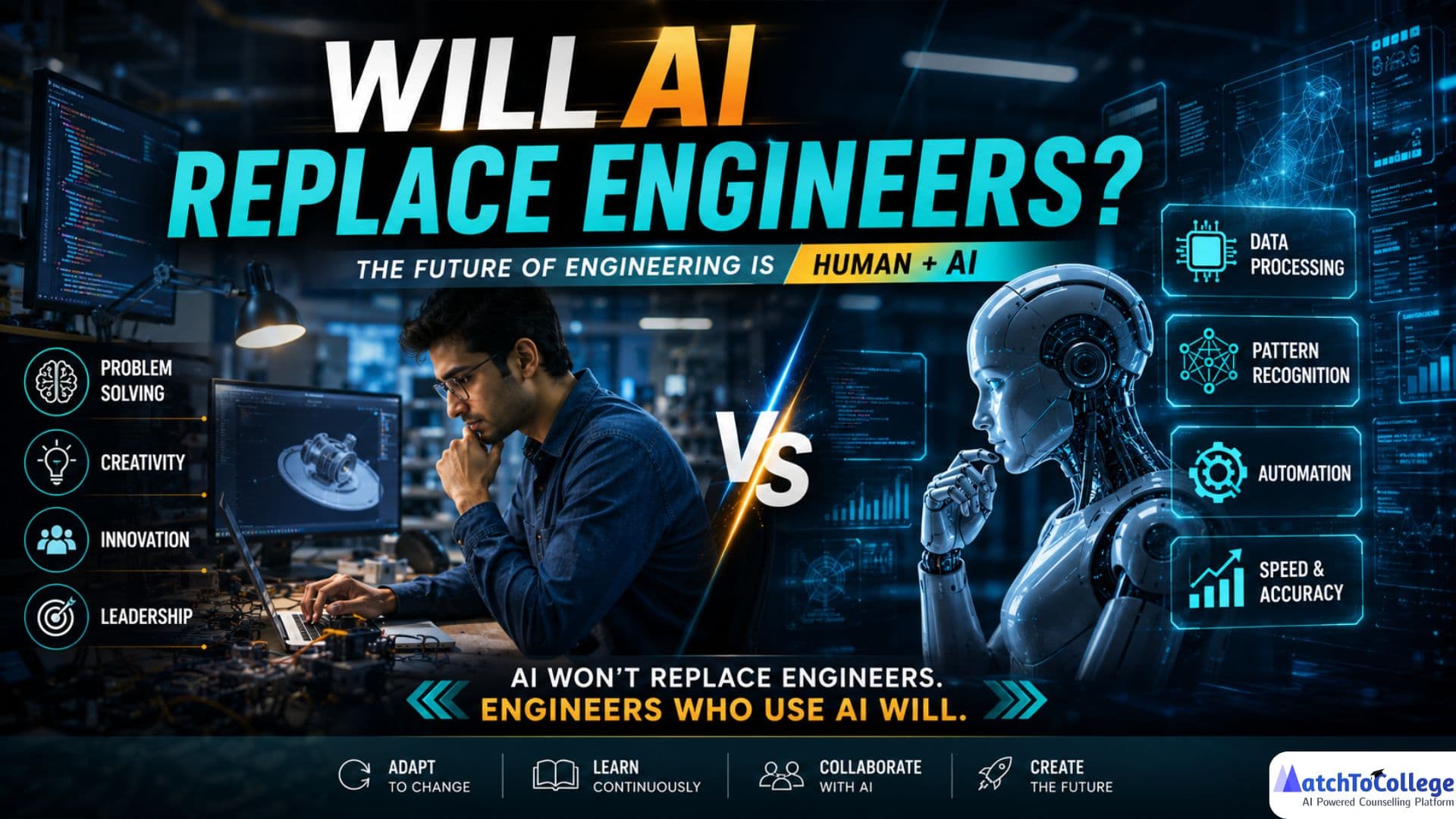
Human vs AI in engineering's future
Artificial Intelligence (AI) is transforming engineering faster than ever before. From automated design software to predictive maintenance and intelligent manufacturing, AI is becoming a powerful engineering tool. This has raised an important question among students and professionals:
Will AI replace engineers?
The short answer is No. AI is more likely to transform engineering jobs than eliminate them. Engineers who learn to work with AI will be in greater demand than those who ignore it.
AI's Impact on Engineering
| What AI Can Do | What Engineers Still Do |
| Automate repetitive tasks | Solve complex real-world problems |
| Analyze large datasets | Make strategic and ethical decisions |
| Generate design suggestions | Validate, optimize, and innovate designs |
| Predict failures through analytics | Apply engineering judgment and creativity |
| Improve productivity | Lead projects and collaborate with teams |
How Engineering Is Changing
- AI automates routine and repetitive engineering tasks.
- Engineers can focus more on innovation and critical decision-making.
- Design, testing, and analysis become faster with AI-powered tools.
- Human expertise remains essential for complex projects and real-world implementation.
Engineering Skills That Will Stay in Demand
| Technical Skills | Human Skills |
| AI & Machine Learning Basics | Critical Thinking |
| Data Analysis | Creativity |
| Programming & Automation | Communication |
| CAD & Simulation Tools | Leadership |
| Cloud Computing & IoT | Problem-Solving |
Engineering Fields with Strong Future Demand
| Engineering Field | Why It Has Strong Scope |
| Computer Science & AI | AI development, software engineering, intelligent systems |
| Mechanical Engineering | Robotics, smart manufacturing, automation |
| Civil Engineering | Smart cities, digital construction, infrastructure planning |
| Electrical & Electronics Engineering | EVs, renewable energy, semiconductor technologies |
| Robotics Engineering | AI-enabled automation and industrial robotics |
| Cyber Security Engineering | Protecting AI systems and digital infrastructure |
| Cloud & DevOps Engineering | AI applications require scalable cloud infrastructure |
How Engineers Can Stay Future-Ready
- Learn AI fundamentals and automation tools.
- Develop programming and data analysis skills.
- Build expertise in emerging technologies like IoT, Robotics, and Cloud Computing.
- Strengthen creativity, leadership, and problem-solving abilities.
- Continuously upskill through certifications and practical projects.
AI: Replacement vs Collaboration
| AI Replaces | Engineers Add Value |
| Repetitive calculations | Innovation and creativity |
| Routine documentation | Strategic planning |
| Basic design optimization | Complex engineering decisions |
| Manual data processing | Human judgment and ethics |
Key Insight
The future belongs to AI-enabled engineers, not engineers who avoid AI. Organizations increasingly seek professionals who can combine engineering expertise with AI, automation, and data-driven decision-making.
AI is not replacing engineering—it is redefining it. Engineers will continue to play a vital role by combining technical knowledge with creativity, critical thinking, and innovation. Those who embrace AI as a tool rather than viewing it as a threat will have the strongest career prospects.
Platforms like MatchToCollege help students choose future-ready engineering programs, understand emerging industry trends, and build the skills needed to succeed in an AI-driven world.
AI's Role in Engineering: Automation vs. Augmentation
AI is undeniably transforming engineering workflows. Repetitive, data-intensive, and optimized tasks are prime candidates for automation. Think about CAD design automation, predictive analytics for infrastructure maintenance, automated code generation, or simulating complex systems. Machine learning algorithms can process vast datasets to identify patterns, predict failures, and suggest optimal solutions far quicker and often more accurately than human engineers alone. This leads to increased efficiency, reduced costs, and faster innovation cycles across sectors like manufacturing, aerospace, civil engineering, and software development.
However, automation isn't synonymous with replacement. Instead, AI serves as a powerful augmentation tool. It frees engineers from mundane tasks, allowing them to focus on higher-level problem-solving, strategic thinking, creativity, and ethical considerations. AI excels at crunching numbers and optimizing existing parameters, but it struggles with abstract reasoning, nuanced ethical dilemmas, unquantifiable human elements, and truly novel innovation from first principles. The partnership between human intuition and AI's computational power creates a synergy that outperforms either working in isolation.
For instance, an AI might design a bridge structure based on optimal load distribution, but a civil engineer is still crucial for understanding local environmental impacts, community needs, regulatory compliance, and integrating aesthetic considerations. Similarly, in software, AI can write boilerplate code, but a software engineer crafts the architecture, defines user experience, and debugs complex logical flaws that AI might not anticipate. The shift is towards engineers becoming supervisors, trainers, and collaborators with AI, rather than simply task-doers.
The Evolving Engineer: New Skills for an AI-Driven World
The engineering landscape of tomorrow demands a refined skill set, moving beyond traditional technical proficiency. While foundational engineering principles remain vital, future-proof engineers will possess a blend of technical acumen and "human" skills that AI cannot replicate. Here are key areas of focus:
- Data Literacy & AI Understanding: Engineers must understand how AI models work, their limitations, and how to effectively integrate AI tools into their workflows. This includes basic coding, data analysis, and an appreciation for machine learning principles.
- Problem-Solving & Critical Thinking: AI handles routine problems; humans excel at defining novel problems, asking the right questions, and tackling ambiguous challenges where no existing data provides a clear answer.
- Creativity & Innovation: Developing entirely new products, processes, or solutions requires out-of-the-box thinking, ideation, and the ability to synthesize disparate concepts – strengths inherent to human cognition.
- Ethical Reasoning & Societal Impact: As AI becomes more powerful, engineers must grapple with the ethical implications of their creations, ensuring fairness, transparency, and accountability. Understanding the broader societal impact of technology will be paramount.
- Collaboration & Communication: Working in interdisciplinary teams, often alongside AI tools, requires strong communication skills to articulate complex ideas, collaborate effectively, and bridge the gap between technical and non-technical stakeholders.
- Adaptability & Lifelong Learning: The pace of technological change means continuous learning is not just an advantage, but a necessity. Engineers must be proactive in acquiring new skills and adapting to evolving tools and methodologies.
These competencies are not just buzzwords; they are the cornerstones of resilience and success in an era where technology constantly shifts the goalposts. Embracing these skills ensures that engineers remain indispensable architects of the future.
Preparing for Tomorrow: Your Engineering Career with MatchToCollege
For students and parents navigating the higher education landscape, understanding these shifts is critical for making informed choices. Choosing an engineering program today means looking beyond traditional curricula and evaluating how institutions are integrating AI literacy, data science, and interdisciplinary problem-solving into their offerings. Does the program foster critical thinking and ethical design? Are there opportunities for projects involving AI tools and real-world applications?
This is precisely where MatchToCollege empowers your journey. Our AI-powered platform doesn't just match you to colleges based on grades and scores; it helps you understand how different programs align with future career demands, including the evolving landscape of engineering. We provide insights into curriculum strengths, faculty expertise in emerging fields like AI and robotics, and career outcomes that reflect an AI-augmented job market. By analyzing your aspirations, strengths, and the latest industry trends, MatchToCollege guides you towards institutions and specializations that will equip you with the essential skills to thrive, not just survive, in the future of engineering.
Don't let the fear of AI overshadow the immense opportunities it presents. Instead, leverage intelligent guidance to choose a path that transforms you from an engineer who might be replaced by AI, into an engineer who wields AI as a powerful extension of their capabilities. Let MatchToCollege be your partner in building a resilient, innovative, and highly successful engineering career.
Share this Article
FAQFrequently Asked Questions
Q: How will AI specifically change engineering job descriptions?
AI will automate routine, repetitive, and data-analysis heavy tasks, transforming job descriptions from execution-focused to oversight, design, and innovation-centric. Engineers will spend more time on complex problem-solving, strategic planning, ethical considerations, interdisciplinary collaboration, and developing new applications for AI, rather than manual calculations or basic data processing. New roles like AI Ethics Engineer, Human-AI Interaction Designer, or AI-driven Systems Architect will emerge, requiring a blend of technical and critical thinking skills.
Q: What can students do now to prepare for an AI-driven engineering career?
Students should focus on developing a strong foundation in core engineering principles combined with proficiency in data science, machine learning fundamentals, and programming (e.g., Python). Cultivate critical thinking, creativity, and problem-solving skills, as these are uniquely human strengths. Engage in projects that involve AI tools, seek interdisciplinary experiences, and prioritize continuous learning. Choosing higher education programs that emphasize AI literacy, ethical technology, and adaptable skill sets, often found with guidance from platforms like MatchToCollege, will also provide a significant advantage.
Get More Info About AI & Engineers
Recommended Reading
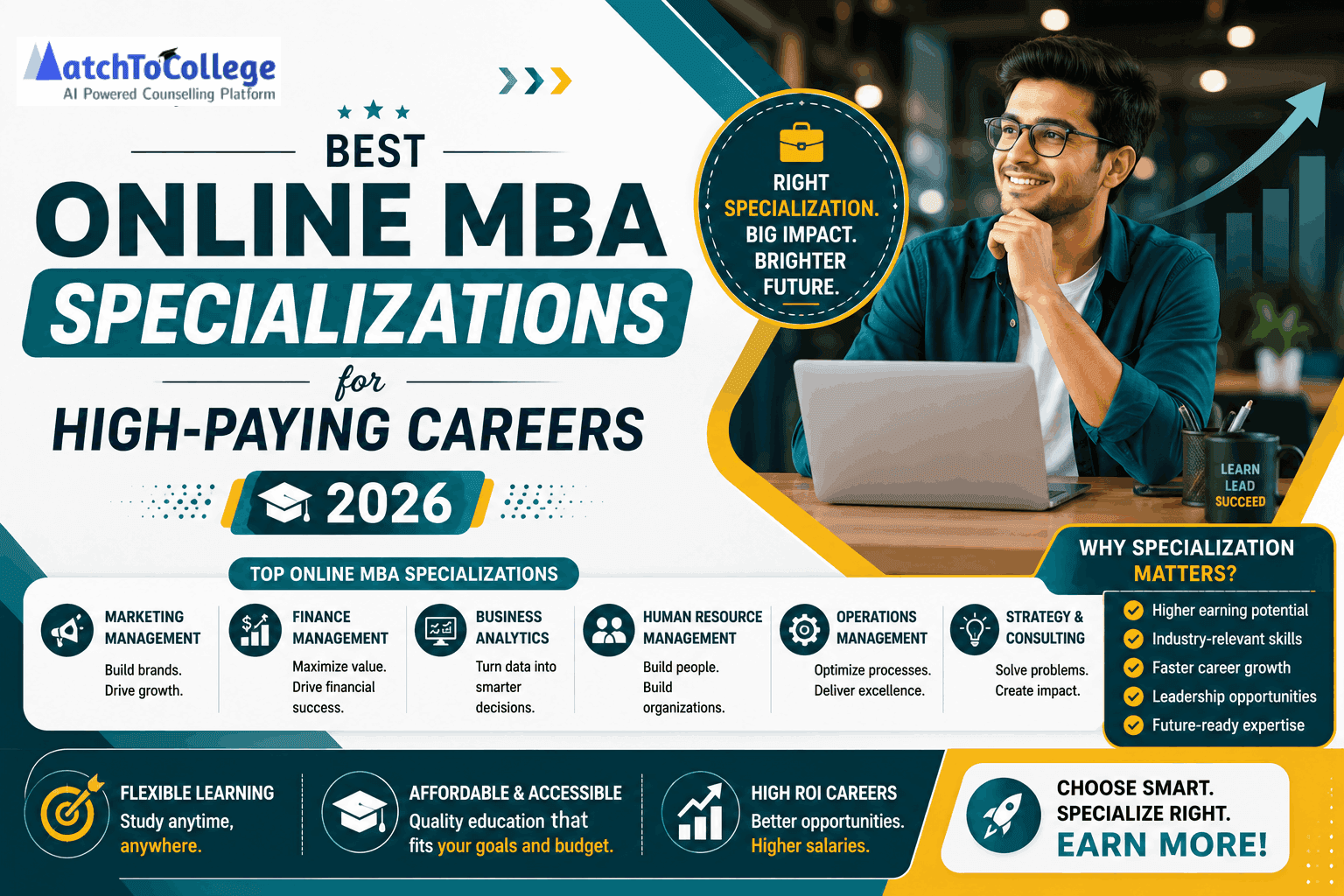
Best Online MBA Specializations for High-Paying Careers 2026
Discover the most lucrative online MBA specializations for 2026-27. Compare ROI, career growth, and use our AI tools to find your perfect management path.
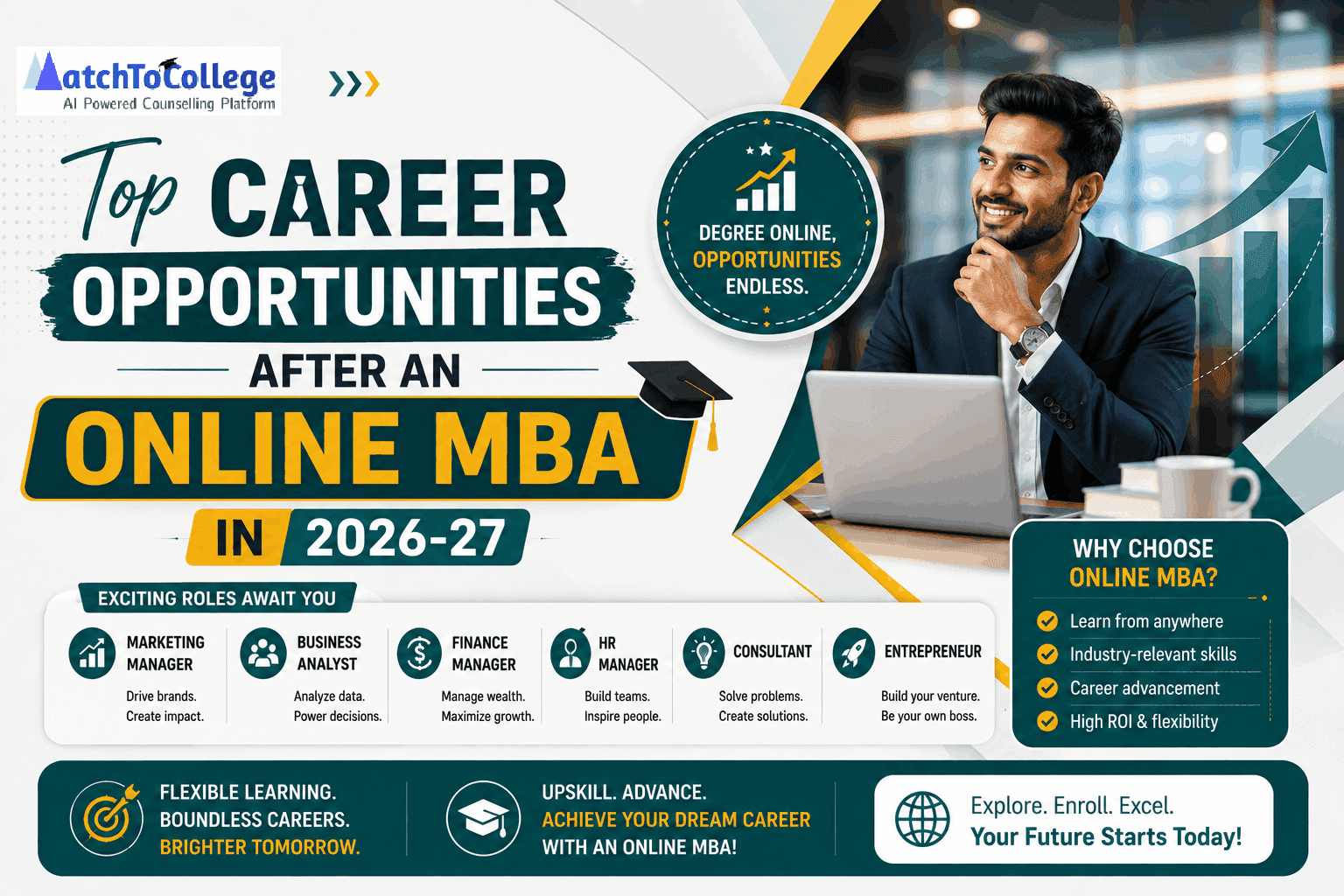
Top Career Opportunities After an Online MBA in 2026-27
Discover high-paying career paths and roles after an online MBA in 2026-27. Explore salary trends, ROI, and tools to navigate your future professional success.

Tax Deductions on Higher Education: 2026-27 India Guide
Maximize your savings with our guide on tax deductions for higher education fees in India for FY 2026-27. Learn about Section 80C, 80E, and upskilling benefits.