

Can Commerce Students Thrive in AI Careers? Absolutely!
Admission & Info Tools
Need Expert Assistance?
Our counselors can help you with fee structures, eligibility guidelines, and upcoming admission cutoffs instantly.
Direct Application Tools
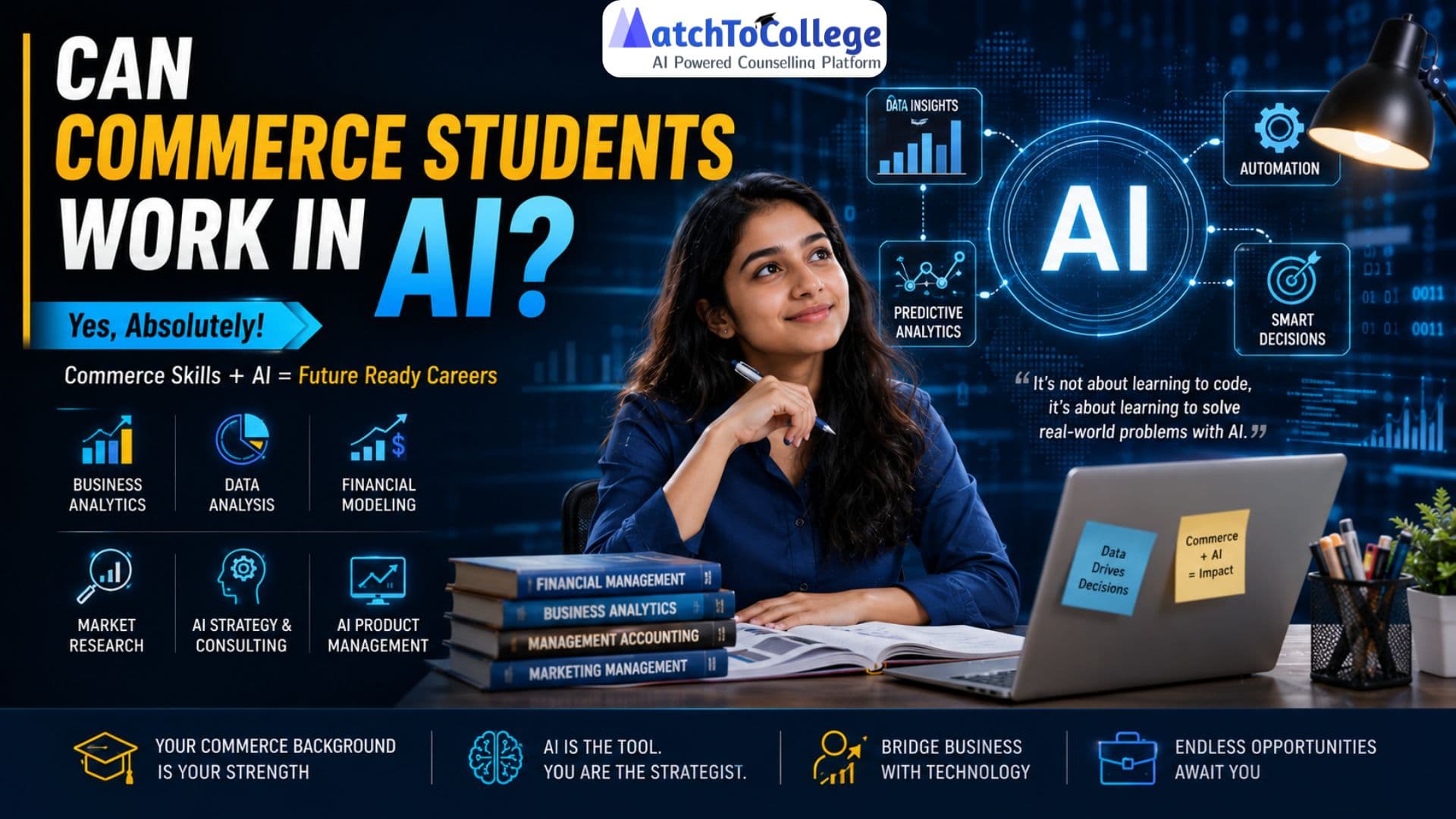
Commerce students + AI: future ready careers
Many students believe Artificial Intelligence (AI) is only for engineers or computer science graduates. In reality, commerce students can also build successful careers in AI by combining their business knowledge with AI tools and digital skills.
As AI transforms industries like finance, banking, marketing, HR, and consulting, companies need professionals who understand both business and technology.
Can Commerce Students Enter AI?
Yes. Commerce students already possess valuable business skills that AI-powered organizations need. By learning AI concepts and digital tools, they can work in several high-demand roles.
Why Commerce Students Are a Good Fit for AI
| Commerce Skills | How They Help in AI Careers |
| Finance & Accounting | AI-powered financial analysis and forecasting |
| Marketing | AI-driven customer insights and digital marketing |
| Business Strategy | AI adoption and business transformation |
| Economics | Market analysis and predictive modeling |
| Data Interpretation | Turning AI insights into business decisions |
AI Career Options for Commerce Students
| Career Role | What You Do |
| Business Analyst | Use AI insights to improve business decisions |
| AI Product Manager | Manage AI-based products and business strategy |
| Digital Marketing Specialist | Use AI for customer targeting and campaign optimization |
| Financial Analyst | Apply AI tools for forecasting and risk analysis |
| Data Analyst | Analyze business data using AI-powered tools |
| Prompt Engineer | Design effective prompts for generative AI applications |
| AI Consultant | Help organizations implement AI solutions |
Skills Commerce Students Should Learn
Business Skills
- Business Strategy
- Financial Analysis
- Marketing Analytics
- Communication
- Problem-Solving
AI & Digital Skills
- Generative AI tools
- Prompt Engineering
- Data Analytics
- Microsoft Excel & Power BI
- SQL (basic)
- Python (optional but beneficial)
Industries Hiring Commerce Graduates with AI Skills
- Banking & Financial Services
- E-commerce
- Consulting
- Marketing & Advertising
- Insurance
- Retail
- Human Resources
- FinTech
- Business Analytics
How to Start Your AI Journey
| Step | Action |
| 1 | Build a strong foundation in business concepts |
| 2 | Learn Generative AI and Prompt Engineering |
| 3 | Study data analytics tools like Excel, SQL, and Power BI |
| 4 | Complete AI-related certifications and projects |
| 5 | Gain practical experience through internships |
Why This Career Path Has Strong Future Scope
- AI is becoming a core part of every business function.
- Companies need professionals who can connect technology with business goals.
- Commerce graduates bring strategic thinking, financial understanding, and customer insights that complement AI capabilities.
Key Insight
The future of AI is not only about coding—it is about solving business problems using intelligent technology. Commerce students who combine their business expertise with AI and analytics skills will have a strong advantage in the evolving job market.
A commerce background is not a limitation for an AI career—it can be a competitive advantage. By adding AI, analytics, and digital skills to their existing business knowledge, commerce students can build rewarding careers in finance, consulting, marketing, product management, business analytics, and AI-driven decision-making.
Platforms like MatchToCollege help students identify future-ready courses, explore AI-focused career paths, and choose higher education programs that match their interests and long-term career goals.
Why Commerce Students are Uniquely Positioned for AI Success
While coding and advanced mathematics are often seen as prerequisites for AI, the reality is that many critical AI roles demand strong business acumen and analytical thinking. Commerce students excel in areas that are becoming indispensable in the AI ecosystem:
- Business Acumen & Strategy: Understanding how businesses operate, generate revenue, and define success is vital. AI solutions must be aligned with business goals, and commerce graduates are adept at identifying these linkages. They can translate complex AI capabilities into tangible business outcomes.
- Data Interpretation & Financial Analysis: Commerce education heavily emphasizes interpreting data, understanding financial statements, and making data-driven decisions. This analytical foundation is directly transferable to working with AI systems, understanding their outputs, and evaluating their business impact.
- Market Understanding & Customer Focus: Whether it's marketing analytics or product development, AI needs to serve a market and solve customer problems. Commerce students inherently understand market dynamics, consumer behavior, and competitive landscapes, which is crucial for developing relevant and impactful AI products.
- Problem-Solving & Critical Thinking: From case studies to economic models, commerce degrees foster strong problem-solving and critical thinking skills—abilities essential for navigating the complex challenges of AI implementation and strategy.
- Ethical & Regulatory Awareness: As AI grows, so does the need for ethical considerations and understanding regulatory frameworks. Students familiar with business ethics, law, and corporate governance can play a crucial role in ensuring AI is developed and deployed responsibly.
These interdisciplinary skills are precisely what the AI industry needs to mature beyond pure technical development and integrate effectively into the global economy.
Key AI Roles Where Commerce Graduates Shine
Forget the stereotype that AI is only for programmers. Here are several high-impact roles where commerce students can not only contribute but truly excel:
- AI Business Analyst: Bridging the gap between business needs and AI solutions. You'll define problems, gather requirements, and ensure AI projects deliver business value.
- AI Product Manager: Overseeing the development and launch of AI-powered products. This role requires understanding market needs, technical capabilities, and business strategy—a perfect fit for commerce skills.
- Data Ethicist / AI Governance Specialist: As AI impacts society, ethical considerations are paramount. Commerce students with an understanding of ethics, law, and societal impact can guide the responsible development and deployment of AI.
- FinTech AI Specialist: Applying AI to financial services, from algorithmic trading to fraud detection and personalized banking. Your finance knowledge combined with AI understanding is a powerful asset here.
- Marketing AI Strategist: Leveraging AI for targeted advertising, customer segmentation, and predictive analytics in marketing. Your marketing background provides an edge.
- Supply Chain AI Consultant: Optimizing logistics, inventory management, and demand forecasting using AI. Knowledge of operations and supply chain management from commerce is invaluable.
- Management Consultant (AI Focus): Advising companies on AI strategy, implementation, and digital transformation. This role demands a holistic understanding of business and technology.
These roles demonstrate that the future of AI is interdisciplinary, creating ample space for diverse talents, including those from commerce backgrounds.
Your Path to an AI Career: Education and Upskilling
If you're a commerce student inspired by the potential of AI, the next step is strategic preparation. While your foundational business knowledge is strong, targeted upskilling can make you highly competitive:
- Specialized Certifications: Look for courses in Business Analytics, Data Science for Business, AI for Managers, or Digital Transformation. Platforms like Coursera, edX, and Udacity offer excellent programs.
- Programming Basics: While not every AI role requires deep coding, familiarity with Python, R, or SQL can be incredibly beneficial for data manipulation and understanding AI concepts.
- Higher Education & MBA Programs: Consider postgraduate degrees with specializations in Business Analytics, FinTech, or AI Management. Many top universities now offer MBA programs with strong technology and AI components.
- Internships & Projects: Seek out internships in companies that are actively integrating AI, even if it's in a business-facing role. Practical experience is invaluable.
- Network: Connect with professionals at the intersection of business and AI. Attend industry events and join online communities.
Navigating these educational and career pathways can be complex, but you don't have to do it alone. MatchToCollege's AI-powered platform provides personalized guidance, helping you identify universities and courses that align with your ambition to blend commerce with AI. We analyze your academic profile, interests, and career goals to recommend the best higher education options, ensuring you're perfectly positioned to excel in the burgeoning AI landscape. Let us help you chart your course to an exciting and impactful AI career.
Share this Article
FAQFrequently Asked Questions
Q: Do I need to be a coding expert to work in AI with a commerce background?
No, not necessarily. While basic programming knowledge (e.g., Python, SQL) can be a significant asset, many AI roles for commerce graduates, such as AI Business Analyst, Product Manager, or Strategist, focus more on understanding business needs, interpreting data, and managing AI projects. You'll be working with AI, not always building it from scratch.
Q: What kind of higher education courses should a commerce student consider for an AI career?
Commerce students interested in AI should explore Master's programs in Business Analytics, Data Science for Business, FinTech, or an MBA with a specialization in Technology Management or AI. Online certifications in AI for Business, Machine Learning applications, or Digital Transformation are also valuable. MatchToCollege can help you find programs that align with your specific interests and career goals.
Get More Info About Can Commerce Students Thrive in AI Careers? Absolutely!
Recommended Reading
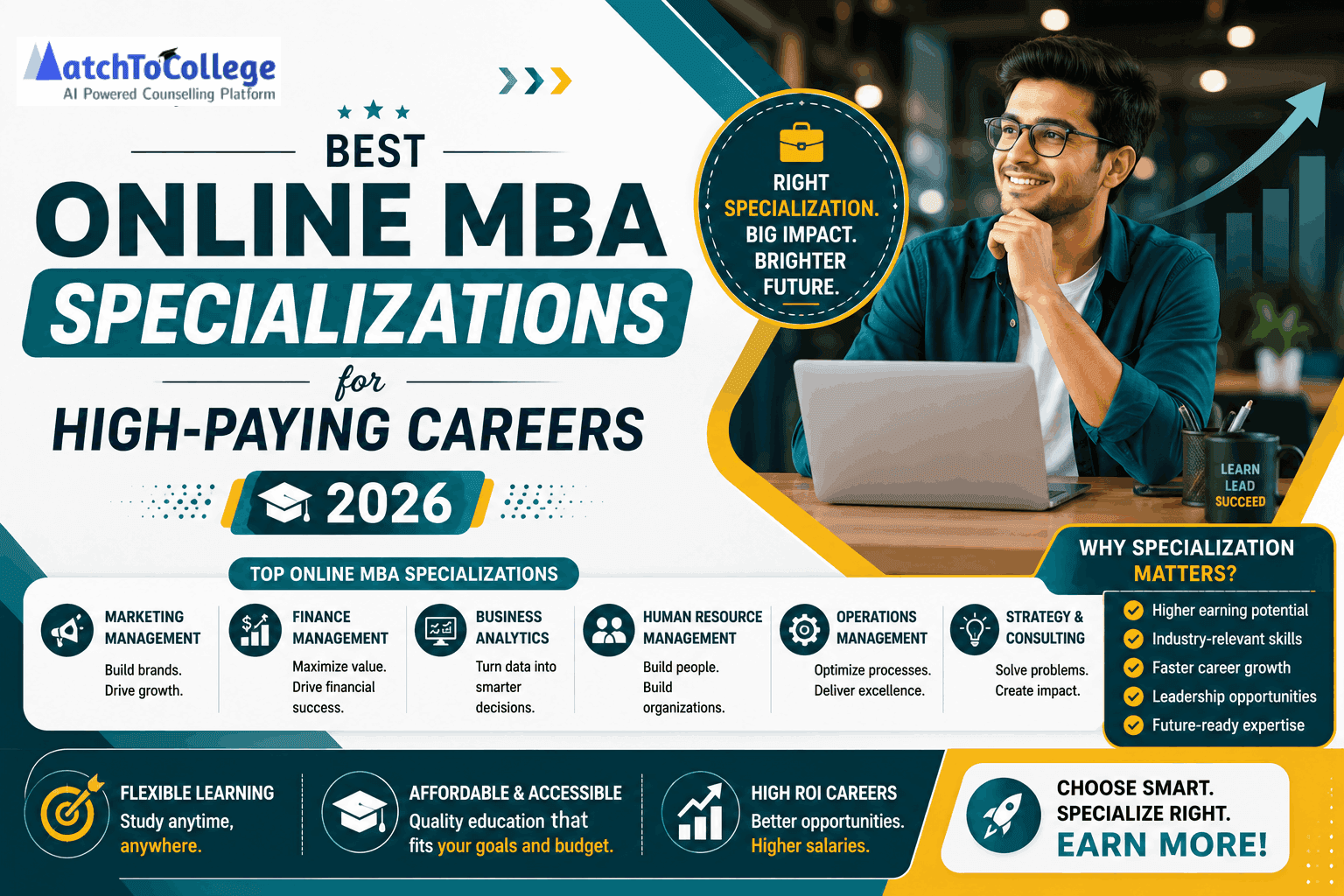
Best Online MBA Specializations for High-Paying Careers 2026
Discover the most lucrative online MBA specializations for 2026-27. Compare ROI, career growth, and use our AI tools to find your perfect management path.
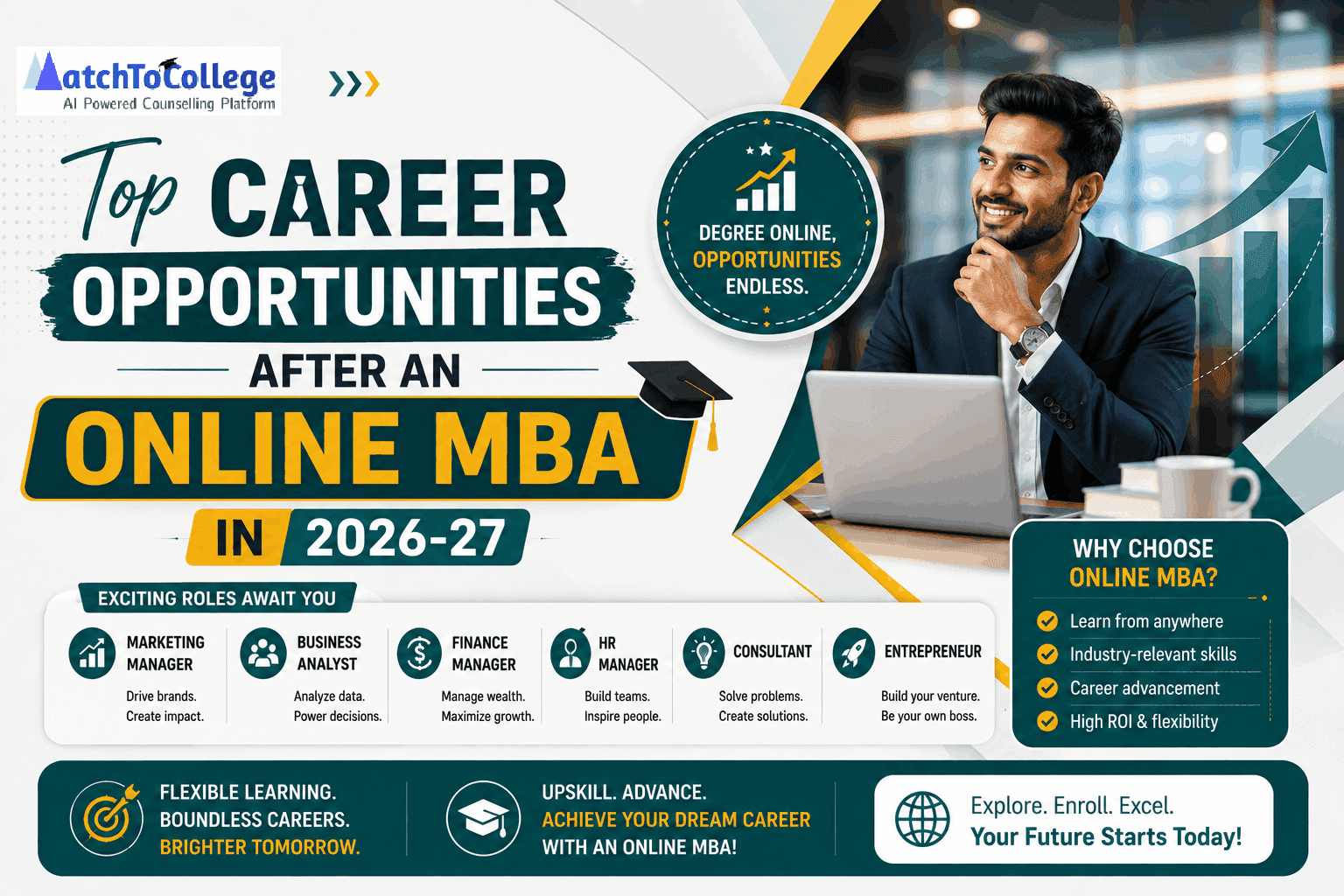
Top Career Opportunities After an Online MBA in 2026-27
Discover high-paying career paths and roles after an online MBA in 2026-27. Explore salary trends, ROI, and tools to navigate your future professional success.
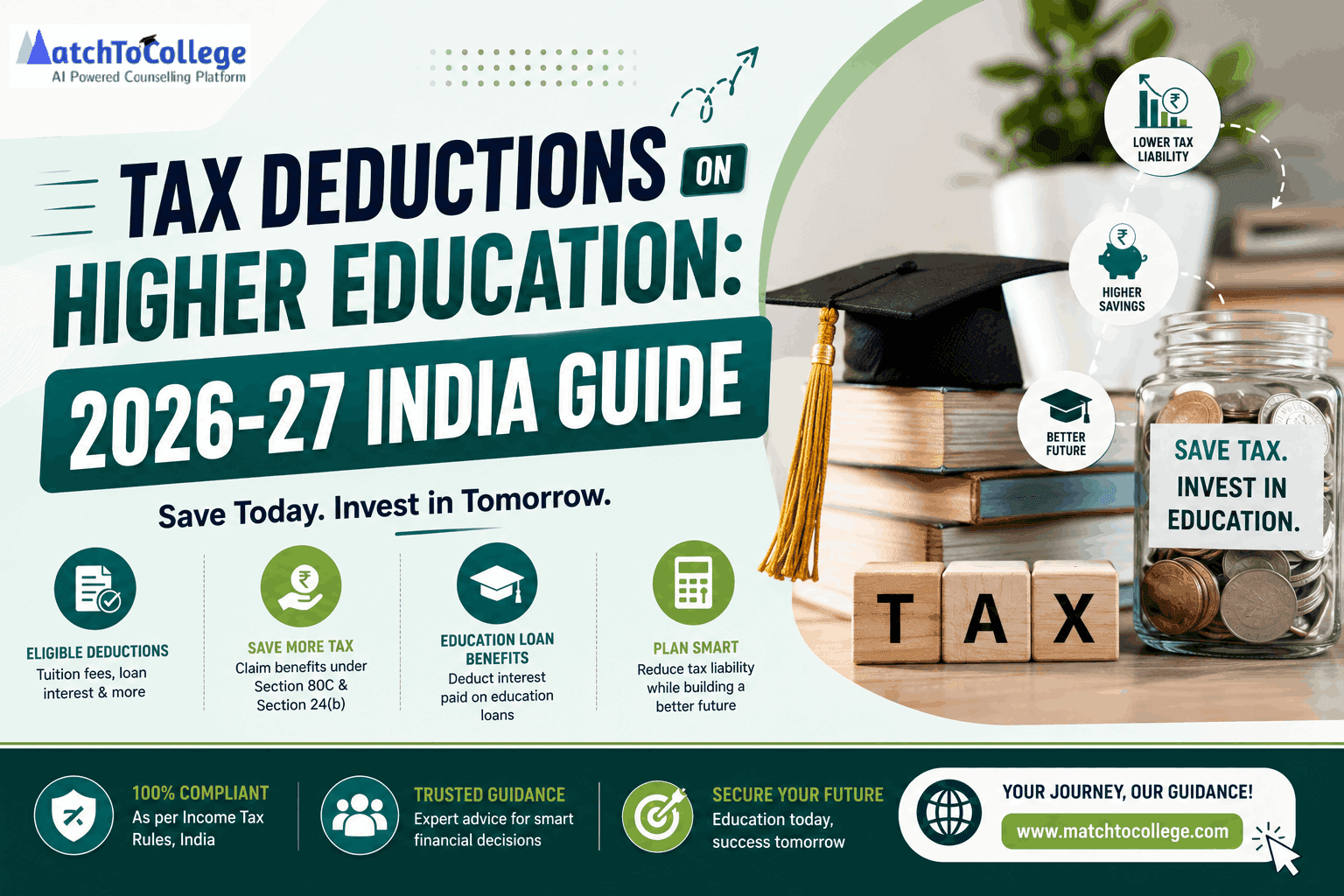
Tax Deductions on Higher Education: 2026-27 India Guide
Maximize your savings with our guide on tax deductions for higher education fees in India for FY 2026-27. Learn about Section 80C, 80E, and upskilling benefits.