

Prompt Engineering: Your AI Career Path Unlocked
Admission & Info Tools
Need Expert Assistance?
Our counselors can help you with fee structures, eligibility guidelines, and upcoming admission cutoffs instantly.
Direct Application Tools
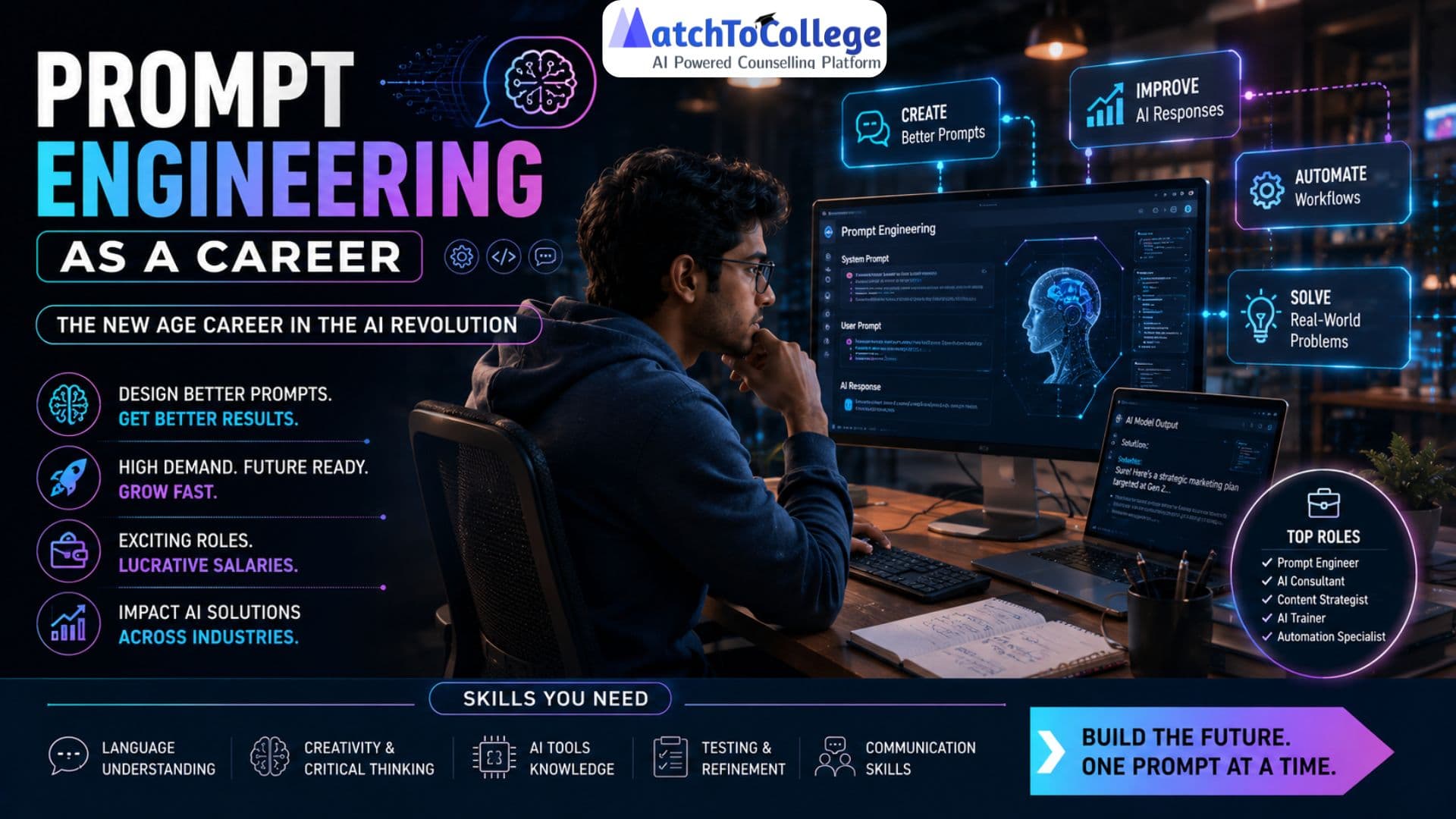
AI career revolution in the workplace
As Artificial Intelligence (AI) continues to transform industries, Prompt Engineering has emerged as one of the most exciting and in-demand career paths. It focuses on designing effective instructions (prompts) that help AI models generate accurate, useful, and high-quality outputs.
What Is Prompt Engineering?
Prompt Engineering is the process of creating, testing, and refining prompts that guide AI systems to produce the desired results.
Whether it's generating content, writing code, analyzing data, or solving complex problems, the quality of AI output largely depends on the quality of the prompt.
How Prompt Engineering Works
| Step | Description |
| Define the Goal | Clearly identify the task you want the AI to perform |
| Write the Prompt | Create clear, detailed, and structured instructions |
| Test the Response | Evaluate the AI's output for accuracy and relevance |
| Refine the Prompt | Improve wording and context for better results |
Why Prompt Engineering Is Growing
- Rapid adoption of AI across industries
- Increasing use of generative AI tools in business
- Demand for professionals who can optimize AI performance
- Growing need for AI-human collaboration rather than AI replacement
What Does a Prompt Engineer Do?
- Design effective prompts for AI models
- Test and optimize AI-generated responses
- Improve content quality and workflow efficiency
- Collaborate with developers, researchers, and business teams
- Build prompt libraries and AI usage guidelines
Industries Hiring Prompt Engineers
| Industry | Applications |
| Technology | AI products, chatbots, automation |
| Education | AI-powered learning and tutoring |
| Healthcare | Clinical documentation and research support |
| Marketing | Content creation and campaign optimization |
| Finance | Report generation and data analysis |
| Customer Support | AI assistants and virtual agents |
Skills Required
Technical Skills
- Understanding of Generative AI and Large Language Models (LLMs)
- Prompt writing and optimization
- Basic programming (Python is helpful)
- Data analysis and AI workflows
Soft Skills
- Critical thinking
- Creativity
- Communication
- Problem-solving
- Attention to detail
Educational Background
Students from many disciplines can enter Prompt Engineering, including:
- Computer Science
- Information Technology
- Data Science
- Engineering
- Business Management
- Marketing
- English, Journalism, and Communication
Why It Is a Future-Proof Career
| Reason | Benefit |
| AI Adoption | Demand is increasing across industries |
| Versatile Skills | Useful in technical and non-technical roles |
| High Business Value | Improves AI efficiency and productivity |
| Continuous Innovation | New AI models create ongoing career opportunities |
Who Should Consider This Career?
Prompt Engineering is ideal for students who:
- Enjoy working with AI technologies
- Like writing and solving problems
- Have strong analytical and creative thinking skills
- Want to build a career in emerging technologies
Prompt Engineering is one of the fastest-growing AI careers, combining technology, communication, and creativity. As organizations increasingly rely on generative AI, professionals who know how to communicate effectively with AI systems will become highly valuable across industries.
Platforms like MatchToCollege help students explore future-ready careers like Prompt Engineering, identify relevant courses, and choose educational pathways aligned with the evolving AI job market.
What Exactly is Prompt Engineering?
At its core, Prompt Engineering is the art and science of communicating effectively with AI models, particularly Large Language Models (LLMs) and generative AI systems. It's not about coding or advanced machine learning algorithms, though understanding their fundamentals is beneficial. Instead, it's about crafting precise, clear, and context-rich inputs (prompts) to guide the AI towards generating desired, high-quality outputs. Think of it as being a skilled diplomat for the digital age, bridging the gap between human intent and artificial intelligence capabilities.
A Prompt Engineer optimizes these interactions to improve the AI's performance, ensure accuracy, reduce bias, and achieve specific objectives. This involves a deep understanding of natural language processing (NLP), critical thinking, creativity, and iterative testing. Whether it’s generating compelling marketing copy, designing intricate digital art, summarizing complex research papers, or assisting in software development, the quality of the AI's output is directly proportional to the expertise of the Prompt Engineer behind the prompt. This role is pivotal for any organization aiming to harness AI for innovation and efficiency.
Why Prompt Engineering is a High-Demand Career
The rapid proliferation of AI tools across every industry has created an unprecedented demand for specialists who can truly unlock their value. Companies are investing heavily in AI models, but without skilled Prompt Engineers, these powerful tools remain underutilized or produce suboptimal results. This creates a significant talent gap that makes Prompt Engineering one of the hottest and highest-paying emerging careers today.
Here’s why it's in such high demand:
- Explosive AI Growth: Generative AI is no longer a niche technology; it's a mainstream productivity and innovation engine. Businesses need experts to integrate AI effectively.
- Bridging the Gap: Prompt Engineers act as crucial intermediaries between technical AI developers and end-users, ensuring AI applications align with business goals and user needs.
- Optimizing Efficiency & Output: Skilled prompt engineering leads to more accurate, relevant, and efficient AI outputs, saving companies time and resources while driving better results.
- Competitive Edge: Organizations with expert Prompt Engineers gain a significant competitive advantage in leveraging AI for product development, marketing, customer service, and more.
- High Compensation: Reflecting the scarcity of talent and critical nature of the role, Prompt Engineers command some of the most competitive salaries in the tech sector, often exceeding traditional software development roles for experienced professionals.
This isn't just a trend; it's a foundational shift in how we interact with technology, making the skills of a Prompt Engineer invaluable for the foreseeable future.
Forging Your Path: How to Become a Prompt Engineer
Aspiring to become a Prompt Engineer doesn't necessarily require a traditional computer science degree, though a background in STEM is certainly an advantage. The most crucial skills are often rooted in critical thinking, creativity, and a deep understanding of language and context.
Here's a roadmap:
- Develop Core Skills: Cultivate strong analytical and problem-solving abilities. Enhance your written communication and logical reasoning. Creativity is key for exploring diverse prompting strategies.
- Understand AI Fundamentals: While you don't need to be an AI developer, a basic grasp of how AI models work, their limitations, and ethical considerations is vital. Online courses, bootcamps, and introductory university modules on AI, machine learning, and natural language processing (NLP) are excellent starting points.
- Experiment & Practice: The best way to learn is by doing. Spend time with various generative AI tools (ChatGPT, Midjourney, Claude, etc.). Experiment with different prompts, observe their outputs, and iterate. Document your findings.
- Consider Relevant Academic Paths: Degrees in Linguistics, Cognitive Science, Data Science, Computer Science, or even Philosophy and Humanities can provide a strong foundation for understanding language, logic, and human-computer interaction. MatchToCollege can help you identify top programs globally that align with these foundational areas.
- Stay Updated: The field of AI is dynamic. Continuously learn about new models, techniques, and best practices. Participate in online communities and forums focused on prompt engineering.
MatchToCollege is your ideal partner in navigating this exciting new career landscape. Our platform connects you with the right educational programs and resources, providing personalized guidance to help you build a robust profile for a successful career in Prompt Engineering and other future-forward professions. Let us help you craft the perfect 'prompt' for your higher education journey!
Share this Article
FAQFrequently Asked Questions
Q: What is a Prompt Engineer?
A Prompt Engineer is a specialist who designs, tests, and refines inputs (prompts) for AI models, especially Large Language Models (LLMs), to achieve desired and optimized outputs. They bridge the gap between human intent and AI capabilities.
Q: What skills are essential for a career in Prompt Engineering?
Key skills include critical thinking, creativity, strong communication, logical reasoning, an understanding of AI/LLM fundamentals, problem-solving, and a keen eye for detail. Proficiency in natural language processing (NLP) concepts is also highly beneficial.
Q: Do I need a Computer Science degree to become a Prompt Engineer?
Not necessarily. While a Computer Science degree is beneficial, fields like Linguistics, Cognitive Science, Data Science, or even Philosophy and Communication can provide excellent foundational skills for understanding language and human-AI interaction. Practical experience and a strong portfolio are often equally important.
Q: What is the typical salary outlook for Prompt Engineers?
Salaries for Prompt Engineers are highly competitive due to high demand and specialized skills. Entry-level positions can start strong, and experienced professionals, especially in tech hubs, can command salaries ranging from $150,000 to over $350,000 annually.
Get More Info About Prompt Engineering
Recommended Reading
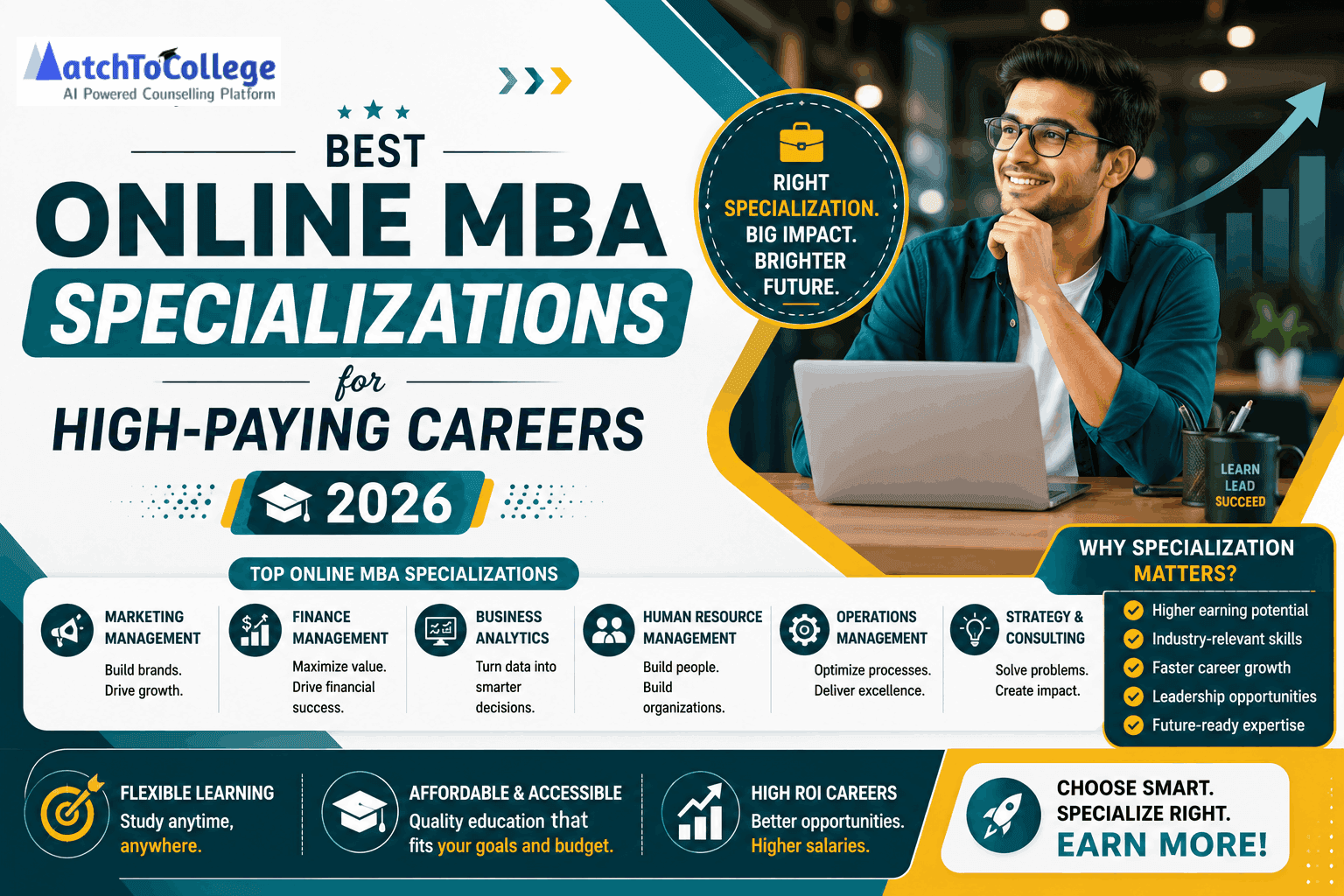
Best Online MBA Specializations for High-Paying Careers 2026
Discover the most lucrative online MBA specializations for 2026-27. Compare ROI, career growth, and use our AI tools to find your perfect management path.
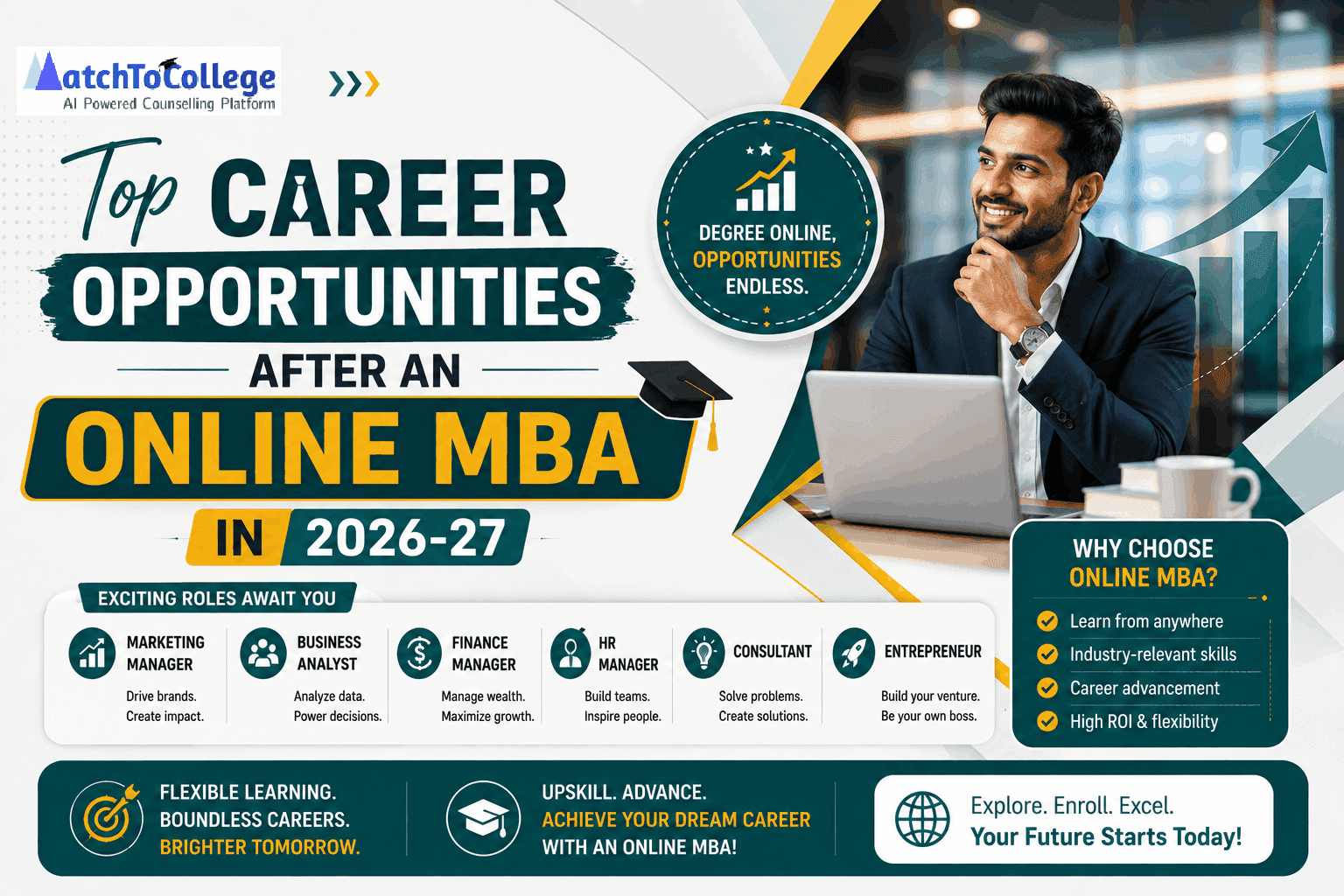
Top Career Opportunities After an Online MBA in 2026-27
Discover high-paying career paths and roles after an online MBA in 2026-27. Explore salary trends, ROI, and tools to navigate your future professional success.

Tax Deductions on Higher Education: 2026-27 India Guide
Maximize your savings with our guide on tax deductions for higher education fees in India for FY 2026-27. Learn about Section 80C, 80E, and upskilling benefits.