

Mastering CAT Quantitative Ability: Your Definitive Guide to QA Success
Admission & Info Tools
Need Expert Assistance?
Our counselors can help you with fee structures, eligibility guidelines, and upcoming admission cutoffs instantly.
Direct Application Tools
Share this Article
🎯 MatchToCollege AI Recommendation: Planning your counselling or choice filling? Check your seat allotment probability across premier colleges using the JEE Main College Predictor.
Key Highlights & Program Overview: Demystifying CAT QA
The Quantitative Ability section is a cornerstone of the CAT exam, designed to assess a candidate's numerical aptitude and ability to solve complex mathematical problems. It typically comprises questions from Arithmetic, Algebra, Geometry, Number System, and Modern Math. Understanding its structure is the first step towards conquering it. Here’s a snapshot of what you can expect:| Parameter | Details |
| Section Name | Quantitative Ability (QA) |
| Total Questions (Approx.) | 22 |
| Time Allotted | 40 minutes |
| Question Types | Multiple Choice Questions (MCQs) & Type-In-The-Answer (TITA) |
| Marking Scheme (MCQ) | +3 for correct, -1 for incorrect |
| Marking Scheme (TITA) | +3 for correct, 0 for incorrect |
| Core Areas | Arithmetic, Algebra, Geometry, Number System, Modern Math |
The QA section demands not just conceptual clarity but also strategic thinking to navigate through questions efficiently within the strict time limit. Our analysis of past CAT papers consistently shows that a balanced approach to all core areas, coupled with rigorous practice, yields the best results.
CAT Eligibility & The Road to Your Dream B-School
Before you even begin your CAT QA preparation, it's vital to ensure you meet the fundamental eligibility criteria set by the IIMs for the Common Admission Test. The selection process is multi-layered, designed to identify well-rounded candidates. Here’s a breakdown:Eligibility Criteria for CAT
- Candidates must hold a Bachelor's Degree with at least 50% marks or equivalent CGPA (45% for Scheduled Caste (SC), Scheduled Tribe (ST), and Persons with Disability (PwD) categories).
- The degree must be awarded by any of the Universities incorporated by an Act of the central or state legislature in India or other educational institutions established by an Act of Parliament or declared to be deemed as a University under Section 3 of the UGC Act, 1956, or possess an equivalent qualification recognized by the Ministry of HRD, Government of India.
- Candidates appearing for the final year of Bachelor's degree/equivalent qualification examination and those awaiting results are also eligible to apply. However, their admission will be provisional and subject to their obtaining a minimum of 50% (or 45% for SC/ST/PwD) aggregate marks.
The CAT Selection Process: A Multi-Stage Journey
The journey to a top B-school involves several critical stages:
- CAT Examination: This is the primary screening stage. Your performance in all three sections—Verbal Ability & Reading Comprehension (VARC), Data Interpretation & Logical Reasoning (DILR), and Quantitative Ability (QA)—determines your percentile score.
- Shortlisting for Interview Rounds: Based on your CAT percentile and individual section cut-offs, along with academic profile (10th, 12th, Graduation scores), work experience, and diversity factors, IIMs and other top B-schools shortlist candidates for the subsequent rounds.
- Written Ability Test (WAT) / Group Discussion (GD) / Personal Interview (PI): Shortlisted candidates undergo these rigorous evaluation rounds. WAT assesses your writing skills, GD evaluates your communication and teamwork, and PI gauges your personality, leadership potential, and motivation for an MBA.
- Final Merit List: A composite score is calculated based on your CAT score, performance in WAT/GD/PI, academic record, and work experience. This final score determines your admission to the chosen program.
Each stage is crucial, and a strong CAT score, especially in QA, significantly boosts your chances of progressing through this competitive process.
Premier B-Schools & Their Investment: A Look at Top MBA Programs
Securing a high CAT percentile opens doors to some of the most prestigious management institutes in India. While the IIMs are often the first choice, several other top-tier B-schools offer exceptional MBA programs. Understanding the investment required and the potential return on investment (ROI) is a key part of your decision-making process. Here's an overview of estimated fees for some leading institutions:| Institution Name | Estimated Total Fees (INR) |
| IIM Ahmedabad (PGP) | ~23-25 Lakhs |
| IIM Bangalore (PGP) | ~23-25 Lakhs |
| IIM Calcutta (PGP) | ~23-25 Lakhs |
| FMS Delhi (MBA) | ~2-4 Lakhs |
| SPJIMR Mumbai (PGDM) | ~20-22 Lakhs |
| MDI Gurgaon (PGPM) | ~20-23 Lakhs |
| IIM Lucknow (PGP) | ~19-21 Lakhs |
| IIM Kozhikode (PGP) | ~17-19 Lakhs |
Note: These figures are approximate and subject to change. Always refer to the official college websites for the most current fee structures.
While the fees for top IIMs and private B-schools might seem substantial, the long-term career growth, networking opportunities, and significant salary packages often ensure a strong return on investment. Institutions like FMS Delhi stand out for their exceptionally low fees coupled with high placements, offering an unparalleled ROI.
Beyond the Degree: Career Scope, Placements & Your MBA ROI
An MBA from a top-tier institution is more than just a degree; it's a launchpad for a transformative career. The skills honed during your program, combined with the robust alumni network and industry exposure, open doors to diverse and high-growth sectors. Our insights at MatchToCollege reveal consistent trends in career opportunities and placement outcomes:Diverse Career Opportunities
Post-MBA, graduates typically find themselves in roles across various domains:
- Consulting: Management consulting, strategy consulting, IT consulting with firms like McKinsey, BCG, Bain, Accenture.
- Finance: Investment banking, corporate finance, private equity, wealth management with leading banks and financial institutions.
- Marketing & Sales: Brand management, product marketing, digital marketing, sales leadership roles in FMCG, tech, and retail sectors.
- Operations & Supply Chain: Optimizing processes, logistics, and supply chain management in manufacturing, e-commerce, and retail.
- Product Management: Leading product development and strategy in technology and consumer goods companies.
- General Management: Leadership roles across various industries, often involving cross-functional responsibilities.
Placement Insights & Average Packages
The placement landscape for top B-schools in India remains robust, with leading companies actively recruiting. While specific figures vary year-on-year, the average salary packages from premier institutions consistently range from INR 25 Lakhs to 35 Lakhs per annum, with the top 10-20% often securing offers upwards of INR 40-50 Lakhs per annum. International placements also offer lucrative opportunities.
Understanding Your Return on Investment (ROI)
ROI for an MBA is not just about the immediate salary jump; it encompasses long-term career progression, leadership development, and the invaluable network you build. While the initial investment in fees and foregone salary can be significant, the accelerated career trajectory, enhanced skill set, and access to senior leadership roles typically ensure that the investment pays off handsomely within 3-5 years post-graduation. MatchToCollege's career counselors help you evaluate potential ROI based on your aspirations and target institutions.
Your CAT QA Admissions Checklist & Expert Preparation Tips
Embarking on your CAT QA preparation requires a structured approach and unwavering dedication. As your mentors, we've compiled an essential checklist and some expert tips to guide you through this journey. Remember, consistency and smart work are your greatest allies.Mastering CAT QA: A Strategic Approach
- Understand the Syllabus Deeply: Don't just skim; truly understand the core concepts across Arithmetic (Percentages, Profit & Loss, Time & Work, Speed & Distance), Algebra (Equations, Inequalities, Functions), Geometry (Triangles, Circles, Mensuration), Number System (Properties, Divisibility, Remainders), and Modern Math (P&C, Probability, Set Theory).
- Build Foundational Strength: Revisit NCERT textbooks for classes 9-10 if your basics are shaky. A strong foundation is non-negotiable.
- Practice, Practice, Practice: Solve a wide variety of problems daily. Focus on conceptual clarity first, then speed and accuracy.
- Analyze Mock Tests Rigorously: Taking mocks is half the battle; analyzing your performance is the other half. Identify weak areas, understand why you made mistakes, and refine your strategy.
- Time Management is Key: Practice solving questions within time limits. Learn to identify easy and moderate questions quickly to maximize your score. Don't get stuck on one difficult problem.
- Focus on Accuracy: Negative marking in MCQs means accuracy is paramount. It's better to attempt fewer questions correctly than many incorrectly.
- Maintain a Formula & Concept Notebook: Jot down all important formulas, theorems, and tricky concepts for quick revision.
MatchToCollege's Expert Guidance & Resources
At MatchToCollege, we provide personalized mentorship, curated study materials, and a robust series of mock tests designed to simulate the actual CAT experience. Our expert counselors help you craft a tailored preparation strategy, track your progress, and provide invaluable insights to boost your performance.
While this guide focuses on mastering the CAT Quantitative Ability section for your MBA aspirations, MatchToCollege is committed to supporting students across all major entrance exams. For those exploring diverse academic paths, or perhaps younger siblings and friends aiming for engineering, our JEE Main College Predictor is an invaluable resource to assess admission probabilities for top B.Tech colleges. It's a testament to our comprehensive approach to higher education guidance, ensuring every student finds their best-fit institution.
Conceptual Challenges from CAT QA (Illustrative)
To give you a glimpse into the analytical rigor required, here are a few conceptual challenges typical of the CAT QA section:
- Find the sum of the integers \(x\) for which \(|x^2 - 5x| \ge 6\) and \(|x| < 16\).
- The two roots of \(x^2 - (p+3)x + (2p+1) = 0\) are \(\alpha\) and \(\alpha - 2\). Determine \(\alpha\).
- Given \(x^2 + y^2 - xy = 19\) and \(\frac{x}{y} + \frac{y}{x} = \frac{29}{10}\), find \((x - y)^2\).
- If \(x > 0\), find the sum of all roots of the equation \[ 4^{\log_{9} x} + 4^{-\log_{9} x} = \frac{5}{2} \]
These problems highlight the need for strong conceptual understanding and efficient problem-solving techniques. MatchToCollege's practice modules offer detailed solutions and alternative approaches to such questions.
🏛️ Looking for Admissions & College Cutoffs? Explore verified fee structures, seat matrices, and real student reviews across top institutions on the MatchToCollege Top Colleges & Universities in India Directory.
Frequently Asked Questions
Q: What is the CAT Quantitative Ability (QA) section all about?
The CAT QA section assesses a candidate's numerical ability, problem-solving skills, and mathematical aptitude. It covers topics like Arithmetic, Algebra, Geometry, Number System, and Modern Math, testing your ability to apply concepts under time pressure.
Q: How many questions are typically in CAT QA and what is the time limit?
The CAT QA section typically consists of 22 questions, which must be attempted within a strict time limit of 40 minutes. These questions include both Multiple Choice Questions (MCQs) and Type-In-The-Answer (TITA) questions.
Q: What are the key topics to focus on for CAT QA preparation?
For CAT QA, aspirants should focus on Arithmetic (Percentages, Profit & Loss, Time & Work, Speed & Distance), Algebra (Equations, Inequalities, Functions), Geometry (Triangles, Circles, Mensuration), Number System (Properties, Divisibility, Remainders), and Modern Math (Permutations & Combinations, Probability, Set Theory).
Q: Is it possible to score well in CAT QA without a strong math background?
Absolutely! While a strong math background is an advantage, it's not a prerequisite for scoring well. Many successful candidates have improved their QA scores significantly through dedicated practice, conceptual clarity, and strategic preparation. MatchToCollege emphasizes building strong fundamentals from scratch.
Q: How can MatchToCollege help me prepare for CAT QA?
MatchToCollege offers comprehensive CAT preparation support, including personalized study plans, expert mentorship, extensive practice modules, full-length mock tests, and detailed performance analysis. Our approach focuses on strengthening your conceptual understanding and refining your test-taking strategies for the QA section.
Q: What is the marking scheme for the CAT QA section?
For every correct answer in the CAT QA section, you are awarded +3 marks. For Multiple Choice Questions (MCQs), there is a negative marking of -1 for every incorrect answer. However, for Type-In-The-Answer (TITA) questions, there is no negative marking for incorrect attempts.
Related Topics
Featured Mentioned Colleges
Explore institutions featured and discussed in this article
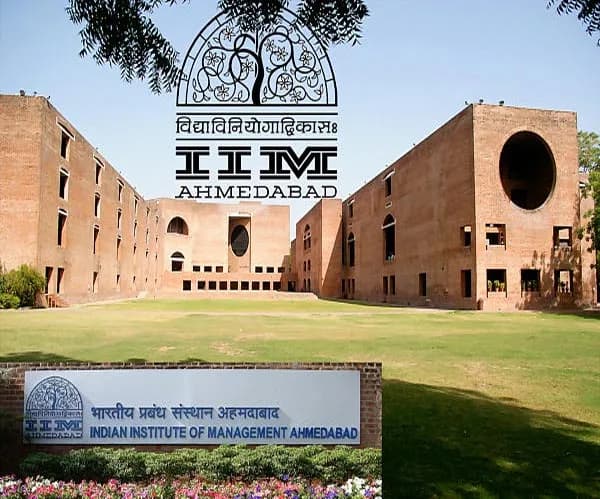

Located in the educational landscape of Ahmedabad, Gujarat, Indian Institute of Management Ahmedabad was established in 1961 to deliver transformative education. Conforming to regulatory norms of All India Council for Technical Education (AICTE) / UGC through its affiliation with Gujarat State University, the institution offers students an integrated foundation across business strategy, financial analytics, corporate governance, and entrepreneurial leadership. The campus is equipped with management simulation suites, modern boardroom presentation centers, and incubation hubs, creating an immersive environment for scholarly development and collaborative innovation. Dedicated to holistic student empowerment, the institution prepares ethical and career-ready professionals who contribute meaningfully to societal and industrial growth.
Total Fees
Contact for Fees
Total Courses
6


Established in 1973, Indian Institute of Management Bangalore is a distinguished institution situated in Bengaluru Urban, Karnataka. Conforming to regulatory norms of All India Council for Technical Education (AICTE) / UGC through its affiliation with Karnataka State University, the institution offers students an integrated foundation across business strategy, financial analytics, corporate governance, and entrepreneurial leadership. The campus is equipped with management simulation suites, modern boardroom presentation centers, and incubation hubs, creating an immersive environment for scholarly development and collaborative innovation. By combining academic discipline with practical exposure, it equips emerging scholars to meet evolving demands in industry, academia, and public service.
Total Fees
Contact for Fees
Total Courses
15


The Indian Institute of Management Calcutta (IIMC) was established as the first national institute for postgraduate studies and research in management by the Government of India in November 1961 in collaboration with the Alfred P. Sloan School of Management (MIT), the Government of West Bengal, the Ford Foundation, and Indian industry. During its initial years, several prominent faculty formed part of its nucleus, including Jagdish Sheth, J. K. Sengupta, and others. Over the years, IIMC has grown into a mature institution with a global reputation, imparting high-quality management education. It has been playing a pioneering role in professionalizing Indian management through its postgraduate and doctoral-level programs, executive training programs, and research and consulting activities. Today, the institute serves as an autonomous body, continually evolving to meet its goals in an ever-changing business environment.
Total Fees
Contact for Fees
Total Courses
11


With an educational trajectory spanning 11 years since its inception in 2015, FACULTY OF MANAGEMENT STUDIES serves as a prominent seat of learning in Rajkot, Gujarat. Affiliated with Marwadi University and adhering to statutory benchmarks established by All India Council for Technical Education (AICTE) / UGC, the institution delivers specialized academic curricula centered on business strategy, financial analytics, corporate governance, and entrepreneurial leadership. Students benefit from contemporary infrastructure featuring management simulation suites, modern boardroom presentation centers, and incubation hubs, designed to support hands-on learning and comprehensive intellectual growth. By combining academic discipline with practical exposure, it equips emerging scholars to meet evolving demands in industry, academia, and public service.
Total Fees
Contact for Fees
Total Courses
3


The IIM Lucknow Noida Campus is a state-of-the-art satellite facility dedicated to executive education and sustainable management. Located in the Delhi-NCR region, it serves as a center of excellence for mid-career professionals, offering full-time residential programs, world-class infrastructure, and a dedicated faculty pool.
Total Fees
Contact for Fees
Total Courses
4


Established in 1996, Indian Institute of Management Kozhikode is a distinguished institution situated in Kozhikode, Kerala. Operating under the academic aegis of Kerala State University and recognized by All India Council for Technical Education (AICTE) / UGC, it provides structured degree programs emphasizing business strategy, financial analytics, corporate governance, and entrepreneurial leadership. The institution maintains robust academic resources including management simulation suites, modern boardroom presentation centers, and incubation hubs, fostering an active student life and practical competencies. Dedicated to holistic student empowerment, the institution prepares ethical and career-ready professionals who contribute meaningfully to societal and industrial growth.
Total Fees
Contact for Fees
Total Courses
12
Get More Info About Mastering CAT Quantitative Ability
Recommended Articles

Decoding the CAT Exam: Your Comprehensive Guide to Pattern, Analysis & Strategy
Navigate the complexities of the CAT exam with this comprehensive guide. Understand its structure, section-wise analysis, and expert strategies to ace your MBA admissions journey.
Mastering CAT Exam Analysis: Your Evergreen Guide to Scores & Admissions
Unlock the secrets of CAT exam analysis, understand how raw scores translate into percentiles, and strategize your path to India's top B-schools. This guide provides an authoritative overview of the CAT exam structure, section-wise insights, and crucial cutoff predictions.

IIM Bangalore PhD Admissions 2027: Your Definitive Guide to Doctoral Management Studies
Aspiring for advanced management research? This comprehensive guide illuminates the IIM Bangalore PhD program for 2027, covering eligibility, selection, and generous financial support. Chart your path to becoming a leading academic or industry expert.