

Decoding the CAT Exam: Your Comprehensive Guide to Pattern, Analysis & Strategy
Admission & Info Tools
Need Expert Assistance?
Our counselors can help you with fee structures, eligibility guidelines, and upcoming admission cutoffs instantly.
Direct Application Tools
Share this Article
🎯 MatchToCollege AI Recommendation: Planning your counselling or choice filling? Check your seat allotment probability across premier colleges using the CAT College Predictor.
Key Highlights & Program Overview
The Common Admission Test (CAT) is a computer-based examination conducted annually for admission to postgraduate management programs across India's top B-schools, including the prestigious IIMs. Understanding its fundamental structure is the first step towards effective preparation. While specific question counts or difficulty levels might see minor year-on-year variations, the core pattern remains consistent.
| Parameter | Details |
| Conducting Body | One of the IIMs (rotational) |
| Exam Frequency | Once a year (typically November) |
| Exam Mode | Computer-Based Test (CBT) |
| Total Sections | 3 (VARC, DILR, QA) |
| Total Questions (Recent Trend) | 66-68 questions |
| Total Marks (Recent Trend) | ~198-204 marks |
| Total Duration | 120 minutes (2 hours) |
| Sectional Time Limit | 40 minutes per section (no switching) |
| Marking Scheme | +3 for correct, -1 for incorrect (MCQs); +3 for correct, 0 for incorrect (TITA) |
| Official Website | iimcat.ac.in |
Recent CAT examinations, such as the 2026 paper, have consistently featured 68 questions distributed across three slots, maintaining a moderate to difficult overall challenge. The sectional time limits are strictly enforced, emphasizing time management and strategic question selection.
Eligibility Criteria & Selection Process
To be eligible for the CAT exam, candidates must meet specific academic requirements. It's crucial to review these criteria carefully before applying:
- Educational Qualification: A Bachelor's Degree with at least 50% marks or equivalent CGPA (45% for SC/ST/PwD candidates) from a university incorporated by an Act of the central or state legislature in India, or other educational institutions established by an Act of Parliament or declared to be deemed as a University under Section 3 of the UGC Act, 1956, or possess an equivalent qualification recognized by the Ministry of HRD, Government of India.
- Final Year Students: Candidates appearing for the final year of Bachelor's degree/equivalent qualification examination and those who have completed degree requirements and are awaiting results can also apply. However, their admission will be provisional and subject to obtaining the required percentage of marks.
- Age Limit: There is no age limit for appearing in the CAT exam.
The selection process for top B-schools, especially the IIMs, typically involves multiple stages:
- CAT Examination: The primary screening stage, where candidates are shortlisted based on their overall and sectional CAT percentiles.
- Shortlisting for WAT/GD-PI: Based on CAT scores, academic profile (10th, 12th, Graduation marks), work experience, and diversity factors, candidates are shortlisted for the Written Ability Test (WAT), Group Discussion (GD), and Personal Interview (PI) rounds.
- Written Ability Test (WAT): Candidates are given a topic to write an essay on within a stipulated time, assessing their communication and analytical skills.
- Group Discussion (GD): Some institutes conduct GDs to evaluate leadership, teamwork, and communication skills.
- Personal Interview (PI): This is a critical stage where candidates are assessed on their personality, communication, general awareness, career goals, and suitability for the program.
- Final Merit List: A composite score is calculated based on CAT percentile, WAT/GD-PI performance, academic record, and work experience to prepare the final merit list for admission.
We encourage you to utilize our CAT College Predictor to gauge your admission chances into various top B-schools based on your expected CAT percentile.
Top Colleges & Fee Comparison
India boasts a robust ecosystem of management education, with numerous institutions offering world-class MBA and PGDM programs. The choice of B-school significantly impacts your career trajectory and return on investment (ROI). Here’s a glimpse at some of the top institutions and their estimated fee structures and average placement figures:
| Institution | Estimated Total Fees (INR Lakhs) |
| IIM Ahmedabad | 23.0 - 25.0 |
| IIM Bangalore | 23.0 - 25.0 |
| IIM Calcutta | 23.0 - 25.0 |
| FMS Delhi | 2.0 - 4.0 |
| XLRI Jamshedpur | 24.0 - 26.0 |
| SPJIMR Mumbai | 20.0 - 22.0 |
| IIM Lucknow | 19.0 - 21.0 |
| IIM Kozhikode | 20.0 - 22.0 |
| MDI Gurgaon | 23.0 - 25.0 |
| IIT Bombay (SJMSOM) | 14.0 - 16.0 |
Note: Fees are approximate and subject to change. Always refer to the official college websites for the most current information.
Beyond the IIMs, several other reputable institutions offer excellent MBA programs. Factors like faculty, curriculum, industry connections, and alumni network play a crucial role in determining the true value of your MBA. Researching these aspects thoroughly is vital for making an informed decision.
Career Scope, Placements & Expected ROI
An MBA from a top-tier institution opens doors to a plethora of career opportunities across diverse sectors. Graduates are sought after for roles that demand strategic thinking, leadership, and strong analytical skills. The return on investment (ROI) for an MBA is often substantial, with average placement packages significantly higher than pre-MBA salaries, especially from leading B-schools.
Diverse Career Paths
MBA graduates find roles in:
- Consulting: Management consulting firms recruit heavily, offering roles in strategy, operations, and technology consulting.
- Finance: Investment banking, corporate finance, private equity, wealth management, and fintech are popular choices.
- Marketing & Sales: Brand management, product management, digital marketing, market research, and sales leadership roles.
- Operations & Supply Chain: Optimizing processes, logistics, procurement, and supply chain management.
- Human Resources: Talent acquisition, HR strategy, organizational development, and compensation & benefits.
- General Management: Leadership roles across various functions, often in large conglomerates or startups.
- Product Management: Especially in tech companies, driving product strategy and development.
- Entrepreneurship: Many MBA graduates leverage their skills and networks to launch their own ventures.
Placement Insights & Average Packages
Top IIMs and other leading B-schools consistently report high placement rates with impressive average packages. While specific figures vary annually, you can expect:
- IIMs (Top Tier): Average packages often range from INR 25-35 LPA, with the highest domestic offers exceeding INR 80 LPA.
- Other Premier B-schools (e.g., XLRI, SPJIMR, FMS, MDI): Average packages typically fall between INR 20-30 LPA.
- Tier 2 B-schools: Average packages can range from INR 10-18 LPA.
The ROI is not just financial; it includes invaluable networking opportunities, leadership development, and a significant boost to your professional credibility. The skills acquired during an MBA program are evergreen, preparing you for dynamic business environments.
Admissions Checklist & Important Tips
A successful CAT journey requires meticulous planning and consistent effort. Here’s a comprehensive checklist and some crucial tips to guide your preparation and admissions process:
CAT Preparation Strategy
- Understand the Exam Pattern: Familiarize yourself with the sectional distribution, question types (MCQ, TITA), and marking scheme.
- Master Core Concepts: Strengthen your fundamentals in Verbal Ability & Reading Comprehension (VARC), Data Interpretation & Logical Reasoning (DILR), and Quantitative Aptitude (QA).
- Practice Regularly: Solve a wide variety of questions from past papers and reputable study materials.
- Take Mock Tests Seriously: Simulate exam conditions by taking full-length mock tests. Analyze your performance thoroughly to identify strengths and weaknesses.
- Time Management: Develop strategies to manage your time effectively within the strict sectional limits. Practice switching between questions and sets efficiently.
- Sectional Focus: Dedicate specific time to each section. For VARC, focus on reading speed and comprehension; for DILR, practice diverse set types; for QA, build speed and accuracy across topics like Arithmetic, Algebra, Geometry, and Number System.
Post-CAT Admissions Tips
- Research B-schools: Identify colleges that align with your career goals, academic profile, and CAT percentile.
- Craft a Strong Application: Pay attention to your Statement of Purpose (SOP) and essays, highlighting your achievements, experiences, and aspirations.
- Prepare for WAT/GD-PI: Stay updated on current affairs, practice group discussions, and prepare for common interview questions. Be ready to articulate your career goals and why you want an MBA.
- Seek Mentorship: Connect with alumni or admissions counselors for guidance.
Remember, consistency is key. Start early, stay disciplined, and leverage resources like the MatchToCollege CAT College Predictor to strategize your applications effectively. Your dedication will pave the way to your dream B-school.
🏛️ Looking for Admissions & College Cutoffs? Explore verified fee structures, seat matrices, and real student reviews across top institutions on the MatchToCollege Top Colleges & Universities in India Directory.
Frequently Asked Questions
Q: Which MBA colleges are available with 80 percentile in CAT?
Many reputable MBA colleges accept CAT scores around the 80th percentile. These institutes often look for a strong overall profile, including academic performance, work experience, and performance in the Group Discussion (GD) and Personal Interview (PI) rounds. Some examples include Fore School of Management, Goa Institute of Management, IMI Delhi, LIBA Chennai, LBSIM Delhi, and various NITs offering MBA programs. The final selection depends on a holistic assessment.
Q: What are the qualifying CAT cutoffs for the IIMs?
The qualifying CAT cutoffs for IIMs vary significantly by institute and category. For the General category, older IIMs (A, B, C, L, K, I) typically have qualifying cutoffs ranging from 85-95+ percentile, while newer and baby IIMs might have cutoffs from 75-93 percentile. These are minimum thresholds for shortlisting for the Written Ability Test (WAT) and Personal Interview (PI) rounds. The final admission cutoff is usually much higher than the qualifying cutoff.
Q: Is scoring 99 percentile in the CAT exam easy?
Achieving a 99 percentile in the CAT exam is considered highly challenging. It signifies being among the top 1% of approximately 2.5 to 3 lakh test-takers. This requires exceptional conceptual clarity, rigorous practice, strategic time management, and the ability to perform under pressure. While difficult, it is certainly achievable with dedicated and smart preparation.
Q: Which MBA colleges are available with 70 percentile in CAT?
A good number of private and some university-affiliated MBA colleges consider candidates with a CAT score around the 70th percentile. These often include institutes like Amity University, Amrita School of Business, Christ Institute of Management, LPU, and various other private B-schools across major cities. It's important to research their specific admission criteria, as many will also consider your academic record, work experience, and performance in their own selection rounds.
Q: Which MBA colleges are available with 60 percentile in CAT?
For candidates with a CAT score in the 60th percentile range, numerous private MBA colleges and some state university programs offer admission opportunities. Institutes such as AIMS Institutes Bangalore, Asian Business School Noida, Eastern Institute For Integrated Learning In Management Kolkata, and various others often accept scores in this range. These colleges typically emphasize a holistic profile, including academic background, extracurricular activities, and performance in their respective admission processes.
Q: How is the CAT exam structured section-wise?
The CAT exam is divided into three distinct sections, each with a strict time limit of 40 minutes. These sections are:
- Verbal Ability & Reading Comprehension (VARC): Focuses on reading comprehension passages, para jumbles, para summaries, and odd-sentence out questions.
- Data Interpretation & Logical Reasoning (DILR): Comprises sets of questions based on data interpretation (tables, charts, graphs) and logical reasoning puzzles.
- Quantitative Aptitude (QA): Covers topics from Arithmetic, Algebra, Geometry, and Number System.
Related Topics
Featured Mentioned Colleges
Explore institutions featured and discussed in this article
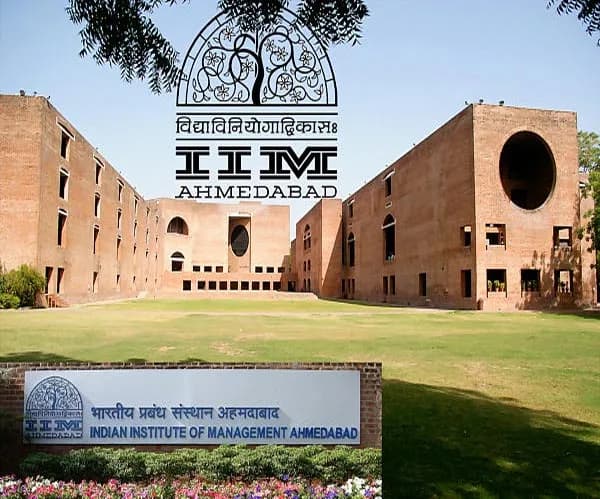

Located in the educational landscape of Ahmedabad, Gujarat, Indian Institute of Management Ahmedabad was established in 1961 to deliver transformative education. Conforming to regulatory norms of All India Council for Technical Education (AICTE) / UGC through its affiliation with Gujarat State University, the institution offers students an integrated foundation across business strategy, financial analytics, corporate governance, and entrepreneurial leadership. The campus is equipped with management simulation suites, modern boardroom presentation centers, and incubation hubs, creating an immersive environment for scholarly development and collaborative innovation. Dedicated to holistic student empowerment, the institution prepares ethical and career-ready professionals who contribute meaningfully to societal and industrial growth.
Total Fees
Contact for Fees
Total Courses
6


Established in 1973, Indian Institute of Management Bangalore is a distinguished institution situated in Bengaluru Urban, Karnataka. Conforming to regulatory norms of All India Council for Technical Education (AICTE) / UGC through its affiliation with Karnataka State University, the institution offers students an integrated foundation across business strategy, financial analytics, corporate governance, and entrepreneurial leadership. The campus is equipped with management simulation suites, modern boardroom presentation centers, and incubation hubs, creating an immersive environment for scholarly development and collaborative innovation. By combining academic discipline with practical exposure, it equips emerging scholars to meet evolving demands in industry, academia, and public service.
Total Fees
Contact for Fees
Total Courses
15


The Indian Institute of Management Calcutta (IIMC) was established as the first national institute for postgraduate studies and research in management by the Government of India in November 1961 in collaboration with the Alfred P. Sloan School of Management (MIT), the Government of West Bengal, the Ford Foundation, and Indian industry. During its initial years, several prominent faculty formed part of its nucleus, including Jagdish Sheth, J. K. Sengupta, and others. Over the years, IIMC has grown into a mature institution with a global reputation, imparting high-quality management education. It has been playing a pioneering role in professionalizing Indian management through its postgraduate and doctoral-level programs, executive training programs, and research and consulting activities. Today, the institute serves as an autonomous body, continually evolving to meet its goals in an ever-changing business environment.
Total Fees
Contact for Fees
Total Courses
11


With an educational trajectory spanning 11 years since its inception in 2015, FACULTY OF MANAGEMENT STUDIES serves as a prominent seat of learning in Rajkot, Gujarat. Affiliated with Marwadi University and adhering to statutory benchmarks established by All India Council for Technical Education (AICTE) / UGC, the institution delivers specialized academic curricula centered on business strategy, financial analytics, corporate governance, and entrepreneurial leadership. Students benefit from contemporary infrastructure featuring management simulation suites, modern boardroom presentation centers, and incubation hubs, designed to support hands-on learning and comprehensive intellectual growth. By combining academic discipline with practical exposure, it equips emerging scholars to meet evolving demands in industry, academia, and public service.
Total Fees
Contact for Fees
Total Courses
3


The IIM Lucknow Noida Campus is a state-of-the-art satellite facility dedicated to executive education and sustainable management. Located in the Delhi-NCR region, it serves as a center of excellence for mid-career professionals, offering full-time residential programs, world-class infrastructure, and a dedicated faculty pool.
Total Fees
Contact for Fees
Total Courses
4


Established in 1996, Indian Institute of Management Kozhikode is a distinguished institution situated in Kozhikode, Kerala. Operating under the academic aegis of Kerala State University and recognized by All India Council for Technical Education (AICTE) / UGC, it provides structured degree programs emphasizing business strategy, financial analytics, corporate governance, and entrepreneurial leadership. The institution maintains robust academic resources including management simulation suites, modern boardroom presentation centers, and incubation hubs, fostering an active student life and practical competencies. Dedicated to holistic student empowerment, the institution prepares ethical and career-ready professionals who contribute meaningfully to societal and industrial growth.
Total Fees
Contact for Fees
Total Courses
12
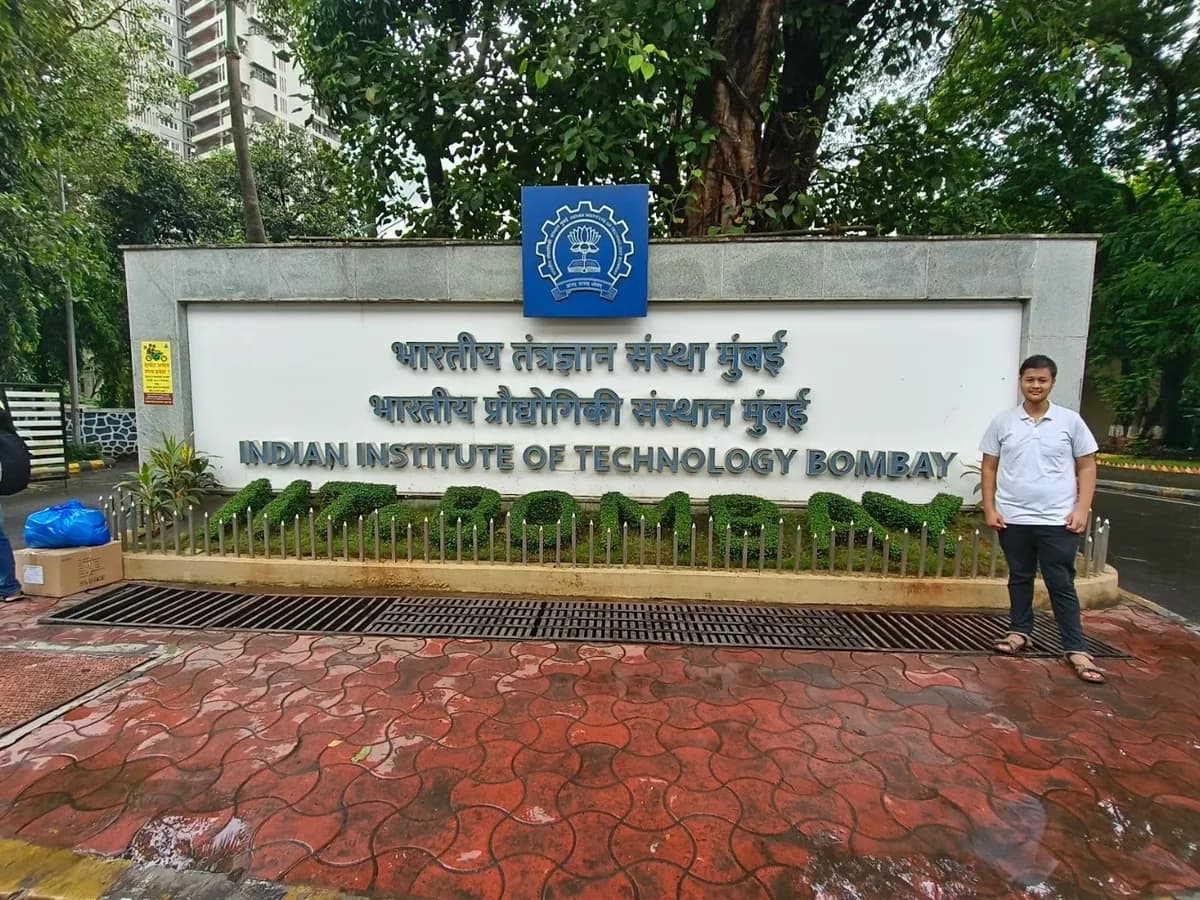

The Indian Institute of Technology Bombay (IIT Bombay or IITB) is a public research university and technical institute located in Mumbai, Maharashtra, India. Established in 1958, it is one of the 23 Indian Institutes of Technology, designated as an Institution of Eminence in 2018. IIT Bombay serves as a Centre of Excellence for India's training, research, and development in science, engineering, and technology. The institute comprises 17 academic departments, 35 additional academic centers, and three schools.
Total Fees
Contact for Fees
Total Courses
9
Get More Info About Decoding the CAT Exam
Recommended Articles
Mastering CAT Quantitative Ability: Your Definitive Guide to QA Success
Unlock your potential in the CAT Quantitative Ability section with this comprehensive guide from MatchToCollege. Learn expert strategies, key topics, and preparation tips to ace one of the most critical MBA entrance exam sections.
Mastering CAT Exam Analysis: Your Evergreen Guide to Scores & Admissions
Unlock the secrets of CAT exam analysis, understand how raw scores translate into percentiles, and strategize your path to India's top B-schools. This guide provides an authoritative overview of the CAT exam structure, section-wise insights, and crucial cutoff predictions.

IIM Bangalore PhD Admissions 2027: Your Definitive Guide to Doctoral Management Studies
Aspiring for advanced management research? This comprehensive guide illuminates the IIM Bangalore PhD program for 2027, covering eligibility, selection, and generous financial support. Chart your path to becoming a leading academic or industry expert.