

Will AI Make Degrees Useless? Future-Proof Your Education
Admission & Info Tools
Need Expert Assistance?
Our counselors can help you with fee structures, eligibility guidelines, and upcoming admission cutoffs instantly.
Direct Application Tools

AI’s Impact on Future Degrees
The rapid advancement of Artificial Intelligence (AI) has sparked both excitement and apprehension across industries worldwide. One of the most pressing questions on the minds of students, parents, and educators is: "Will AI make some degrees useless?" This isn't just idle speculation; it's a critical inquiry into the future of higher education and career preparedness. As AI continues to automate tasks once performed by humans, the landscape of the job market is undeniably shifting, creating new demands for skills and rendering others less essential.
It's natural to feel a pang of worry when contemplating years of study and significant investment in a degree, only to wonder if a machine might soon perform its core functions. However, the narrative isn't one of universal obsolescence. Instead, it's a call for adaptation, strategic planning, and a deep understanding of how technological advancements will redefine value in the professional world. The key isn't to fear AI, but to understand its implications for your career path and leverage this knowledge to make informed decisions about your higher education.
At MatchToCollege, we understand these concerns. Our AI-powered platform is designed precisely to help students navigate this complex terrain, providing personalized guidance that aligns with the future of work. We believe that while AI will undoubtedly transform many sectors, it also presents unparalleled opportunities for those who choose their educational and career paths wisely. This blog post will delve into which degrees and skills are most susceptible to AI disruption, and more importantly, how you can future-proof your education and thrive in the AI era.
The AI Revolution: Understanding the Impact on Jobs
AI's influence is pervasive, extending from customer service chatbots to complex data analysis and even creative content generation. This digital transformation means that jobs heavily reliant on repetitive, predictable, or rule-based tasks are most vulnerable to automation. Consider roles in data entry, routine accounting, manufacturing, and even some aspects of journalism or customer support. Degrees that historically led directly into these highly routine positions may see a decrease in demand, or at least a significant shift in the required skillset.
However, it's crucial to understand that AI doesn't simply eliminate jobs; it fundamentally changes them and creates entirely new ones. While some entry-level positions may be impacted, there's a surge in demand for roles that involve designing, deploying, maintaining, and innovating with AI systems. Fields like AI ethics, prompt engineering, machine learning engineering, and data science are booming. Therefore, the impact on degrees is less about making them 'useless' and more about necessitating a re-evaluation of curricula to focus on higher-order thinking, creativity, and interdisciplinary problem-solving that complements, rather than competes with, artificial intelligence.
Future-Proofing Your Degree: Skills AI Can't Replicate (Yet!)
To thrive in an AI-driven future, students must cultivate skills that transcend mere technical proficiency. While coding and data literacy remain vital, the truly 'AI-proof' degrees and career paths will emphasize uniquely human capabilities. These include critical thinking, the ability to analyze complex information, evaluate arguments, and form reasoned judgments. Creativity and innovation are paramount; AI can generate variations, but true breakthrough ideas often stem from human ingenuity. Emotional intelligence, encompassing empathy, collaboration, and leadership, is irreplaceable in roles requiring complex human interaction, negotiation, and team building.
Furthermore, complex problem-solving, requiring the synthesis of diverse information and adaptive strategies, will always be in high demand. Adaptability and lifelong learning are also non-negotiable; the pace of technological change demands a mindset of continuous skill acquisition and reskilling. Degrees that foster these core human attributes – often found in liberal arts, psychology, sociology, and specialized design or engineering fields that integrate human-centric approaches – are likely to remain highly valuable, evolving alongside AI rather than being superseded by it. The focus shifts from 'what you know' to 'how you think and interact'.
Navigating Your Future with MatchToCollege
Choosing a degree in today's evolving educational landscape can feel overwhelming, but you don't have to navigate it alone. MatchToCollege leverages cutting-edge AI to provide personalized higher education counselling, helping you make informed decisions that align with future job market trends and your unique strengths.
Our platform goes beyond traditional rankings, analyzing the skills emphasized in various degree programs and projecting their relevance in an AI-transformed world. We help you identify educational pathways that foster critical human skills, connect you with institutions pioneering future-forward curricula, and provide insights into emerging career opportunities. With MatchToCollege, you gain a strategic partner dedicated to empowering your academic and professional success, ensuring your degree choice isn't just relevant today, but future-proof for tomorrow.
Share this Article
FAQFrequently Asked Questions
Q: Will all traditional degrees become obsolete due to AI?
No, not all traditional degrees will become obsolete. While AI will automate many routine tasks, it also creates new job categories and elevates the importance of uniquely human skills like critical thinking, creativity, and emotional intelligence. Degrees that emphasize these skills, or integrate AI literacy, will remain highly valuable.
Q: What kind of degrees are considered 'AI-proof' or future-ready?
Degrees that are considered 'AI-proof' or future-ready typically focus on skills that AI struggles to replicate. These include fields that foster critical thinking, complex problem-solving, creativity, emotional intelligence, ethical reasoning, and interdisciplinary collaboration. Examples can range from liberal arts and human-centric design to advanced engineering, psychology, and specialized data ethics programs.
Get More Info About Will AI Make Degrees Useless? Future-Proof Your Education
Recommended Reading
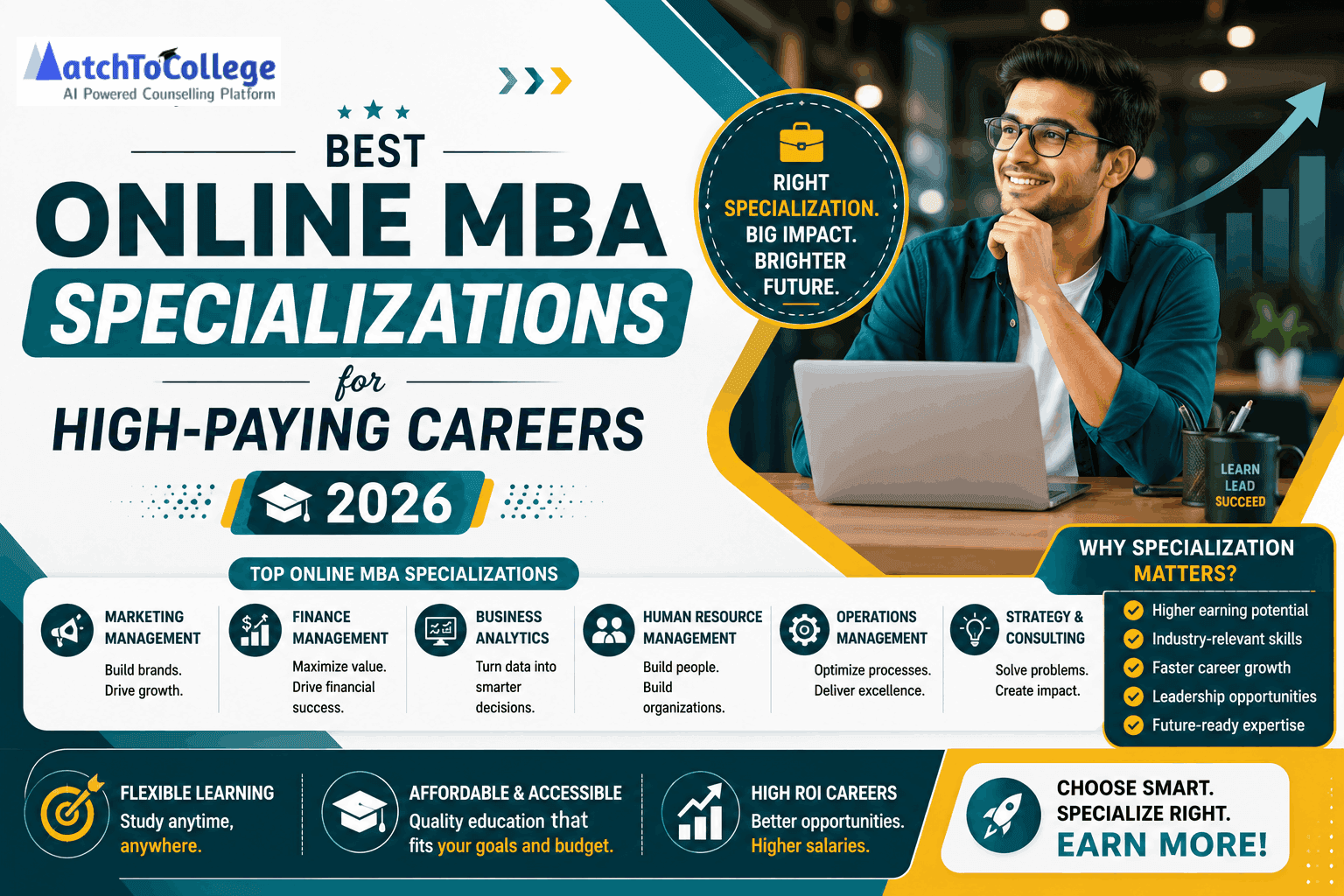
Best Online MBA Specializations for High-Paying Careers 2026
Discover the most lucrative online MBA specializations for 2026-27. Compare ROI, career growth, and use our AI tools to find your perfect management path.
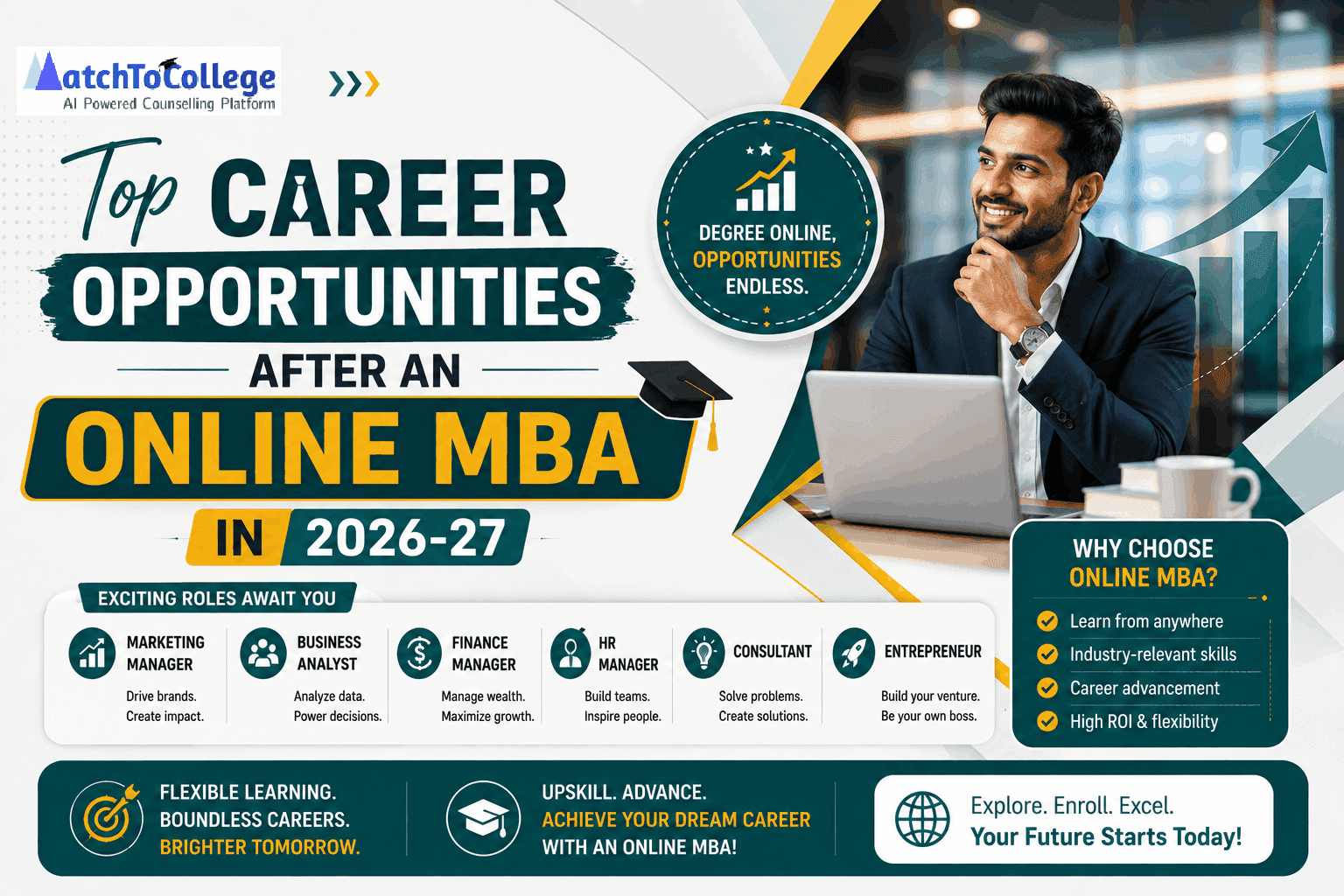
Top Career Opportunities After an Online MBA in 2026-27
Discover high-paying career paths and roles after an online MBA in 2026-27. Explore salary trends, ROI, and tools to navigate your future professional success.
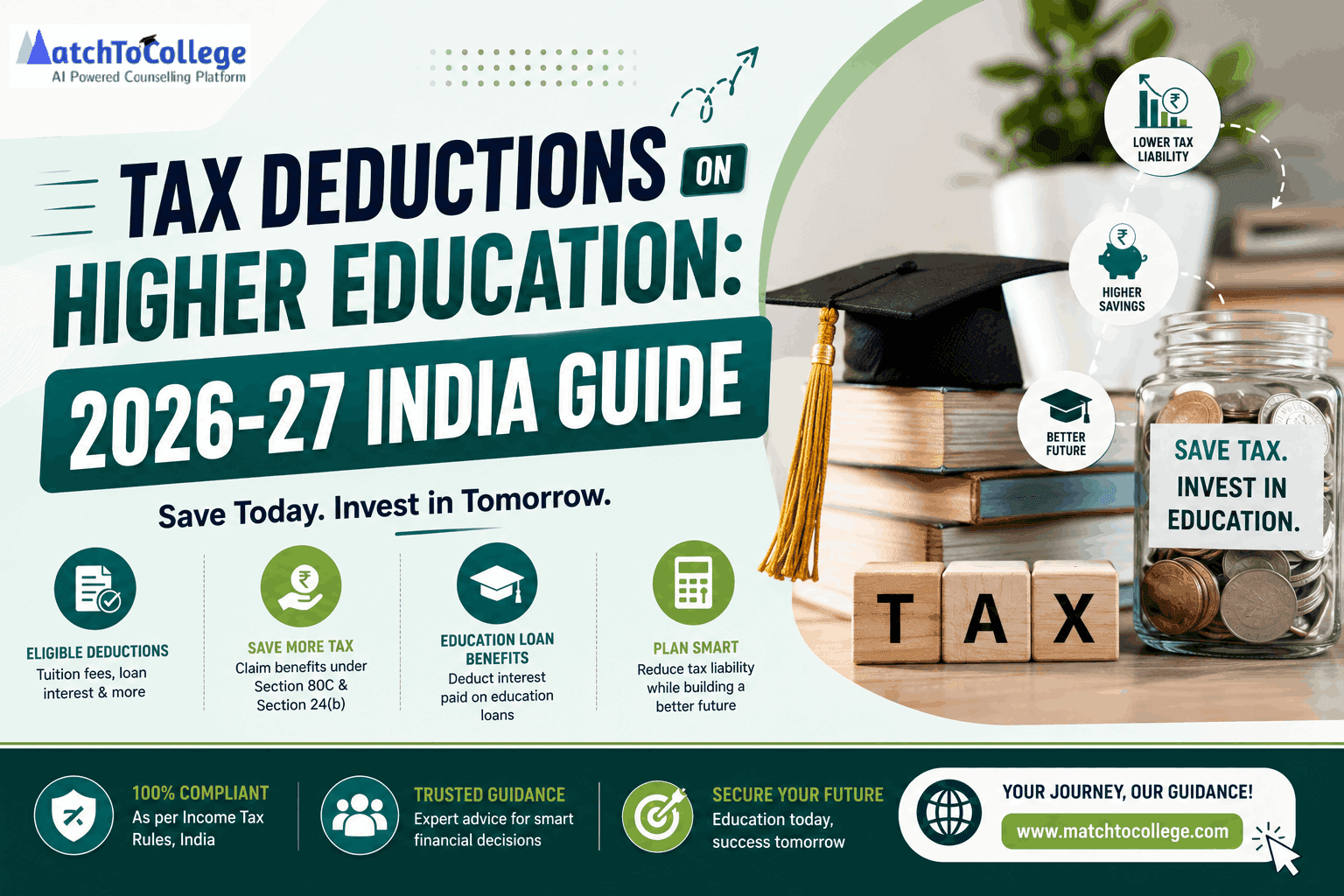
Tax Deductions on Higher Education: 2026-27 India Guide
Maximize your savings with our guide on tax deductions for higher education fees in India for FY 2026-27. Learn about Section 80C, 80E, and upskilling benefits.