

College Tiers Explained: Which One is Right for You?
Admission & Info Tools
Need Expert Assistance?
Our counselors can help you with fee structures, eligibility guidelines, and upcoming admission cutoffs instantly.
Direct Application Tools
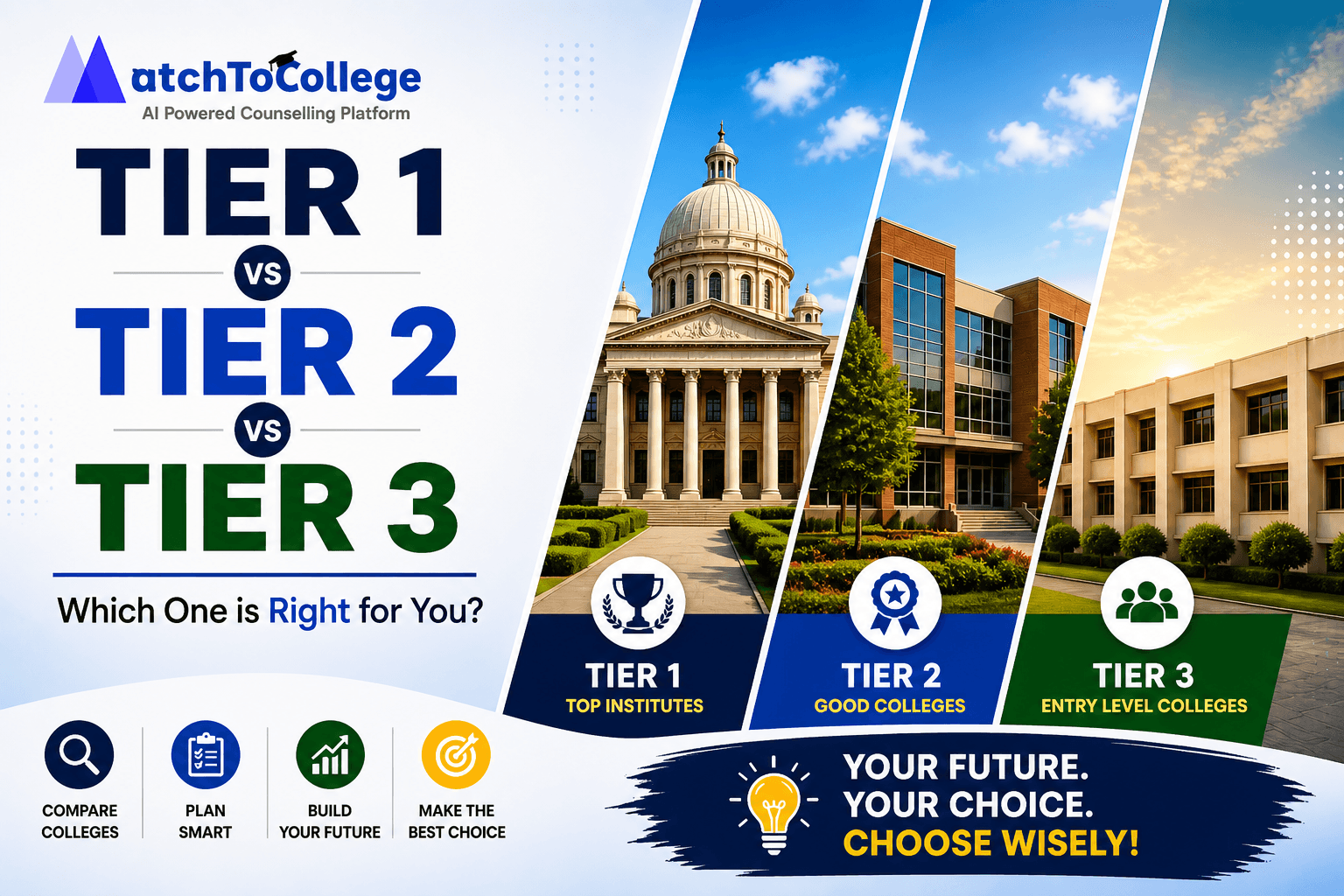
Choose the right college tier
Students often dream of attending a "top-tier" university, but what exactly do these tiers mean, and more importantly, which tier is truly the "right" fit for you? Navigating the complex landscape of higher education can feel like an overwhelming challenge, with countless institutions vying for your attention. The terms "Tier 1," "Tier 2," and "Tier 3" are frequently thrown around, often creating more confusion than clarity. Are they official classifications? Do they reflect quality or simply prestige? And how do you discern which category aligns best with your academic aspirations, career goals, and personal preferences?
At MatchToCollege, we understand that finding your ideal educational path is about more than just chasing a prestigious name. It's about securing a future where you thrive – academically, professionally, and personally. Our AI-powered higher education counseling platform is designed to cut through the noise, providing personalized insights tailored specifically to your profile. This comprehensive guide will demystify the concept of college tiers, break down what differentiates these institutions, and equip you with the knowledge to make an informed decision. We’ll explore the nuances beyond mere rankings, delve into what each tier typically offers, and help you identify the factors that should truly matter in your college selection process. Whether you're aiming for an MBA, Engineering, Medical degree, or planning to Study Abroad, understanding college tiers is a crucial step towards crafting a successful application strategy. Let's embark on this journey to discover which college tier truly resonates with your unique potential.
Demystifying College Tiers: What Do They Really Mean?
While there are no official, universally recognized college tier classifications by governmental or educational bodies, the terms "Tier 1," "Tier 2," and "Tier 3" are widely used within higher education circles. These informal categories are typically based on a combination of factors, including:
- Selectivity: The acceptance rate and academic profile of admitted students.
- Research Output: The volume and impact of faculty research.
- Reputation & Prestige: National and international standing, often influenced by major university rankings.
- Endowment & Resources: Financial strength, facilities, and academic support services.
- Alumni Network: The success and influence of graduates in various fields.
- Tier 1 institutions generally refer to highly selective, often research-intensive universities (like R1 universities in the US, Ivy League, or top public flagships). Examples
- IIT Bombay – Computer Science
- IIT Delhi – Electrical Engineering
- IIM Ahmedabad – MBA
- AIIMS Delhi – MBBS
- SRCC (Delhi University) – Commerce
Tier 2 colleges are typically selective, with strong regional or national reputations, excellent programs, and a good balance of teaching and research. Example
- DTU (Delhi Technological University) – Engineering
- Christ University – BBA/MBA
- Symbiosis Pune – Management/Law
Tier 3 institutions often have broader admissions, focus heavily on undergraduate teaching, and serve a more regional student body. It’s crucial to remember that quality education can be found at all levels, and these tiers are more about institutional characteristics than definitive judgments of educational value.
Beyond Prestige: What Each College Tier Offers You
Understanding the general characteristics of each tier can help you align your expectations and goals with the right institution:
- Tier 1 Institutions (e.g., Ivy League, Top Public Universities): These universities often boast unparalleled resources, cutting-edge research opportunities, a highly competitive environment, and vast, influential alumni networks. They tend to attract top faculty and students globally, leading to intense academic rigor and excellent career placement in highly sought-after fields (e.g., investment banking, top consulting, medical research). The prestige can open doors, but the environment demands extreme self-motivation and academic excellence.
- Tier 2 Institutions (e.g., Strong State Universities, Reputable Private Colleges): These offer an excellent balance of strong academics, practical experience, and a vibrant campus life. They often have specific programs that are nationally recognized and provide strong regional employment opportunities. You'll find a diverse student body, dedicated faculty, and a supportive learning environment without the intense pressure often associated with Tier 1. They offer great value for money and a solid foundation for most career paths, including competitive graduate programs.
- Tier 3 Institutions (e.g., Regional Universities, Liberal Arts Colleges, Community Colleges): These institutions often focus heavily on undergraduate teaching, smaller class sizes, and a more personalized educational experience. They are typically more accessible and can be a fantastic choice for students looking to build strong academic foundations, seeking a close-knit community, or preferring a more supportive learning environment. Many offer strong vocational programs and serve as excellent stepping stones for transfer to larger universities or direct entry into local job markets.
Finding Your Perfect Fit: Choosing the Right College Tier
Choosing a college tier is a highly personal decision. Don't let perceived prestige overshadow what truly matters for your success. Consider these factors:
- Your Academic Profile & Aspirations: Be realistic about your GPA, test scores, and extracurriculars. What kind of academic challenge do you thrive in? Are you looking for a research-heavy environment or one focused on hands-on learning?
- Career Goals: Some highly specialized or competitive careers (e.g., certain fields in finance, top-tier research) may benefit more from a Tier 1 degree. However, most careers value skills, experience, and drive, which can be cultivated at any tier. Research specific program strengths over overall university ranking.
- Learning Style & Campus Culture: Do you prefer large lectures or small seminars? A competitive environment or a collaborative one? A large urban campus or a smaller, more intimate setting?
- Financial Considerations: Tuition, scholarships, and living costs vary significantly. A prestigious name might come with a higher price tag, but also potentially more financial aid for top students.
- Program-Specific Strengths: A Tier 2 university might have a nationally ranked engineering program, while a Tier 1 school might excel in humanities. Focus on the department and faculty in your chosen major.
How MatchToCollege Helps: Our AI-powered platform goes beyond generic rankings. We analyze your unique academic strengths, career aspirations (be it MBA, Engineering, Medical, or Study Abroad), personal preferences, and financial situation to match you with institutions across various tiers where you are most likely to thrive. We help you identify your "reach," "target," and "safety" schools, ensuring a balanced application strategy that maximizes your potential for admission to a truly best-fit college.
Share this Article
FAQFrequently Asked Questions
Q: Are college tiers official classifications recognized by educational bodies?
No, college tiers like Tier 1, Tier 2, and Tier 3 are not official classifications. They are informal terms widely used to categorize institutions based on factors such as selectivity, research output, national rankings, and perceived prestige. While not formally defined, these terms reflect common perceptions within the higher education landscape and help students and parents navigate options.
Q: Should I only consider Tier 1 colleges for a successful career?
Not necessarily. While Tier 1 colleges often offer vast networks and resources, success is primarily determined by your dedication, skills, and strategic career planning, not solely by your college's tier. Many Tier 2 and Tier 3 institutions provide excellent education, strong career services, and produce highly successful graduates. The 'right' college is the one that best fits your academic needs, learning style, and career goals, regardless of its informal tier. MatchToCollege helps you identify institutions across all tiers that align perfectly with your potential and aspirations.
Q: How do Tier 1, Tier 2, and Tier 3 colleges differ in terms of admission difficulty?
Generally, Tier 1 colleges are the most difficult to get into, with highly selective admission rates and requiring exceptional academic profiles (high GPA, test scores, strong extracurriculars). Tier 2 colleges are selective but less so than Tier 1, looking for strong academic records and well-rounded applicants. Tier 3 colleges typically have broader admission criteria, making them more accessible to a wider range of students, often with a greater emphasis on individual potential and fit.
Get More Info About College Tiers Explained
Recommended Reading

Best Online MBA Specializations for High-Paying Careers 2026
Discover the most lucrative online MBA specializations for 2026-27. Compare ROI, career growth, and use our AI tools to find your perfect management path.

Top Career Opportunities After an Online MBA in 2026-27
Discover high-paying career paths and roles after an online MBA in 2026-27. Explore salary trends, ROI, and tools to navigate your future professional success.

Tax Deductions on Higher Education: 2026-27 India Guide
Maximize your savings with our guide on tax deductions for higher education fees in India for FY 2026-27. Learn about Section 80C, 80E, and upskilling benefits.