

Mastering WBJEE Mathematics: Your Definitive Syllabus & Preparation Guide
Admission & Info Tools
Need Expert Assistance?
Our counselors can help you with fee structures, eligibility guidelines, and upcoming admission cutoffs instantly.
Direct Application Tools
🎯 MatchToCollege AI Recommendation: Planning your counselling or choice filling? Check your seat allotment probability across premier colleges using the WBJEE College Predictor.
Key Highlights & WBJEE Exam Overview
The West Bengal Joint Entrance Examination (WBJEE) is a state-level entrance test conducted for admission to undergraduate engineering and technology programs in various government and private institutions across West Bengal. Understanding the exam's structure is the first step towards a focused preparation.
| Parameter | Details |
| Exam Name | West Bengal Joint Entrance Examination (WBJEE) |
| Conducting Body | West Bengal Joint Entrance Examinations Board (WBJEEB) |
| Exam Level | State-level |
| Mode of Exam | Offline (Pen & Paper Based Test) |
| Subjects | Physics, Chemistry, Mathematics |
| Total Questions | 155 (Mathematics: 75, Physics: 40, Chemistry: 40) |
| Total Marks | 200 (Mathematics: 100, Physics: 50, Chemistry: 50) |
| Exam Duration | 4 hours (Paper 1: Mathematics - 2 hours; Paper 2: Physics & Chemistry - 2 hours) |
| Marking Scheme | Varies by category; typically +1/-0.25 or +2/-0.5 for incorrect answers |
| Official Website | wbjeeb.nic.in |
Mathematics carries a significant weightage of 100 marks, making it a pivotal section for securing a high rank. A strong command over the Mathematics syllabus can truly differentiate your performance.
Eligibility Criteria & Selection Process
Before diving into preparation, it's essential to ensure you meet the WBJEE eligibility requirements. The selection process is straightforward, primarily based on your performance in the entrance examination.
Eligibility Criteria:
- Nationality: Candidates must be Indian citizens.
- Age Limit: Applicants must be at least 17 years of age as of December 31 of the admission year. There is no upper age limit for Engineering/Technology courses.
- Academic Qualification: You must have passed or be appearing for the 10+2 (or equivalent) examination with Physics, Chemistry, and Mathematics as compulsory subjects.
- Minimum Marks: Generally, a minimum of 45% aggregate marks (40% for SC/ST/OBC-A/OBC-B/PwD candidates) in Physics, Chemistry, and Mathematics taken together is required. You must also have passed in English with at least 30% marks in the qualifying examination.
Selection Process:
- Application Submission: Candidates register and submit their application forms online via the official WBJEEB website.
- Admit Card Release: Eligible candidates download their admit cards from the official portal.
- WBJEE Examination: Appear for the offline (pen and paper based) examination.
- Result Declaration: WBJEEB declares the results, including ranks, on its official website.
- Counselling & Allotment: Qualified candidates participate in e-counselling conducted by WBJEEB, where seats are allotted based on rank, preferences, and availability.
WBJEE Mathematics Syllabus: Core Topics & Weightage
The WBJEE Mathematics syllabus is comprehensive, drawing heavily from the 11th and 12th standard curriculum. While the official detailed syllabus is released annually, the core units remain consistent. Here are some of the key topics you can expect:
- Algebra:
- Complex Numbers: Definition, properties, Argand plane, De Moivre’s theorem, quadratic equations in complex system.
- Quadratic Equations: Real coefficients, fundamental theorem of Algebra, relations between roots and coefficients, nature of roots.
- Logarithms: Definition, general properties, change of base.
- Sequences & Series: A.P., G.P., H.P., general term, summation of n-terms (Σn, Σn², Σn³), infinite G.P. series.
- Permutations & Combinations
- Binomial Theorem
- Matrices & Determinants
- Trigonometry:
- Trigonometric Ratios, Identities & Equations
- Inverse Trigonometric Functions
- Properties of Triangles
- Coordinate Geometry:
- Straight Lines
- Circles
- Parabola, Ellipse, Hyperbola (Conic Sections)
- Calculus:
- Functions
- Limits, Continuity & Differentiability
- Differentiation
- Application of Derivatives
- Indefinite & Definite Integrals
- Application of Integrals
- Differential Equations
- Vector Algebra:
- Vectors & their properties
- Scalar & Vector Products
- Probability & Statistics:
- Probability
- Measures of Dispersion
While it's crucial to cover the entire syllabus, students should analyze previous years' question papers to identify high-weightage chapters and recurring themes. This strategic approach allows for focused revision and practice, maximizing your score potential.
Strategic Preparation for WBJEE Mathematics
Success in WBJEE Mathematics requires a structured and consistent preparation strategy. Here’s a roadmap to help you excel:
- Master the NCERT Foundation: Begin by thoroughly understanding all concepts from your 11th and 12th-grade NCERT Mathematics textbooks. These books form the bedrock of the WBJEE syllabus.
- Refer to Advanced Books: Once NCERT concepts are clear, move to reference books like R.D. Sharma or Arihant for a deeper understanding and a wider range of practice problems.
- Systematic Topic Coverage: Tackle topics systematically. Start with fundamental concepts and gradually progress to more complex ones. Ensure you understand the theory before attempting problems.
- Practice, Practice, Practice: Mathematics is all about practice. Solve a diverse set of problems daily. Focus on accuracy and speed.
- Solve Previous Year Papers: Regularly solve WBJEE previous year's question papers. This helps you understand the exam pattern, question types, and time management. Identify recurring topics and question styles.
- Attempt Mock Tests: Integrate mock tests into your preparation schedule. They simulate exam conditions, helping you identify your strengths and weaknesses, improve time management, and build stamina. Analyze your performance after each mock test to refine your strategy.
- Consistent Revision: Mathematics concepts can be forgotten if not revised regularly. Dedicate time each week to revise previously studied topics and formulas. Create short notes or flashcards for quick recall.
- Time Management: Develop a strategy for allocating time to each section during the actual exam. Practice solving problems within a time limit to enhance your speed.
As you refine your preparation, understanding your potential college options is equally important. Utilize the MatchToCollege WBJEE College Predictor to gauge your admission chances into top institutions like Jadavpur University, IEM, and Heritage based on your expected scores. This tool can provide valuable insights as you strategize your college applications.
Top Colleges Accepting WBJEE Scores & Fee Insights
A strong WBJEE score opens doors to some of West Bengal's most reputed engineering institutions. Here’s a glimpse at some top colleges and their approximate fee structures:
| College Name | Estimated Annual Fees (INR) |
| Jadavpur University, Kolkata | ~8,000 - 15,000 |
| IIEST Shibpur (Indian Institute of Engineering Science and Technology) | ~1.2 Lakhs - 1.5 Lakhs |
| Heritage Institute of Technology, Kolkata | ~1.2 Lakhs - 1.6 Lakhs |
| Institute of Engineering & Management (IEM), Kolkata | ~1.3 Lakhs - 1.8 Lakhs |
| Haldia Institute of Technology, Haldia | ~1.0 Lakh - 1.4 Lakhs |
| Techno India University, Kolkata | ~1.5 Lakhs - 2.5 Lakhs |
| Netaji Subhas Engineering College, Kolkata | ~1.0 Lakh - 1.4 Lakhs |
| Ghugli Engineering and Technology College, Hooghly | ~90,000 - 1.2 Lakhs |
Please note: These fee ranges are indicative and subject to change. It's always advisable to check the official college websites for the most current fee structures.
Career Scope, Placements & Expected ROI
An engineering degree from a reputable institution in West Bengal, secured through WBJEE, offers a robust foundation for a promising career. The return on investment (ROI) is particularly attractive for government colleges with lower fee structures.
Career Opportunities:
Graduates can pursue diverse roles across various sectors, including:
- Software Development & IT Services
- Core Engineering (Mechanical, Civil, Electrical, Electronics)
- Manufacturing & Production
- Research & Development
- Consulting
- Data Science & Analytics
- Entrepreneurship
Placement Insights & Average Packages:
Top institutions like Jadavpur University and IIEST Shibpur consistently report excellent placement records, with students securing positions in leading national and multinational companies. For freshers, average packages can range from INR 4 LPA to 8 LPA, with top performers and those from premier colleges often securing significantly higher offers. Private colleges also offer competitive placements, with average packages typically ranging from INR 3.5 LPA to 6 LPA, depending on the branch and student's skill set.
The long-term career growth and earning potential for engineers from these institutions are substantial, making the effort invested in WBJEE preparation truly worthwhile.
🏛️ Looking for Admissions & College Cutoffs? Explore verified fee structures, seat matrices, and real student reviews across top institutions on the MatchToCollege Top Colleges & Universities in India Directory.
Frequently Asked Questions
Q: Which preparation materials can I use for WBJEE Mathematics?
For a strong foundation in WBJEE Mathematics, begin with your 11th and 12th-grade NCERT textbooks. Supplement these with popular reference books like R.D. Sharma, Arihant's WBJEE guides, or similar comprehensive materials. Additionally, regularly practice with mock tests and previous years' question papers to familiarize yourself with the exam pattern and question types.
Q: Do I need to prepare the full WBJEE Mathematics syllabus for the exam?
Yes, it is highly recommended to cover the entire WBJEE Mathematics syllabus. While some topics might carry higher weightage, questions can be asked from any part of the syllabus. A comprehensive understanding ensures you are prepared for all types of questions and maximizes your chances of scoring high marks.
Q: How can I identify high-weightage topics in WBJEE Mathematics?
To identify high-weightage topics, meticulously analyze previous years' WBJEE question papers. Look for topics and concepts that appear frequently or have more questions associated with them. This analysis will help you prioritize your study efforts, allowing you to focus more on these crucial areas while ensuring overall syllabus coverage.
Q: How crucial are mock tests for WBJEE Mathematics preparation?
Mock tests are incredibly crucial for WBJEE Mathematics preparation. They not only help you understand the examination environment but also improve your time management skills. Regularly attempting mock tests allows you to identify your weak areas, refine your problem-solving strategies, and build confidence, making you better prepared for the actual exam.
Q: Are NCERT books sufficient for WBJEE Mathematics preparation?
NCERT books are an excellent starting point and provide a strong conceptual foundation for WBJEE Mathematics. However, for a more in-depth understanding, advanced problem-solving practice, and to tackle the moderate to tough difficulty level of WBJEE, it is advisable to refer to additional reference books alongside NCERTs.
Q: What is the difficulty level of WBJEE Mathematics compared to board exams?
The WBJEE Mathematics syllabus is largely similar to the 11th and 12th standard board exams. However, the difficulty level of the WBJEE exam itself can range from moderate to tough. It often requires a deeper conceptual understanding and faster problem-solving skills than typical board examinations.
Key Highlights & WBJEE Exam Overview
The West Bengal Joint Entrance Examination (WBJEE) is a state-level entrance test conducted for admission to undergraduate engineering and technology programs in various government and private institutions across West Bengal. Understanding the exam's structure is the first step towards a focused preparation.
| Parameter | Details |
| Exam Name | West Bengal Joint Entrance Examination (WBJEE) |
| Conducting Body | West Bengal Joint Entrance Examinations Board (WBJEEB) |
| Exam Level | State-level |
| Mode of Exam | Offline (Pen & Paper Based Test) |
| Subjects | Physics, Chemistry, Mathematics |
| Total Questions | 155 (Mathematics: 75, Physics: 40, Chemistry: 40) |
| Total Marks | 200 (Mathematics: 100, Physics: 50, Chemistry: 50) |
| Exam Duration | 4 hours (Paper 1: Mathematics - 2 hours; Paper 2: Physics & Chemistry - 2 hours) |
| Marking Scheme | Varies by category; typically +1/-0.25 or +2/-0.5 for incorrect answers |
| Official Website | wbjeeb.nic.in |
Mathematics carries a significant weightage of 100 marks, making it a pivotal section for securing a high rank. A strong command over the Mathematics syllabus can truly differentiate your performance.
Eligibility Criteria & Selection Process
Before diving into preparation, it's essential to ensure you meet the WBJEE eligibility requirements. The selection process is straightforward, primarily based on your performance in the entrance examination.
Eligibility Criteria:
- Nationality: Candidates must be Indian citizens.
- Age Limit: Applicants must be at least 17 years of age as of December 31 of the admission year. There is no upper age limit for Engineering/Technology courses.
- Academic Qualification: You must have passed or be appearing for the 10+2 (or equivalent) examination with Physics, Chemistry, and Mathematics as compulsory subjects.
- Minimum Marks: Generally, a minimum of 45% aggregate marks (40% for SC/ST/OBC-A/OBC-B/PwD candidates) in Physics, Chemistry, and Mathematics taken together is required. You must also have passed in English with at least 30% marks in the qualifying examination.
Selection Process:
- Application Submission: Candidates register and submit their application forms online via the official WBJEEB website.
- Admit Card Release: Eligible candidates download their admit cards from the official portal.
- WBJEE Examination: Appear for the offline (pen and paper based) examination.
- Result Declaration: WBJEEB declares the results, including ranks, on its official website.
- Counselling & Allotment: Qualified candidates participate in e-counselling conducted by WBJEEB, where seats are allotted based on rank, preferences, and availability.
WBJEE Mathematics Syllabus: Core Topics & Weightage
The WBJEE Mathematics syllabus is comprehensive, drawing heavily from the 11th and 12th standard curriculum. While the official detailed syllabus is released annually, the core units remain consistent. Here are some of the key topics you can expect:
- Algebra:
- Complex Numbers: Definition, properties, Argand plane, De Moivre’s theorem, quadratic equations in complex system.
- Quadratic Equations: Real coefficients, fundamental theorem of Algebra, relations between roots and coefficients, nature of roots.
- Logarithms: Definition, general properties, change of base.
- Sequences & Series: A.P., G.P., H.P., general term, summation of n-terms (Σn, Σn², Σn³), infinite G.P. series.
- Permutations & Combinations
- Binomial Theorem
- Matrices & Determinants
- Trigonometry:
- Trigonometric Ratios, Identities & Equations
- Inverse Trigonometric Functions
- Properties of Triangles
- Coordinate Geometry:
- Straight Lines
- Circles
- Parabola, Ellipse, Hyperbola (Conic Sections)
- Calculus:
- Functions
- Limits, Continuity & Differentiability
- Differentiation
- Application of Derivatives
- Indefinite & Definite Integrals
- Application of Integrals
- Differential Equations
- Vector Algebra:
- Vectors & their properties
- Scalar & Vector Products
- Probability & Statistics:
- Probability
- Measures of Dispersion
While it's crucial to cover the entire syllabus, students should analyze previous years' question papers to identify high-weightage chapters and recurring themes. This strategic approach allows for focused revision and practice, maximizing your score potential.
Strategic Preparation for WBJEE Mathematics
Success in WBJEE Mathematics requires a structured and consistent preparation strategy. Here’s a roadmap to help you excel:
- Master the NCERT Foundation: Begin by thoroughly understanding all concepts from your 11th and 12th-grade NCERT Mathematics textbooks. These books form the bedrock of the WBJEE syllabus.
- Refer to Advanced Books: Once NCERT concepts are clear, move to reference books like R.D. Sharma or Arihant for a deeper understanding and a wider range of practice problems.
- Systematic Topic Coverage: Tackle topics systematically. Start with fundamental concepts and gradually progress to more complex ones. Ensure you understand the theory before attempting problems.
- Practice, Practice, Practice: Mathematics is all about practice. Solve a diverse set of problems daily. Focus on accuracy and speed.
- Solve Previous Year Papers: Regularly solve WBJEE previous year's question papers. This helps you understand the exam pattern, question types, and time management. Identify recurring topics and question styles.
- Attempt Mock Tests: Integrate mock tests into your preparation schedule. They simulate exam conditions, helping you identify your strengths and weaknesses, improve time management, and build stamina. Analyze your performance after each mock test to refine your strategy.
- Consistent Revision: Mathematics concepts can be forgotten if not revised regularly. Dedicate time each week to revise previously studied topics and formulas. Create short notes or flashcards for quick recall.
- Time Management: Develop a strategy for allocating time to each section during the actual exam. Practice solving problems within a time limit to enhance your speed.
As you refine your preparation, understanding your potential college options is equally important. Utilize the MatchToCollege WBJEE College Predictor to gauge your admission chances into top institutions like Jadavpur University, IEM, and Heritage based on your expected scores. This tool can provide valuable insights as you strategize your college applications.
Top Colleges Accepting WBJEE Scores & Fee Insights
A strong WBJEE score opens doors to some of West Bengal's most reputed engineering institutions. Here’s a glimpse at some top colleges and their approximate fee structures:
| College Name | Estimated Annual Fees (INR) |
| Jadavpur University, Kolkata | ~8,000 - 15,000 |
| IIEST Shibpur (Indian Institute of Engineering Science and Technology) | ~1.2 Lakhs - 1.5 Lakhs |
| Heritage Institute of Technology, Kolkata | ~1.2 Lakhs - 1.6 Lakhs |
| Institute of Engineering & Management (IEM), Kolkata | ~1.3 Lakhs - 1.8 Lakhs |
| Haldia Institute of Technology, Haldia | ~1.0 Lakh - 1.4 Lakhs |
| Techno India University, Kolkata | ~1.5 Lakhs - 2.5 Lakhs |
| Netaji Subhas Engineering College, Kolkata | ~1.0 Lakh - 1.4 Lakhs |
| Ghugli Engineering and Technology College, Hooghly | ~90,000 - 1.2 Lakhs |
Please note: These fee ranges are indicative and subject to change. It's always advisable to check the official college websites for the most current fee structures.
Career Scope, Placements & Expected ROI
An engineering degree from a reputable institution in West Bengal, secured through WBJEE, offers a robust foundation for a promising career. The return on investment (ROI) is particularly attractive for government colleges with lower fee structures.
Career Opportunities:
Graduates can pursue diverse roles across various sectors, including:
- Software Development & IT Services
- Core Engineering (Mechanical, Civil, Electrical, Electronics)
- Manufacturing & Production
- Research & Development
- Consulting
- Data Science & Analytics
- Entrepreneurship
Placement Insights & Average Packages:
Top institutions like Jadavpur University and IIEST Shibpur consistently report excellent placement records, with students securing positions in leading national and multinational companies. For freshers, average packages can range from INR 4 LPA to 8 LPA, with top performers and those from premier colleges often securing significantly higher offers. Private colleges also offer competitive placements, with average packages typically ranging from INR 3.5 LPA to 6 LPA, depending on the branch and student's skill set.
The long-term career growth and earning potential for engineers from these institutions are substantial, making the effort invested in WBJEE preparation truly worthwhile.
🏛️ Looking for Admissions & College Cutoffs? Explore verified fee structures, seat matrices, and real student reviews across top institutions on the MatchToCollege Top Colleges & Universities in India Directory.
Share this Article
FAQFrequently Asked Questions
Q: Which preparation materials can I use for WBJEE Mathematics?
For a strong foundation in WBJEE Mathematics, begin with your 11th and 12th-grade NCERT textbooks. Supplement these with popular reference books like R.D. Sharma, Arihant's WBJEE guides, or similar comprehensive materials. Additionally, regularly practice with mock tests and previous years' question papers to familiarize yourself with the exam pattern and question types.
Q: Do I need to prepare the full WBJEE Mathematics syllabus for the exam?
Yes, it is highly recommended to cover the entire WBJEE Mathematics syllabus. While some topics might carry higher weightage, questions can be asked from any part of the syllabus. A comprehensive understanding ensures you are prepared for all types of questions and maximizes your chances of scoring high marks.
Q: How can I identify high-weightage topics in WBJEE Mathematics?
To identify high-weightage topics, meticulously analyze previous years' WBJEE question papers. Look for topics and concepts that appear frequently or have more questions associated with them. This analysis will help you prioritize your study efforts, allowing you to focus more on these crucial areas while ensuring overall syllabus coverage.
Q: How crucial are mock tests for WBJEE Mathematics preparation?
Mock tests are incredibly crucial for WBJEE Mathematics preparation. They not only help you understand the examination environment but also improve your time management skills. Regularly attempting mock tests allows you to identify your weak areas, refine your problem-solving strategies, and build confidence, making you better prepared for the actual exam.
Q: Are NCERT books sufficient for WBJEE Mathematics preparation?
NCERT books are an excellent starting point and provide a strong conceptual foundation for WBJEE Mathematics. However, for a more in-depth understanding, advanced problem-solving practice, and to tackle the moderate to tough difficulty level of WBJEE, it is advisable to refer to additional reference books alongside NCERTs.
Q: What is the difficulty level of WBJEE Mathematics compared to board exams?
The WBJEE Mathematics syllabus is largely similar to the 11th and 12th standard board exams. However, the difficulty level of the WBJEE exam itself can range from moderate to tough. It often requires a deeper conceptual understanding and faster problem-solving skills than typical board examinations.
Top Colleges Covered in this Blog
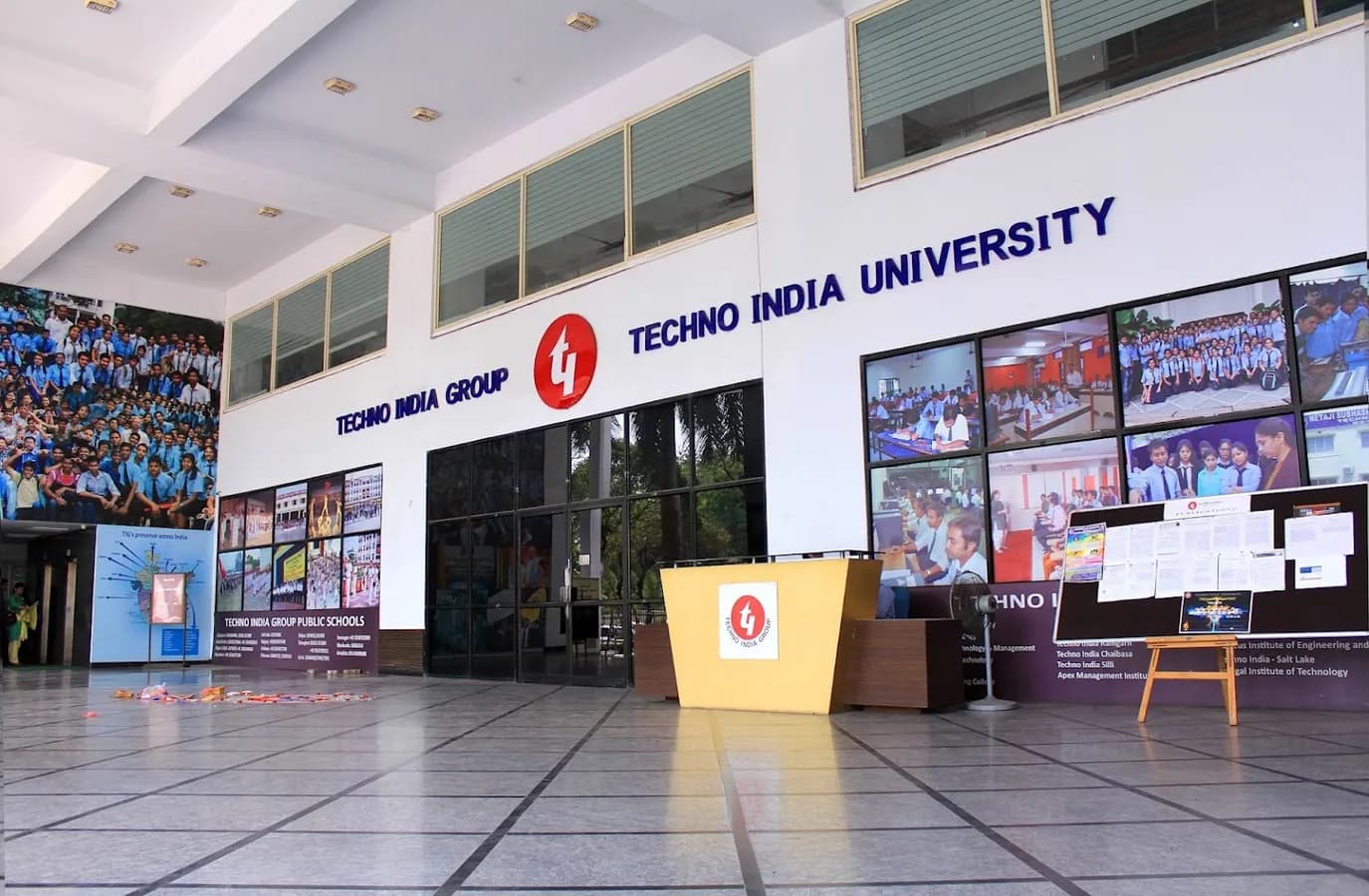

TECHNO INDIA UNIVERSITY, WEST BENGAL, founded in 2012 in Kolkata, West Bengal, is a premier academic institution dedicated to higher learning. Affiliated with TECHNO INDIA UNIVERSITY, WEST BENGAL and adhering to statutory benchmarks established by All India Council for Technical Education (AICTE), the institution delivers specialized academic curricula centered on engineering innovation, applied science, computational systems, and advanced technical research. Students benefit from contemporary infrastructure featuring state-of-the-art computational centers, robotics and IoT laboratories, and core engineering workshops, designed to support hands-on learning and comprehensive intellectual growth. Graduates of TECHNO INDIA UNIVERSITY, WEST BENGAL emerge as competent, socially conscious professionals poised to assume impactful roles in diverse professional domains.
Total Fees
₹1.4L - ₹7.9L
Total Courses
19
Get More Info About Mastering WBJEE Mathematics
Recommended Reading
JEE Main 2027 Registration: Your Definitive Guide to Application Deadlines & Process
Navigate the JEE Main 2027 registration process with confidence. This comprehensive guide covers crucial deadlines, eligibility, step-by-step application, and essential tips for aspiring engineers.
MHT CET: Your Definitive Guide to Maharashtra Engineering Admissions
Navigate the MHT CET exam with confidence. This comprehensive guide from MatchToCollege covers eligibility, exam pattern, top colleges, and expert preparation strategies for aspiring engineers in Maharashtra.
JEE Main Without Calculator: Your Ultimate Guide to Mastering Calculations & Securing Top Ranks
Navigating JEE Main without a calculator demands sharp mental acuity and strategic preparation. This comprehensive guide from MatchToCollege empowers you with proven techniques to ace complex calculations and secure your dream engineering seat.