

Unsecured Education Loans 2026: Low CIBIL? No Problem!
Admission & Info Tools
Need Expert Assistance?
Our counselors can help you with fee structures, eligibility guidelines, and upcoming admission cutoffs instantly.
Direct Application Tools
Unsecured Education Loans 2026
The dream of higher education – whether it's an MBA, Engineering, Medical, or studying abroad – often comes with a significant financial commitment. For many aspiring students and their families in 2026, securing an education loan is a crucial step. However, a common hurdle emerges: what if your parents don't have a high CIBIL score?
Traditional lenders often weigh a co-applicant's (usually parents') CIBIL score heavily, especially for unsecured education loans. A low or non-existent credit history can feel like an insurmountable barrier, leaving families stressed and students doubting their academic futures. This challenge is particularly acute when seeking an unsecured education loan, where the absence of collateral makes creditworthiness paramount.
But here's the reassuring news: a low parental CIBIL score does NOT automatically shut the door on your higher education aspirations. The financial landscape for student loans is evolving, with various lenders and innovative schemes emerging to support meritorious students. In 2026, there are distinct pathways and strategies you can explore to secure the funding you need, even without a stellar parental credit history.
At MatchToCollege, our AI-powered platform understands these complexities. We're dedicated to guiding you through the intricate world of higher education finance, helping you identify opportunities, understand eligibility criteria, and connect with lenders who look beyond just CIBIL scores. This comprehensive guide will demystify the process, revealing how you can obtain an unsecured education loan for 2026 admissions, transforming your academic dreams into reality, regardless of your parents' CIBIL.
Understanding CIBIL and Its Impact on Education Loans
CIBIL, or Credit Information Bureau (India) Limited, provides a comprehensive credit score and report that reflects an individual's creditworthiness. For lenders, a high CIBIL score (typically above 750) signifies responsible financial behavior, making loan approval easier and interest rates more favorable. When applying for an education loan, particularly an unsecured one that requires no collateral, banks and NBFCs often require a co-applicant (usually a parent or guardian) with a strong CIBIL score to mitigate risk.
If your parents have a low CIBIL score or no credit history at all, it signals a higher perceived risk to traditional lenders. This can lead to loan rejections, demands for collateral (which you might not have), or less attractive loan terms. While this hurdle is significant, it's crucial to understand that it’s not an absolute roadblock. Many aspiring students pursuing higher education, both domestically and internationally, face this exact challenge. The key is to be aware of how lenders assess credit and then explore alternative avenues that prioritize other factors over a parental CIBIL score.
Pathways to Unsecured Education Loans Beyond High CIBIL Scores
Navigating the world of education loans when parental CIBIL is low requires a strategic approach. Fortunately, several innovative options and lender types cater to this specific need:
1. Future Income Potential (FIP) Based Loans
Many modern lenders, especially Non-Banking Financial Companies (NBFCs) and specialized education loan providers, are shifting their focus from past credit history to the student's future earning potential. If you've secured admission to a high-ranking college or a program with excellent career prospects (e.g., top-tier Engineering, Medical, MBA programs, or demanding STEM courses abroad), lenders might approve an unsecured loan based on your projected post-graduation salary. This is a game-changer for students attending prestigious institutions, as the institution itself serves as a proxy for employability and repayment capacity.
2. Leveraging a Strong Co-Applicant (Beyond Parents)
If your parents' CIBIL is a concern, consider involving another close relative with a strong credit history. An uncle, aunt, elder sibling, or even a grandparent with a good CIBIL score and stable income can act as a co-applicant or guarantor. Their financial standing can significantly bolster your loan application, satisfying the lender's creditworthiness requirements for an unsecured loan. Ensure this individual understands their responsibilities as a co-applicant.
3. Exploring NBFCs and Private Lenders
Unlike traditional public sector banks that often adhere to strict CIBIL guidelines, NBFCs and private education loan providers tend to be more flexible. They often have customized products designed for specific scenarios, including those without high parental CIBIL scores. These lenders might have different assessment models, focusing more on the student's academic record, the reputation of the chosen university/course, and the projected return on investment of the education. Researching these specialized lenders is crucial.
4. Merit-Based & Study Abroad Specific Loans
Some financial institutions offer merit-based loans where exceptional academic performance can override CIBIL concerns. Similarly, many loans designed specifically for study abroad programs have unique eligibility criteria that account for the higher earning potential associated with international degrees. These often include provisions for unsecured loans based on the country, university ranking, and chosen course rather than just parental credit score.
Strengthening Your Loan Application & MatchToCollege's Role
Even with alternative pathways, a strong loan application is vital. Focus on presenting a compelling case to lenders:
- Academic Excellence: Highlight your strong academic record, entrance exam scores, and any scholarships or awards. This demonstrates your commitment and potential for success.
- Course & College Choice: Opting for high-demand courses at reputable institutions automatically increases your perceived employability, making lenders more confident in your repayment ability.
- Detailed Financial Plan: Provide a clear breakdown of your education costs and how you plan to manage repayments. This shows responsibility and foresight.
- Showcase Employability: If you have relevant internships, projects, or work experience, include them to demonstrate practical skills and future career readiness.
This process can be overwhelming, but you don't have to navigate it alone. MatchToCollege offers personalized guidance, leveraging AI to match you with education loan options that fit your unique profile, including those for students whose parents have a low CIBIL score. We help you compare different lenders, understand their nuanced eligibility criteria for 2026 admissions, and optimize your application to maximize your chances of securing an unsecured education loan. Let us help you unlock your higher education dreams.
Share this Article
FAQFrequently Asked Questions
Q: Can I get an education loan if my parents have no CIBIL score or a very low one?
Yes, it is possible! While a low or non-existent CIBIL score for parents can be a challenge with traditional banks, many NBFCs and specialized education loan providers offer unsecured loans based on the student's future income potential (FIP), the reputation of the chosen course/college, or through a strong co-applicant other than your parents. MatchToCollege can help you explore these specific options.
Q: What role does a co-applicant play if my parents have low CIBIL, and who can be one?
A co-applicant with a good CIBIL score and stable income significantly strengthens an unsecured education loan application, effectively mitigating the risk posed by low parental CIBIL. This individual takes joint responsibility for the loan. Beyond parents, an eligible co-applicant can be a close relative like an uncle, aunt, elder sibling, or grandparent who meets the lender's creditworthiness criteria. They become equally liable for repayment if the primary borrower defaults.
Get More Info About Unsecured Education Loans 2026
Recommended Reading

Best Online MBA Specializations for High-Paying Careers 2026
Discover the most lucrative online MBA specializations for 2026-27. Compare ROI, career growth, and use our AI tools to find your perfect management path.

Top Career Opportunities After an Online MBA in 2026-27
Discover high-paying career paths and roles after an online MBA in 2026-27. Explore salary trends, ROI, and tools to navigate your future professional success.
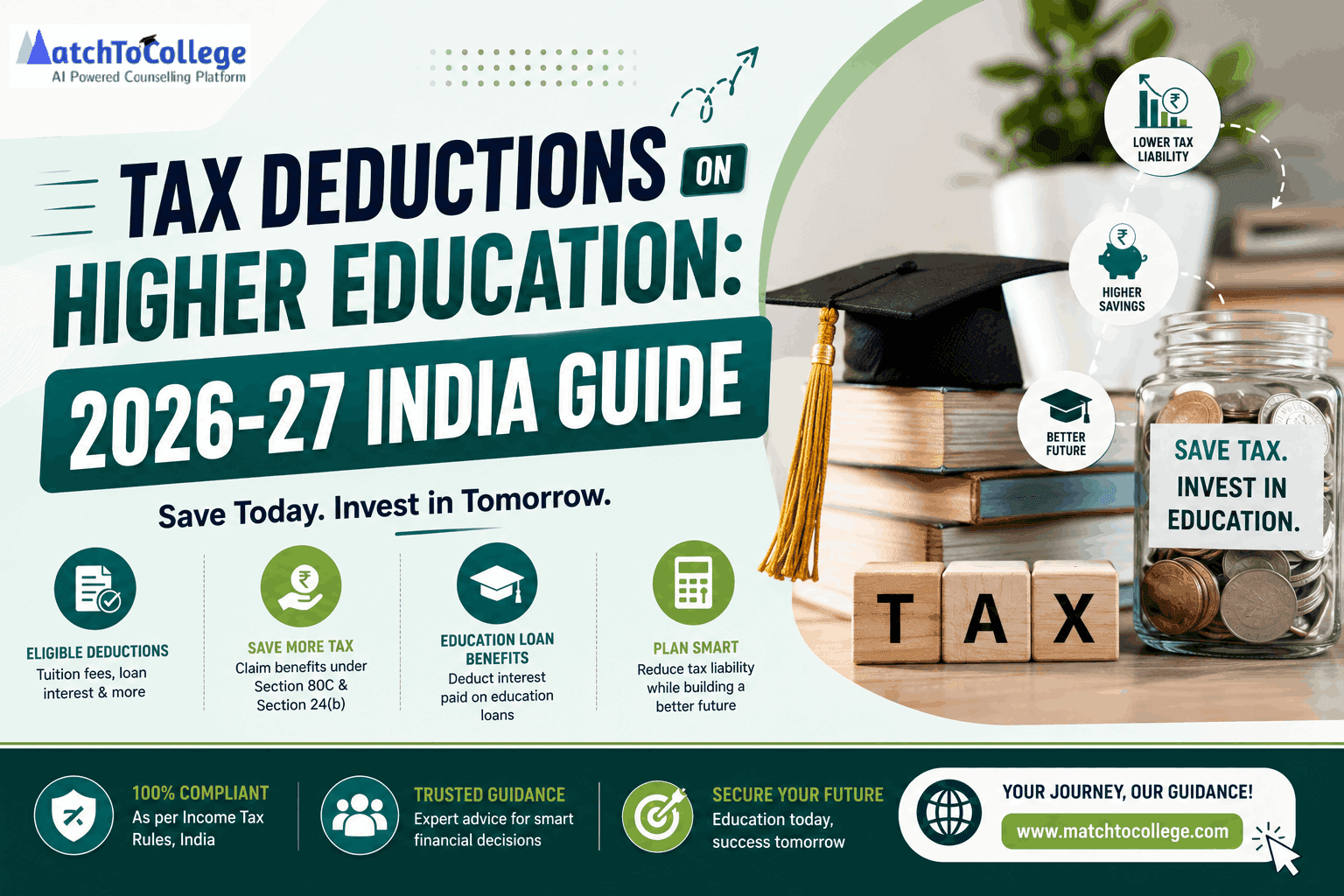
Tax Deductions on Higher Education: 2026-27 India Guide
Maximize your savings with our guide on tax deductions for higher education fees in India for FY 2026-27. Learn about Section 80C, 80E, and upskilling benefits.