

UGC-Entitled vs. Distance Learning: A 2026 Guide
Admission & Info Tools
Need Expert Assistance?
Our counselors can help you with fee structures, eligibility guidelines, and upcoming admission cutoffs instantly.
Direct Application Tools

Understanding online vs traditional learning
The landscape of higher education is undergoing a seismic shift, driven by technological advancements and a global demand for flexible, accessible learning. For students and parents navigating this evolving world, understanding the nuances of various online learning formats is paramount. Two terms that often cause confusion are "UGC-Entitled Online Programs" and "Traditional Distance Learning." While both offer education remotely, their underlying structure, regulatory framework, and recognition can differ significantly, impacting your academic journey and future career prospects.
As we approach the 2026 academic year, the distinction between these modes becomes even more critical. With a projected surge in online enrollments, particularly in professional and skill-based courses, institutions are adapting, and regulatory bodies are refining their guidelines. The University Grants Commission (UGC) in India, for example, has played a pivotal role in standardizing and legitimizing online degrees, bringing a new level of credibility and acceptance to digital learning.
This comprehensive guide by MatchToCollege aims to cut through the jargon, providing a clear, authoritative comparison. We'll delve into the real meaning behind UGC-Entitled programs, contrast them with the historical model of traditional distance learning, and highlight what these differences mean for your academic credentials, employability, and overall learning experience. Whether you're considering an MBA, an engineering specialization, a medical-related program, or planning to study abroad, an informed decision about your online degree choice for 2026 is crucial. Let MatchToCollege empower you with the knowledge to select the best path for your future.
Understanding Traditional Distance Learning: A Legacy of Flexibility
Traditional distance learning has been a cornerstone of accessible education for decades, predating the internet era. Historically, it involved self-study through mailed course materials, radio broadcasts, or television lessons. While it has evolved to incorporate digital resources like email and online forums, its core philosophy often remains focused on asynchronous, largely self-directed learning with minimal real-time interaction.
These programs were primarily offered by dedicated Open Universities or specific distance education directorates within conventional universities. The accreditation for such programs often resided with these specialized bodies or specific regulatory frameworks for distance education, which sometimes operated separately from the mainstream higher education accreditation standards. While providing immense flexibility and opportunities for those who couldn't attend on-campus classes, traditional distance learning occasionally faced challenges regarding perceived academic rigor and industry acceptance. For the 2026 academic cycle, while still relevant for specific niches, its growth trajectory is notably flatter compared to its more regulated online counterparts.
The Rise of UGC-Entitled Online Programs: A New Standard for 2026
UGC-Entitled Online Programs represent a significant leap forward in online education, particularly in countries like India where the University Grants Commission (UGC) sets stringent standards. These programs are explicitly recognized and regulated by the UGC, ensuring their academic equivalence to traditional on-campus degrees. This entitlement means the curriculum, faculty qualifications, assessment methods, and infrastructure for online delivery must meet the same high benchmarks as their conventional counterparts.
Key features include a blend of synchronous and asynchronous learning, interactive virtual classrooms, digital libraries, online proctored examinations, and robust student support services. The emphasis is on creating an engaging, rigorous, and quality-assured learning environment that mirrors the on-campus experience as closely as possible. By 2026, projections indicate that enrollment in UGC-Entitled online programs could see an annual growth of over 30% in key regions, driven by their enhanced credibility and industry acceptance. These programs are not just remote learning; they are fully recognized, high-quality digital education experiences.
Key Differences: A Comparative Overview for Your 2026 Decision
To make an informed choice for your 2026 higher education journey, understanding the fundamental differences between these two modes is crucial.
Here's a comparative table highlighting their distinct characteristics:
| Feature | UGC-Entitled Online Program | Traditional Distance Learning |
| Regulatory Body | UGC (India), CHEA/DOE equivalent (USA) | Often specific Distance Ed Boards, sometimes less stringent |
| Accreditation | Equivalent to Regular On-Campus Degree | Separate Distance Learning Accreditation, potentially lower perceived value |
| Pedagogy | Blended, Interactive, Tech-driven (live classes, virtual labs) | Primarily Self-Study, Asynchronous (mailed materials, limited interaction) |
| Curriculum | Updated regularly, Industry-relevant | Can be slower to update, potentially less current |
| Interaction Level | High (live sessions, discussion forums, direct faculty access) | Low (email support, limited peer interaction) |
| Recognition (2026) | High, increasing parity with regular degrees for jobs & further study | Varies, sometimes lower perceived value by employers/institutions |
| Exams | Proctored (online or physical centers), standardized | Often physical centers, sometimes less stringent or varied |
| Student Support | Comprehensive (academic, technical, career counseling) | Limited, primarily administrative support |
| Enrollment Trend (2026) | ~30% Annual Growth Projection (India & similar markets) | Stagnant or marginal growth, niche focus |
This table clearly illustrates that while both offer flexibility, UGC-Entitled programs provide a more robust, recognized, and interactive educational experience aligned with contemporary academic standards.
Why UGC Entitlement Matters for Your Career in 2026 and Beyond
Choosing a UGC-Entitled online program can significantly impact your career trajectory and academic future. The most vital benefit is undoubtedly credibility. A degree from a UGC-Entitled program carries the same weight and recognition as a traditional on-campus degree from the same university. This is paramount for:
- Employability: Employers, particularly in competitive sectors like technology, finance, and healthcare, are increasingly recognizing and valuing these degrees. The assurance of quality and regulatory oversight means they trust the graduate's competencies. By 2026, industry reports suggest a growing preference for graduates with digitally adaptable skills, which UGC-Entitled programs foster.
- Further Education: If you plan to pursue a Master's, PhD, or even specific certifications after your bachelor's, a UGC-Entitled degree ensures seamless eligibility for these advanced programs, both nationally and internationally.
- Global Recognition: While specific country regulations vary, the adherence to established academic standards in UGC-Entitled programs often facilitates better recognition by international universities and employers, unlike some traditional distance learning degrees that might require additional credential evaluations.
In essence, opting for a UGC-Entitled online program is an investment in a future-proof education, offering both the flexibility of online learning and the unwavering assurance of academic integrity and career readiness.
Choosing Your Path: How MatchToCollege Guides Your Decision
Making the right choice between UGC-Entitled online programs and traditional distance learning can feel overwhelming, especially with your sights set on the 2026 academic year. Your decision should align with your learning style, career aspirations, financial considerations, and the level of recognition you seek.
Factors to ponder include:
- Learning Style: Do you thrive with interactive, structured online classes, or prefer complete self-pacing?
- Career Goals: How important is industry-wide recognition and seamless progression into higher roles or further studies?
- Program Recognition: Is a degree equivalent to an on-campus one critical for your professional path?
- Budget & Flexibility: While both offer flexibility, the cost structures and support services can differ.
This is where MatchToCollege becomes your invaluable partner. Our AI-powered higher education counseling platform is designed to cut through the complexity. We help you:
- Personalized Recommendations: Based on your profile, career ambitions, and preferred learning style, we match you with accredited UGC-Entitled online programs.
- Compare & Contrast: Get detailed insights into program structures, faculty, career outcomes, and recognition of various online degrees.
- Eligibility & Application Guidance: Navigate admission requirements and application processes for your chosen programs for the 2026 cycle.
- Future Outlook: Gain foresight into how specific online degrees are perceived in the job market, leveraging our extensive data on employment trends and industry demands.
With MatchToCollege, you're not just choosing an online program; you're crafting a recognized, rewarding educational future. Ensure your online degree for 2026 stands for quality and opens doors to unparalleled opportunities.
Share this Article
FAQFrequently Asked Questions
Q: Are UGC-Entitled online degrees equivalent to regular on-campus degrees?
Yes, UGC-Entitled online degrees are recognized as equivalent to regular on-campus degrees for all academic and employment purposes in countries where UGC regulations apply. This ensures parity in value and recognition.
Q: How can I verify if an online program is UGC-Entitled?
You can verify the entitlement of an online program by checking the official website of the University Grants Commission (UGC) or the relevant regulatory body in your country. Universities offering such programs will also explicitly state their UGC recognition on their official portals.
Q: What are the career prospects after completing a UGC-Entitled online degree by 2026?
Career prospects for graduates with UGC-Entitled online degrees are expected to be very strong by 2026. Employers are increasingly valuing these programs due to their stringent quality controls and the emphasis on relevant, updated curricula, leading to growing industry acceptance and demand for skilled online graduates.
Q: Can I pursue higher education after completing a UGC-Entitled online degree?
Absolutely. A UGC-Entitled online degree is fully recognized for pursuing higher education, including Master's, PhD, and other advanced programs, both domestically and internationally. Its equivalence to a regular degree ensures seamless academic progression.
Q: How do UGC-Entitled programs differ in terms of student support compared to traditional distance learning?
UGC-Entitled programs typically offer more comprehensive student support, including academic advising, technical assistance, career counseling, and interactive faculty engagement through virtual platforms. Traditional distance learning often provides more limited support, primarily administrative, with less emphasis on interactive learning environments.
Get More Info About UGC-Entitled vs. Distance Learning
Recommended Reading
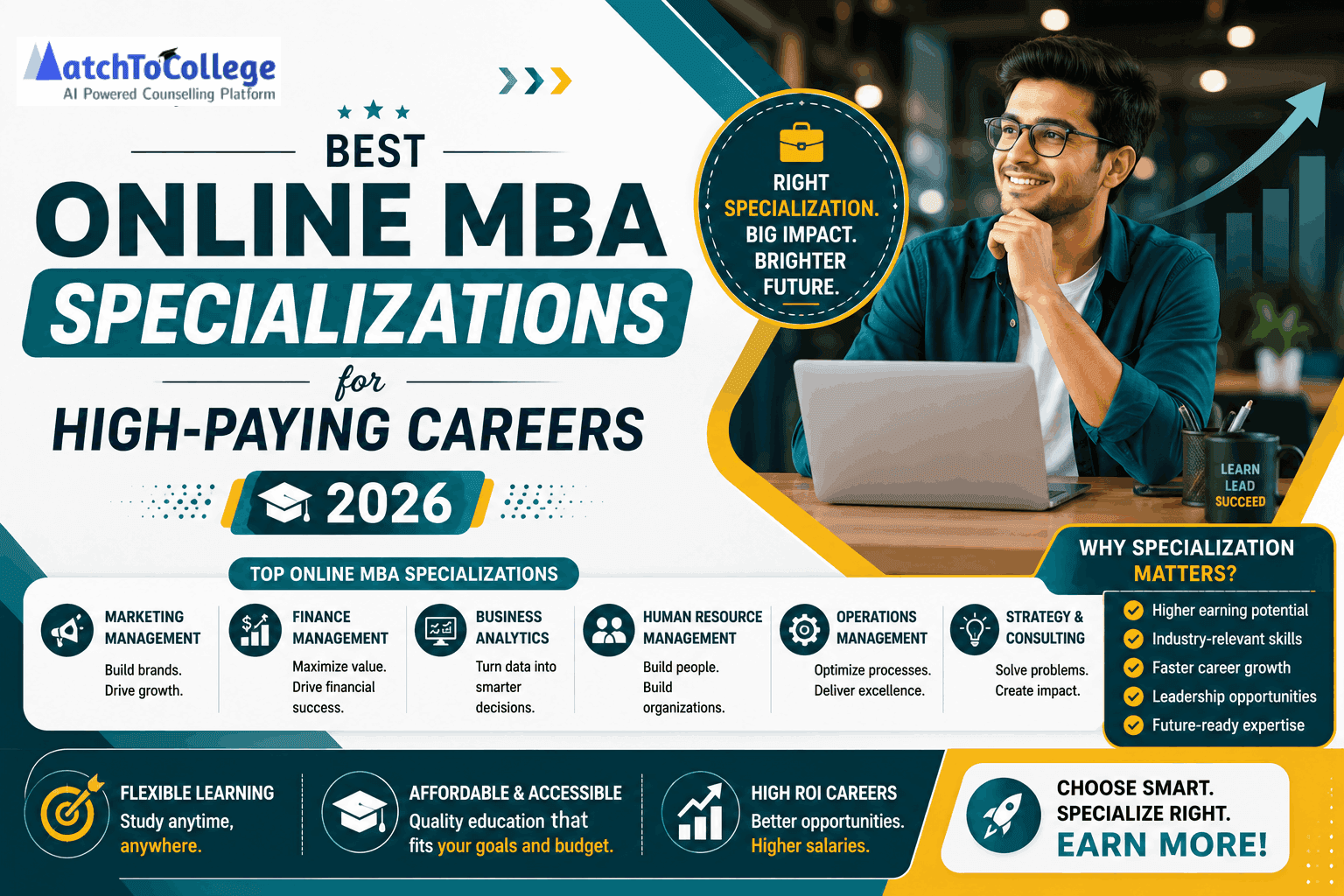
Best Online MBA Specializations for High-Paying Careers 2026
Discover the most lucrative online MBA specializations for 2026-27. Compare ROI, career growth, and use our AI tools to find your perfect management path.
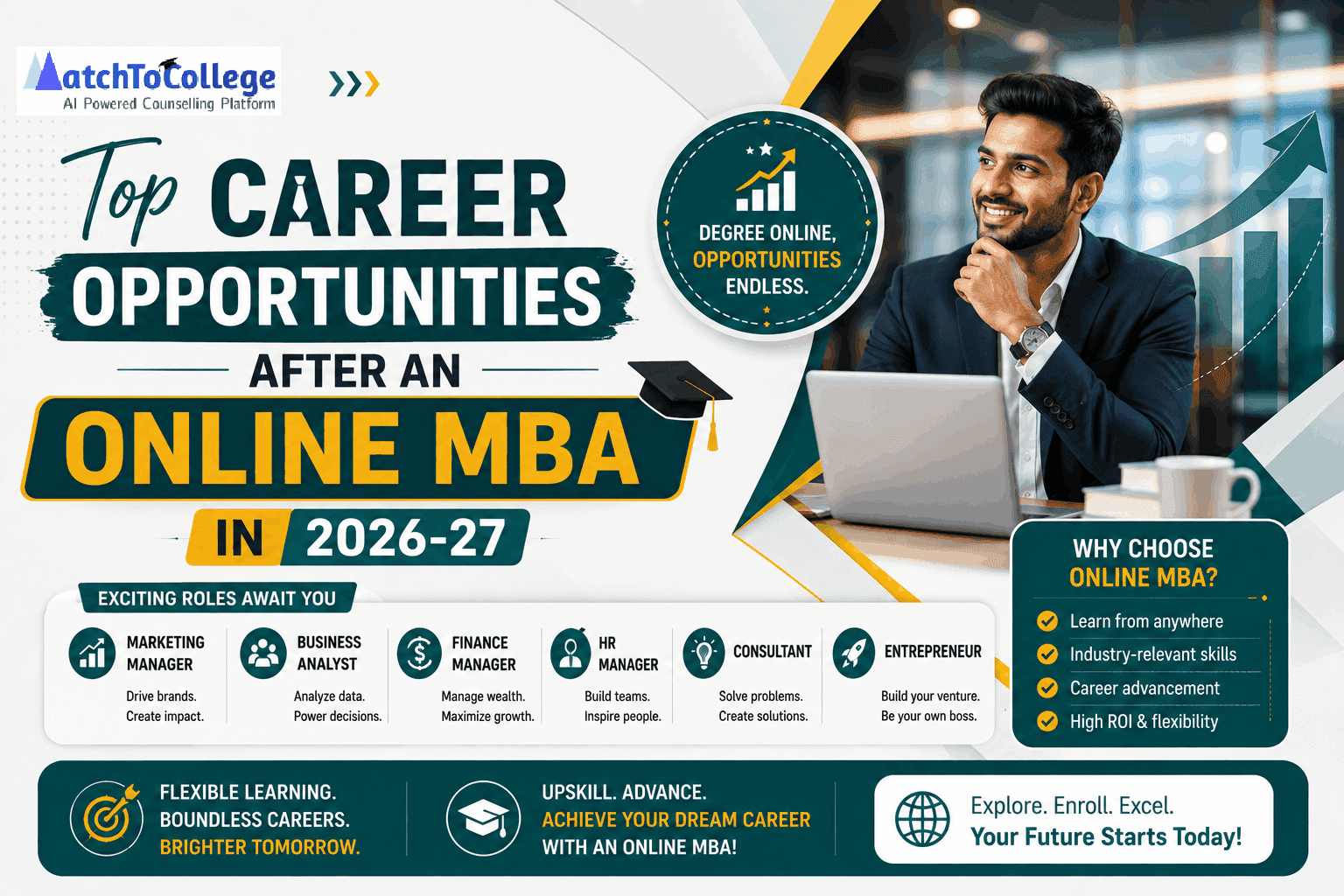
Top Career Opportunities After an Online MBA in 2026-27
Discover high-paying career paths and roles after an online MBA in 2026-27. Explore salary trends, ROI, and tools to navigate your future professional success.
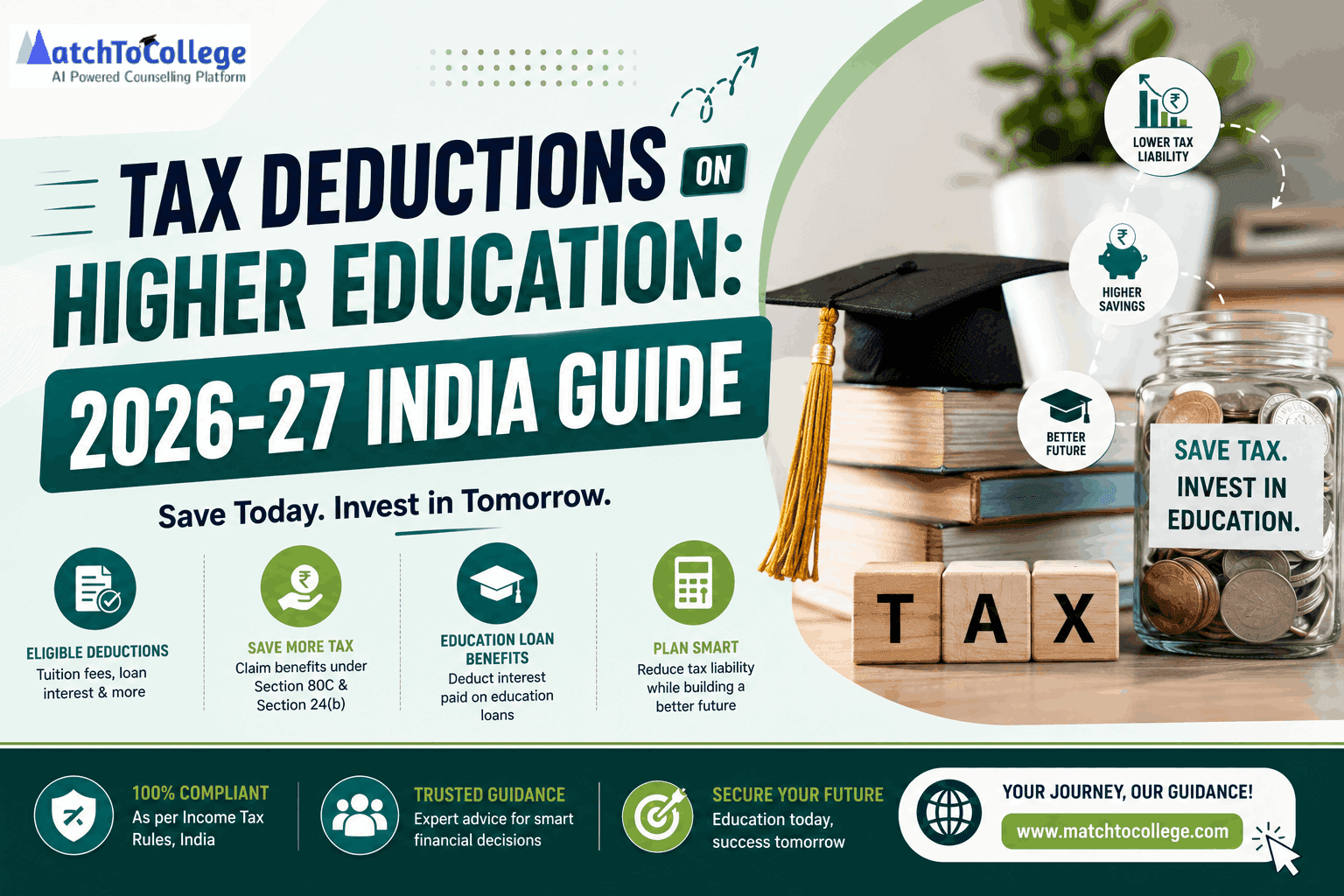
Tax Deductions on Higher Education: 2026-27 India Guide
Maximize your savings with our guide on tax deductions for higher education fees in India for FY 2026-27. Learn about Section 80C, 80E, and upskilling benefits.