

Top Online MBA Specializations 2026: Highest Demand?
Admission & Info Tools
Need Expert Assistance?
Our counselors can help you with fee structures, eligibility guidelines, and upcoming admission cutoffs instantly.
Direct Application Tools
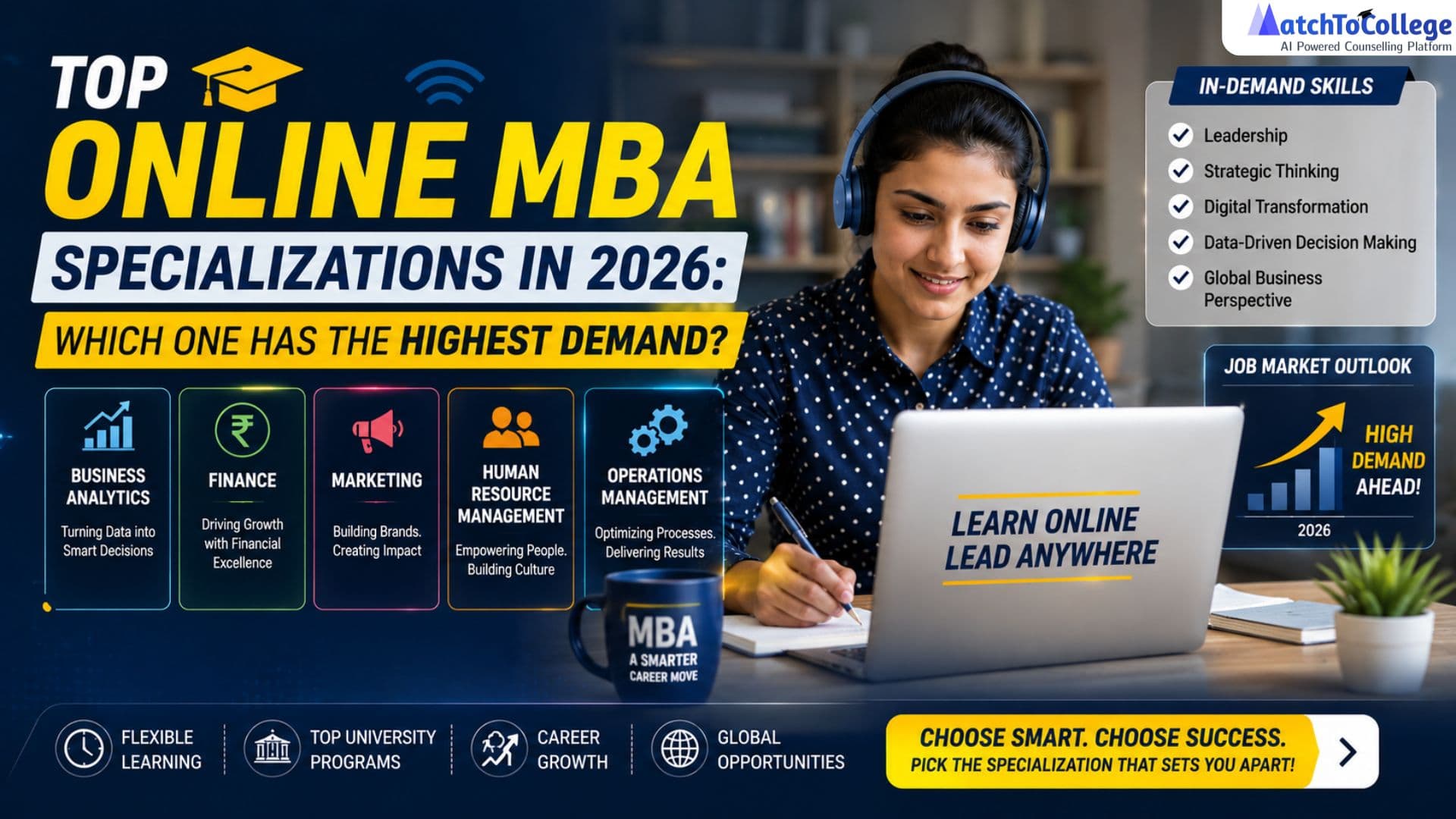
Choose the MBA That Leads
The business world is evolving rapidly due to digital transformation, artificial intelligence, globalization, sustainability initiatives, and changing consumer expectations. As a result, MBA specializations that combine business leadership with emerging technologies and strategic decision-making are expected to be in the highest demand through 2026 and beyond.
For professionals considering an online MBA, choosing the right specialization can significantly influence career growth, earning potential, and long-term relevance in the job market.
Why Choosing the Right MBA Specialization Matters
| Factor | Impact on Your Career |
| Industry Demand | Increases employability and job opportunities |
| Future Relevance | Keeps skills aligned with market trends |
| Salary Potential | Influences long-term earning capacity |
| Leadership Opportunities | Opens pathways to management and executive roles |
| Career Flexibility | Allows movement across industries and functions |
Top MBA Specializations Expected to Be in High Demand by 2026
1. Business Analytics
| Aspect | Details |
| Focus Area | Data analysis, business intelligence, predictive modeling |
| Key Skills | Data interpretation, analytics tools, decision-making |
| Career Roles | Business Analyst, Analytics Manager, Strategy Consultant |
| Demand Drivers | Data-driven decision-making across industries |
Why It Matters
Organizations increasingly rely on data to improve performance, optimize operations, and gain competitive advantages. Business analytics professionals help transform data into actionable business strategies.
2. Artificial Intelligence & Digital Transformation
| Aspect | Details |
| Focus Area | AI strategy, automation, digital innovation |
| Key Skills | AI applications, digital leadership, technology management |
| Career Roles | Digital Transformation Manager, AI Strategy Consultant, Innovation Leader |
| Demand Drivers | Rapid adoption of AI and automation technologies |
Why It Matters
Companies need leaders who can bridge the gap between technology and business strategy, making this one of the fastest-growing MBA specializations.
3. Finance and FinTech
| Aspect | Details |
| Focus Area | Corporate finance, investments, financial technology |
| Key Skills | Financial analysis, risk management, digital finance |
| Career Roles | Financial Manager, Investment Analyst, FinTech Consultant |
| Demand Drivers | Growth of digital banking, payments, and financial innovation |
Why It Matters
The financial sector continues to evolve through technology, creating demand for professionals who understand both finance and digital transformation.
4. Marketing and Digital Marketing
| Aspect | Details |
| Focus Area | Brand management, digital campaigns, customer analytics |
| Key Skills | SEO, social media strategy, consumer behavior analysis |
| Career Roles | Marketing Manager, Brand Strategist, Growth Manager |
| Demand Drivers | Expansion of digital commerce and online customer engagement |
Why It Matters
Businesses increasingly compete through digital channels, making data-driven marketing expertise highly valuable.
5. Supply Chain and Operations Management
| Aspect | Details |
| Focus Area | Logistics, procurement, operations optimization |
| Key Skills | Process improvement, inventory management, supply chain analytics |
| Career Roles | Operations Manager, Supply Chain Director, Logistics Consultant |
| Demand Drivers | Global trade, e-commerce growth, supply chain resilience |
Why It Matters
Recent global disruptions have highlighted the strategic importance of efficient and resilient supply chains.
6. Human Resource Management (HRM)
| Aspect | Details |
| Focus Area | Talent management, workforce planning, organizational development |
| Key Skills | Leadership development, employee engagement, HR analytics |
| Career Roles | HR Manager, Talent Acquisition Leader, People Operations Director |
| Demand Drivers | Changing workforce expectations and remote work trends |
Why It Matters
Organizations recognize that attracting and retaining talent is a key competitive advantage.
7. Healthcare Management
| Aspect | Details |
| Focus Area | Healthcare operations, policy, administration |
| Key Skills | Healthcare systems management, strategic planning |
| Career Roles | Healthcare Administrator, Hospital Manager, Health Services Director |
| Demand Drivers | Aging populations and expanding healthcare services |
Why It Matters
The healthcare sector continues to grow globally, creating demand for skilled management professionals.
8. Sustainability and ESG Management
| Aspect | Details |
| Focus Area | Environmental, Social, and Governance (ESG) strategy |
| Key Skills | Sustainable business practices, ESG reporting, risk assessment |
| Career Roles | Sustainability Manager, ESG Consultant, Corporate Responsibility Director |
| Demand Drivers | Regulatory requirements and corporate sustainability goals |
Why It Matters
Investors, customers, and governments increasingly expect businesses to prioritize sustainability.
Comparison of High-Demand MBA Specializations
| Specialization | Job Demand | Salary Potential | Future Growth |
| Business Analytics | Very High | High | Excellent |
| AI & Digital Transformation | Very High | Very High | Excellent |
| Finance & FinTech | High | Very High | Excellent |
| Marketing & Digital Marketing | High | High | Strong |
| Supply Chain Management | High | High | Strong |
| Human Resource Management | Moderate to High | High | Strong |
| Healthcare Management | High | High | Excellent |
| Sustainability & ESG | Growing Rapidly | High | Excellent |
Benefits of Pursuing an Online MBA
| Benefit | Description |
| Flexibility | Study while working full-time |
| Global Access | Learn from institutions worldwide |
| Cost Efficiency | Often more affordable than traditional programs |
| Career Continuity | Continue earning while studying |
| Networking Opportunities | Connect with professionals across industries and regions |
How to Choose the Right MBA Specialization
Consider the following questions before deciding:
| Question | Purpose |
| What industries interest me most? | Aligns specialization with career goals |
| What are my strengths? | Helps identify suitable functional areas |
| Which sectors are growing rapidly? | Maximizes future opportunities |
| What salary and lifestyle goals do I have? | Supports long-term planning |
| Do I prefer people management, technology, finance, or strategy? | Guides specialization selection |
How MatchToCollege Can Help
MatchToCollege uses AI-driven insights to help students identify the MBA specialization best suited to their profile.
| Feature | Benefit |
| Career Assessment | Evaluates interests, strengths, and goals |
| Specialization Matching | Recommends suitable MBA concentrations |
| Market Trend Analysis | Identifies high-growth industries and roles |
| College Recommendations | Matches students with relevant online MBA programs |
| Personalized Guidance | Supports informed career planning |
The most valuable MBA specializations in 2026 will be those that combine business leadership with technology, analytics, sustainability, and innovation. While traditional fields such as Finance, Marketing, and Human Resources remain strong, emerging areas like Business Analytics, Artificial Intelligence, FinTech, and ESG Management are expected to drive the next generation of business leadership.
Choosing a specialization should not be based solely on current popularity. Instead, it should align with your interests, strengths, career aspirations, and the future direction of the industries you want to work in. A well-chosen MBA specialization can become a powerful catalyst for long-term professional success.
The Rise of Data-Driven Leadership: Data Analytics & AI Specializations
As organizations increasingly rely on data-driven decision-making, the demand for professionals who can combine business expertise with analytical and technological skills continues to grow. Online MBA specializations in Data Analytics, Business Intelligence (BI), and Artificial Intelligence (AI) Management are becoming some of the most sought-after programs for future business leaders.
These specializations help professionals understand how to transform raw data into actionable insights, enabling organizations to improve performance, reduce risks, identify opportunities, and gain a competitive advantage.
Why This Specialization Is Growing Rapidly
| Driver | Impact on Business |
| Big Data Growth | Organizations generate massive volumes of data daily |
| Artificial Intelligence Adoption | Businesses increasingly use AI for automation and decision-making |
| Digital Transformation | Companies require data-driven strategies to remain competitive |
| Customer Analytics | Businesses use data to understand and predict customer behavior |
| Operational Efficiency | Analytics helps optimize processes and reduce costs |
What Students Learn
| Learning Area | Key Topics Covered |
| Data Analytics | Data interpretation, visualization, statistical analysis |
| Business Intelligence | Reporting systems, dashboards, performance measurement |
| Artificial Intelligence | AI applications, machine learning fundamentals, automation strategies |
| Decision Science | Data-driven business decision-making |
| Predictive Analytics | Forecasting trends and future outcomes |
| Strategic Management | Applying analytics to business growth and innovation |
Skills Developed Through This MBA Specialization
| Technical Skills | Business Skills |
| Data Analysis | Strategic Thinking |
| Business Intelligence Tools | Leadership |
| Data Visualization | Decision-Making |
| Predictive Modeling | Problem-Solving |
| AI and Automation Concepts | Change Management |
| Performance Analytics | Communication and Stakeholder Management |
Career Opportunities After Graduation
| Role | Primary Responsibilities |
| Data Strategist | Develop data-driven business strategies |
| Business Intelligence Manager | Manage reporting systems and business insights |
| Analytics Consultant | Help organizations solve business problems using data |
| AI Project Manager | Lead AI implementation and digital transformation initiatives |
| Data Analytics Manager | Oversee analytics teams and projects |
| Digital Transformation Manager | Drive technology adoption and innovation |
| Strategy Consultant | Use data insights to improve business performance |
Industries Hiring These Professionals
| Industry | Applications |
| Finance | Risk analysis, fraud detection, investment analytics |
| Healthcare | Patient data analysis, operational optimization |
| Retail & E-commerce | Customer behavior analysis, demand forecasting |
| Manufacturing | Process optimization, predictive maintenance |
| Technology | AI development, product analytics |
| Telecommunications | Network optimization and customer insights |
| Consulting | Data-driven business strategy and transformation |
Why Employers Value This Specialization
| Benefit to Organizations | Business Impact |
| Better Decision-Making | More accurate and informed strategic choices |
| Improved Efficiency | Reduced costs and optimized operations |
| Competitive Advantage | Faster response to market changes |
| Enhanced Customer Experience | Personalized products and services |
| Innovation Support | Identification of new growth opportunities |
Job Market Outlook for 2026
| Factor | Outlook |
| Demand for Analytics Professionals | Very High |
| Demand for AI-Enabled Business Leaders | Very High |
| Cross-Industry Opportunities | Extensive |
| Leadership Potential | Strong |
| Long-Term Career Growth | Excellent |
As businesses continue investing in artificial intelligence, automation, and advanced analytics, professionals who can bridge the gap between technology and business strategy will remain highly valuable.
Who Should Choose This Specialization?
This MBA specialization is particularly suitable for individuals who:
- Enjoy working with data and solving complex problems
- Have strong analytical and logical thinking abilities
- Are interested in technology-driven business innovation
- Want to influence strategic decision-making
- Aspire to leadership roles in digital transformation and analytics
Data Analytics, Business Intelligence, and AI Management are no longer niche disciplines—they are becoming core business functions. By 2026, organizations across finance, healthcare, retail, manufacturing, technology, and consulting will increasingly depend on leaders who can transform data into strategic business value.
For students seeking a future-focused MBA specialization with strong demand, excellent career growth, and high earning potential, this field offers one of the most promising opportunities in the evolving global business landscape.
Navigating the Digital Economy: FinTech & Digital Marketing MBAs
As digital transformation reshapes the global economy, two MBA specializations are emerging as particularly valuable for future business leaders: Financial Technology (FinTech) and Digital Marketing. Both fields combine traditional business principles with modern technology, creating exciting career opportunities across industries.
For professionals seeking future-ready skills and strong career growth, these specializations offer excellent prospects through 2026 and beyond.
FinTech (Financial Technology) MBA Specialization
The financial sector is undergoing a major transformation driven by innovations such as digital payments, blockchain technology, cryptocurrency, artificial intelligence, and automated financial services. Organizations need professionals who understand both finance and technology to lead this change.
What Is FinTech?
| Area | Description |
| Digital Payments | Online payment systems and mobile transactions |
| Blockchain | Secure and transparent digital transaction technology |
| Cryptocurrency | Digital assets and decentralized financial systems |
| RegTech | Technology solutions for regulatory compliance |
| AI in Finance | Automated decision-making and risk management |
| Digital Banking | Technology-driven banking services |
Key Skills Developed
| Technical Skills | Business Skills |
| Financial Analysis | Strategic Planning |
| FinTech Ecosystems | Leadership |
| Blockchain Fundamentals | Innovation Management |
| Risk Assessment | Decision-Making |
| Digital Payment Systems | Business Development |
| Regulatory Compliance | Problem-Solving |
Career Opportunities in FinTech
| Job Role | Key Responsibilities |
| FinTech Manager | Lead technology-driven financial initiatives |
| Product Manager (FinTech) | Develop digital financial products |
| Financial Analyst | Evaluate investments and financial performance |
| Digital Banking Specialist | Manage online banking solutions |
| Blockchain Consultant | Advise organizations on blockchain adoption |
| Risk Management Professional | Assess and mitigate financial risks |
| Venture Capital Analyst | Evaluate emerging financial technology startups |
Why FinTech Is in High Demand
| Growth Driver | Impact |
| Cashless Economy | Increasing adoption of digital payments |
| Banking Innovation | Growth of digital banking platforms |
| Regulatory Changes | Demand for compliance technology solutions |
| Startup Ecosystem | Expansion of FinTech startups globally |
| Financial Inclusion | Technology enabling broader access to financial services |
Digital Marketing MBA Specialization
As businesses continue shifting toward digital channels, marketing has evolved into a highly data-driven and technology-enabled function. Companies need professionals who can attract, engage, and retain customers through digital platforms.
What Is Digital Marketing?
| Area | Description |
| Search Engine Optimization (SEO) | Improving website visibility in search engines |
| Content Marketing | Creating valuable content to attract audiences |
| Social Media Marketing | Building brand presence across social platforms |
| E-commerce Marketing | Driving online sales and customer acquisition |
| Marketing Automation | Using technology to streamline marketing efforts |
| Customer Analytics | Understanding consumer behavior through data |
Key Skills Developed
| Technical Skills | Business Skills |
| SEO & SEM | Brand Strategy |
| Marketing Analytics | Consumer Insights |
| Content Strategy | Communication |
| Social Media Management | Leadership |
| Campaign Optimization | Strategic Thinking |
| Marketing Automation Tools | Customer Relationship Management |
Career Opportunities in Digital Marketing
| Job Role | Key Responsibilities |
| Digital Marketing Manager | Develop and execute digital marketing strategies |
| Brand Manager | Build and manage brand positioning |
| Growth Marketing Manager | Drive customer acquisition and retention |
| SEO Specialist | Improve search engine rankings and visibility |
| Content Strategist | Create and manage content strategies |
| Social Media Manager | Oversee social media campaigns and engagement |
| Marketing Analytics Manager | Measure and optimize campaign performance |
Why Digital Marketing Is Growing Rapidly
| Growth Driver | Impact |
| E-commerce Expansion | Increased online purchasing behavior |
| Mobile Usage Growth | More digital interactions through smartphones |
| Data-Driven Marketing | Greater focus on measurable marketing outcomes |
| Social Media Influence | Strong impact on consumer decisions |
| Global Digitalization | Businesses prioritizing online customer engagement |
FinTech vs. Digital Marketing: Comparison
| Factor | FinTech | Digital Marketing |
| Core Focus | Finance + Technology | Marketing + Technology |
| Industry Demand | Very High | Very High |
| Technology Involvement | High | Moderate to High |
| Innovation Potential | High | High |
| Leadership Opportunities | Strong | Strong |
| Startup Opportunities | Extensive | Extensive |
| Salary Potential | High to Very High | High |
| Global Career Scope | Excellent | Excellent |
Who Should Choose These Specializations?
| Specialization | Best Suited For |
| FinTech | Students interested in finance, technology, innovation, and digital transformation |
| Digital Marketing | Students interested in branding, customer behavior, communication, and online business growth |
Future Outlook for 2026
| Specialization | Demand Outlook | Growth Potential |
| FinTech | Extremely High | Excellent |
| Digital Marketing | Extremely High | Excellent |
Both specializations are expected to remain among the fastest-growing MBA fields due to ongoing technological innovation and digital adoption across industries.
FinTech and Digital Marketing represent the intersection of business and technology—two forces driving the future global economy. While FinTech focuses on transforming financial services through innovation, Digital Marketing helps organizations build customer relationships and drive revenue in an increasingly digital world.
Students who choose either specialization can benefit from strong job demand, excellent career growth opportunities, and the ability to contribute to industries undergoing rapid transformation. The ideal choice depends on whether your interests align more closely with finance and technology or customer engagement and digital business strategy.
Future-Proofing Careers: Healthcare & Sustainable Business Management
As businesses face increasing pressure to address environmental and social challenges, Sustainable Business and ESG (Environmental, Social, and Governance) have become strategic priorities rather than optional initiatives. Organizations are actively seeking leaders who can balance profitability with sustainability, making this one of the fastest-growing MBA specializations for 2026 and beyond.
An MBA in Sustainable Business & ESG equips professionals with the knowledge and skills needed to drive responsible growth, manage sustainability risks, ensure regulatory compliance, and create long-term value for stakeholders.
Understanding ESG
| ESG Component | Focus Area |
| Environmental | Climate change, carbon reduction, renewable energy, waste management, and resource efficiency |
| Social | Employee well-being, diversity and inclusion, community engagement, and human rights |
| Governance | Ethical leadership, corporate transparency, compliance, accountability, and risk management |
Why Sustainable Business & ESG Is Growing Rapidly
| Growth Driver | Impact |
| Climate Change Concerns | Organizations are investing in sustainable practices to reduce environmental impact |
| Investor Expectations | ESG performance increasingly influences investment decisions |
| Government Regulations | Stricter sustainability and reporting requirements are being introduced worldwide |
| Consumer Preferences | Customers increasingly support socially responsible brands |
| Corporate Reputation | Strong ESG practices improve brand trust and stakeholder confidence |
What Students Learn
| Learning Area | Key Topics |
| Sustainable Business Strategy | Long-term value creation through responsible business practices |
| ESG Reporting & Compliance | Sustainability disclosures, reporting frameworks, and regulatory requirements |
| Environmental Management | Resource efficiency, emissions reduction, and environmental risk management |
| Corporate Governance | Ethical leadership, transparency, and accountability |
| Sustainable Supply Chains | Responsible sourcing, procurement, and logistics management |
| Impact Measurement | Evaluating environmental and social outcomes alongside financial performance |
Key Skills Developed
| Technical Skills | Business Skills |
| ESG Reporting | Strategic Thinking |
| Sustainability Assessment | Leadership |
| Risk Analysis | Decision-Making |
| Regulatory Compliance | Change Management |
| Environmental Impact Evaluation | Stakeholder Management |
| Sustainability Metrics | Problem-Solving |
Career Opportunities
| Job Role | Responsibilities |
| Sustainability Manager | Develop and implement sustainability initiatives across the organization |
| ESG Consultant | Advise companies on ESG strategy, reporting, and compliance |
| Corporate Responsibility Manager | Lead social and environmental impact programs |
| Sustainability Analyst | Measure and monitor ESG performance and sustainability metrics |
| ESG Risk Manager | Assess environmental, social, and governance risks |
| Sustainable Supply Chain Manager | Improve responsible sourcing and operational sustainability |
| Impact Investment Analyst | Evaluate investments based on ESG performance and sustainability criteria |
Industries Hiring ESG Professionals
| Industry | ESG Applications |
| Financial Services | Sustainable investing and ESG risk assessment |
| Manufacturing | Resource efficiency and sustainable operations |
| Energy & Utilities | Renewable energy and environmental compliance |
| Technology | Responsible innovation and governance |
| Retail & Consumer Goods | Sustainable sourcing and ethical supply chains |
| Consulting | ESG strategy, reporting, and transformation projects |
Benefits of Choosing This Specialization
| Benefit | Value |
| High Market Demand | Sustainability is becoming a core business priority |
| Cross-Industry Opportunities | Applicable across multiple sectors |
| Leadership Potential | Growing demand for ESG-focused executives |
| Global Relevance | Sustainability challenges affect organizations worldwide |
| Purpose-Driven Career | Opportunity to create positive environmental and social impact |
| Long-Term Career Security | ESG skills are expected to remain valuable for decades |
Career Outlook for 2026
| Factor | Outlook |
| Industry Demand | Very High |
| Global Relevance | Excellent |
| Leadership Opportunities | Strong |
| Salary Potential | High |
| Long-Term Growth | Excellent |
As sustainability becomes deeply integrated into corporate strategy, organizations will continue to seek professionals who can align business performance with environmental responsibility and social impact.
Who Should Choose This Specialization?
This MBA specialization is ideal for individuals who:
- Are passionate about sustainability and responsible business practices
- Want to influence long-term corporate strategy
- Enjoy solving complex environmental and social challenges
- Aspire to leadership roles focused on organizational transformation
- Seek a career that combines business success with positive societal impact
Sustainable Business & ESG is no longer a niche area—it is becoming a core component of modern business strategy. Organizations, investors, regulators, and consumers increasingly expect companies to operate responsibly while delivering sustainable growth.
An MBA in Sustainable Business & ESG prepares future leaders to meet these expectations, making it one of the most relevant and high-demand specializations for 2026 and beyond. For professionals seeking a purpose-driven career with strong growth potential, ESG offers an opportunity to lead meaningful change while driving business success.
Share this Article
FAQFrequently Asked Questions
Q: Which online MBA specialization has the highest demand for 2026?
Based on current trends and future projections, specializations in Data Analytics, AI & Machine Learning Management, FinTech, and Healthcare Management are expected to have the highest demand by 2026. These fields combine critical business acumen with cutting-edge technological and societal relevance.
Q: How do I choose the best online MBA specialization for my career goals?
Choosing the right online MBA specialization involves assessing your current skills, career aspirations, and market trends. Consider industries you're passionate about, research future job growth in those areas, and analyze how a particular specialization aligns with your long-term objectives. Tools like MatchToCollege can provide personalized guidance by matching your profile to ideal programs and specializations, helping you make an informed decision for your future success.
Get More Info About Top Online MBA Specializations 2026
Recommended Reading
Best Online MBA Specializations for High-Paying Careers 2026
Discover the most lucrative online MBA specializations for 2026-27. Compare ROI, career growth, and use our AI tools to find your perfect management path.

Top Career Opportunities After an Online MBA in 2026-27
Discover high-paying career paths and roles after an online MBA in 2026-27. Explore salary trends, ROI, and tools to navigate your future professional success.

Tax Deductions on Higher Education: 2026-27 India Guide
Maximize your savings with our guide on tax deductions for higher education fees in India for FY 2026-27. Learn about Section 80C, 80E, and upskilling benefits.