

Study Master's Abroad 2026: The Ultimate Career Guide
Admission & Info Tools
Need Expert Assistance?
Our counselors can help you with fee structures, eligibility guidelines, and upcoming admission cutoffs instantly.
Direct Application Tools
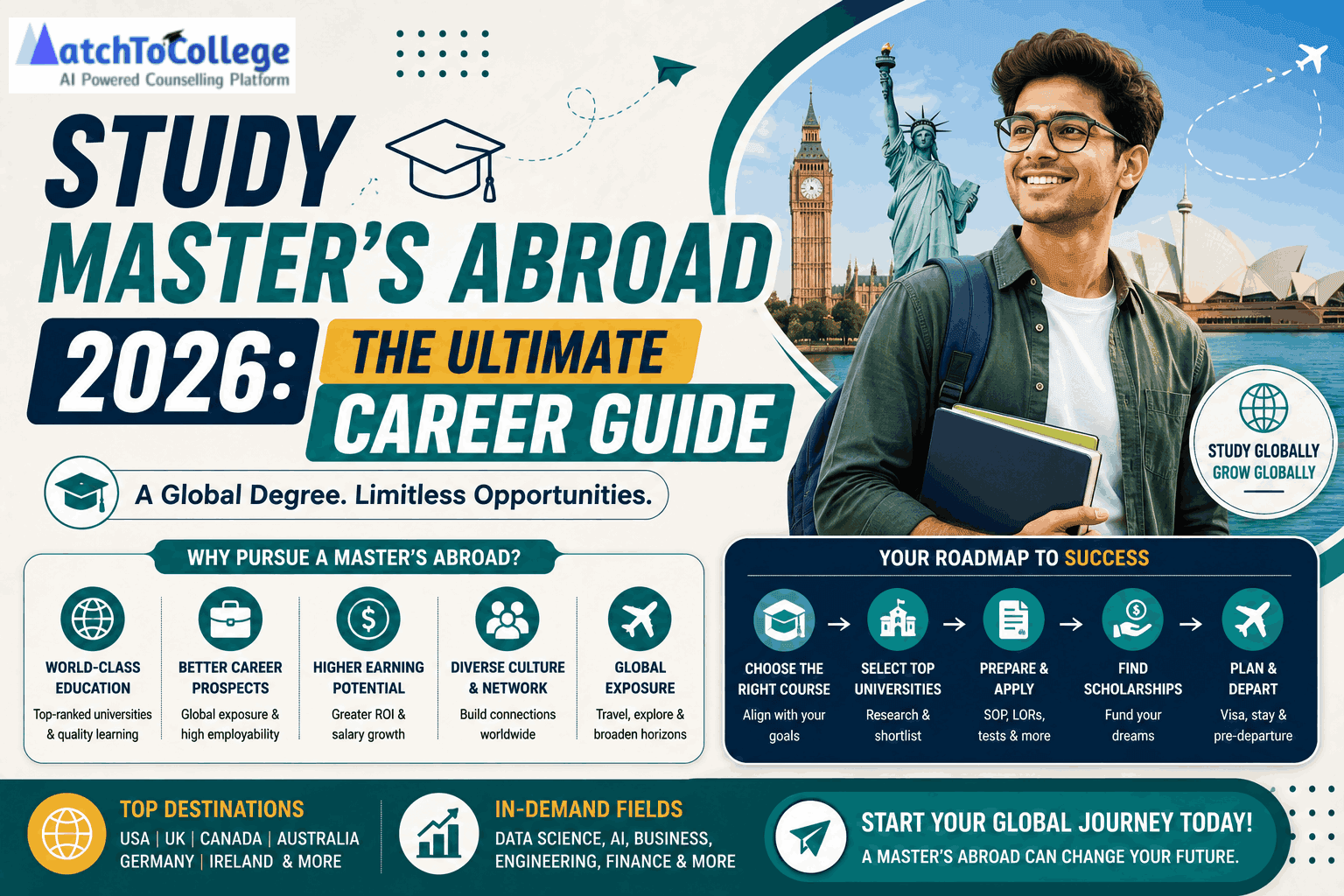
As we approach the mid-2020s, the landscape of higher education is undergoing a seismic shift. The year 2026 is projected to be a landmark year for international students, marked by the stabilization of post-pandemic economies and the full integration of artificial intelligence in the global workforce.
Deciding to pursue a Master’s degree abroad is no longer just about the prestige of a foreign parchment; it is a strategic maneuver to future-proof your career in an increasingly interconnected and tech-driven world. For those evaluating their options, our Study Abroad resources offer a comprehensive look at how global institutions are evolving to meet these new demands. The value proposition of an international PG degree has shifted from mere classroom learning to high-stakes networking, cross-cultural competency, and access to cutting-edge research facilities that are often unavailable domestically.
In 2026, the global job market will reward those who possess a 'global-first' mindset. Employers are increasingly looking for candidates who can navigate different regulatory environments, communicate across time zones, and bring a diverse perspective to problem-solving. This is precisely where an international Master’s program shines. Whether you are looking at the tech hubs of Silicon Valley, the financial districts of London, or the sustainable energy clusters in Northern Europe, the exposure gained during a two-year residency is unparalleled. However, before jumping in, students must ask themselves: Are You on the Right Path to Your Dream Career? Our AI-driven tools help you align your academic choices with the actual demands of the 2026 labor market.
Furthermore, the logistical ease of studying abroad is improving. With more streamlined visa processes in emerging destinations and a greater emphasis on post-study work permits, the barriers to entry are lowering for meritorious students. But with more options comes more confusion. Should you choose a traditional MBA or a specialized Master’s in Data Science? Should you look at the US, or is the ROI better in Germany? Navigating these questions requires data-backed insights. At MatchToCollege, we emphasize the importance of calculating the long-term value of your degree.
For those considering specialized fields, comparing the University ROI of various programs is a critical first step. By the time 2026 rolls around, the integration of 'Green Skills' and 'AI Ethics' into standard curricula will make these degrees essential for leadership roles. This introduction explores the fundamental reasons why the 2026 intake is the most strategic window for your global academic journey.
The 2026 Global Job Market: Why International Exposure is Non-Negotiable
By 2026, the distinction between local and international business will have almost entirely evaporated for mid-to-senior level roles. The rise of decentralized autonomous organizations (DAOs) and remote-first multinational corporations means that your colleagues, clients, and competitors will be global.
Pursuing a Master's abroad provides the 'soft power' skills—such as cross-cultural negotiation and global empathy—that cannot be taught through a screen. When you study in a foreign country, you aren't just learning from professors; you are learning from a cohort of peers representing dozens of nationalities. This peer-to-peer learning is what truly prepares you for the boardrooms of the future.
Moreover, specialized industries like Biotechnology, Quantum Computing, and Renewable Energy Policy are concentrated in specific global clusters. If your goal is to lead in these fields, being physically present in these ecosystems is a massive advantage. For instance, a Master's in Sustainable Finance from a university in Luxembourg or Switzerland provides direct access to the world’s leading ESG (Environmental, Social, and Governance) funds.
To understand if your current trajectory matches these high-growth areas, you should use our Career Pathway Matcher. It analyzes current market trends and matches them against your academic profile to see if a foreign Master’s is the missing link in your professional development.
The ROI of an international degree in 2026 is also tied to the concept of 'optionality.' Having a degree from a recognized global institution gives you the flexibility to work in multiple jurisdictions. Many countries, including Canada, Australia, and parts of the EU, have refined their 2026 immigration targets to favor individuals with locally obtained advanced degrees.
This 'fast-track' to residency or high-skill work visas is a benefit that domestic degrees simply cannot match. For students currently in India or other South Asian markets, bridging the gap between local results and global requirements is key. Tools like the CGPA to Percentage Calculator can help you present your credentials accurately to international admissions committees, ensuring your hard-earned grades are recognized at their full value.
Financial Planning and the True ROI of a Foreign Master's
One of the biggest deterrents for students considering an international Master's is the perceived cost. However, in 2026, the focus has shifted from the 'sticker price' of tuition to the 'Net Present Value' (NPV) of the degree. High-quality education is an investment, not an expense.
With the proliferation of specialized education loans and international scholarships, the upfront burden is manageable if planned correctly. Students must look at the lifetime earning potential rather than just the first year's salary. A Master's from a top-tier global university often leads to a salary jump of 50% to 120%, depending on the field and location.
To truly understand the impact on your finances, you need to use precise tools. Our Education Loan EMI Calculator allows you to input various interest rates and tenures to see what your post-graduation life will actually look like. It is also vital to convert these costs into your home currency to understand the real-world impact. For instance, if you are looking at a budget in USD or EUR, our Million to Rupees Calculator or the Million to Lakhs Calculator provides an instant perspective on the total investment required in Indian terms.
This level of clarity prevents 'budget creep' and ensures you are making a decision based on hard data rather than emotion.
Furthermore, many students are now opting for 'Hybrid Masters'—where the first year is online and the second is on-campus—to save costs. While this is a viable path, one must be cautious about completion rates.
You might ask, Will You Actually Finish Your Online Degree? Our predictor helps you assess your readiness for this mode of study. Ultimately, the ROI is also determined by the 'Opportunity Cost' of staying in your current role. In a fast-evolving market, a two-year hiatus to gain global expertise might be the most profitable decision of your life. Use our tool to Calculate Your University ROI Compare to see how different global programs stack up against each other in terms of break-even points and long-term wealth generation.
Navigating the 2026 Admissions Maze with AI and Precision Tools
The admissions process for 2026 will be more competitive than ever, but also more transparent, thanks to AI integration. Admissions committees are moving away from purely standardized test scores to a more holistic 'Profile Score.'
This means your internships, research papers, and even your digital footprint matter. For students from technical backgrounds, particularly those in India, the transition from local entrance exams like JEE or GATE to international applications can be confusing. While you might be focused on your GATE College Predictor results for domestic options, it’s equally important to see how those skills translate globally.
Precision is key when submitting transcripts. Different countries use different grading scales, and a mistake here can lead to an automatic rejection. We recommend using the GPA to Percentage Calculator or the SGPA to Percentage Calculator to ensure your academic records meet the specific formatting requirements of universities in the US, UK, or Australia. Additionally, for those applying to management programs, our CAT College Predictor and related tools offer a benchmark of where you stand relative to top-tier domestic talent, which is a great indicator of your competitiveness for international MBA programs.
Finally, do not overlook the importance of administrative accuracy. Even small details like age requirements or measurement conversions for housing applications can be a hurdle. Tools like our Age Calculator and Inch to Centimeter Calculator (useful for shipping luggage or checking dorm requirements) might seem basic, but they are essential for a smooth transition.
The 2026 applicant must be tech-savvy and utilize every available resource to build a foolproof application. Our Domestic Colleges listing can also serve as a 'Plan B' comparison to ensure you are choosing the best possible path for your specific profile.
In 2026, the 'best' destination is entirely subjective and should be based on your specific career goals. Are you looking for a PR-friendly route? Australia might be best. Looking for the highest starting salaries in tech? The US is still king. Looking for a high quality of life and social security? The Nordic countries are winning. To make this choice, you need to look at more than just rankings.
You need to look at industry clusters and local economic forecasts. Our Online Courses section also provides bridge programs that can help you gain the necessary prerequisites for these diverse global destinations, making 2026 the year you finally make the leap.
Choosing the Right Destination: Beyond the Traditional Big Three
While the US, UK, and Canada remain popular, 2026 is seeing the rise of 'Alternative Academic Hubs.' Countries like Germany, the Netherlands, and South Korea are offering Master’s programs taught entirely in English with much lower tuition fees. These countries are also facing demographic shifts that make them hungry for international talent, leading to very favorable post-study work visa policies.
For example, Germany's focus on 'Industry 4.0' makes it an ideal destination for Engineering and Robotics students. If you've been using a JEE Main College Predictor to look for seats in India, you might be surprised to find that your scores and profile could also qualify you for prestigious Technical Universities (TU9) in Germany.
Similarly, the medical field is seeing a massive trend toward MBBS Abroad and subsequent specialized Master's (MD/MS) in Eastern Europe or Central Asia.
These programs often provide clinical exposure that is much harder to get in highly saturated domestic markets. For those who are currently preparing for medical entrance exams, using the NEET College Predictor or the NEET Rank Predictor can give you a clear picture of your domestic standing. If the competition is too high, the 2026 international intake offers a viable, high-quality alternative that ensures your career doesn't stall.
Share this Article
FAQFrequently Asked Questions
Q: Is it worth studying abroad in 2026 given the economic climate?
Yes, 2026 is projected to be a year of recovery and growth in key tech and finance sectors. A Master's degree abroad provides the specialized skills and global networking required to thrive in a post-AI economy.
Q: How can I calculate the ROI of an international Master's degree?
You should use the MatchToCollege ROI Calculator to compare tuition costs, living expenses, and expected post-graduation salaries. Don't forget to factor in the 'Optionality Value' of working in a different currency/country.
Q: What tools can help me with the application process?
Essential tools include GPA-to-Percentage converters, the Education Loan EMI calculator, and Rank Predictors (like those for NEET or JEE) to benchmark your academic standing globally.
Get More Info About Study Master's Abroad 2026

Recommended Reading
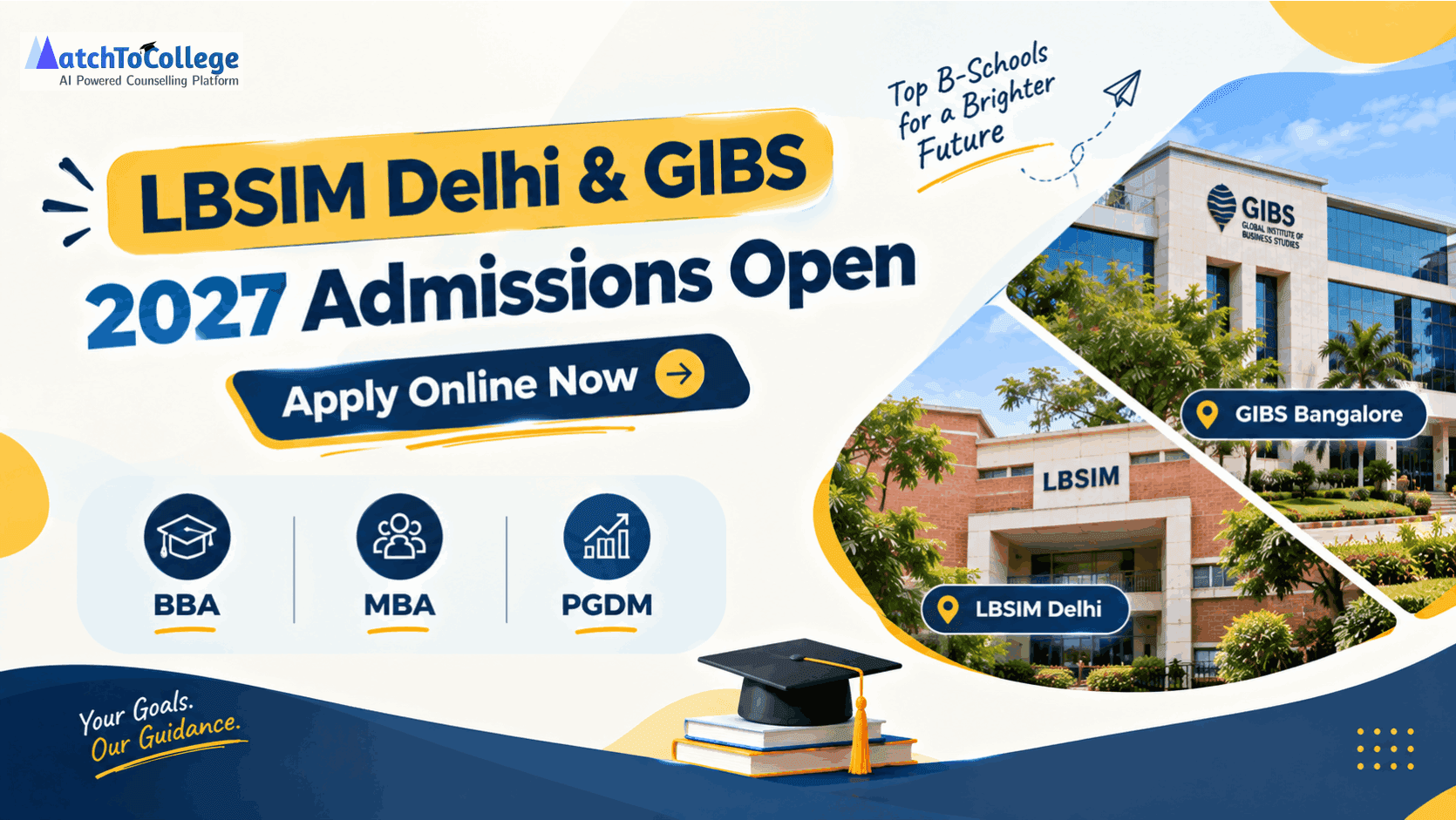
LBSIM Delhi & GIBS 2027 Admissions Open: Apply Online Now
LBSIM Delhi and GIBS Bangalore open 2027 admissions. Explore PGDM, MBA, and BBA application details, early bird offers, and WBJEE/TNEA 2026 counseling updates.
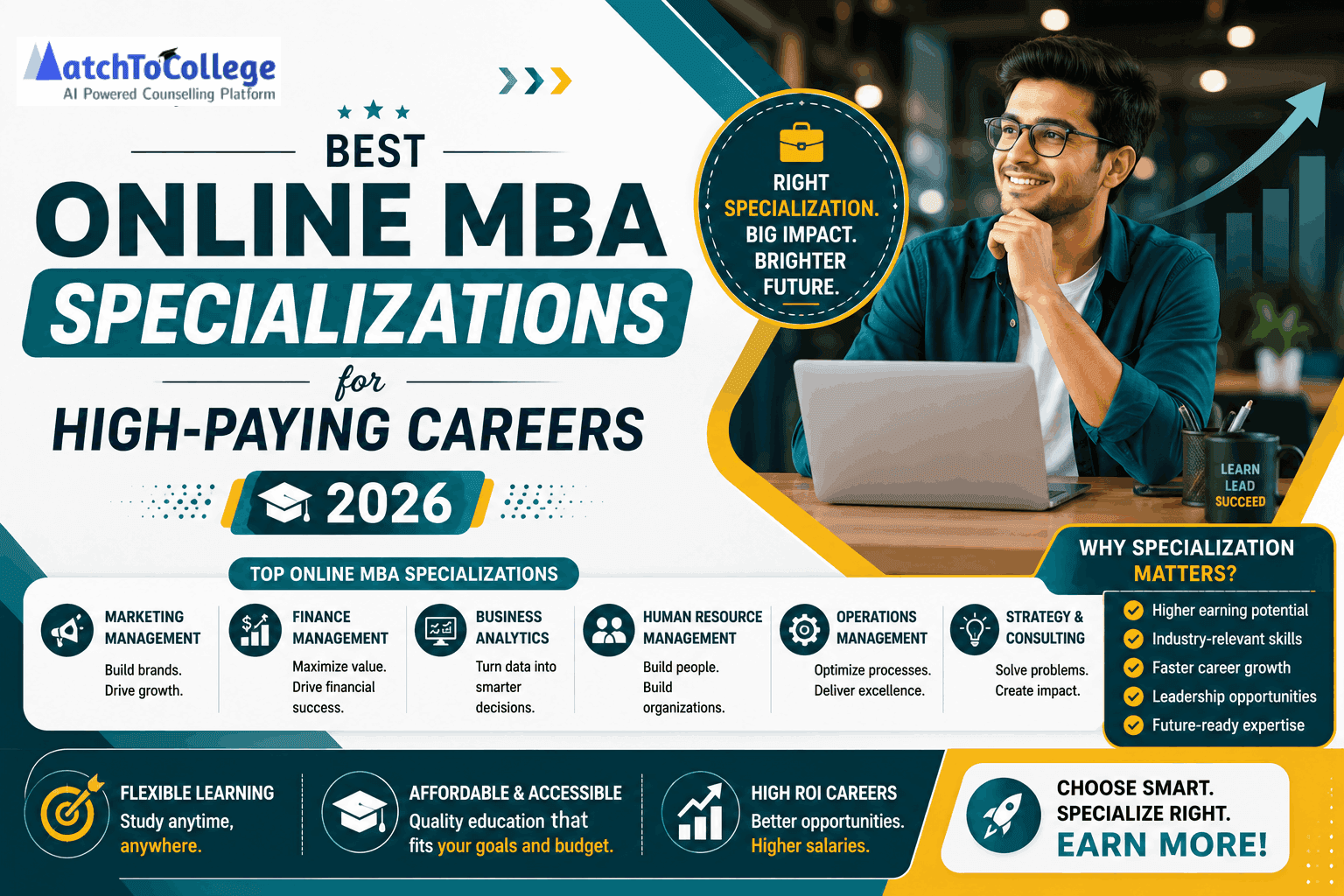
Best Online MBA Specializations for High-Paying Careers 2026
Discover the most lucrative online MBA specializations for 2026-27. Compare ROI, career growth, and use our AI tools to find your perfect management path.
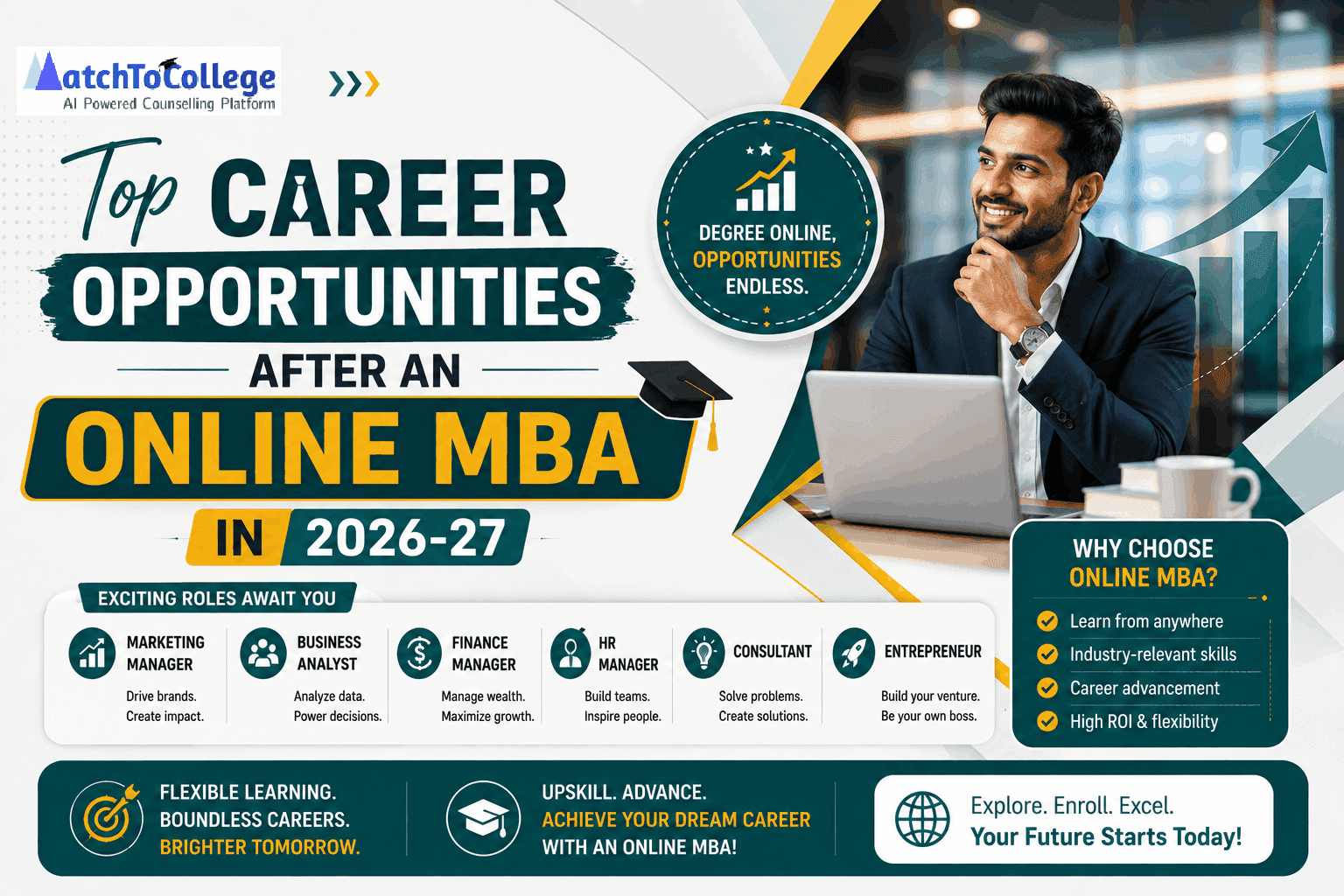
Top Career Opportunities After an Online MBA in 2026-27
Discover high-paying career paths and roles after an online MBA in 2026-27. Explore salary trends, ROI, and tools to navigate your future professional success.