

State vs. Private Universities: CCSU & DDU for Your Pocket
Admission & Info Tools
Need Expert Assistance?
Our counselors can help you with fee structures, eligibility guidelines, and upcoming admission cutoffs instantly.
Direct Application Tools
State vs. Private Universities
The quest for higher education is a significant milestone, often accompanied by big dreams and, inevitably, big questions about finances. For many aspiring students and their families across India, the choice between a State Government University and a Private University boils down to more than just academic programs or campus life; it's a critical decision with long-term financial implications. With rising tuition fees and the escalating cost of living, securing a quality education that doesn't break the bank has become a top priority.
You might be envisioning a future in engineering, medicine, an MBA, or even exploring study abroad options. Regardless of your ambition, the fundamental question remains: where can you get the best return on your educational investment without accumulating crippling debt? While private institutions often market lavish infrastructure and niche courses, the truth is, many State Government Universities, like the highly respected Chaudhary Charan Singh University (CCSU) in Meerut or Deen Dayal Upadhyay Gorakhpur University (DDU), offer comparable, if not superior, academic value at a fraction of the cost.
This blog post will delve deep into the pros and cons of both state and private universities, shedding light on why institutions like CCSU and DDU stand out as excellent, budget-friendly choices for thousands of students. We’ll explore the financial benefits, the quality of education, career prospects, and how to make an informed decision that aligns with both your academic goals and your financial reality. At MatchToCollege, our AI-powered platform is designed to cut through the noise, helping you navigate these complex choices and find the perfect educational match that’s both high-quality and affordable. Let’s explore why sometimes, the most prestigious and valuable education might just be the one that’s kinder to your pocket.
The Undeniable Financial Advantage of State Govt. Universities
When comparing the cost of higher education, State Government Universities consistently emerge as the more affordable option. This isn't by accident; these institutions are typically funded by state governments, allowing them to offer substantially lower tuition fees compared to their private counterparts. For instance, universities like CCSU or DDU operate with a mandate to provide accessible education to a broad demographic, meaning the burden of operational costs is not entirely passed on to students.
Consider the typical fee structure: a private university degree, especially in high-demand fields like engineering or medicine, can run into lakhs of rupees per year, excluding hostel and other living expenses. A similar program at a state university often costs a fraction of that, sometimes as little as tens of thousands annually. This significant difference can translate into massive savings over the course of a 3-4 year degree, directly impacting your post-graduation financial health. Lower tuition means less need for student loans, resulting in less debt and greater financial freedom to pursue further studies, entrepreneurship, or simply start your career on a stronger footing. This affordability doesn't just benefit individual students; it contributes to a more equitable and accessible higher education landscape.
Beyond the Fees: Quality Education & Strong Foundations
The misconception that higher fees equate to better education is often debunked when examining the academic rigor and foundational strength of State Government Universities. Institutions like CCSU and DDU boast long-standing reputations, often with a rich history of academic excellence and well-established departments. They are home to highly qualified faculty, many of whom are seasoned experts in their fields, published researchers, and deeply committed educators. The curriculum is typically robust, updated, and aligned with national educational standards, preparing students for competitive examinations and diverse career paths.
Furthermore, state universities often have strong accreditation and affiliations, which lend significant credibility to their degrees. Graduates from these universities are well-regarded by employers, particularly within the government sector and regional industries. Many state universities also benefit from government-funded research initiatives and collaborations, providing students with opportunities for practical exposure and advanced learning that might not be available in newer private setups. The emphasis here is on building a strong academic foundation, fostering critical thinking, and ensuring a comprehensive learning experience that prioritizes knowledge over profit.
Navigating the Private University Landscape: What to Consider
While State Government Universities offer compelling advantages, it's also important to understand the landscape of private universities. Private institutions often invest heavily in state-of-the-art infrastructure, offer highly specialized or niche courses, and sometimes provide more flexible curriculum options. They might also boast smaller class sizes or a wider range of international collaborations. However, these benefits almost invariably come with a hefty price tag. The significant capital expenditure on facilities and marketing by private universities is passed on to students through higher tuition and fees.
When evaluating private options, it’s crucial to look beyond the shiny brochures. Research the accreditation status, faculty qualifications, student-faculty ratio, and most importantly, the actual career placement rates and average graduate salaries. Consider the potential for student debt and how that might impact your future choices. While some private universities offer excellent value, many can lead to substantial financial strain without a proportionate increase in career prospects or educational quality compared to their state-funded counterparts. A thorough cost-benefit analysis, considering both short-term expenses and long-term ROI, is essential.
Share this Article
FAQFrequently Asked Questions
Q: Are degrees from state universities like CCSU or DDU recognized and respected?
Yes, degrees from State Government Universities like CCSU and DDU are widely recognized and highly respected across India, especially by government bodies, PSUs, and many private sector companies. They are accredited by statutory bodies like UGC and often carry a long history of academic excellence, making their degrees very credible.
Q: Do state universities offer good career placement opportunities?
Many state universities, including CCSU and DDU, have dedicated placement cells and strong alumni networks. While placement statistics can vary by program and department, they consistently place students in various sectors, including government jobs, public sector undertakings, and regional private companies. Their graduates are often sought after for their strong foundational knowledge and affordability to employers.
Q: Can I get scholarships or financial aid at State Government Universities?
Yes, despite their already lower fees, State Government Universities often provide various scholarships, fee concessions, and financial aid programs based on merit, economic background, or specific categories (e.g., SC/ST/OBC). State governments also run schemes to support students pursuing higher education, making it even more accessible. It's advisable to check the specific university's website and state government scholarship portals.
Top Colleges Covered in this Blog

Chaudhary Charan Singh University
Chaudhary Charan Singh University
Chaudhary Charan Singh University (formerly, Meerut University) was established in 1965 to cater to the needs of higher education in western Uttar Pradesh. The university celebrated its silver jubilee in 1991. Presently, it is one of the premier educational institutions of the country, encompassing a vast, beautiful, and pollution-free campus that sprawls over 222 acres of land and having vast playgrounds and experimental fields, a botanical garden, a rose garden with a life-size statue of the late Prime Minister Ch. Charan Singh, a gymnasium, an indoor stadium, a well-equipped library, hostels for both girls and boys, an administrative block, a spacious auditorium, a guest house, a community center, a medical center, residential quarters for faculty members and employees, a canteen, a bank, and a post office. The teaching department, belonging to different faculties, is housed in spacious buildings and has well-equipped laboratories and advanced facilities. The university also has a separate engineering college, which is currently offering courses leading to a B.Tech. degree in several different branches of engineering. Initially, the M.Phil. and Ph.D. programs were started in 1969, taking credit for becoming the first university in the country to introduce the M.Phil. program.
Total Fees
₹500 - ₹1.8L
Total Courses
29
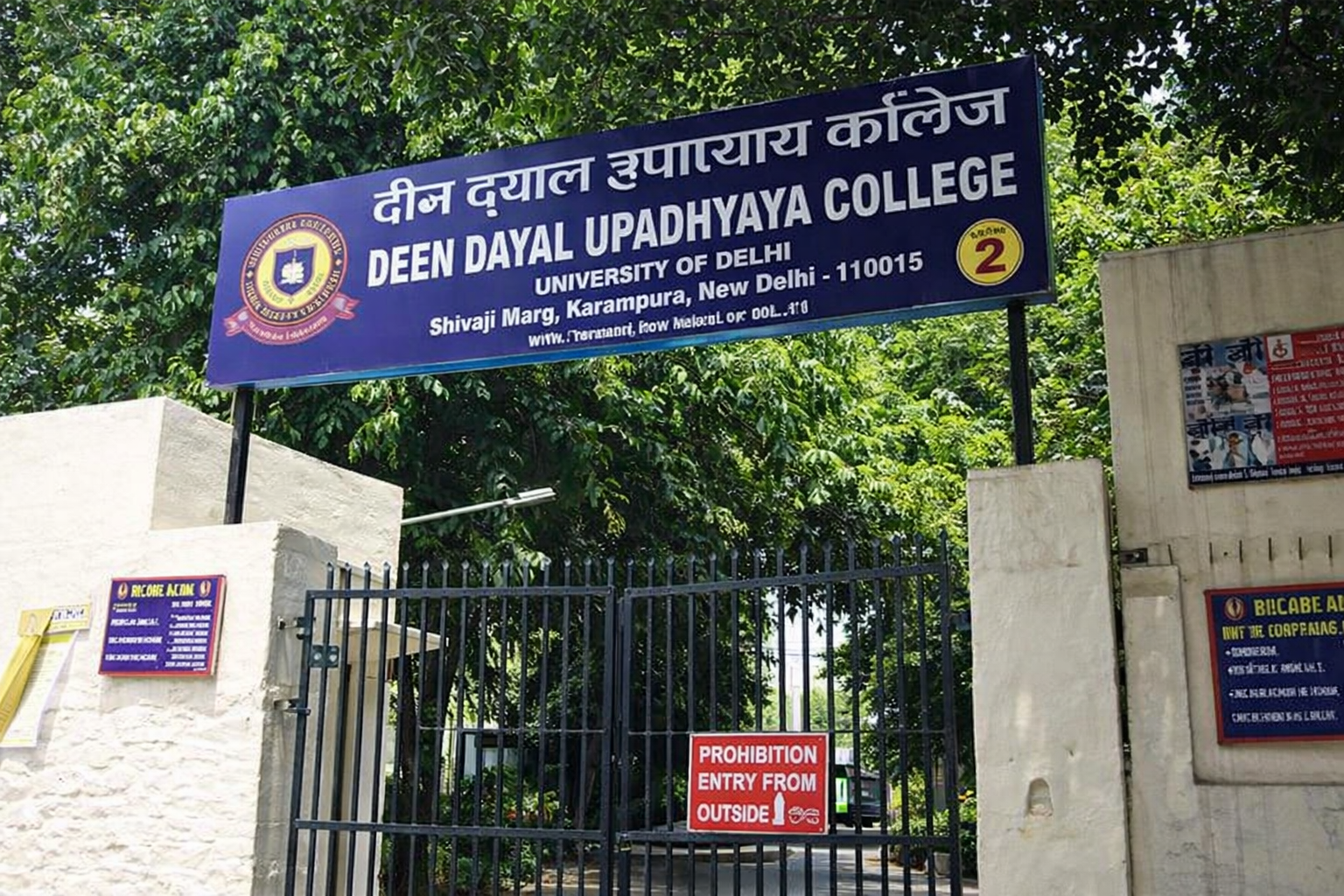
Deen Dayal Upadhyaya College, New Delhi
Deen Dayal Upadhyaya College, New Delhi
Deen Dayal Upadhyaya is a constituent college of the University of Delhi. The Government of National Capital Territory of Delhi established the college in the year 1990 in Karampura. The college receives 100% grant from the Govt. of NCT of Delhi and is recognized under 2 (f) and 12 (b) of the UGC Act. We cater to the students of Delhi as well as neighboring states, particularly Haryana, Uttar Pradesh, Rajasthan, Madhya Pradesh and Bihar. Recently we have shifted to our new campus in Sector-3, Dwarka.
Total Fees
₹98K - ₹1.4L
Total Courses
3
Get More Info About State vs. Private Universities
Recommended Reading

Best Online MBA Specializations for High-Paying Careers 2026
Discover the most lucrative online MBA specializations for 2026-27. Compare ROI, career growth, and use our AI tools to find your perfect management path.

Top Career Opportunities After an Online MBA in 2026-27
Discover high-paying career paths and roles after an online MBA in 2026-27. Explore salary trends, ROI, and tools to navigate your future professional success.
Tax Deductions on Higher Education: 2026-27 India Guide
Maximize your savings with our guide on tax deductions for higher education fees in India for FY 2026-27. Learn about Section 80C, 80E, and upskilling benefits.