

Skills Over Degrees: Resumes Obsolete by 2030?
Admission & Info Tools
Need Expert Assistance?
Our counselors can help you with fee structures, eligibility guidelines, and upcoming admission cutoffs instantly.
Direct Application Tools
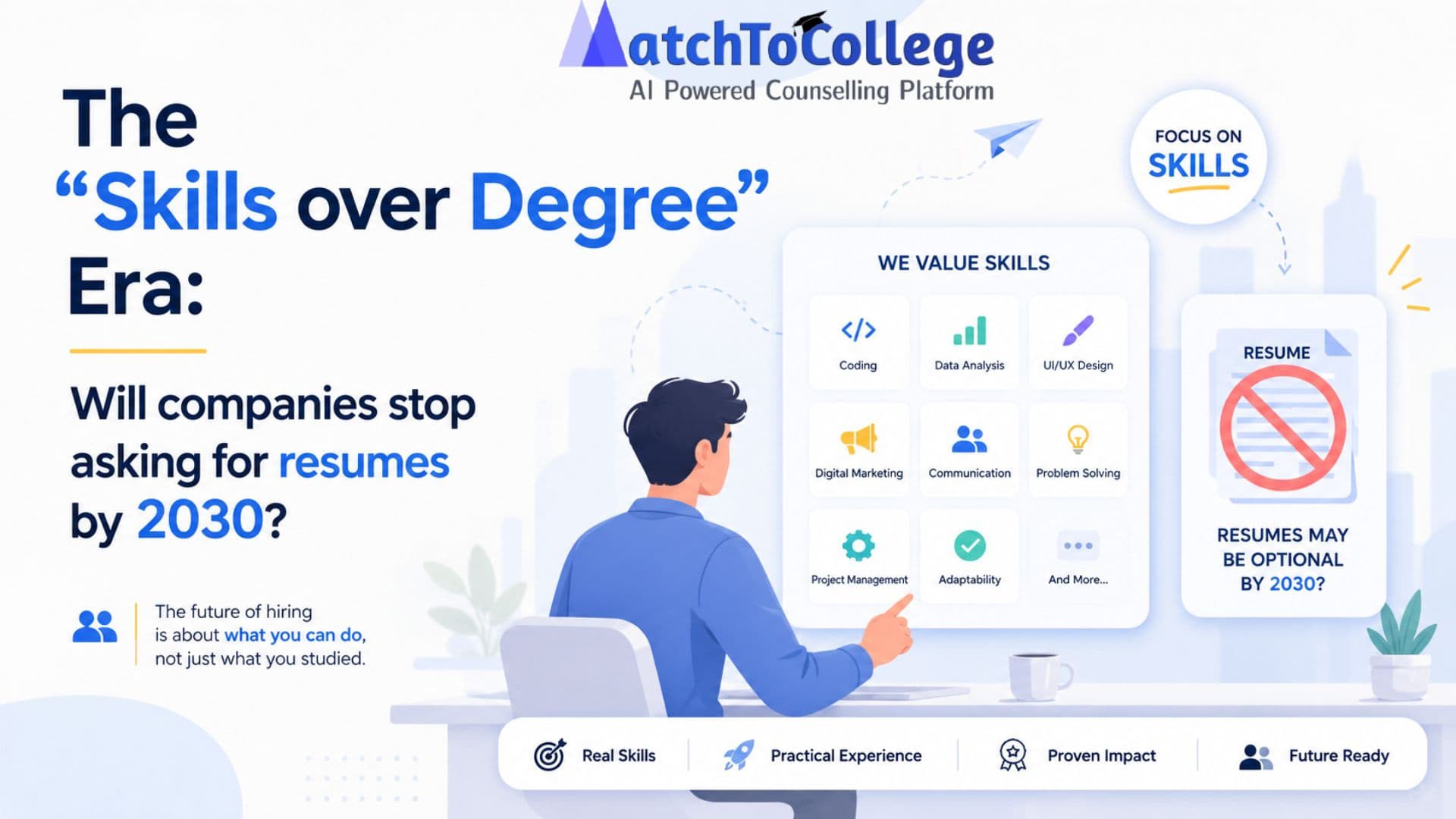
Future Hiring Beyond Traditional Degrees
Higher education and hiring are changing fast. For years, a university degree and a strong resume were seen as the main route to a good job. That is starting to shift.
Today, many employers care more about what you can do than where you studied. Real-world skills, projects, and proven results are becoming more important than just a degree certificate.
Companies now need people who can adapt quickly, solve problems, and contribute from day one. This is why practical skills are gaining value across industries.
The big question: Will companies stop asking for resumes by 2030?
Probably not completely. But resumes may become less important as employers use skill tests, digital portfolios, AI assessments, and project-based evaluations to judge candidates.
AI is also changing recruitment. Hiring tools can now scan work samples, certifications, online portfolios, and skill records—making traditional resumes only one part of the process.
For students, parents, and educators, this means planning differently. Choosing the right course, gaining industry-ready skills, and building practical experience will matter more than ever.
What’s Changing in Hiring
| Traditional Hiring | Future Hiring Trend |
| Degree-focused selection | Skill-focused selection |
| Resume screening | AI-based skill assessment |
| Academic marks priority | Real-world project experience |
| Fixed qualifications | Verified practical competencies |
| Institution reputation | Demonstrated results |
What Students Should Focus On
| Priority Area | Why It Matters |
| Industry skills | Directly improves employability |
| Internships | Adds practical experience |
| Certifications | Shows specialized expertise |
| Portfolios | Proves actual work ability |
| Continuous learning | Keeps skills relevant |
The future of careers will likely be shaped less by paper qualifications and more by measurable skills. The smartest approach is to combine education with strong practical experience so you stay ready for the changing job market.
The Rise of Skill-Based Hiring: Why Competencies Trump Credentials
The shift toward skill-based hiring is not temporary. It is happening because employers need people who can perform from day one, not just candidates with degrees.
A university degree still matters, but it no longer guarantees job readiness. Many companies now prefer candidates who can show practical knowledge, problem-solving ability, and role-specific skills.
Rapid changes in technology are a major reason. Fields like Artificial Intelligence, Data Science, and automation evolve so quickly that knowledge from a degree may become outdated within a few years. Employers are therefore using direct skill checks instead of relying only on resumes.
Why This Change Is Growing
| Key Driver | Impact on Hiring |
| Fast technology changes | Demand for updated practical skills |
| Skills gap in industries | Companies expand beyond traditional degrees |
| AI in recruitment | Faster skill-based screening |
| New learning options | More acceptance of non-degree qualifications |
| Hiring efficiency | Better matching of talent to roles |
New Hiring Methods Replacing Traditional CV Focus
Instead of depending only on resumes, employers are increasingly using:
| Modern Evaluation | Method Purpose |
| Skill assessments | Test real capability |
| Coding tests | Check technical skills |
| Project tasks | Measure applied knowledge |
| Portfolio reviews | Evaluate past work |
| AI screening tools | Identify job-fit faster |
Rise of Alternative Credentials
Short-term learning credentials are gaining recognition because they focus on job-ready abilities.
| Alternative Path | Benefit |
| Micro-credentials | Specialized skills |
| Digital badges | Verified competencies |
| Online certificates | Flexible learning |
| Bootcamps | Industry-specific training |
| Self-learning portfolios | Practical proof of expertise |
This does not mean higher education is losing value. It means universities must adapt by combining academic learning with practical training, internships, and industry exposure. The future workforce will be judged less by degrees alone and more by proven skills that employers can directly verify.
Resumeless Recruitment: The Future of Talent Acquisition?
Resumes are unlikely to disappear completely by 2030, but their role is clearly changing. Traditional resumes—focused on degrees, marks, and work history—may no longer be enough in a skills-first hiring market.
Today, many employers use Artificial Intelligence tools to screen candidates before a recruiter even reads an application. These systems analyze keywords, project work, certifications, and verified skills, making hiring more data-driven.
How Hiring Is Evolving
| Traditional Resume | Emerging Alternative |
| Static document | Dynamic digital profile |
| Academic history | Verified skills record |
| Job titles | Real project contributions |
| Manual review | AI-based screening |
| Self-written claims | Skill-tested validation |
What May Replace the Resume
Future hiring is moving toward more interactive ways of evaluating candidates.
| New Format | Why It Matters |
| Digital portfolios | Show actual work and projects |
| Online assessments | Test real-time ability |
| Skill badges | Verify competencies |
| AI matching platforms | Match talent with jobs faster |
| Learning records | Track continuous growth |
Companies such as Google and IBM have already expanded skill-based hiring for many roles. In these models, what a person can demonstrate often matters more than formal credentials alone.
What Students Should Do Now
| Action | Benefit |
| Build project portfolios | Shows practical experience |
| Gain certifications | Adds recognized skills |
| Share work online | Creates visibility |
| Learn continuously | Keeps skills updated |
| Track achievements | Builds stronger career proof |
The future is likely not resume-free, but resume-light. A resume may remain as a quick summary, while portfolios, skill assessments, and verified digital profiles become the real evidence of employability. For students, the key is not just learning skills—but proving them through visible, practical work.
Navigating the New Landscape: Your Path with MatchToCollege
As hiring changes, students and parents need to ask a new question: not just which degree to choose, but which skills that degree will build for the future job market.
Employers are looking for practical abilities, adaptability, and real-world problem-solving. That means choosing a course that develops both academic knowledge and career-ready skills is more important than ever.
This is where MatchToCollege can help. It supports students in making smarter higher education choices by connecting career goals with future skill demand.
How MatchToCollege Helps
| Support Area | What You Get |
| Career guidance | Personalized higher education planning |
| Skill mapping | Match your strengths with future careers |
| Program selection | Find courses aligned with industry demand |
| Institution guidance | Compare colleges beyond rankings |
| Career readiness | Focus on skills employers need |
Programs Students Can Explore
| Study Option | Skill Focus |
| MBA | Leadership, analytics, business strategy |
| Engineering | Technical innovation, practical application |
| Medical | Clinical skills, healthcare technology |
| Study Abroad | Global exposure, cross-cultural learning |
Why It Matters
The future belongs to students who combine qualifications with demonstrable skills.
| Focus | Outcome |
| Technical learning | Strong employability |
| Practical projects | Real work experience |
| Industry exposure | Better job readiness |
| Global competencies | Wider career opportunities |
| Continuous upskilling | Long-term growth |
A degree still opens doors, but skills keep them open. The smartest education choice is one that helps you build a strong skill portfolio alongside your academic credentials. With the right guidance, students can prepare for careers that stay relevant in a fast-changing world.
Share this Article
FAQFrequently Asked Questions
Q: Is a university degree still valuable in the "skills over degree" era?
Yes, degrees still provide foundational knowledge, critical thinking, and networking opportunities. However, their value is increasingly tied to how well they integrate practical, in-demand skills and real-world experience. Combining a strong academic foundation with demonstrable skills is key for career readiness.
Q: How can students prepare for a job market that prioritizes skills?
Students should focus on developing both soft (communication, problem-solving, adaptability) and hard skills (coding, data analysis, digital literacy) relevant to their desired field. Engage in internships, personal projects, online courses, and seek higher education programs that emphasize experiential learning and verifiable skill development. Building a digital portfolio of work is crucial to showcase competencies.
Get More Info About Skills Over Degrees
Recommended Reading
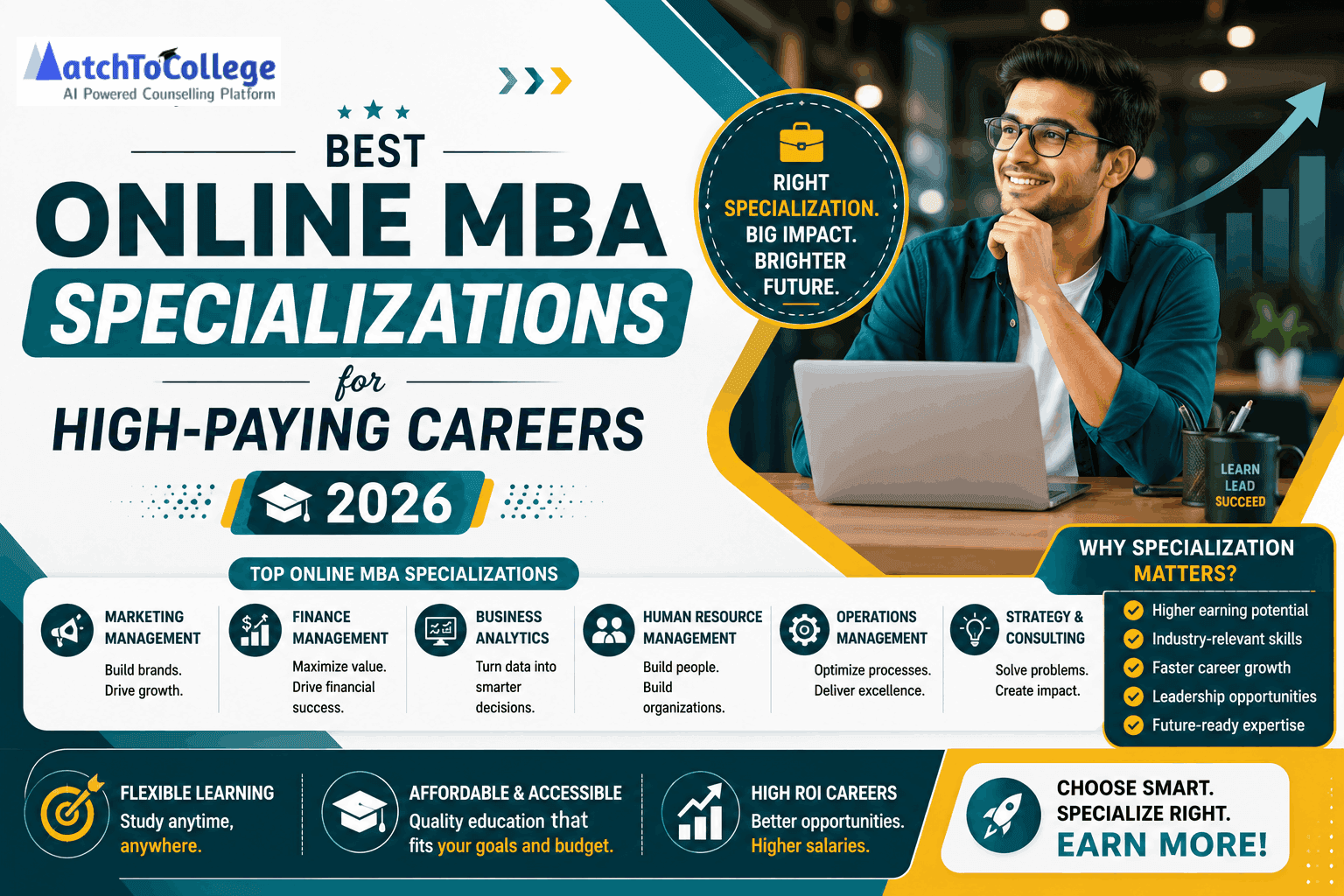
Best Online MBA Specializations for High-Paying Careers 2026
Discover the most lucrative online MBA specializations for 2026-27. Compare ROI, career growth, and use our AI tools to find your perfect management path.
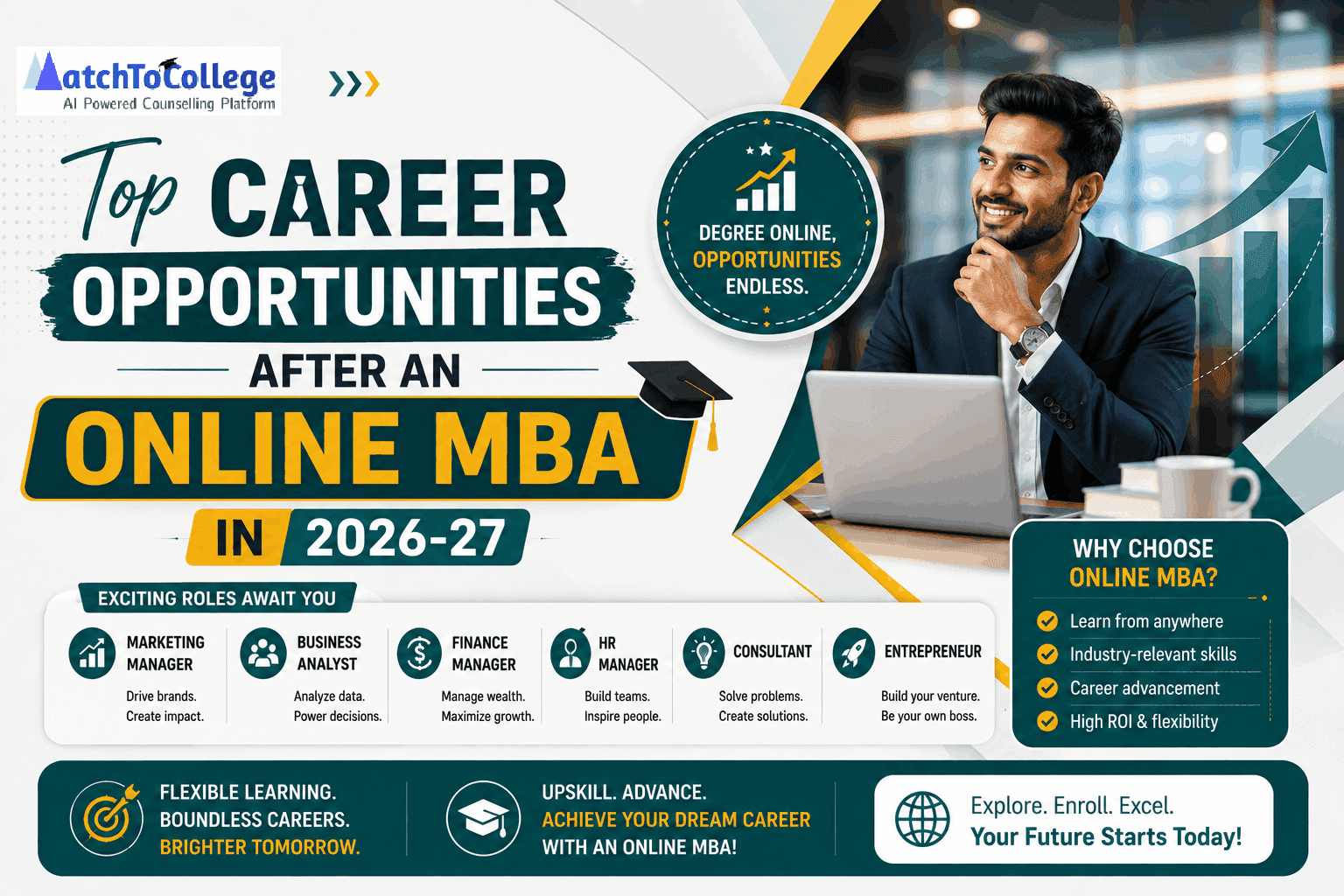
Top Career Opportunities After an Online MBA in 2026-27
Discover high-paying career paths and roles after an online MBA in 2026-27. Explore salary trends, ROI, and tools to navigate your future professional success.
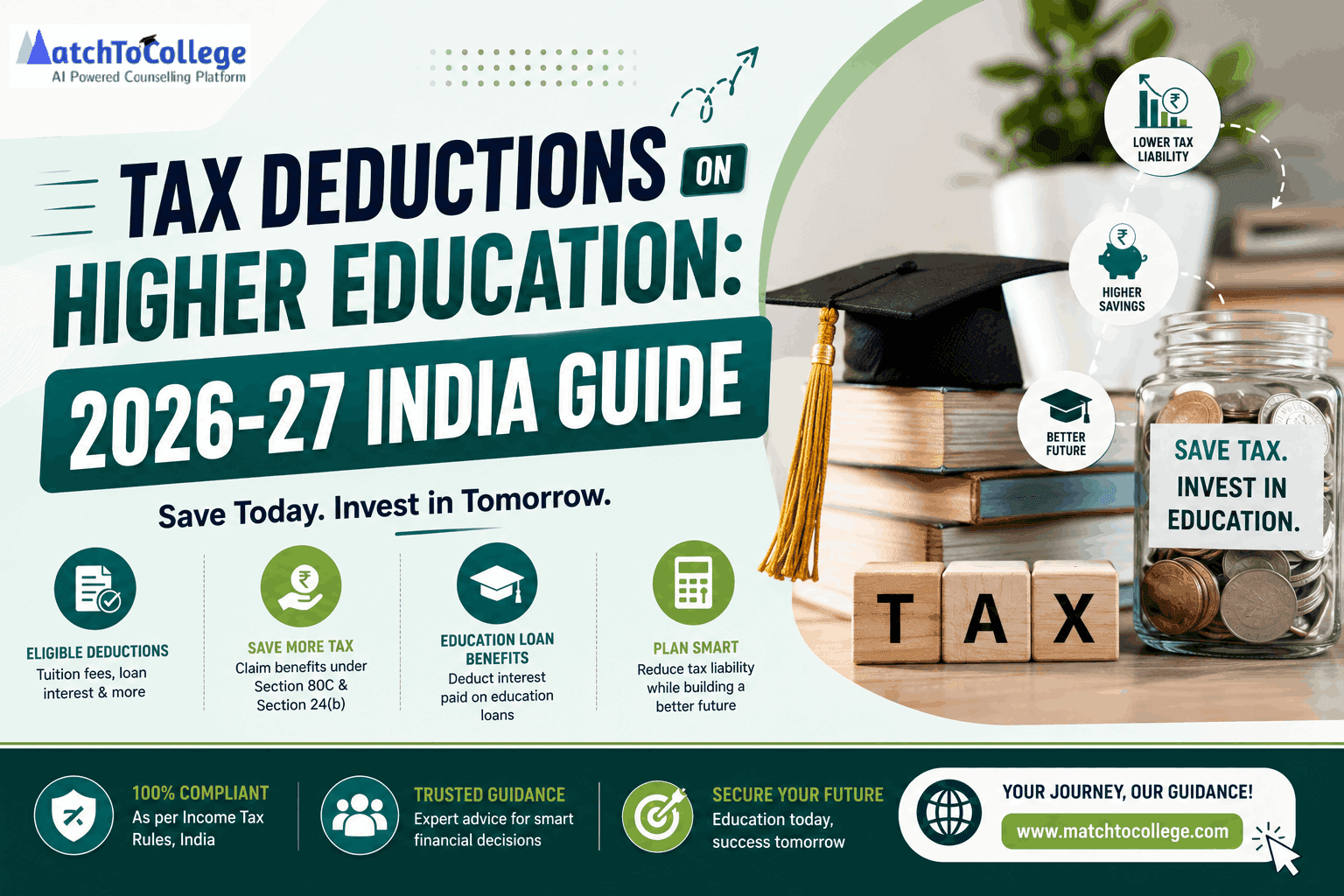
Tax Deductions on Higher Education: 2026-27 India Guide
Maximize your savings with our guide on tax deductions for higher education fees in India for FY 2026-27. Learn about Section 80C, 80E, and upskilling benefits.