

Scaling MatchToCollege: Database Bottlenecks & Fixes
Admission & Info Tools
Need Expert Assistance?
Our counselors can help you with fee structures, eligibility guidelines, and upcoming admission cutoffs instantly.
Direct Application Tools

Scaling MatchToCollege
At MatchToCollege, our mission is to revolutionize higher education counseling. We empower students and parents with AI-driven insights, personalized recommendations, and expert guidance to navigate the complex world of college admissions, scholarships, and career paths. From engineering to medical, MBA to study abroad, our platform is designed to be your trusted companion.
But delivering a seamless, instant, and highly personalized experience to thousands of users isn't magic; it's meticulous engineering. Behind every quick search, every tailored recommendation, and every insightful comparison lies a sophisticated infrastructure constantly working to keep up with your demands. As MatchToCollege rapidly grew from a promising startup to an essential tool for thousands of aspiring students, we encountered the kind of challenges that define any successful technology platform: scaling.
Reaching 10,000 active users was a monumental milestone for us. It validated our vision and the value we provide. However, with this exponential growth came significant pressure on our backend systems, particularly our databases. Imagine thousands of students simultaneously searching for MBA programs, refining their profiles for medical school applications, or comparing engineering colleges abroad. Each interaction generates data, queries the database, and demands immediate responses. If the database falters, the entire user experience grinds to a halt.
This isn't just about keeping the lights on; it's about maintaining trust. Students and parents rely on MatchToCollege for critical, time-sensitive decisions. Slow loading times, data inconsistencies, or even outright crashes are unacceptable when someone is planning their future. We quickly realized that to continue providing the unparalleled service you expect, we needed to proactively address the bottlenecks emerging in our core data infrastructure.
This blog post pulls back the curtain on our journey. We'll dive into the specific database challenges we faced as we scaled to 10,000 users – the performance hitches, the architectural limitations, and the late-night debugging sessions. More importantly, we'll share the strategic solutions we implemented, from query optimizations and indexing strategies to advanced caching and database architecture redesigns. Our goal is not just to share our technical story, but to reassure you, our valued users, that the MatchToCollege platform is built on a foundation of robust, reliable, and continuously optimized technology, ensuring your path to higher education is always smooth and secure. Join us as we explore the hidden world of backend scaling and the commitment that underpins your AI-powered counseling journey.
The Foundations: Our Initial Database Setup & Early Growing Pains
When MatchToCollege first launched, our database infrastructure was intentionally lean – a single, powerful PostgreSQL instance perfectly suited for a burgeoning user base. This setup allowed for rapid development and served hundreds of users flawlessly, providing quick access to admission guides, top college rankings, and scholarship information. However, as our community exploded, nearing the 10,000-user mark, this initial architecture began to show its limits. We observed longer query execution times, increased latency during peak hours, and occasional system resource spikes (CPU and RAM) that signaled the database was struggling to keep up. For you, this could translate into frustrating delays when searching for critical information or updating your profile.
Identifying & Diagnosing Critical Bottlenecks
To tackle these issues head-on, our engineering team employed advanced monitoring tools and extensive query profiling. We meticulously analyzed database logs and performance metrics to pinpoint the exact sources of contention. We discovered several key bottlenecks:
- Inefficient Queries: Many complex queries, particularly those involving multiple JOINs to aggregate student profiles with vast university datasets, lacked proper indexing. This meant the database had to scan through enormous amounts of data for simple requests.
- Connection Overload: As concurrent users surged, the number of open database connections often exceeded optimal thresholds, leading to resource exhaustion and degraded performance.
- Lack of Caching: Frequently requested, relatively static data – like college descriptions, historical rankings, or general scholarship criteria – was being fetched directly from the database with every user request, creating unnecessary load.
- Write Contention: High volumes of write operations (e.g., user profile updates, application tracking) were sometimes locking tables or rows, preventing other operations from proceeding swiftly.
Understanding these specific pain points was the crucial first step toward building a more robust and scalable platform for your higher education journey.
Engineering the Fix: Our Strategic Solutions
Armed with a clear diagnosis, we implemented a multi-pronged strategy to fortify our database infrastructure, ensuring MatchToCollege remains fast, reliable, and responsive for every student and parent:
- Query Optimization & Advanced Indexing: We systematically reviewed and refactored our most resource-intensive queries, adding strategic indexes to frequently accessed columns. This dramatically accelerated searches for specific MBA programs, medical school requirements, or study abroad scholarship criteria.
- Robust Caching Mechanisms: We introduced Redis, an in-memory data store, for caching frequently accessed, semi-static data such as college rankings, admission deadlines, and top university lists. This significantly reduced direct database hits, resulting in much faster load times and a smoother user experience.
- Scaling Database Infrastructure with Read Replicas: To handle the increasing read load, we migrated to a managed database service (like AWS RDS), enabling us to easily provision read replicas. This offloaded read operations from our primary database, ensuring that heavy data retrieval tasks didn't impact transactional performance.
- Optimized Connection Pooling: At the application layer, we implemented sophisticated connection pooling. This efficiently manages database connections, reusing them instead of opening new ones for every request, thus preventing database overload.
- Continuous Monitoring & Automated Alerting: We established comprehensive monitoring dashboards (e.g., Grafana) and automated alerting systems. This allows our team to proactively identify and address potential performance issues in real-time, often before they can impact your experience.
These enhancements were instrumental in not only handling 10,000 concurrent users but also laying the groundwork for MatchToCollege to scale effectively to hundreds of thousands, ensuring your AI-powered higher education counseling is always seamless and secure.
Share this Article
FAQFrequently Asked Questions
Q: How does MatchToCollege ensure my data is secure and recommendations are fast?
MatchToCollege employs robust database security measures, including encryption at rest and in transit, strict access controls, and regular security audits. Our platform's speed is maintained through advanced database optimizations, caching mechanisms (like Redis), and a scalable infrastructure with read replicas, ensuring you receive personalized, AI-driven recommendations swiftly and securely.
Q: Why should I care about database scaling for my college application process?
A well-scaled database ensures MatchToCollege remains available and responsive, especially during peak application periods when many students and parents are using the platform simultaneously. It means you won't experience slow loading times, errors, or data inconsistencies. A reliable backend guarantees instant access to updated information, seamless profile management, and accurate AI insights crucial for your time-sensitive higher education decisions.
Get More Info About Scaling MatchToCollege
Recommended Reading
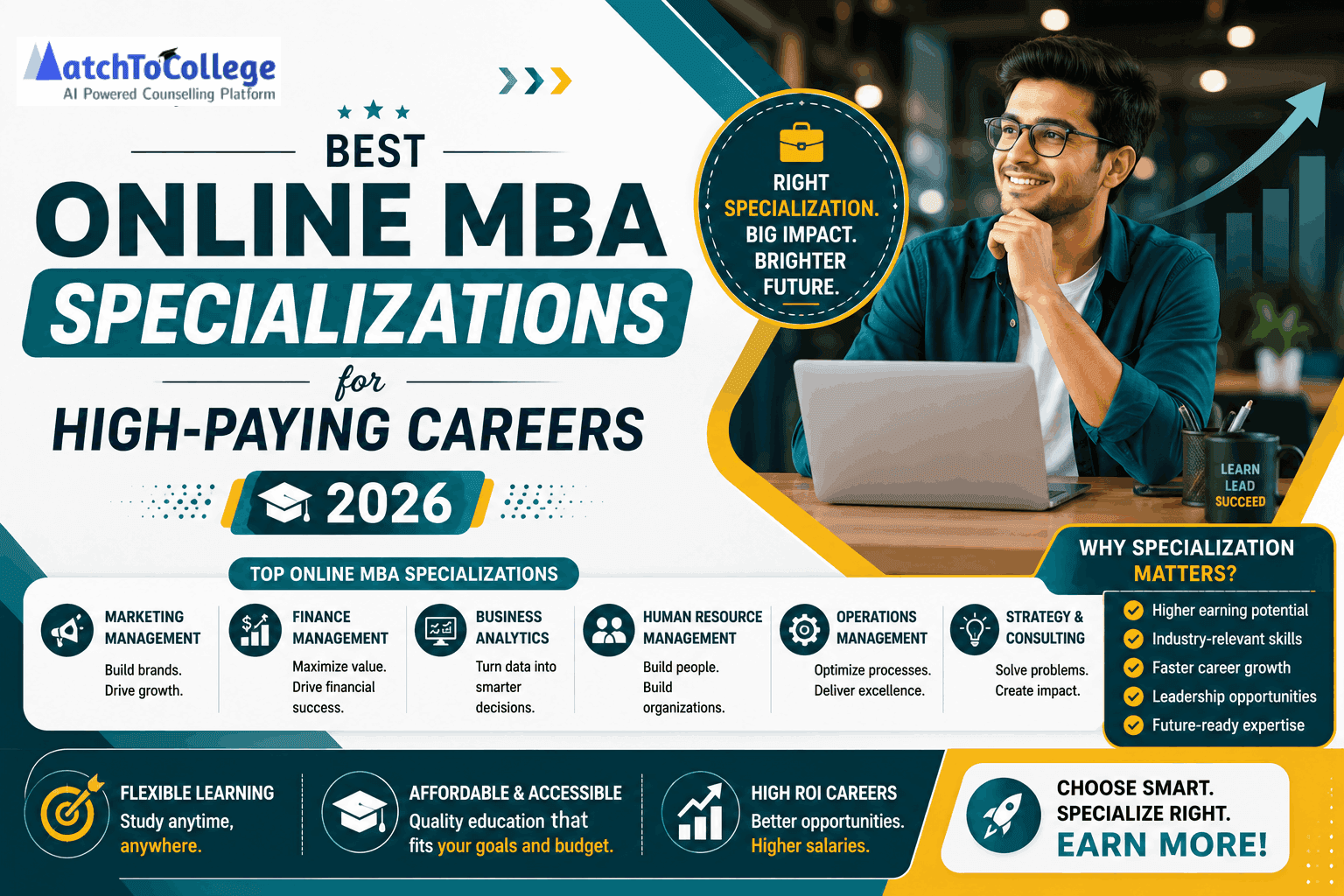
Best Online MBA Specializations for High-Paying Careers 2026
Discover the most lucrative online MBA specializations for 2026-27. Compare ROI, career growth, and use our AI tools to find your perfect management path.
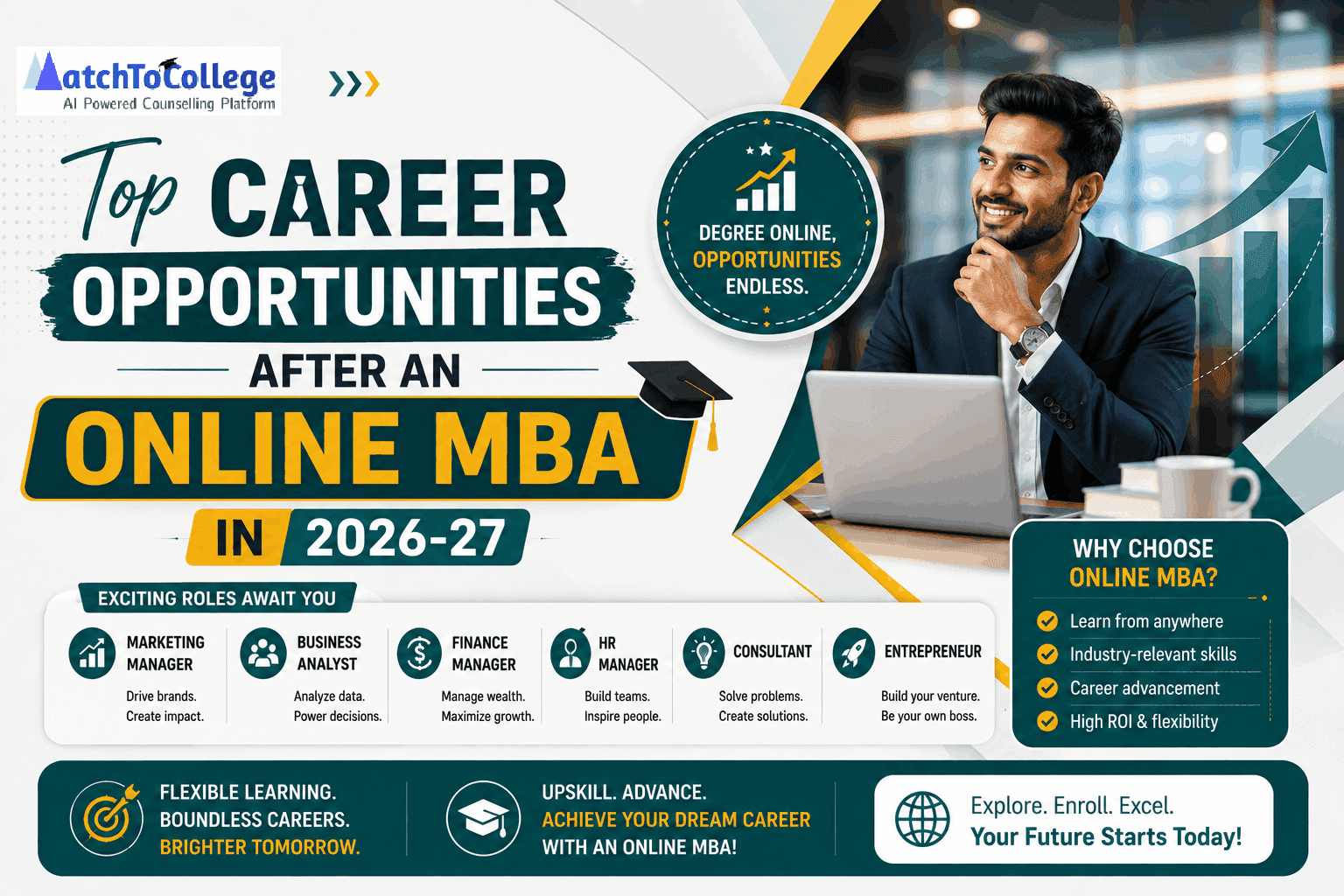
Top Career Opportunities After an Online MBA in 2026-27
Discover high-paying career paths and roles after an online MBA in 2026-27. Explore salary trends, ROI, and tools to navigate your future professional success.

Tax Deductions on Higher Education: 2026-27 India Guide
Maximize your savings with our guide on tax deductions for higher education fees in India for FY 2026-27. Learn about Section 80C, 80E, and upskilling benefits.