

Salary vs. Passion: Your Ultimate Career Path Guide
Admission & Info Tools
Need Expert Assistance?
Our counselors can help you with fee structures, eligibility guidelines, and upcoming admission cutoffs instantly.
Direct Application Tools
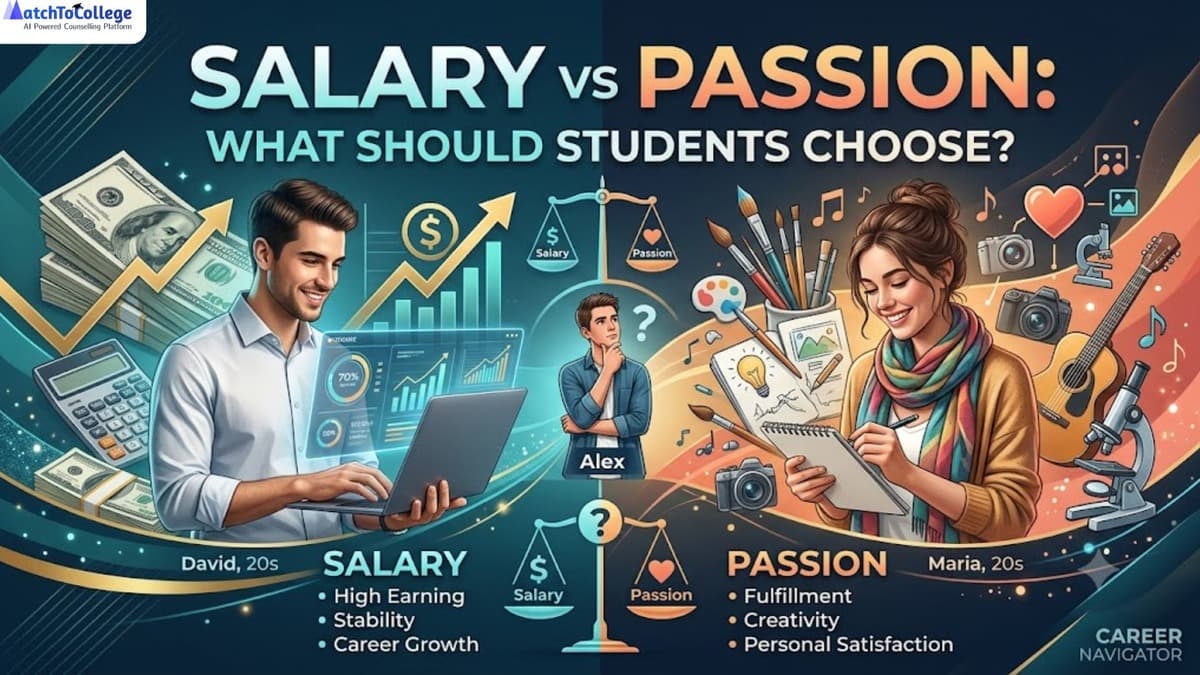
Students weigh salary versus passion.
Choosing a career is one of the most important decisions in life. Many students wonder whether they should choose a high-paying job or follow their passion. While a high salary provides financial security, pursuing a passion can bring greater job satisfaction and personal fulfillment. The best career choice is one that balances your interests, skills, career goals, and financial needs.
High Salary vs Passion
| Factor | High-Paying Career | Passion-Based Career |
| Main Focus | Financial stability and income | Personal interest and job satisfaction |
| Motivation | Salary, benefits, and career growth | Enjoyment, purpose, and personal fulfillment |
| Career Growth | Often offers structured promotions and higher earning potential | Growth depends on skills, opportunities, and dedication |
| Job Satisfaction | May vary depending on interest in the work | Often higher because the work is enjoyable and meaningful |
| Challenges | Can involve stress, long hours, and work pressure | May offer lower starting salaries or slower financial growth |
Advantages and Challenges
| High-Paying Career | Passion-Based Career |
| Advantages: Financial security, better salary, career stability, and growth opportunities. | Advantages: Greater motivation, creativity, job satisfaction, and long-term fulfillment. |
| Challenges: Work pressure, long working hours, and possible lack of interest in the job. | Challenges: Lower initial income, uncertain career path, and financial risk in some fields. |
How to Make the Right Choice
- Identify your interests, strengths, and values.
- Research salary, job demand, and future career opportunities.
- Consider your long-term career and financial goals.
- Develop skills that increase both employability and career satisfaction.
- Seek advice from mentors, career counselors, and industry professionals.
- Look for careers that combine your passion with strong growth opportunities.
How MatchToCollege Helps
| Feature | How It Helps |
| AI-Powered Career Guidance | Recommends careers based on your interests, skills, personality, and academic profile. |
| Career & Course Matching | Suggests suitable courses, colleges, and career paths. |
| Industry Insights | Provides information on salary trends, job demand, and future career opportunities. |
| Expert Counseling | Helps students make informed academic and career decisions. |
Choosing between salary and passion does not have to be an either-or decision. The best career is one that matches your interests, strengths, financial goals, and long-term aspirations. With proper planning, skill development, and guidance from MatchToCollege, you can find a career that offers both professional success and personal satisfaction.
The Allure of a High Salary: Pros and Cons
A high-paying career can provide financial security, career growth, and a comfortable lifestyle. However, it is also important to consider whether the job matches your interests and long-term goals.
Benefits of a High-Paying Career
| Benefit | How It Helps |
| Financial Security | Helps you meet your financial needs, save money, and plan for the future. |
| Comfortable Lifestyle | Supports better living standards and financial independence. |
| Career Growth | Many high-paying careers offer promotions and leadership opportunities. |
| Education Investment | Helps recover the cost of higher education through better earnings. |
| Family Support | Provides financial stability to support yourself and your family. |
| Professional Recognition | Well-paying careers often come with greater responsibility, influence, and recognition. |
Challenges of Choosing Only for Salary
| Challenge | Impact |
| Low Job Satisfaction | You may lose interest if the work does not match your passions. |
| Lack of Motivation | Working only for money can reduce enthusiasm and engagement. |
| Stress and Burnout | High-paying jobs may involve long hours, pressure, and demanding responsibilities. |
| Limited Personal Fulfillment | Financial success alone may not lead to long-term happiness if the work is not meaningful. |
Before Choosing a High-Paying Career, Ask Yourself
- Am I interested in this field?
- Will I enjoy doing this work every day?
- Does it match my skills and strengths?
- Can I manage the workload and responsibilities?
- Will this career support my long-term goals?
A high-paying career offers financial stability, career growth, and better opportunities, but salary should not be the only factor when choosing a profession. The best career combines good earning potential with your interests, skills, and long-term career goals, leading to both professional success and personal satisfaction.
The Power of Passion: Beyond Monetary Gains
A passion-based career is built around your interests, talents, and values. When you enjoy your work, you are more likely to stay motivated, learn continuously, and achieve long-term career satisfaction.
Benefits of Following Your Passion
| Benefit | How It Helps |
| Higher Job Satisfaction | Enjoy your work and find greater personal fulfillment. |
| Strong Motivation | Stay committed, productive, and enthusiastic about your career. |
| Creativity & Innovation | Generate new ideas and solve problems more effectively. |
| Continuous Learning | Develop new skills and improve your expertise because you enjoy the field. |
| Career Growth | Passion often leads to better performance and long-term success. |
| Entrepreneurial Opportunities | Your interests can inspire business ideas, startups, or unique career paths. |
Challenges of Following Your Passion
| Challenge | Impact |
| Uncertain Income | Some careers may offer lower starting salaries or irregular earnings. |
| Financial Stability | It may take time to build a stable income. |
| Market Competition | Success often requires strong skills, experience, and persistence. |
| Career Planning | Passion needs to be supported with practical planning and continuous skill development. |
How to Turn Passion into a Successful Career
- Develop industry-relevant skills.
- Research career opportunities and market demand.
- Gain practical experience through internships and projects.
- Build a professional network.
- Keep learning and upgrading your knowledge.
- Create a clear career and financial plan.
Following your passion can lead to greater motivation, creativity, and long-term career satisfaction. However, passion should be combined with skill development, careful planning, and an understanding of industry opportunities to build a successful and financially sustainable career.
Finding Your Sweet Spot: Integrating Both for a Fulfilling Future
The best career is often not about choosing between salary and passion—it is about finding a balance between the two. By understanding your interests, building the right skills, and exploring career opportunities, you can choose a career that is both financially rewarding and personally fulfilling.
How to Balance Salary and Passion
| Step | What to Do |
| Know Yourself | Identify your interests, strengths, skills, and values. |
| Explore Career Options | Research careers that match your passions and have good job opportunities. |
| Study Market Demand | Look for industries with strong future growth and earning potential. |
| Develop Relevant Skills | Gain practical experience through internships, projects, and certifications. |
| Choose the Right Education | Select courses and colleges that support both your career goals and interests. |
| Keep Learning | Continuously upgrade your skills to stay competitive in the job market. |
How MatchToCollege Helps
| Feature | How It Helps |
| AI-Powered Career Guidance | Recommends careers based on your interests, skills, personality, and academic profile. |
| Course & College Matching | Suggests programs and colleges that align with your career goals. |
| Career Exploration | Helps you discover careers where passion and strong job opportunities meet. |
| Industry Insights | Provides information on job demand, salary trends, and future career growth. |
| Expert Counseling | Offers personalized guidance for higher education and career planning. |
Tips for Students
- Choose a career that matches both your interests and abilities.
- Research salary, job demand, and future opportunities before making a decision.
- Build practical skills through internships and industry projects.
- Stay open to new opportunities and continue learning.
- Seek guidance from mentors, teachers, and career counselors.
You do not have to choose only salary or passion. The best career is one that combines your interests, skills, financial goals, and market opportunities. With proper planning and guidance from MatchToCollege, you can confidently choose a career that offers both long-term success and personal satisfaction.
Share this Article
FAQFrequently Asked Questions
Q: Is it possible to pursue a passion and still earn a high salary?
Absolutely! Many passion-driven fields, especially with the right skills and strategic planning, can lead to high earning potential. Consider areas like tech entrepreneurship, specialized design, data science in specific industries, or even creating unique content. The key is to identify marketable skills within your passion, continuously develop them, and understand the industry landscape. MatchToCollege can help identify programs that align passion with market demand.
Q: How can I identify my true passion and link it to career options?
Self-reflection is crucial. Think about what activities genuinely engage you, what problems you enjoy solving, or what topics you love learning about even in your free time. Explore internships, volunteer opportunities, and informational interviews to gain practical experience and insights. MatchToCollege's personalized counselling can then help translate these passions into viable higher education programs and potential career paths, showing you how your interests can connect to real-world opportunities.
Q: What role does education play in balancing salary and passion?
Education is foundational. It provides the knowledge, skills, and credentials necessary to transform a passion into a profession and enhance earning potential. Choosing the right program can equip you with in-demand skills, build a strong professional network, and open doors to opportunities you might not have otherwise accessed. Whether it's an MBA, an engineering degree, medical school, or specialized arts programs, MatchToCollege assists in finding institutions and courses that align with both your aspirations and career goals, ensuring a strong return on your educational investment.
Get More Info About Salary vs. Passion
Recommended Reading
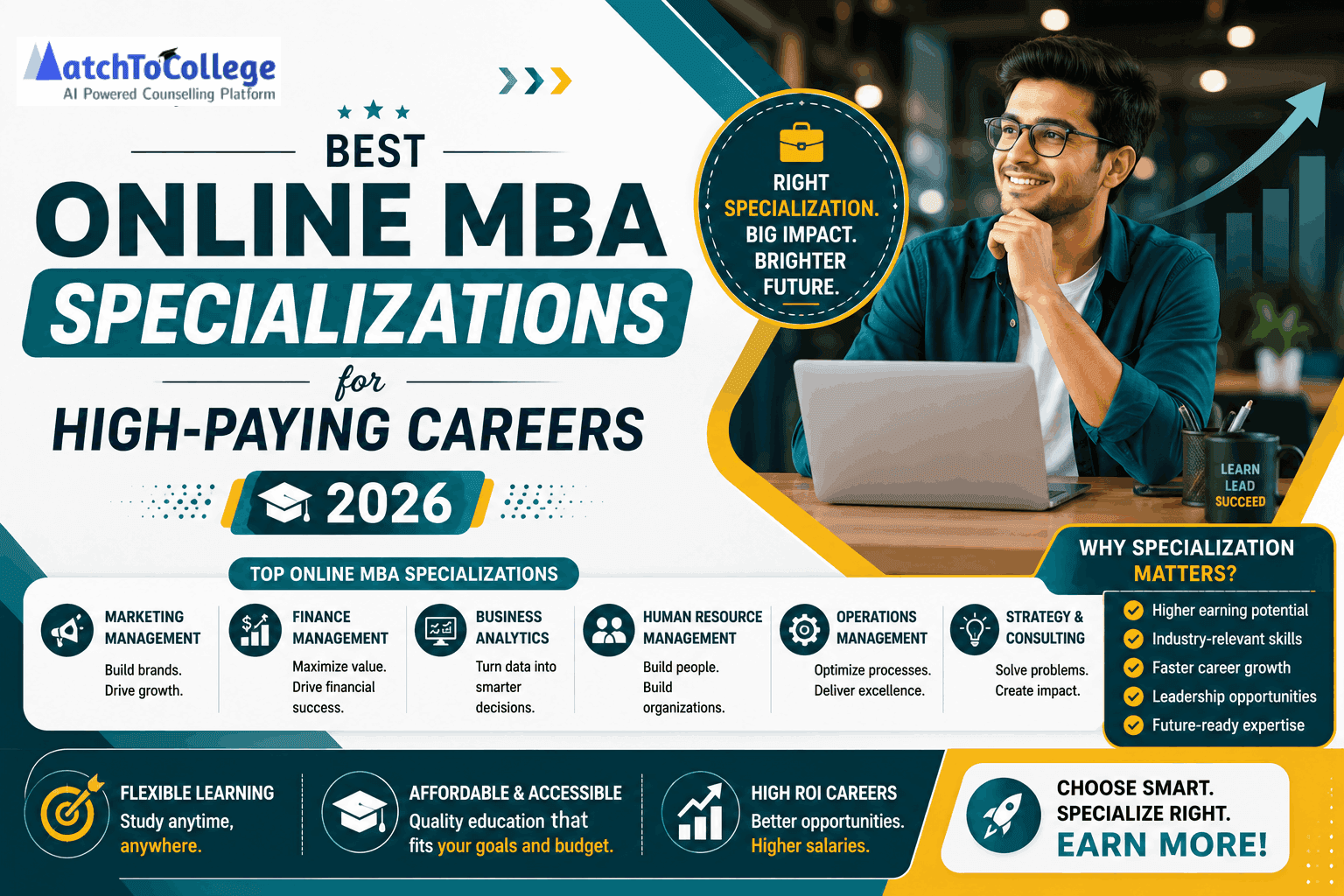
Best Online MBA Specializations for High-Paying Careers 2026
Discover the most lucrative online MBA specializations for 2026-27. Compare ROI, career growth, and use our AI tools to find your perfect management path.

Top Career Opportunities After an Online MBA in 2026-27
Discover high-paying career paths and roles after an online MBA in 2026-27. Explore salary trends, ROI, and tools to navigate your future professional success.
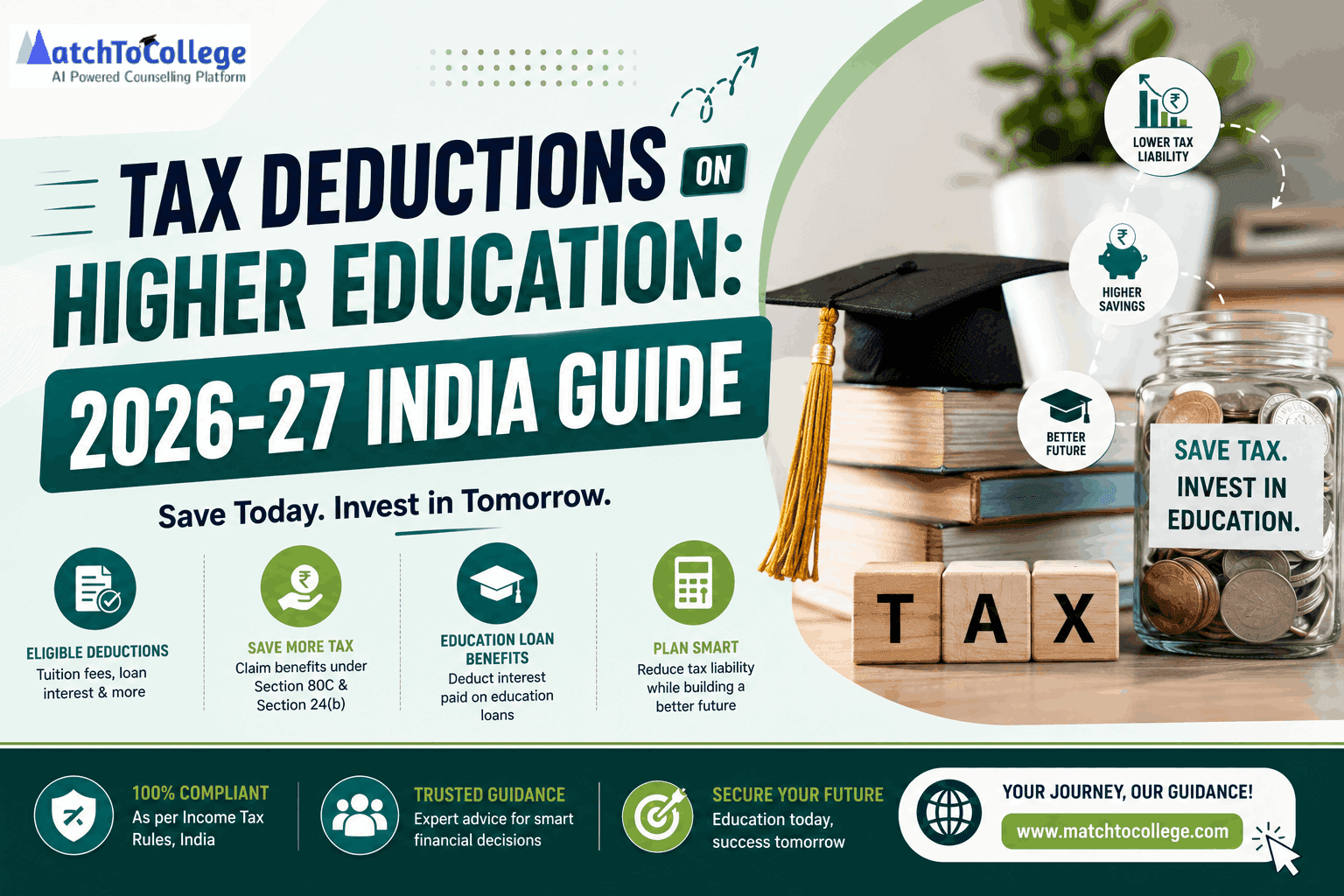
Tax Deductions on Higher Education: 2026-27 India Guide
Maximize your savings with our guide on tax deductions for higher education fees in India for FY 2026-27. Learn about Section 80C, 80E, and upskilling benefits.