

Cybersecurity for Students: How to protect your academic data from "Degree Ransoms."
Admission & Info Tools
Need Expert Assistance?
Our counselors can help you with fee structures, eligibility guidelines, and upcoming admission cutoffs instantly.
Direct Application Tools
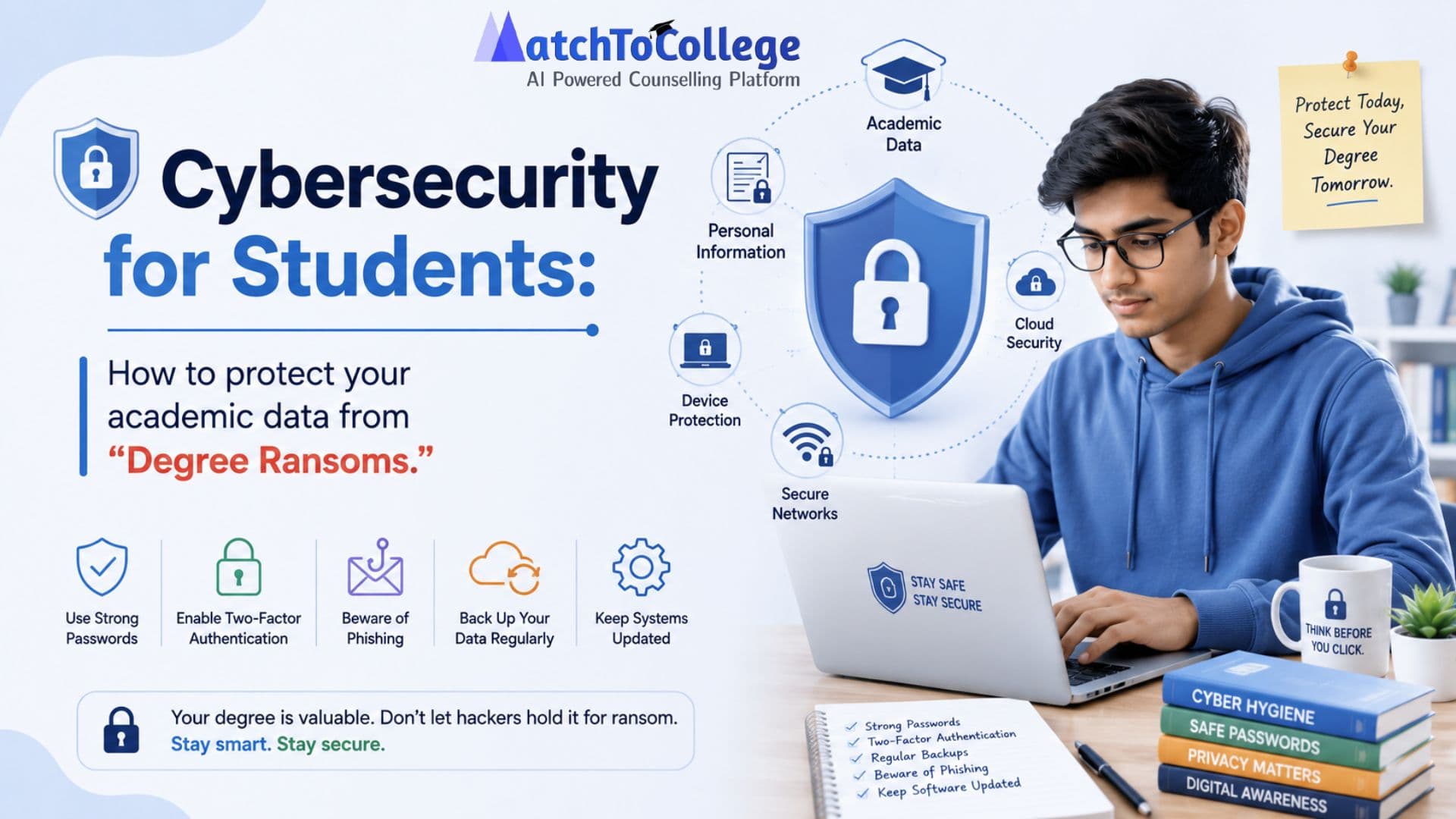
Protect Your Academic Data Securely
In today's digitally-driven academic world, students are more connected than ever. From online lectures and virtual assignments to cloud-based research and digital submission portals, your entire higher education journey is intertwined with technology. While this offers incredible convenience and access, it also opens the door to new and insidious threats. One such emerging danger, specifically targeting the academic sphere, is the concept of a "Degree Ransom" – a sophisticated form of cyberattack designed to jeopardize your academic future.
Imagine spending years diligently working towards your degree, only to find your crucial academic data – transcripts, research papers, assignment submissions, or even access to your university portal – locked down by malicious actors demanding payment. This isn't a dystopian future; it's a growing reality for students globally. As your trusted partner in navigating the complexities of higher education. We'll demystify what a "Degree Ransom" entails, explain why students are becoming prime targets, and, most importantly, provide actionable steps to protect your valuable academic data. Protecting your digital footprint is as crucial as maintaining your GPA. By adopting robust cybersecurity hygiene, you can ensure that your hard work and dedication are never held hostage, allowing you to focus on achieving your educational aspirations without fear. Let's dive in and empower you with the tools to secure your future.
What Are "Degree Ransoms" and Why Are Students Targets?
A "Degree Ransom" is a specialized form of ransomware attack that targets the critical academic data and access credentials of students. Unlike traditional ransomware that might lock down a personal computer, these attacks specifically aim at data essential for a student's educational progression. This could include access to learning management systems (LMS), university email accounts, crucial research files, dissertation drafts, or even official academic records like transcripts. The attackers then demand a payment, often in cryptocurrency, in exchange for restoring access or preventing the publication of sensitive information.
Students are increasingly becoming attractive targets for several reasons:
- High Value of Academic Progress: For a student, the loss of years of academic work or the inability to access university systems can be devastating, potentially delaying graduation or even leading to expulsion. This creates immense pressure to comply with demands.
- Perceived Lower Security Awareness: While tech-savvy, many students may not prioritize robust cybersecurity practices compared to businesses or government entities, making them easier targets for phishing scams and malware.
- Reliance on Digital Tools: Modern education relies heavily on digital platforms. Every assignment, lecture, and communication often occurs online, creating a vast digital footprint ripe for exploitation.
- Shared Networks & Devices: Students often use public Wi-Fi networks, share devices, or access their accounts from various locations, increasing vulnerability to eavesdropping and data breaches.
Essential Cybersecurity Habits for Protecting Your Academic Data
Safeguarding your academic future requires a proactive approach to online security. Here are essential cybersecurity habits every student should adopt:
- Strengthen Your Password Game: Create long, complex, and unique passwords for every academic account (university portal, email, cloud storage). Use a reputable password manager to store them securely. Never reuse passwords.
- Enable Multi-Factor Authentication (MFA): This is your strongest defense. Activate MFA (e.g., using an authenticator app or SMS code) on all university accounts, email, and social media. Even if a hacker gets your password, they can't log in without the second factor.
- Beware of Phishing and Social Engineering: Always be suspicious of unsolicited emails, texts, or calls asking for personal or login information. Verify the sender's identity. Never click on suspicious links or download attachments from unknown sources. This is how most ransomware infiltrates systems.
- Regularly Back Up Your Data: Don't rely solely on one storage location. Implement a robust data protection strategy by backing up all crucial academic files (research, assignments, notes) to at least two separate places – for example, an external hard drive and a secure cloud storage service.
- Keep Software Updated: Regularly update your operating system, web browsers, antivirus software, and all applications. These updates often include critical security patches that close vulnerabilities exploited by malware and ransomware.
- Secure Your Wi-Fi Connection: Avoid conducting sensitive academic work on public, unsecured Wi-Fi networks. If you must use them, consider using a Virtual Private Network (VPN) to encrypt your internet traffic. Ensure your home Wi-Fi network is password-protected and uses WPA2/WPA3 encryption.
- Review Privacy Settings: Understand and adjust the privacy settings on all your online accounts, social media, and university portals to limit the information you share publicly.
What to Do If You're Targeted by a "Degree Ransom" Attack
Despite your best efforts, cyberattacks can happen. Knowing how to react swiftly can minimize damage:
- Do NOT Pay the Ransom Immediately: While tempting, paying encourages attackers and offers no guarantee of data recovery. It also signals that you're a willing target for future attacks.
- Isolate Affected Devices: Disconnect any compromised computer or device from the internet and any network (Wi-Fi, Ethernet). This prevents the ransomware from spreading to other devices or network drives.
- Report to University IT/Security: Your university's IT department is your first and most crucial point of contact. They have resources and expertise to deal with such incidents and might have decryption tools or recovery protocols in place. They can also alert others.
- Change All Passwords: From an uncompromised device, immediately change the passwords for all your online accounts, especially those linked to your academic identity. Prioritize email, university portals, and banking.
- Utilize Backups: If you've been consistently backing up your data, you might be able to restore your files without engaging with the attackers.
- Seek Expert Help: If your university's IT department cannot fully resolve the issue, consider consulting a professional cybersecurity expert.
Share this Article
FAQFrequently Asked Questions
Q: What specifically is a "Degree Ransom"?
A "Degree Ransom" is a type of ransomware attack specifically designed to target students by locking access to their critical academic data (e.g., assignments, research, transcripts, university portal access) and demanding payment, usually in cryptocurrency, to restore access or prevent data leakage. It leverages the high value students place on their academic progress.
Q: Should I pay the ransom if my academic data is held hostage?
No, it is generally advised not to pay the ransom. Paying encourages cybercriminals, does not guarantee the return of your data, and may mark you as a vulnerable target for future attacks. Instead, immediately isolate the affected device, report the incident to your university's IT department, change all your passwords, and attempt to restore your data from secure backups.
Get More Info About Cybersecurity for Students
Recommended Reading

Best Online MBA Specializations for High-Paying Careers 2026
Discover the most lucrative online MBA specializations for 2026-27. Compare ROI, career growth, and use our AI tools to find your perfect management path.

Top Career Opportunities After an Online MBA in 2026-27
Discover high-paying career paths and roles after an online MBA in 2026-27. Explore salary trends, ROI, and tools to navigate your future professional success.

Tax Deductions on Higher Education: 2026-27 India Guide
Maximize your savings with our guide on tax deductions for higher education fees in India for FY 2026-27. Learn about Section 80C, 80E, and upskilling benefits.