

Portfolio vs. Degree: Tech Prioritizes Projects
Admission & Info Tools
Need Expert Assistance?
Our counselors can help you with fee structures, eligibility guidelines, and upcoming admission cutoffs instantly.
Direct Application Tools

Portfolio vs. Degree
In the rapidly evolving world of technology, the traditional path from a university degree directly to a high-paying job is being re-evaluated. For aspiring tech professionals and their parents, a critical question emerges: Does a prestigious degree still hold the same weight as a robust, demonstrable portfolio of projects? The answer, increasingly, points towards the latter.
Tech giants and innovative startups alike are shifting their hiring paradigms. They're moving beyond mere academic credentials to prioritize tangible skills, practical experience, and a proven ability to solve real-world problems. This paradigm shift means that while a degree can provide a foundational understanding, it's your portfolio—a collection of completed projects showcasing your technical prowess, problem-solving abilities, and initiative—that truly opens doors.
This blog post will delve into why tech companies are increasingly focused on what you can *do*, rather than just where you've studied. We'll explore the advantages of a strong portfolio, how it reflects job market readiness, and why demonstrating practical application of skills is paramount in today's competitive landscape. Whether you're considering a coding bootcamp, self-taught learning, or traditional higher education, understanding this crucial distinction is vital for navigating your career path effectively.
The Evolving Tech Landscape: A Skill-Based Revolution
The tech industry moves at lightning speed, far quicker than academic curricula can often adapt. This dynamic environment necessitates a workforce that can hit the ground running, possessing not just theoretical knowledge but also practical, hands-on experience. Companies are no longer content with candidates who merely understand concepts; they seek individuals who can apply those concepts to build, innovate, and debug.
This shift has fueled a skill-based hiring revolution. Employers are more interested in seeing proof of your coding abilities, data analysis skills, UI/UX design capabilities, or software development expertise through tangible projects. They want to see how you approach problems, collaborate, and bring ideas to fruition. This emphasis on demonstrable skills means that a candidate with an impressive portfolio, even without a traditional computer science degree, can often outshine one with just academic accolades.
Why Practical Projects Outshine Academic Credentials
A well-curated project portfolio serves as a powerful testament to your capabilities in ways a transcript simply cannot. It offers concrete evidence of your practical experience and technical skills. Here’s why projects are so highly valued:
- Demonstrates Problem-Solving: Each project showcases your ability to identify a problem, design a solution, and implement it.
- Highlights Initiative & Passion: Independent projects reveal self-motivation and a genuine passion for technology, qualities highly sought after.
- Exhibits Technical Proficiency: Recruiters can directly assess your proficiency in specific programming languages, frameworks, and tools.
- Shows Real-World Application: Projects that solve practical problems or interact with real data demonstrate an understanding of industry challenges.
- Fosters Collaboration: Group projects illustrate your teamwork and communication skills, crucial for tech teams.
From a data science portfolio analyzing complex datasets to a full-stack web development project, each piece adds to a compelling narrative of your abilities.
Building a Standout Portfolio: Actionable Steps
So, how do you create a portfolio that grabs attention? It's about quality, relevance, and presentation. Start by identifying your target roles and the skills they require. Then, embark on projects that directly showcase those skills. This could involve contributing to open-source projects, creating personal applications, participating in hackathons, or developing solutions for non-profits.
Document your process meticulously: explain the problem you tackled, your chosen technologies, the challenges you faced, and your solutions. Host your code on platforms like GitHub and create a professional website to showcase your work. Regularly update your portfolio with new and improved projects. Remember, even if you're pursuing a degree, actively building a portfolio concurrently will significantly enhance your job market readiness.
The Role of a Degree in a Portfolio-First World
While projects often take center stage, a degree is far from irrelevant. It provides a structured learning environment, foundational theoretical knowledge, networking opportunities, and often access to internships that can kickstart your portfolio development. For some specialized fields like AI research or highly regulated industries, a degree might still be a prerequisite.
The key is to view a degree as a powerful *complement* to your portfolio, not a replacement for it. Use your academic journey to gain deep theoretical understanding, but always seek opportunities to apply that knowledge through practical projects. When combined, a solid academic foundation and a robust portfolio create an unstoppable profile.
MatchToCollege: Your Partner in Navigating Your Tech Career Path
Understanding the evolving demands of the tech industry can be daunting. At MatchToCollege, our AI-powered higher education counseling platform is designed to provide personalized guidance, helping students and parents navigate these complexities. Whether you're aiming for an MBA, an Engineering degree, or exploring study abroad options, we help you identify programs that not only provide strong academic foundations but also foster the practical skills and project opportunities crucial for today's job market.
We empower you to strategically plan your educational journey to build a profile that resonates with top tech companies. Let MatchToCollege guide you in leveraging both academic excellence and practical experience to achieve your career aspirations.
Share this Article
FAQFrequently Asked Questions
Q: Do tech companies really ignore degrees?
No, they don't ignore degrees entirely, especially for foundational knowledge. However, they place significantly higher emphasis on practical skills demonstrated through a project portfolio. Many tech companies now offer alternative pathways for talented individuals without traditional degrees.
Q: How can I build a strong tech portfolio?
Focus on creating projects that solve real-world problems, contribute to open-source initiatives, participate in hackathons, and develop personal applications. Document your process, use version control (like GitHub), and build a professional website to showcase your work.
Q: Is a degree completely useless for tech jobs?
Absolutely not. A degree provides a strong theoretical foundation, critical thinking skills, networking opportunities, and can be crucial for specific roles or advanced research. However, it's most effective when combined with a robust portfolio that demonstrates practical application of your knowledge.
Q: What kind of projects should I include in my portfolio?
Include projects that showcase the skills relevant to the roles you aspire to. For software development, this might include web apps, mobile apps, or backend services. For data science, projects involving data analysis, machine learning models, or data visualization are excellent. Always aim for projects that are complete, well-documented, and demonstrate your unique problem-solving approach.
Get More Info About Portfolio vs. Degree
Recommended Reading
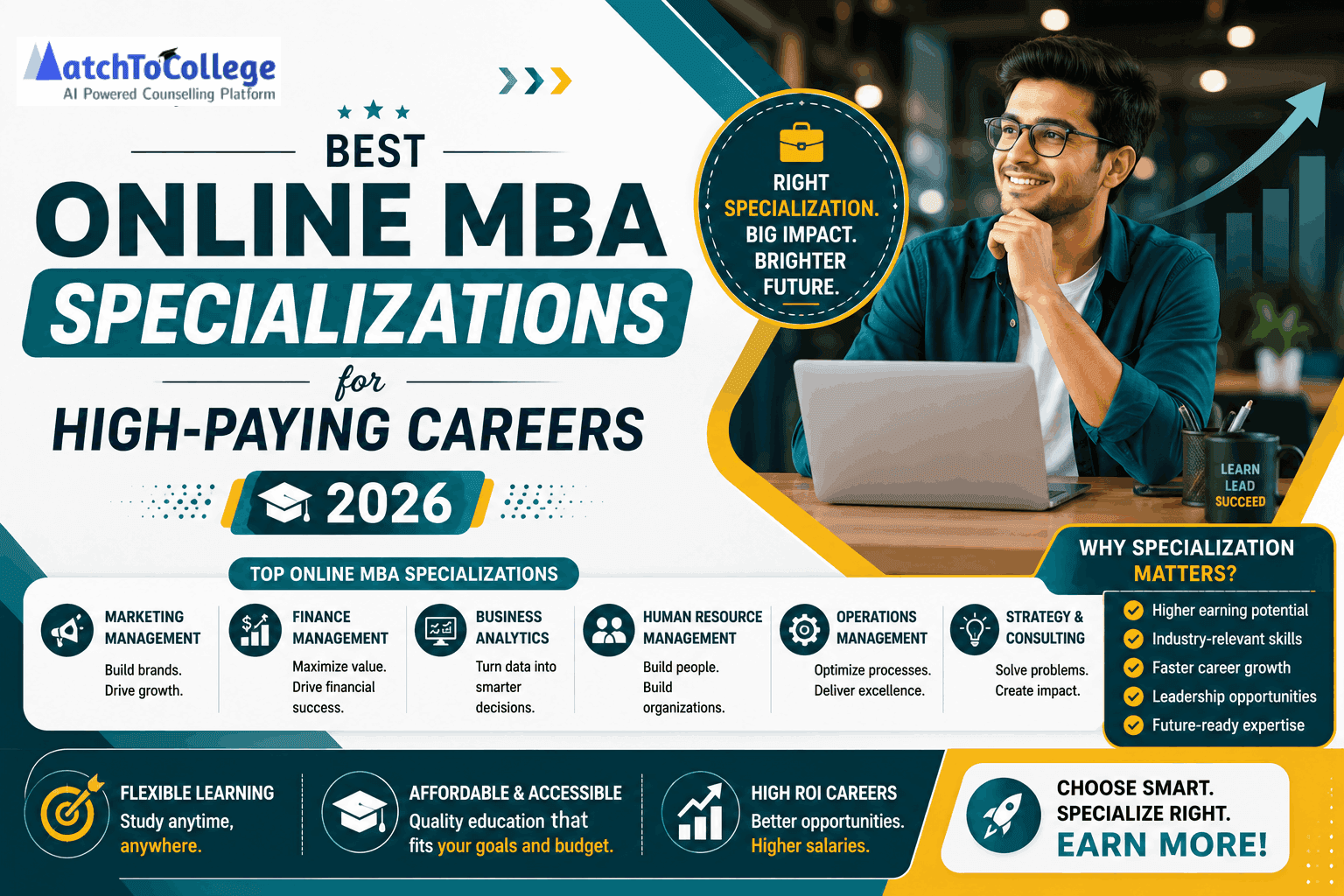
Best Online MBA Specializations for High-Paying Careers 2026
Discover the most lucrative online MBA specializations for 2026-27. Compare ROI, career growth, and use our AI tools to find your perfect management path.

Top Career Opportunities After an Online MBA in 2026-27
Discover high-paying career paths and roles after an online MBA in 2026-27. Explore salary trends, ROI, and tools to navigate your future professional success.

Tax Deductions on Higher Education: 2026-27 India Guide
Maximize your savings with our guide on tax deductions for higher education fees in India for FY 2026-27. Learn about Section 80C, 80E, and upskilling benefits.