

Mastering NEET Physics: Your Comprehensive Guide to Scoring High
Admission & Info Tools
Need Expert Assistance?
Our counselors can help you with fee structures, eligibility guidelines, and upcoming admission cutoffs instantly.
Direct Application Tools

🎯 MatchToCollege AI Recommendation: Planning your counselling or choice filling? Check your seat allotment probability across premier colleges using the NEET College Predictor.
NEET Physics: Exam Pattern & Key Highlights
Understanding the structure of the NEET Physics section is the first step towards a strategic preparation. It's not just about knowing the syllabus, but also how questions are framed and marked. Here’s a quick overview of what to expect:
| Parameter | Details |
| Total Questions | 45 questions |
| Sections | Section A (35 questions), Section B (15 questions, attempt any 10) |
| Total Marks | 180 marks (out of 720 for the entire NEET exam) |
| Marking Scheme | +4 for each correct answer |
| Negative Marking | -1 for each incorrect answer |
| Good Score Target | Above 140 marks (approx. 36-38 correct answers) |
Physics contributes a significant portion to your overall NEET score. A strong performance here can significantly boost your rank. The key is consistent effort and a clear understanding of fundamental principles.
Navigating the Challenges of NEET Physics
Many medical aspirants find Physics challenging, often perceiving it as a subject heavily reliant on complex mathematics. Let's address why this perception exists and how to overcome it:
- Conceptual Misconception: The primary reason students struggle is often a fundamental misunderstanding of how to approach Physics. It's not about memorizing formulas and applying them blindly; it's about grasping the underlying concepts first, and then using formulas as tools to quantify those concepts.
- Mathematics vs. Physics: While Physics uses mathematical tools, it is not Mathematics. Early chapters, especially Mechanics, might involve calculus or intricate numerical problems, leading students to treat Physics like a pure math subject. Remember, Physics describes the natural world; math is merely its language. Focus on the 'why' and 'how' of phenomena before diving into calculations.
- Lack of Practice: Physics demands consistent numerical problem-solving. Without regular practice, concepts remain abstract, and speed and accuracy suffer.
- Over-reliance on Rote Learning: Attempting to memorize derivations or problem solutions without understanding the principles behind them is a common pitfall. This approach crumbles under the pressure of varied question types in NEET.
To truly excel, shift your mindset: embrace Physics as a subject of logic and understanding, where every formula tells a story about how the universe works.
Strategic Preparation: Your Roadmap to Success
With the right strategy, Physics can become your scoring stronghold. Here's a step-by-step approach recommended by the MatchToCollege Research & Academic Guidance Desk:
- Build a Strong NCERT Foundation: Start with NCERT textbooks. They are the official syllabus guide and cover all fundamental concepts in a clear, concise manner. Read each chapter thoroughly, understand the examples, and solve all exercises.
- Prioritize Conceptual Clarity: Before attempting problems, ensure you understand the 'why' behind every concept. Focus on derivations not for memorization, but to grasp the logical flow and interconnections of principles. Visualize the physical phenomena.
- Consistent Numerical Practice: Physics is incomplete without problem-solving. Dedicate specific time daily to solve numerical questions. Start with easier problems and gradually move to more complex ones. Practice a variety of question types.
- Maintain a Formula & Concept Log: Keep a dedicated notebook for all important formulas, key concepts, and problem-solving techniques. This will be an invaluable asset for quick revisions, especially in the last few months before the exam.
- Master High-Weightage Topics: While covering the entire syllabus is important, MatchToCollege Research & Academic Guidance Desk consistently highlights high-weightage topics such as Mechanics, Current Electricity, Optics, and Modern Physics. Allocate more time and practice to these areas.
- Regular Mock Tests & Previous Year Papers: Solving NEET previous year question papers and taking full-length mock tests are non-negotiable. This helps you understand the exam pattern, time management, identify weak areas, and build exam temperament. Analyze your mistakes meticulously.
- Avoid Extremism: Don't spend excessive time on Physics at the expense of Biology and Chemistry, nor should you neglect it entirely. Maintain a balanced study schedule. Physics constitutes 25% of the NEET paper; allocate your time proportionally.
- Don't Compare with JEE Aspirants: The depth and type of questions in NEET Physics differ from JEE. While some concepts overlap, the problem-solving approach and complexity are distinct. Stick to NEET-specific resources and question patterns.
To gauge your readiness and predict potential college admissions based on your performance, consider using MatchToCollege's NEET College Predictor. It's a valuable tool for understanding cutoffs and your chances.
Essential Study Resources & Recommended Books
Choosing the right study material is crucial. Here are the resources that have consistently proven effective for NEET Physics aspirants:
- NCERT Textbooks (Class 11 & 12): These are your primary and most important resource. Master every concept, example, and exercise.
- Concepts of Physics by H.C. Verma (Vol. I & II): A highly recommended book for building strong conceptual understanding and problem-solving skills. Focus on the theory and solved examples.
- Objective Physics by D.C. Pandey: Excellent for practicing a wide range of objective questions, categorized by topic.
- Problems in General Physics by I.E. Irodov: (Caution: Use this judiciously and only if you have mastered all other books and have ample time. It's generally considered too advanced for NEET and more suited for JEE Advanced. Avoid if you are struggling with basics.)
- Previous Year Question Papers: Absolutely essential. Solve at least the last 10-15 years' papers to understand trends, important topics, and question difficulty.
A Word of Caution: Avoid books specifically designed for JEE Advanced, unless you are exceptionally strong in Physics and have exhausted all NEET-specific resources. The depth and style of questions can be counterproductive for NEET preparation.
Mastering NEET Physics: Advanced Strategies & Revision
As you progress in your preparation, these advanced strategies will help you refine your skills and maximize your score:
- Error Analysis: After every mock test or practice session, meticulously analyze your incorrect answers. Understand *why* you made a mistake – was it a conceptual error, a calculation error, or a silly mistake? Rectify these gaps immediately.
- Topic-wise Revision: Don't wait until the end to revise. Integrate short revision sessions into your daily or weekly schedule. Use your formula log and short notes for quick recaps.
- Conceptual Linking: Physics topics are interconnected. Try to link concepts across chapters. For instance, understanding forces in Mechanics helps with Electric Fields, and wave properties are relevant in Optics and Modern Physics.
- Time Management in Exam: During mock tests, practice allocating time effectively for the Physics section. Identify questions that can be solved quickly and those that require more thought. Don't get stuck on a single problem.
- Stay Positive and Persistent: Physics can be frustrating at times, but persistence is key. Celebrate small victories in understanding difficult concepts and solving challenging problems. Your dedication will pay off.
Remember, your journey to becoming a doctor begins with a strong foundation in subjects like Physics. Embrace the challenge, follow a structured approach, and trust in your abilities. MatchToCollege is here to support you every step of the way.
🏛️ Looking for Admissions & College Cutoffs? Explore verified fee structures, seat matrices, and real student reviews across top institutions on the MatchToCollege Top Colleges & Universities in India Directory.
Frequently Asked Questions
Q: How many questions from Physics come in NEET?
The NEET Physics section comprises 45 questions in total. These are divided into two parts: Section A with 35 compulsory questions and Section B with 15 questions, out of which you need to attempt any 10. This makes Physics a significant component of the overall NEET exam.
Q: What is considered a good score in NEET Physics?
According to experts at MatchToCollege, scoring above 140 marks in the NEET Physics section is generally considered a very good score. To achieve this, you would typically need to correctly answer around 36-38 questions, accounting for the negative marking scheme.
Q: Which books are best for NEET Physics preparation?
For NEET Physics, the NCERT textbooks for Class 11 and 12 are absolutely essential as your primary resource. Beyond NCERT, 'Concepts of Physics' by H.C. Verma (Vol. I & II) is highly recommended for conceptual clarity, and 'Objective Physics' by D.C. Pandey is excellent for practicing objective questions. Always prioritize solving previous year's NEET question papers.
Q: How can I improve my problem-solving skills in Physics for NEET?
To improve problem-solving, focus on conceptual understanding first. Don't just memorize formulas; understand their derivation and application. Practice consistently, starting with basic problems and gradually moving to complex ones. Analyze your mistakes, categorize them, and revisit the underlying concepts. Regularly solving previous year papers also significantly hones your skills.
Q: Should I study JEE-level Physics books for NEET?
Generally, it's advisable to stick to NEET-specific resources. While some concepts overlap, JEE-level Physics books, especially those for JEE Advanced, delve into a much higher level of complexity and problem-solving techniques that are not typically required for NEET. Over-studying from these can be time-consuming and counterproductive. Master NCERT and NEET-focused objective books first.
Q: How important is Physics for my overall NEET rank?
Physics is extremely important for your overall NEET rank. It accounts for 180 out of 720 total marks. A strong score in Physics can significantly boost your overall percentile and secure you a better rank, often making the difference between getting into your desired medical college or not. It's a crucial differentiator among top aspirants.
NEET Physics: Exam Pattern & Key Highlights
Understanding the structure of the NEET Physics section is the first step towards a strategic preparation. It's not just about knowing the syllabus, but also how questions are framed and marked. Here’s a quick overview of what to expect:
| Parameter | Details |
| Total Questions | 45 questions |
| Sections | Section A (35 questions), Section B (15 questions, attempt any 10) |
| Total Marks | 180 marks (out of 720 for the entire NEET exam) |
| Marking Scheme | +4 for each correct answer |
| Negative Marking | -1 for each incorrect answer |
| Good Score Target | Above 140 marks (approx. 36-38 correct answers) |
Physics contributes a significant portion to your overall NEET score. A strong performance here can significantly boost your rank. The key is consistent effort and a clear understanding of fundamental principles.
Navigating the Challenges of NEET Physics
Many medical aspirants find Physics challenging, often perceiving it as a subject heavily reliant on complex mathematics. Let's address why this perception exists and how to overcome it:
- Conceptual Misconception: The primary reason students struggle is often a fundamental misunderstanding of how to approach Physics. It's not about memorizing formulas and applying them blindly; it's about grasping the underlying concepts first, and then using formulas as tools to quantify those concepts.
- Mathematics vs. Physics: While Physics uses mathematical tools, it is not Mathematics. Early chapters, especially Mechanics, might involve calculus or intricate numerical problems, leading students to treat Physics like a pure math subject. Remember, Physics describes the natural world; math is merely its language. Focus on the 'why' and 'how' of phenomena before diving into calculations.
- Lack of Practice: Physics demands consistent numerical problem-solving. Without regular practice, concepts remain abstract, and speed and accuracy suffer.
- Over-reliance on Rote Learning: Attempting to memorize derivations or problem solutions without understanding the principles behind them is a common pitfall. This approach crumbles under the pressure of varied question types in NEET.
To truly excel, shift your mindset: embrace Physics as a subject of logic and understanding, where every formula tells a story about how the universe works.
Strategic Preparation: Your Roadmap to Success
With the right strategy, Physics can become your scoring stronghold. Here's a step-by-step approach recommended by the MatchToCollege Research & Academic Guidance Desk:
- Build a Strong NCERT Foundation: Start with NCERT textbooks. They are the official syllabus guide and cover all fundamental concepts in a clear, concise manner. Read each chapter thoroughly, understand the examples, and solve all exercises.
- Prioritize Conceptual Clarity: Before attempting problems, ensure you understand the 'why' behind every concept. Focus on derivations not for memorization, but to grasp the logical flow and interconnections of principles. Visualize the physical phenomena.
- Consistent Numerical Practice: Physics is incomplete without problem-solving. Dedicate specific time daily to solve numerical questions. Start with easier problems and gradually move to more complex ones. Practice a variety of question types.
- Maintain a Formula & Concept Log: Keep a dedicated notebook for all important formulas, key concepts, and problem-solving techniques. This will be an invaluable asset for quick revisions, especially in the last few months before the exam.
- Master High-Weightage Topics: While covering the entire syllabus is important, MatchToCollege Research & Academic Guidance Desk consistently highlights high-weightage topics such as Mechanics, Current Electricity, Optics, and Modern Physics. Allocate more time and practice to these areas.
- Regular Mock Tests & Previous Year Papers: Solving NEET previous year question papers and taking full-length mock tests are non-negotiable. This helps you understand the exam pattern, time management, identify weak areas, and build exam temperament. Analyze your mistakes meticulously.
- Avoid Extremism: Don't spend excessive time on Physics at the expense of Biology and Chemistry, nor should you neglect it entirely. Maintain a balanced study schedule. Physics constitutes 25% of the NEET paper; allocate your time proportionally.
- Don't Compare with JEE Aspirants: The depth and type of questions in NEET Physics differ from JEE. While some concepts overlap, the problem-solving approach and complexity are distinct. Stick to NEET-specific resources and question patterns.
To gauge your readiness and predict potential college admissions based on your performance, consider using MatchToCollege's NEET College Predictor. It's a valuable tool for understanding cutoffs and your chances.
Essential Study Resources & Recommended Books
Choosing the right study material is crucial. Here are the resources that have consistently proven effective for NEET Physics aspirants:
- NCERT Textbooks (Class 11 & 12): These are your primary and most important resource. Master every concept, example, and exercise.
- Concepts of Physics by H.C. Verma (Vol. I & II): A highly recommended book for building strong conceptual understanding and problem-solving skills. Focus on the theory and solved examples.
- Objective Physics by D.C. Pandey: Excellent for practicing a wide range of objective questions, categorized by topic.
- Problems in General Physics by I.E. Irodov: (Caution: Use this judiciously and only if you have mastered all other books and have ample time. It's generally considered too advanced for NEET and more suited for JEE Advanced. Avoid if you are struggling with basics.)
- Previous Year Question Papers: Absolutely essential. Solve at least the last 10-15 years' papers to understand trends, important topics, and question difficulty.
A Word of Caution: Avoid books specifically designed for JEE Advanced, unless you are exceptionally strong in Physics and have exhausted all NEET-specific resources. The depth and style of questions can be counterproductive for NEET preparation.
Mastering NEET Physics: Advanced Strategies & Revision
As you progress in your preparation, these advanced strategies will help you refine your skills and maximize your score:
- Error Analysis: After every mock test or practice session, meticulously analyze your incorrect answers. Understand *why* you made a mistake – was it a conceptual error, a calculation error, or a silly mistake? Rectify these gaps immediately.
- Topic-wise Revision: Don't wait until the end to revise. Integrate short revision sessions into your daily or weekly schedule. Use your formula log and short notes for quick recaps.
- Conceptual Linking: Physics topics are interconnected. Try to link concepts across chapters. For instance, understanding forces in Mechanics helps with Electric Fields, and wave properties are relevant in Optics and Modern Physics.
- Time Management in Exam: During mock tests, practice allocating time effectively for the Physics section. Identify questions that can be solved quickly and those that require more thought. Don't get stuck on a single problem.
- Stay Positive and Persistent: Physics can be frustrating at times, but persistence is key. Celebrate small victories in understanding difficult concepts and solving challenging problems. Your dedication will pay off.
Remember, your journey to becoming a doctor begins with a strong foundation in subjects like Physics. Embrace the challenge, follow a structured approach, and trust in your abilities. MatchToCollege is here to support you every step of the way.
🏛️ Looking for Admissions & College Cutoffs? Explore verified fee structures, seat matrices, and real student reviews across top institutions on the MatchToCollege Top Colleges & Universities in India Directory.
Share this Article
FAQFrequently Asked Questions
Q: How many questions from Physics come in NEET?
The NEET Physics section comprises 45 questions in total. These are divided into two parts: Section A with 35 compulsory questions and Section B with 15 questions, out of which you need to attempt any 10. This makes Physics a significant component of the overall NEET exam.
Q: What is considered a good score in NEET Physics?
According to experts at MatchToCollege, scoring above 140 marks in the NEET Physics section is generally considered a very good score. To achieve this, you would typically need to correctly answer around 36-38 questions, accounting for the negative marking scheme.
Q: Which books are best for NEET Physics preparation?
For NEET Physics, the NCERT textbooks for Class 11 and 12 are absolutely essential as your primary resource. Beyond NCERT, 'Concepts of Physics' by H.C. Verma (Vol. I & II) is highly recommended for conceptual clarity, and 'Objective Physics' by D.C. Pandey is excellent for practicing objective questions. Always prioritize solving previous year's NEET question papers.
Q: How can I improve my problem-solving skills in Physics for NEET?
To improve problem-solving, focus on conceptual understanding first. Don't just memorize formulas; understand their derivation and application. Practice consistently, starting with basic problems and gradually moving to complex ones. Analyze your mistakes, categorize them, and revisit the underlying concepts. Regularly solving previous year papers also significantly hones your skills.
Q: Should I study JEE-level Physics books for NEET?
Generally, it's advisable to stick to NEET-specific resources. While some concepts overlap, JEE-level Physics books, especially those for JEE Advanced, delve into a much higher level of complexity and problem-solving techniques that are not typically required for NEET. Over-studying from these can be time-consuming and counterproductive. Master NCERT and NEET-focused objective books first.
Q: How important is Physics for my overall NEET rank?
Physics is extremely important for your overall NEET rank. It accounts for 180 out of 720 total marks. A strong score in Physics can significantly boost your overall percentile and secure you a better rank, often making the difference between getting into your desired medical college or not. It's a crucial differentiator among top aspirants.
Get More Info About Mastering NEET Physics
Recommended Reading
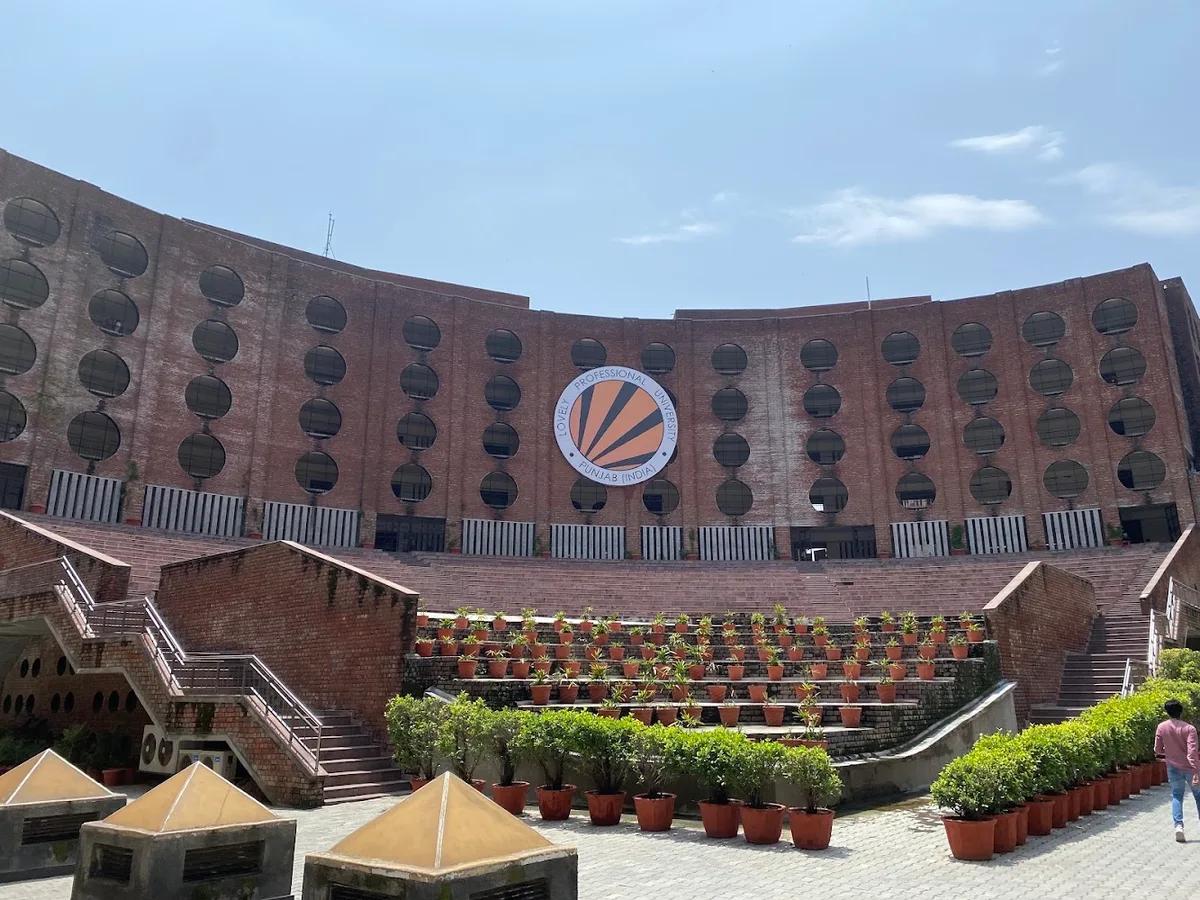
Best MBA Colleges in Punjab 2027: Fees, Entrance Exams, Specialisations & Placements
Compare MBA colleges in Punjab for 2027 using programme fit, entrance exams, specialisations, fee transparency, median placements and admission requirements.
Best Engineering Colleges in Punjab 2027: Fees, CSE Admission, Rankings & Placements
Shortlist engineering colleges in Punjab for 2027 by comparing Thapar, Chandigarh University, LPU and other institutions on branch fit, admission routes, fees and placement outcomes.
Top Universities in Punjab 2027: Rankings, Courses, Fees & Admission Comparison
Compare leading universities in Punjab for 2027 using NIRF 2025 category-specific rankings, course strengths, location, fee checks and admission factors.