

Metaverse Campus: My Immersive 3D Virtual Classroom Journey
Admission & Info Tools
Need Expert Assistance?
Our counselors can help you with fee structures, eligibility guidelines, and upcoming admission cutoffs instantly.
Direct Application Tools
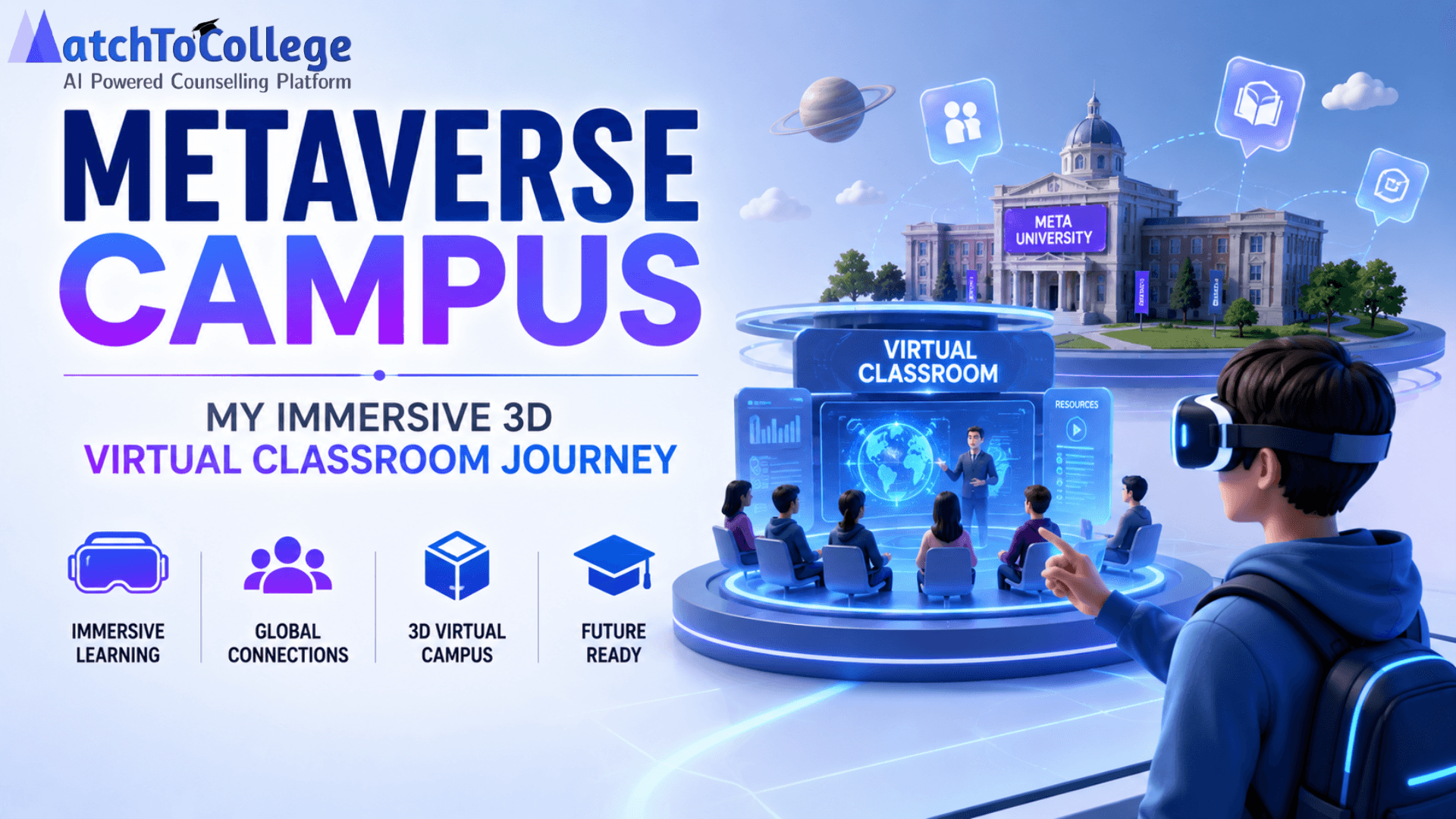
Metaverse Campus
Forget flat screens, static webinars, and the familiar grid of faces in a typical online class. Imagine stepping into a vibrant, three-dimensional digital environment where your avatar walks through virtual lecture halls, collaborates with classmates in interactive labs, and even explores historical sites that feel incredibly real. This isn't science fiction; it's the reality of a metaverse campus, and I recently had the chance to experience a 3D virtual classroom firsthand.
As higher education continues its rapid evolution, driven by technological advancements like artificial intelligence and virtual reality, institutions are exploring innovative ways to deliver engaging and effective learning experiences. For students and parents navigating the increasingly complex landscape of college admissions, understanding these emerging trends is crucial. Platforms like MatchToCollege are becoming indispensable, helping aspiring students find programs that aren't just ranked high, but are also future-proof, integrating cutting-edge technologies that will define tomorrow's careers.
My journey into the metaverse campus wasn't just a novelty; it was a revelation. It offered a glimpse into a future where geographical barriers to elite education crumble, where learning becomes an active, experiential adventure rather than a passive information transfer. This immersive education model promises to revolutionize how we think about higher learning, from engineering simulations to medical training, and even interdisciplinary arts. It’s an exciting time, but also one that requires informed decision-making. How do you find the right university embracing these immersive learning environments? How do you assess the quality of a digital campus versus a traditional one? These are the questions MatchToCollege aims to answer, ensuring every student finds their perfect academic match, whether that's in a historic lecture hall or a cutting-edge virtual reality education space.
Join me as I recount my experience, delving into the practicalities, the excitements, and the profound implications of attending a class in the metaverse. We'll explore how these 3D classrooms are setting new benchmarks for engagement, collaboration, and understanding, and what this paradigm shift means for your educational journey and career prospects.
Stepping into the Digital Realm: My First Impressions
The moment I logged in, the difference was palpable. Instead of a typical video conference, I was prompted to customize my avatar – a digital representation that would be my persona on the metaverse campus. After a quick character creation, I found myself in a bustling virtual common area, a vibrant digital twin of a university quad. Other student avatars milled about, some chatting in spatial audio, giving the impression of actual presence. My first class, an Introduction to Digital Ethics, took place in a beautifully rendered amphitheater. The lecturer, a glowing avatar, stood at a virtual podium, his voice emanating from the direction of his digital self. The feeling of 'being there' was surprisingly strong, far surpassing the engagement level of any 2D online meeting. It wasn't just a video feed; it was a place I could inhabit, explore, and interact within. This truly felt like a global learning environment.
Learning Reimagined: Engaging Beyond Expectations
What truly set this immersive learning experience apart was the level of interaction. In a virtual anatomy class, instead of looking at diagrams, we could manipulate a 3D model of the human heart, zooming in, dissecting layers, and observing blood flow simulations – all collaboratively with classmates. For an architecture course, we walked through a digital campus building model, critiquing designs in real-time as if we were actually on-site. Group projects moved beyond shared documents; we met in virtual meeting rooms, sharing interactive whiteboards, projecting designs onto digital walls, and conversing with spatial audio that mimicked real-world acoustics. This wasn't just passive consumption; it was active, hands-on, and deeply experiential learning. The use of VR education elements made complex concepts intuitively understandable, boosting both retention and critical thinking skills. It felt like the future of higher education had arrived.
Navigating the New Frontier: Challenges & Opportunities
While the potential of the metaverse campus is immense, it's not without its challenges. Issues like equitable access to high-end VR hardware, potential digital fatigue, and the need for robust cybersecurity are all critical considerations. However, the opportunities far outweigh the hurdles. Metaverse education democratizes access to world-class institutions, allowing students from diverse backgrounds and geographies to attend. It facilitates unprecedented global collaboration, fosters specialized skill development through hyper-realistic simulations, and can even offer personalized learning paths tailored to individual student needs. For parents and students seeking to navigate this evolving landscape, platforms like MatchToCollege are vital. We help identify universities leading the charge in EdTech innovations, connecting you with programs that offer not just traditional excellence but also integrate cutting-edge AI in education and immersive technologies, ensuring you’re prepared for a future where digital and physical worlds increasingly merge.
Share this Article
FAQFrequently Asked Questions
Q: What exactly is a 'Metaverse Campus' in higher education?
A Metaverse Campus is a persistent, interactive 3D virtual environment where students, faculty, and staff can engage in learning, social activities, and administrative tasks using avatars. It goes beyond traditional online learning by offering immersive, experiential learning opportunities through virtual reality (VR) and augmented reality (AR) technologies, simulating a real-world campus experience digitally.
Q: How will metaverse learning impact the value of a traditional degree and future career paths?
Metaverse learning is not designed to replace traditional degrees but rather to enhance and complement them. It adds immense value by providing specialized, hands-on skills through virtual labs, global collaboration, and access to unique simulations that might be impossible in physical settings. Degrees earned through metaverse campuses or hybrid models can demonstrate adaptability, technological proficiency, and readiness for future-forward careers, making graduates highly competitive in a rapidly evolving job market. MatchToCollege can help you find programs that leverage these innovations effectively.
Get More Info About Metaverse Campus
Recommended Reading
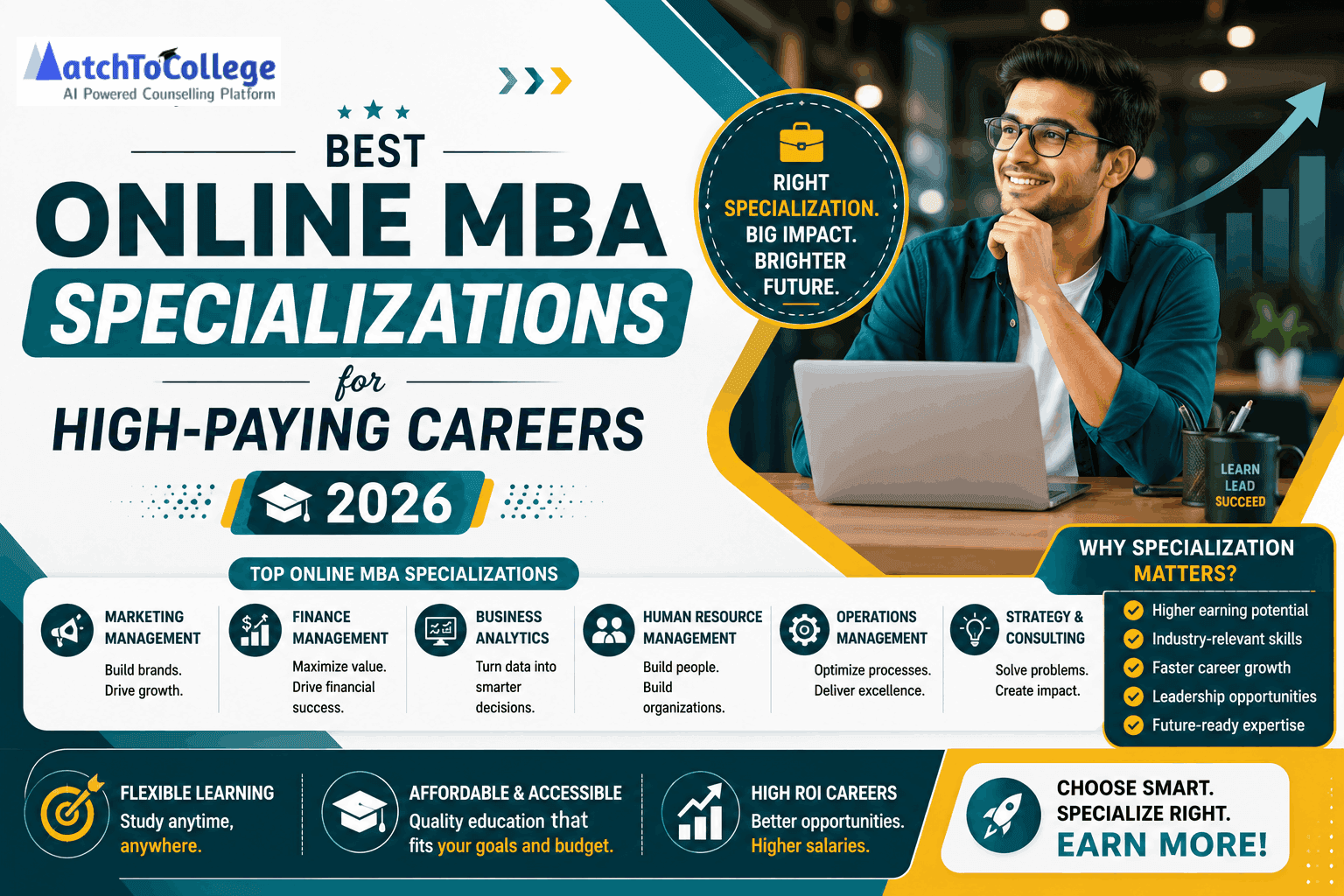
Best Online MBA Specializations for High-Paying Careers 2026
Discover the most lucrative online MBA specializations for 2026-27. Compare ROI, career growth, and use our AI tools to find your perfect management path.

Top Career Opportunities After an Online MBA in 2026-27
Discover high-paying career paths and roles after an online MBA in 2026-27. Explore salary trends, ROI, and tools to navigate your future professional success.

Tax Deductions on Higher Education: 2026-27 India Guide
Maximize your savings with our guide on tax deductions for higher education fees in India for FY 2026-27. Learn about Section 80C, 80E, and upskilling benefits.