

Why Every MBA Student Needs AI: Your Future Leadership Edge
Admission & Info Tools
Need Expert Assistance?
Our counselors can help you with fee structures, eligibility guidelines, and upcoming admission cutoffs instantly.
Direct Application Tools
Why Every MBA Student Needs AI
In an era defined by rapid technological advancements, Artificial Intelligence (AI) has transcended its initial applications to become an indispensable force shaping every facet of business. From streamlining operations to revolutionizing customer engagement and informing strategic decisions, AI is no longer a futuristic concept but a present-day imperative. For current and aspiring MBA students, understanding and leveraging AI isn't just an advantage—it's a fundamental requirement for leadership in the 21st century.
The traditional MBA curriculum, while robust in foundational business principles, is undergoing a profound transformation. What once sufficed as comprehensive business acumen now demands a critical overlay of technological literacy, particularly in AI. Leaders are increasingly expected to not only manage teams and resources but also to drive digital transformation, interpret complex data generated by AI systems, and integrate intelligent solutions into their core business strategies. Ignoring this shift is akin to pursuing a business degree without understanding global economics—a critical oversight that limits future potential.
Consider the landscape of modern enterprise: supply chains optimized by machine learning, marketing campaigns personalized by AI algorithms, financial models predicting market trends with unprecedented accuracy, and human resource departments leveraging AI for talent acquisition and management. These aren't isolated technological experiments; they are the new normal, powered by AI. Therefore, an MBA graduate stepping into this world without a firm grasp of AI's capabilities, limitations, and ethical implications is effectively entering a race without adequate training.
MatchToCollege understands this pivotal moment in higher education and career development. Our AI-powered platform helps students navigate this complex landscape, identifying programs and pathways that align with the demands of a future-forward business world. We believe that integrating AI knowledge into your MBA journey is not an option but a strategic imperative that will differentiate you in a competitive job market and equip you to lead with vision and impact. This blog post will delve into the compelling reasons why every MBA student must actively embrace AI, transforming their education into a powerhouse of modern leadership skills and ensuring they are not just participants, but pioneers, in the next wave of global business innovation.
The AI Revolution: Reshaping the Business Landscape
Artificial Intelligence is not just another technology; it's a foundational shift comparable to the internet or electricity in its transformative potential. For MBA students, this means recognizing that AI is rapidly redefining how businesses operate, innovate, and compete. It's moving beyond the realm of tech companies and seeping into every industry, from healthcare and finance to retail and manufacturing. Understanding the macro and micro impacts of AI is crucial for any aspiring business leader. You'll need to analyze how AI-driven automation impacts labor markets, how predictive analytics can revolutionize market forecasting, or how machine learning algorithms personalize customer experiences at scale. Failing to grasp these fundamental changes risks rendering your business strategies obsolete even before they're implemented.
MBA programs are increasingly acknowledging this by integrating modules on data science, machine learning, and AI strategy. These aren't elective luxuries but core competencies. Leaders fluent in AI can identify opportunities for efficiency gains, unlock new revenue streams, and develop innovative products and services that leverage intelligent systems. They can also effectively communicate with technical teams, bridge the gap between business objectives and technological implementation, and guide their organizations through complex digital transformations. The future belongs to those who can harness AI to create value, and for MBA students, this journey begins now.
Strategic Decision-Making Enhanced by AI
The demand for business leaders with AI literacy is skyrocketing. Recruiters across industries are actively seeking MBA graduates who can not only articulate strategic vision but also understand the technological underpinnings of modern business. Possessing a solid understanding of AI principles and applications provides a significant competitive advantage in a crowded job market. Imagine two equally qualified MBA graduates applying for a top consulting role or a product management position at a Fortune 500 company. The candidate who can demonstrate how they would leverage AI for market analysis, optimize supply chains, or develop data-driven marketing strategies will undoubtedly stand out.
Employers are no longer just looking for traditional business skills; they want individuals who can drive digital transformation, lead AI initiatives, and make informed decisions based on AI-generated insights. This isn't about becoming a data scientist, but about being an intelligent consumer and strategic deployer of AI technologies. Roles like AI Strategy Consultant, Head of Digital Transformation, AI Product Manager, and even general management positions increasingly require an understanding of how to integrate AI effectively. By proactively learning about AI, MBA students are future-proofing their careers, opening doors to high-impact, high-growth roles that are shaping tomorrow's economy. Platforms like MatchToCollege can help you identify programs that offer specialized tracks or concentrations in Business Analytics and AI, further enhancing your marketability.
AI for Operational Efficiency and Innovation
At its core, AI empowers businesses to make smarter, faster, and more precise decisions. For MBA students, understanding AI means acquiring the tools to transform raw data into actionable insights, moving beyond gut feelings to evidence-based strategies. AI excels at processing vast datasets, identifying patterns, and predicting outcomes with a level of accuracy human analysis simply cannot match. This capability is invaluable in every business function, from financial forecasting and risk management to customer segmentation and operational optimization.
Moreover, AI is a catalyst for innovation. By automating routine tasks, it frees up human capital to focus on creative problem-solving and strategic thinking. It enables personalized product development, predictive maintenance for machinery, and even the creation of entirely new business models. An MBA student with AI knowledge can lead teams in identifying areas where AI can drive significant improvements, develop innovative AI-powered solutions, and foster a culture of data-driven innovation within their organizations. This involves not just knowing what AI can do, but how to strategically apply it to solve real-world business challenges and unlock unprecedented growth opportunities.
New Career Pathways and Leadership Roles
As AI becomes more ubiquitous, so do the complex ethical considerations surrounding its use. Issues such as data privacy, algorithmic bias, job displacement, and transparency are not just technical problems; they are profound leadership challenges that MBA graduates will be at the forefront of addressing. A truly impactful business leader in the age of AI must understand these ethical dilemmas and be equipped to navigate them responsibly. This requires more than just technical knowledge; it demands critical thinking, empathy, and a strong moral compass.
MBA students learning AI must explore the societal implications of these technologies, understanding how to build and deploy AI systems that are fair, accountable, and transparent. They need to lead discussions around data governance, develop ethical AI frameworks for their organizations, and ensure that AI deployment aligns with corporate values and societal well-being. This responsible approach to AI leadership is not just about mitigating risks; it's about building trust with customers, employees, and stakeholders, ultimately enhancing brand reputation and ensuring long-term sustainable growth. Ethical AI leadership is fast becoming a cornerstone of good corporate governance and a defining characteristic of future-forward businesses.
Ethical Considerations and Responsible AI Implementation
Beyond strategic decision-making, AI offers tangible benefits in enhancing operational efficiency and revolutionizing customer experience (CX). For MBA students aspiring to roles in operations, supply chain management, or customer relations, a deep understanding of AI's capabilities in these areas is non-negotiable. AI-powered tools can automate repetitive tasks, optimize logistics, predict equipment failures, and manage vast inventories with unparalleled precision, leading to significant cost savings and improved productivity. Imagine managing a global supply chain where AI anticipates demand fluctuations and optimizes shipping routes in real-time, drastically reducing waste and accelerating delivery times.
In customer experience, AI-driven chatbots provide instant support, personalized recommendations boost sales, and sentiment analysis tools allow businesses to understand customer feedback at scale. An MBA graduate who can identify where AI can streamline processes, improve service delivery, and create hyper-personalized customer journeys will be invaluable. This isn't just about implementing technology; it's about strategically leveraging AI to create seamless, efficient, and highly responsive operations that delight customers and drive business growth. Integrating AI into your operational strategy allows for a dynamic and adaptive business model, crucial for staying competitive in today's fast-paced market.
Integrating AI into Your MBA Journey: Practical Steps
The field of Artificial Intelligence is in a state of perpetual evolution. What is cutting-edge today may be standard practice tomorrow, and entirely new applications emerge constantly. For MBA students, this necessitates adopting a mindset of continuous learning and adaptability. Acquiring foundational AI knowledge during your MBA is not an end goal, but a crucial starting point. It equips you with the framework to understand new developments, critically evaluate emerging technologies, and continuously integrate them into your strategic toolkit.
Future-proofing your career in the AI era means understanding concepts like machine learning, deep learning, natural language processing, and computer vision, and recognizing their business applications. It involves staying abreast of industry trends, ethical guidelines, and regulatory changes pertaining to AI. More importantly, it means cultivating the agility to lead through technological disruption, fostering innovation within your teams, and leveraging AI as a force for positive change. By embracing AI today, MBA students are not just preparing for their next job; they are building the capacity to lead businesses into an intelligent future, confident and capable in a world increasingly shaped by algorithms and data. MatchToCollege is here to support you in finding the right programs that integrate this forward-thinking approach into your higher education journey.
Beyond the Hype: Long-Term Value of AI Competency
While the immediate benefits of AI skills for MBA students are clear, the long-term value extends far beyond securing a first post-MBA job. AI competency future-proofs your career in an era of continuous technological disruption. As AI continues to evolve, leaders with a foundational understanding will be better positioned to adapt, learn new tools, and leverage emerging technologies effectively. This isn't about mastering every technical detail, but cultivating a mindset that embraces data-driven innovation and critical thinking about technology's role in business.
Learning AI during your MBA journey transforms you into a change agent – someone who can identify opportunities for digital transformation, lead diverse teams, and drive organizational growth in an AI-powered world. It empowers you to not just witness the future of business, but to actively shape it. Embrace this learning curve, and you will emerge from your MBA program not just as a competent manager, but as a visionary leader ready to tackle the complexities and harness the immense potential of the 21st-century economy. The investment in AI knowledge during your MBA will undoubtedly yield significant returns throughout your entire professional life.
Share this Article
FAQFrequently Asked Questions
Q: Why is AI knowledge essential for MBA students?
AI knowledge is crucial for MBA students because it provides a competitive edge in the job market, enables data-driven decision making, drives innovation, helps navigate ethical challenges, and improves operational efficiency and customer experience in a rapidly evolving business landscape. It's a foundational skill for future leaders.
Q: What specific AI skills do MBA graduates need?
MBA graduates don't necessarily need to be AI programmers, but they should understand AI concepts like machine learning, deep learning, and natural language processing. Key skills include strategic thinking about AI applications, data literacy, the ability to interpret AI-generated insights, understanding of ethical AI, and leading digital transformation initiatives.
Q: How does AI impact career opportunities for MBA students?
AI significantly expands career opportunities for MBA students, opening doors to roles such as AI Strategy Consultant, AI Product Manager, Head of Digital Transformation, and data-driven leadership positions across various industries. Employers increasingly seek MBA graduates who can leverage AI for competitive advantage.
Q: Can I get an MBA with a specialization in AI?
Yes, many top business schools now offer MBA specializations or concentrations in Business Analytics, Data Science, or AI Strategy. These programs integrate core MBA curriculum with advanced courses on AI, machine learning, and their business applications. MatchToCollege can help you find such programs.
Q: Will AI replace traditional MBA jobs?
While AI will automate some routine tasks, it's more likely to augment MBA jobs rather than replace them entirely. Leaders who understand AI will be better positioned to leverage it for strategic advantage, creating new roles and increasing demand for human-centric skills like critical thinking, creativity, and ethical leadership.
Get More Info About Why Every MBA Student Needs AI
Recommended Reading
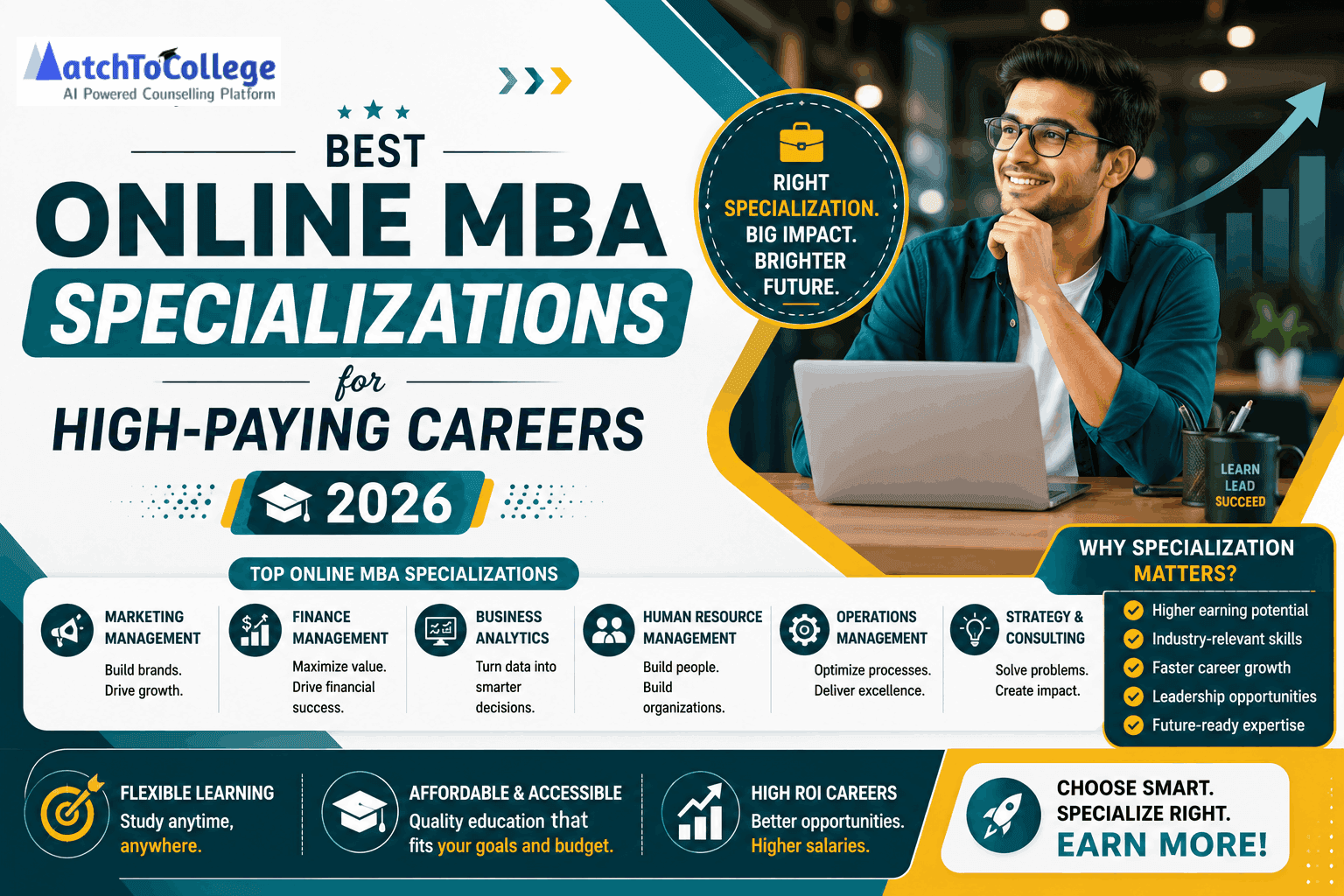
Best Online MBA Specializations for High-Paying Careers 2026
Discover the most lucrative online MBA specializations for 2026-27. Compare ROI, career growth, and use our AI tools to find your perfect management path.
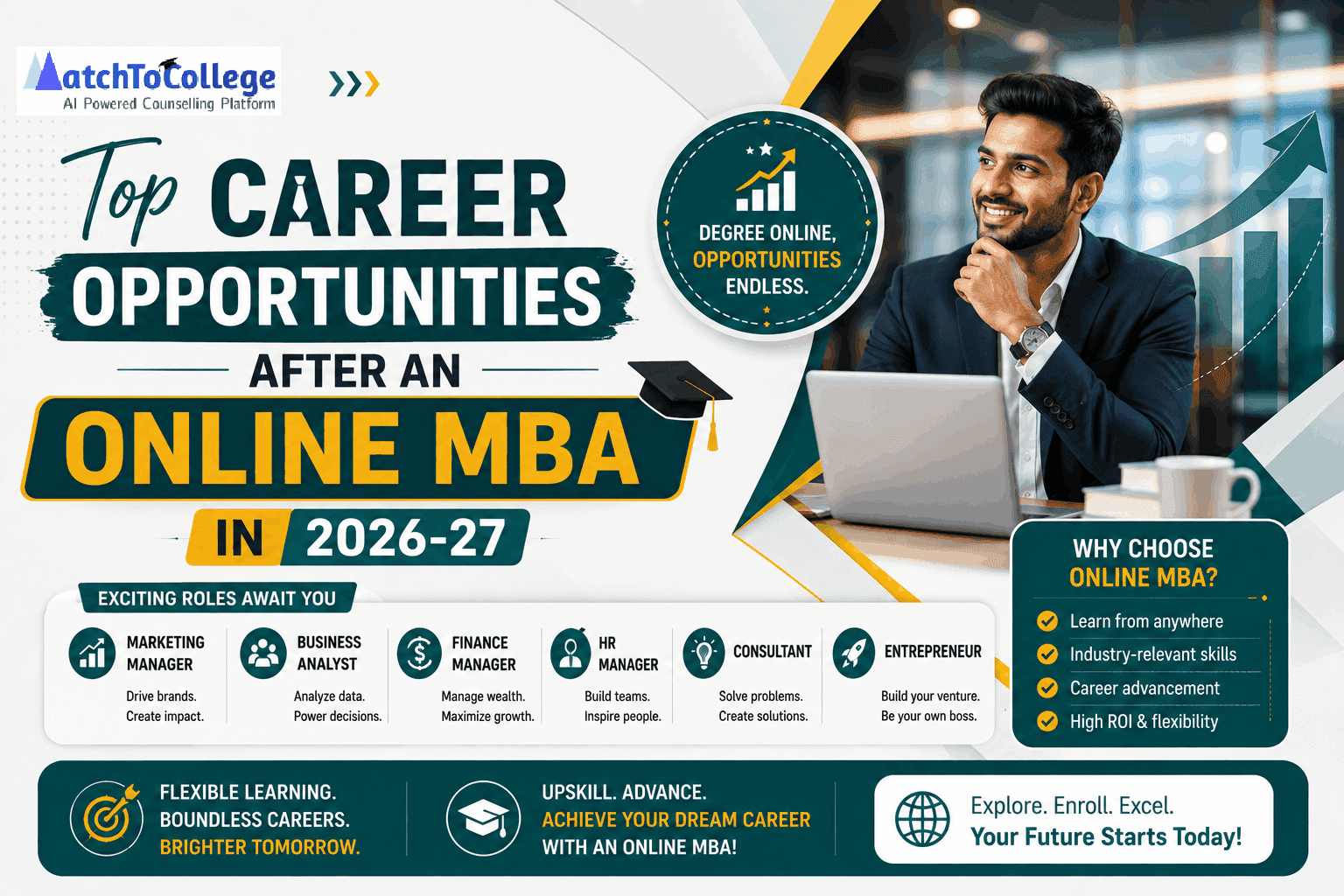
Top Career Opportunities After an Online MBA in 2026-27
Discover high-paying career paths and roles after an online MBA in 2026-27. Explore salary trends, ROI, and tools to navigate your future professional success.

Tax Deductions on Higher Education: 2026-27 India Guide
Maximize your savings with our guide on tax deductions for higher education fees in India for FY 2026-27. Learn about Section 80C, 80E, and upskilling benefits.