

Why every tech student should learn Next.js and Prisma this year.
Admission & Info Tools
Need Expert Assistance?
Our counselors can help you with fee structures, eligibility guidelines, and upcoming admission cutoffs instantly.
Direct Application Tools
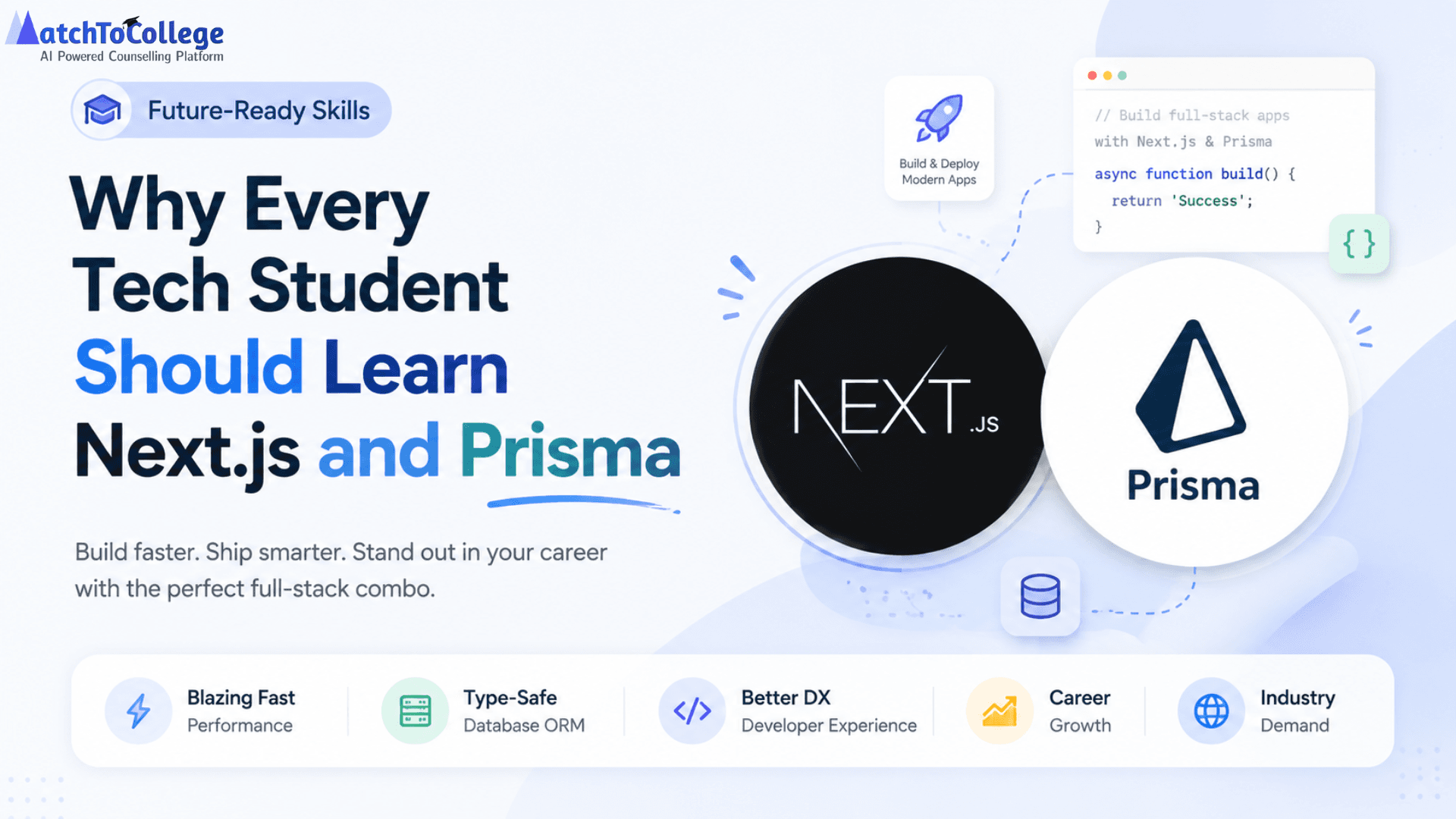
Future-Proof Skills with Next.js
The tech landscape is a vibrant, ever-evolving ecosystem. For aspiring engineers and computer science students, staying ahead of the curve isn't just an advantage—it's a necessity. As you navigate your higher education journey and plan for a thriving career, equipping yourself with in-demand skills becomes paramount. Gone are the days when basic HTML, CSS, and JavaScript sufficed. Today's industry demands professionals who can build scalable, high-performance, and maintainable web applications efficiently. This year, two powerful technologies have risen to prominence, becoming indispensable tools for modern web developers: Next.js and Prisma. If you're serious about forging a successful path in software development, mastering these two frameworks should be at the top of your learning agenda.
Next.js, a leading React framework, empowers developers to create full-stack web applications with unparalleled efficiency. It streamlines complex processes like server-side rendering (SSR), static site generation (SSG), and API route creation, fundamentally changing how front-end and back-end interactions are handled. Its focus on performance, developer experience, and built-in SEO optimizations makes it a cornerstone for building anything from a simple blog to a sophisticated enterprise-level application. Learning Next.js isn't just about understanding a framework; it's about adopting a modern approach to web development that aligns with industry best practices and demands.
Complementing Next.js's prowess on the application layer is Prisma, a next-generation Object-Relational Mapper (ORM) for Node.js and TypeScript. In an era where data is king, efficient and type-safe database interaction is critical. Prisma simplifies database access, migrations, and schema management, allowing developers to interact with their databases using intuitive, auto-generated type-safe clients. It abstracts away the complexities of SQL queries, enabling you to focus on building features rather than wrestling with database specifics. From PostgreSQL to MySQL, SQLite, and MongoDB (experimental), Prisma offers robust support, making it a versatile tool for any data-driven application.
Together, Next.js and Prisma form a formidable duo. They enable students and professionals alike to build complete, high-quality, and scalable full-stack applications with remarkable speed and confidence. This synergy isn't just about combining two tools; it's about unlocking a workflow that mirrors what's expected in top tech companies and startups today. By integrating these two technologies into your skill set, you're not just learning frameworks; you're investing in a future-proof career, opening doors to advanced development roles, and significantly boosting your employability in a competitive global market. This blog post will delve deeper into why every tech student should prioritize learning Next.js and Prisma this year, and how MatchToCollege can guide you through the higher education pathways that equip you with these essential skills.
Why Next.js is Your Gateway to Modern Web Development
In the dynamic world of web development, staying current is paramount. Next.js, built on top of React, has emerged as the go-to framework for building high-performance, production-ready applications. Here’s why mastering Next.js is a game-changer for tech students:
| Feature | Key Benefit |
| SSR & SSG (Performance + SEO) | Faster load times, better UX, and improved SEO through pre-rendering |
| Full-Stack Capabilities | Build backend APIs inside Next.js using API routes |
| Developer Experience (DX) | Faster development with file-based routing and auto optimizations |
| Industry Demand | High demand skill used by startups and top tech companies |
Demystifying Databases: The Power of Prisma for Tech Students
Interacting with databases can often be complex and error-prone. Prisma revolutionizes this process, providing a modern, type-safe, and intuitive way to connect your application to your database. For tech students, learning Prisma offers significant advantages:
| Feature | Key Benefit |
| Type Safety & Autocompletion | Reduces bugs with TypeScript support and smart code suggestions |
| Simplified Database Queries | Use JavaScript/TypeScript instead of raw SQL |
| Migrations & Schema Management | Safe, version-controlled database updates |
| Boosted Productivity | Faster development with less database complexity |
The Unbeatable Combination: Next.js and Prisma for Full-Stack Excellence
While powerful individually, Next.js and Prisma truly shine when used together. This synergy enables students to build production-grade full-stack applications with remarkable speed and efficiency:
- Seamless Integration: Next.js API routes provide the perfect backend environment for Prisma. You can define your API endpoints, use Prisma Client to interact with your database, and then consume that data directly in your Next.js front-end components. This cohesive architecture simplifies deployment and maintenance.
- Rapid Prototyping & Development: Imagine building a complete e-commerce platform, a social media clone, or a sophisticated data dashboard. With Next.js handling the UI and server logic, and Prisma managing the database, you can rapidly prototype and develop complex applications, bringing your project ideas to life faster than ever before.
- Scalability & Performance: The combination ensures that both your application logic and data fetching are optimized. Next.js’s various rendering strategies combined with Prisma’s efficient query engine lead to performant and scalable solutions, ready for real-world traffic.
Future-Proof Your Career: Stand Out in the Tech Job Market
For any tech student, the ultimate goal is a rewarding career. Learning Next.js and Prisma doesn't just equip you with technical skills; it provides a significant competitive edge:
- High Demand Skills: Companies are actively seeking developers proficient in modern JavaScript frameworks and robust ORMs. Demonstrating expertise in Next.js and Prisma makes you a highly attractive candidate for internships and entry-level positions.
- Full-Stack Versatility: Becoming proficient in both front-end (Next.js) and back-end/database (Prisma) development positions you as a versatile full-stack developer. This broad skill set is invaluable and opens up a wider range of job opportunities across various industries.
- Build an Impressive Portfolio: The ability to build complete, functional web applications using these cutting-edge tools will significantly enhance your project portfolio. This tangible evidence of your skills will set you apart during job applications and interviews.
- Adaptability for Future Technologies: Mastering these modern tools fosters a mindset of continuous learning and adaptability, crucial traits for navigating the ever-evolving tech industry.
Investing your time in Next.js and Prisma this year is an investment in your future. These technologies are not just trends; they are foundational pillars of modern web development, offering a clear pathway to a successful and impactful tech career. MatchToCollege is here to help you find the higher education programs that foster these essential skills and prepare you for the jobs of tomorrow.
Share this Article
FAQFrequently Asked Questions
Q: What kind of projects can I build using Next.js and Prisma?
With Next.js and Prisma, you can build a wide array of full-stack projects including e-commerce platforms, content management systems (CMS), social media applications, SaaS products, interactive dashboards, personal blogs, forums, and real-time chat applications. Their combined power allows for complex data interactions and dynamic user interfaces.
Q: Is Next.js or Prisma difficult for a beginner tech student to learn?
While both Next.js and Prisma involve modern concepts, they are designed with developer experience in mind. If you have a foundational understanding of JavaScript, React (for Next.js), and basic database concepts, you can pick them up relatively quickly. Many online resources, tutorials, and a strong community support learning for beginners. Starting with smaller projects and gradually increasing complexity is a great approach.
Get More Info About Why every tech student should learn Next.js and Prisma this year.
Recommended Reading

Best Online MBA Specializations for High-Paying Careers 2026
Discover the most lucrative online MBA specializations for 2026-27. Compare ROI, career growth, and use our AI tools to find your perfect management path.

Top Career Opportunities After an Online MBA in 2026-27
Discover high-paying career paths and roles after an online MBA in 2026-27. Explore salary trends, ROI, and tools to navigate your future professional success.

Tax Deductions on Higher Education: 2026-27 India Guide
Maximize your savings with our guide on tax deductions for higher education fees in India for FY 2026-27. Learn about Section 80C, 80E, and upskilling benefits.