

Job vs. Higher Studies: Your Ultimate Post-Graduation Guide
Admission & Info Tools
Need Expert Assistance?
Our counselors can help you with fee structures, eligibility guidelines, and upcoming admission cutoffs instantly.
Direct Application Tools
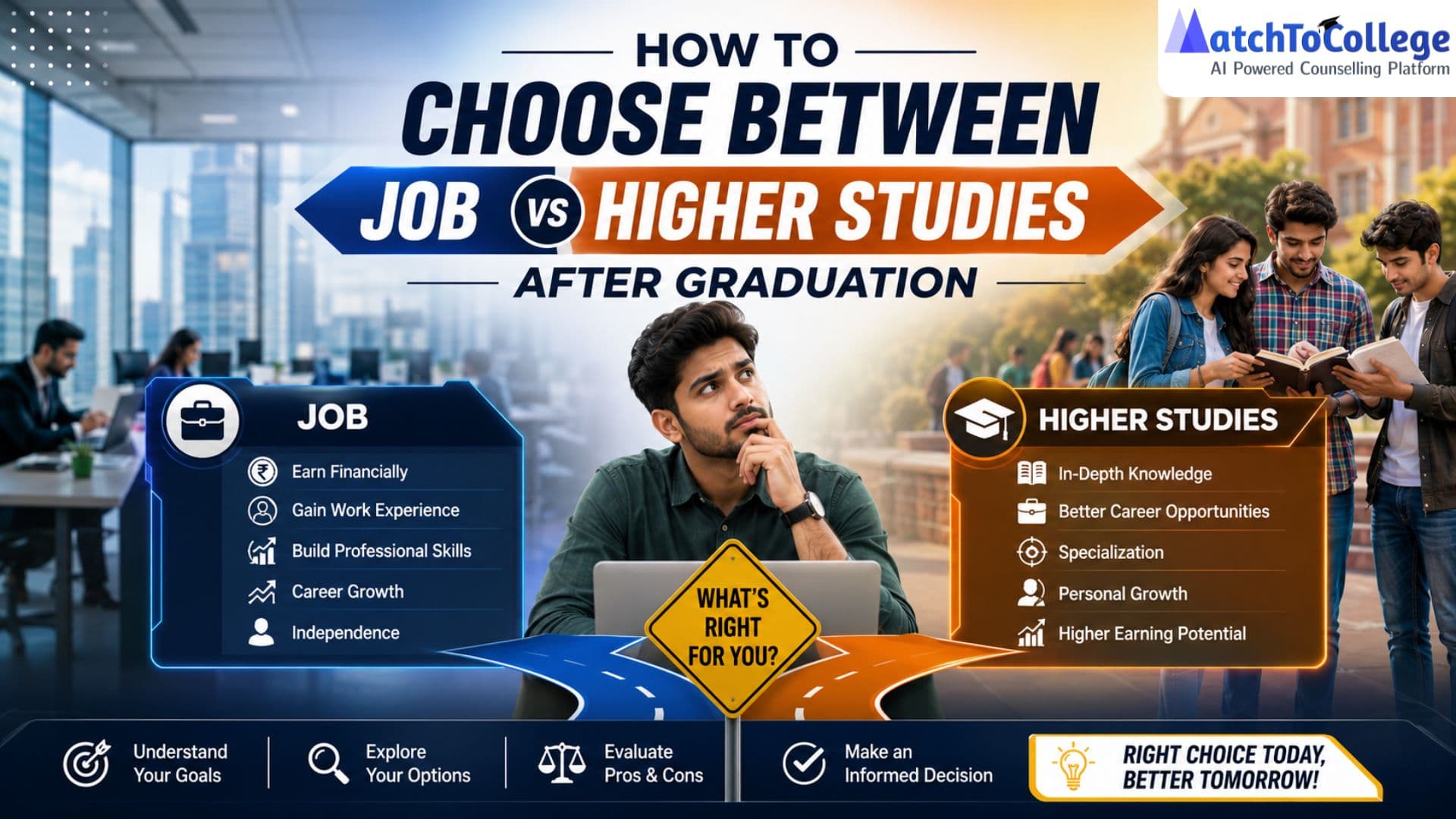
Job or Studies: Choose Wisely
Graduation marks a major turning point in life. At this stage, many students face a common yet important question: Should I start working or pursue higher studies? The answer depends on your career goals, financial situation, industry requirements, and personal aspirations.
There is no universal solution. Both options offer valuable opportunities, and the right choice varies from one individual to another. A thoughtful and informed decision can significantly impact your long-term career growth and professional satisfaction.
Understanding the Two Paths
| Option | What It Involves | Primary Goal |
| Job | Entering the workforce immediately after graduation | Gain practical experience, income, and professional exposure |
| Higher Studies | Pursuing advanced education such as a master's degree, professional certification, or specialized program | Develop expertise, improve qualifications, and access advanced career opportunities |
Benefits of Starting a Job After Graduation
| Advantage | Description |
| Practical Experience | Develop real-world skills and industry knowledge |
| Financial Independence | Begin earning and managing personal finances |
| Professional Networking | Build valuable connections within your industry |
| Career Clarity | Understand your interests and strengths through practical exposure |
| Early Career Growth | Gain a head start in promotions and work experience |
Best Suited For
- Students eager to gain industry experience
- Individuals with financial responsibilities
- Fields where skills and experience are highly valued
- Those seeking immediate employment opportunities
Benefits of Pursuing Higher Studies
| Advantage | Description |
| Specialized Knowledge | Gain deeper expertise in a chosen field |
| Better Career Opportunities | Qualify for advanced or specialized roles |
| Higher Earning Potential | Some industries reward advanced qualifications |
| Academic and Research Opportunities | Suitable for students interested in innovation and research |
| Competitive Advantage | Stand out in industries that prioritize advanced education |
Best Suited For
- Students pursuing careers requiring higher qualifications
- Individuals interested in research or academia
- Professionals seeking leadership or specialized positions
- Those aiming for long-term career advancement
Key Factors to Consider Before Deciding
| Factor | Questions to Ask Yourself |
| Career Goals | What kind of professional role do I want in the future? |
| Industry Requirements | Does my target profession require an advanced degree? |
| Financial Situation | Can I afford further education, or do I need income immediately? |
| Return on Investment (ROI) | Will higher studies significantly improve my career prospects? |
| Learning Preference | Do I enjoy academic learning or practical application? |
| Job Market Demand | What skills and qualifications are employers currently seeking? |
| Long-Term Vision | Which path better supports my future aspirations? |
Job vs. Higher Studies: Quick Comparison
| Criteria | Job | Higher Studies |
| Income | Immediate earnings | Delayed earnings |
| Experience | Real-world exposure from day one | Limited industry exposure during study |
| Skill Development | Practical and workplace-oriented | Academic and specialized |
| Cost | Generally lower upfront cost | Tuition and living expenses may apply |
| Career Entry | Faster entry into workforce | Delayed entry but potentially higher-level roles |
| Networking | Industry professionals and employers | Professors, researchers, and academic peers |
| Career Flexibility | Builds practical expertise early | Expands qualifications and specialization |
The Importance of a Personalized Decision
The choice between a job and higher studies should not be based solely on trends, peer influence, or societal expectations. Instead, it should reflect:
- Your interests and strengths
- Career ambitions
- Financial circumstances
- Industry requirements
- Long-term professional goals
What works for one student may not be the best option for another.
How MatchToCollege Can Help
MatchToCollege uses AI-powered analysis to support students in making informed career decisions.
| Feature | Benefit |
| Profile Assessment | Evaluates academic background, interests, and career goals |
| Career Path Analysis | Compares job opportunities and higher education options |
| Industry Insights | Provides information on demand, growth, and future trends |
| College & Program Matching | Recommends suitable institutions and courses |
| Personalized Guidance | Helps students choose the path most aligned with their aspirations |
Choosing between a job and higher studies is one of the most significant decisions after graduation. Both paths can lead to successful and rewarding careers when aligned with your goals and circumstances.
The key is to evaluate your options carefully, understand the opportunities and challenges of each route, and make a decision based on informed analysis rather than uncertainty. With proper guidance and planning, you can confidently choose a path that supports both your personal growth and long-term career success.
Starting a Job After Graduation: Benefits and Challenges
Choosing to start a job immediately after graduation is a popular option for many students. It provides an opportunity to gain real-world experience, earn an income, and begin building a professional career without delaying entry into the workforce.
While this path offers several advantages, it also comes with challenges that should be carefully considered before making a decision.
Benefits of Starting a Job After Graduation
| Benefit | Description |
| Financial Independence | Earn a regular income, reduce dependence on family, and start managing personal finances. |
| Practical Experience | Apply academic knowledge to real-world situations and gain industry-specific expertise. |
| Professional Skill Development | Develop essential workplace skills such as communication, teamwork, problem-solving, leadership, and time management. |
| Industry Exposure | Gain firsthand understanding of industry practices, trends, and business operations. |
| Professional Networking | Build relationships with colleagues, mentors, clients, and industry professionals that can support future career growth. |
| Early Career Progression | Start accumulating work experience earlier, which can contribute to promotions and career advancement. |
| Employer-Sponsored Training | Many organizations provide onboarding, certifications, and professional development programs for fresh graduates. |
| Portfolio Building | Particularly valuable in fields such as technology, design, media, and creative industries where demonstrated work often carries significant weight. |
Potential Challenges of Starting a Job Immediately
| Challenge | Description |
| Lower Initial Salary Potential | Entry-level salaries may be lower compared to positions requiring advanced qualifications. |
| Limited Specialization | Some roles may not provide deep expertise in a specialized area without further education. |
| Career Advancement Restrictions | Certain industries and leadership positions may require postgraduate degrees or professional certifications. |
| Competitive Job Market | Finding a role that aligns with both your qualifications and career interests can be challenging. |
| Risk of Career Stagnation | Without continuous learning and skill development, career growth may slow over time. |
| Reduced Academic Momentum | Returning to formal education later can be more difficult after spending years in the workforce. |
Industries Where Experience Is Often Highly Valued
| Industry | Why Experience Matters |
| Information Technology (IT) | Employers often prioritize practical skills, project experience, and technical proficiency. |
| Software Development | Strong portfolios, coding skills, and real-world projects can outweigh additional academic qualifications. |
| Digital Marketing | Hands-on campaign experience and measurable results are highly valued. |
| Media & Content Creation | Portfolios and industry exposure often play a greater role than advanced degrees. |
| Graphic Design & Creative Arts | Demonstrated creative work and client experience are key hiring factors. |
| Sales & Business Development | Performance, communication skills, and industry experience drive career growth. |
Questions to Ask Before Choosing This Path
| Consideration | Key Question |
| Career Goals | Will this job help me move toward my long-term objectives? |
| Growth Opportunities | Does the company provide learning, training, and promotion opportunities? |
| Industry Requirements | Is work experience sufficient, or will I eventually need advanced qualifications? |
| Salary Potential | Does the compensation align with my financial goals and expectations? |
| Job Satisfaction | Does the role match my interests, strengths, and values? |
| Future Flexibility | Will this experience keep multiple career options open in the future? |
When Starting a Job May Be the Right Choice
You may benefit from entering the workforce immediately if:
- You want financial independence and practical experience.
- Your industry values skills and experience more than advanced degrees.
- You have secured a strong job opportunity with growth potential.
- You prefer learning through hands-on work rather than classroom-based study.
- You plan to pursue certifications or higher studies later while working.
Starting a job after graduation can accelerate professional growth, provide financial stability, and help build valuable industry experience. However, it is important to evaluate whether your chosen field rewards experience alone or whether advanced qualifications will eventually be necessary for long-term career progression.
Embracing Higher Studies: Investing in Future Growth
Higher studies—whether a Master's degree, Ph.D., MBA, MD, or another professional qualification—can be a powerful investment in your future. It allows you to deepen your expertise, develop advanced skills, and access career opportunities that may not be available with an undergraduate degree alone.
However, pursuing further education requires a significant commitment of time, effort, and financial resources. Understanding both the advantages and potential drawbacks is essential before making this important decision.
Benefits of Pursuing Higher Studies
| Benefit | Description |
| Specialized Knowledge | Gain in-depth expertise in a specific field, making you more competitive in the job market. |
| Advanced Skills Development | Develop research, analytical, technical, leadership, and problem-solving skills. |
| Higher Earning Potential | Many postgraduate qualifications can lead to higher-paying positions over time. |
| Access to Leadership Roles | Advanced degrees often support progression into managerial, executive, and strategic roles. |
| Expanded Career Opportunities | Qualify for specialized, research-oriented, or highly technical positions. |
| Professional Networking | Connect with professors, researchers, industry leaders, alumni, and ambitious peers. |
| Academic and Research Opportunities | Essential for careers in academia, scientific research, and innovation-driven industries. |
| Global Exposure | Many postgraduate programs offer international collaborations, internships, and exchange opportunities. |
Career Fields Where Higher Studies Are Often Essential
| Field | Common Advanced Qualification | Reason |
| Medicine | MD, MS, Specialized Medical Degrees | Required for specialization and advanced clinical practice |
| Research & Academia | Master's, Ph.D. | Necessary for research, teaching, and academic leadership |
| Psychology | Master's, M.Phil., Ph.D. | Required for specialized practice and research roles |
| Law | LLM and Specialized Legal Certifications | Supports expertise in niche legal domains |
| Engineering & Technology Research | M.Tech, MS, Ph.D. | Needed for advanced technical and research positions |
| Business Leadership | MBA | Often valued for senior management and executive roles |
Challenges of Pursuing Higher Studies
| Challenge | Description |
| High Educational Costs | Tuition fees, accommodation, study materials, and living expenses can be substantial. |
| Student Loan Debt | Financing education may lead to long-term repayment obligations. |
| Deferred Earnings | Delays full-time income and financial independence for several years. |
| Significant Time Commitment | Programs often require intensive study, projects, internships, or research. |
| Opportunity Cost | While studying, peers in the workforce continue gaining experience and income. |
| Competitive Admissions | Top institutions and programs often have demanding entry requirements. |
| Risk of Overqualification | Some employers may consider advanced qualifications unnecessary for entry-level roles. |
| Uncertain Return on Investment (ROI) | Financial and career benefits may vary depending on the field and institution. |
Questions to Evaluate Before Choosing Higher Studies
| Consideration | Key Question |
| Career Requirement | Is an advanced degree necessary for my desired profession? |
| Financial Feasibility | Can I comfortably manage the cost of education? |
| Return on Investment | Will the long-term benefits justify the time and financial investment? |
| Career Goals | Does further education align with my professional ambitions? |
| Learning Preference | Do I enjoy academic learning, research, and specialized study? |
| Job Market Value | Do employers in my industry actively seek advanced qualifications? |
Job vs. Higher Studies: Long-Term Perspective
| Aspect | Job | Higher Studies |
| Immediate Income | Yes | No |
| Industry Experience | Starts immediately | Delayed |
| Specialized Expertise | Moderate | High |
| Educational Cost | Low | High |
| Career Flexibility | Experience-based growth | Qualification-based growth |
| Leadership Potential | Depends on experience | Often enhanced by advanced credentials |
| Research Opportunities | Limited | Extensive |
| Long-Term Earning Potential | Varies by industry | Often higher in specialized fields |
When Higher Studies May Be the Right Choice
You may benefit from pursuing higher education if:
- Your target career requires advanced qualifications.
- You want to specialize in a particular field.
- You are interested in research, innovation, or academia.
- You aspire to leadership or expert-level positions.
- You are willing to invest time and resources for long-term career growth.
Higher studies can significantly enhance your expertise, career opportunities, and earning potential, but they also require a substantial investment of time and money. Before committing, carefully evaluate the expected return on investment, industry requirements, and your personal career goals.
The best decision is one that balances your aspirations, financial circumstances, and long-term professional vision. In many cases, the most successful path is not simply choosing between a job and higher studies, but determining which option aligns most effectively with your future ambitions.
Navigating Your Decision with MatchToCollege's AI Guidance
Ultimately, the choice between a job and higher studies is deeply personal and dependent on a multitude of factors. There's no universal right or wrong answer, only the best decision for you. To make an informed choice, consider your specific career goals, your current financial situation, the demands of your desired industry, your personal learning style, and your long-term vision for your life.
This is where MatchToCollege's AI-powered platform becomes an invaluable tool. Instead of sifting through countless websites and opinions, our intelligent system assesses your unique academic profile, interests, strengths, and career aspirations. We can help you:
- Identify relevant career paths: Understand which job roles are a good fit for your undergraduate degree and skill set.
- Explore higher education options: Discover postgraduate programs, top colleges, and courses that align with your goals, even abroad.
- Analyze ROI: Get data-driven insights into the potential earning increases and career progression associated with various degrees versus immediate employment.
- Find scholarship opportunities: Reduce the financial burden of higher education.
- Receive personalized recommendations: Our AI acts as your personal career counselor, guiding you toward the optimal choice that maximizes your potential.
Don't leave this critical decision to chance. Let MatchToCollege provide the clarity and personalized roadmap you need to confidently choose your path after graduation, whether it leads to a rewarding job or an enriching higher studies experience. Your future starts here.
Share this Article
FAQFrequently Asked Questions
Q: Is it better to get work experience before pursuing a Master's degree?
It heavily depends on your field and career goals. For professional degrees like an MBA, significant work experience (typically 2-5 years) is often highly valued, providing practical context for your studies and enhancing your application. For research-focused Master's or Ph.D. programs, direct entry after undergraduate studies is more common. Gaining work experience can clarify your career path, develop essential professional skills, and make you a more competitive and mature candidate for advanced programs.
Q: How can I assess the financial return on investment (ROI) for higher education?
To assess the financial ROI of higher education, you need to weigh the total cost of the degree (tuition, fees, living expenses, and lost income during studies) against the projected increase in your earning potential and career opportunities over your lifetime. Research average salaries for graduates with your target degree in your desired industry and compare them to salaries with only an undergraduate degree. Consider how quickly you can recoup your investment. Platforms like MatchToCollege can provide data-driven insights and financial projections to help you analyze these complex implications and make an informed decision.
Get More Info About Job vs. Higher Studies
Recommended Reading
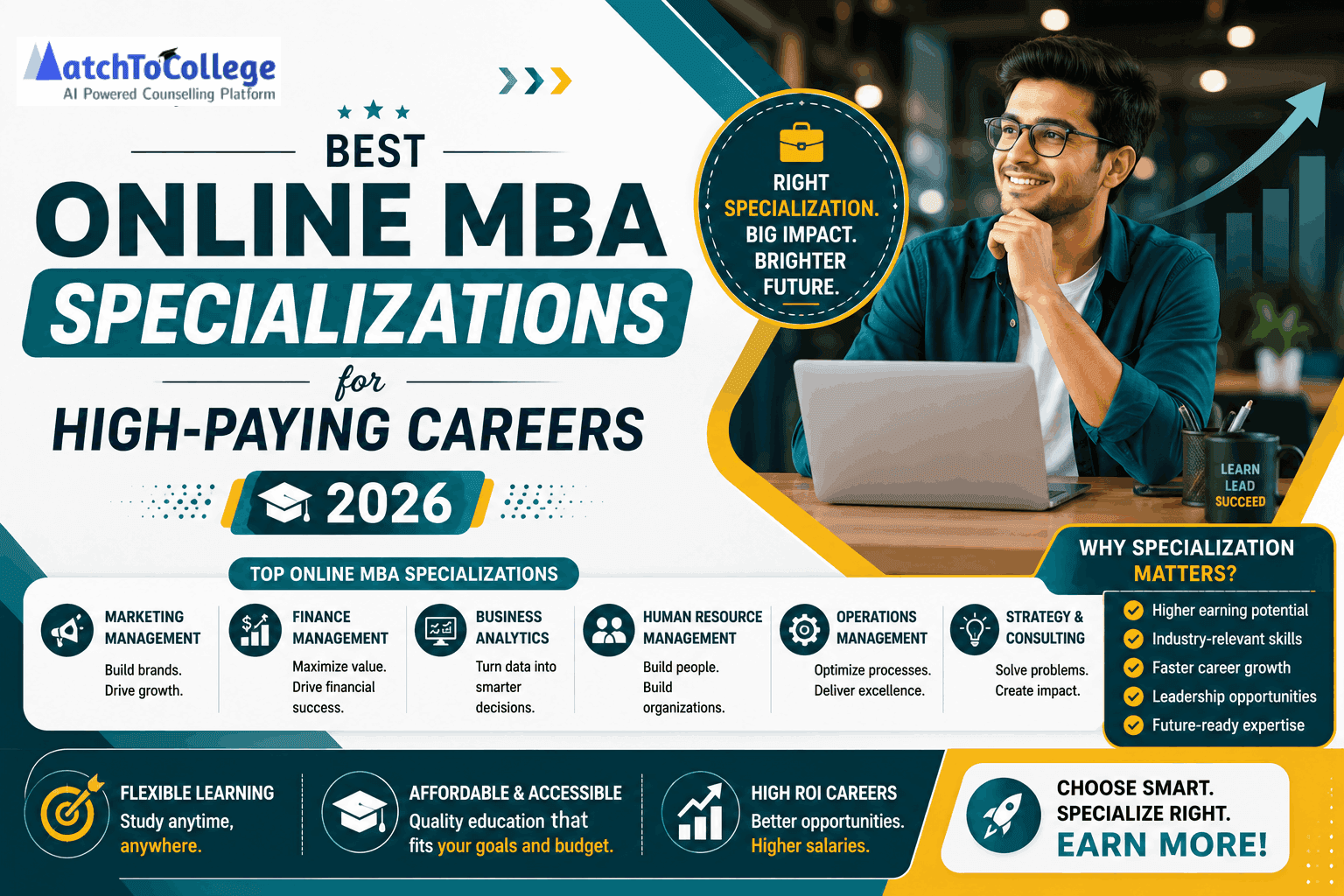
Best Online MBA Specializations for High-Paying Careers 2026
Discover the most lucrative online MBA specializations for 2026-27. Compare ROI, career growth, and use our AI tools to find your perfect management path.
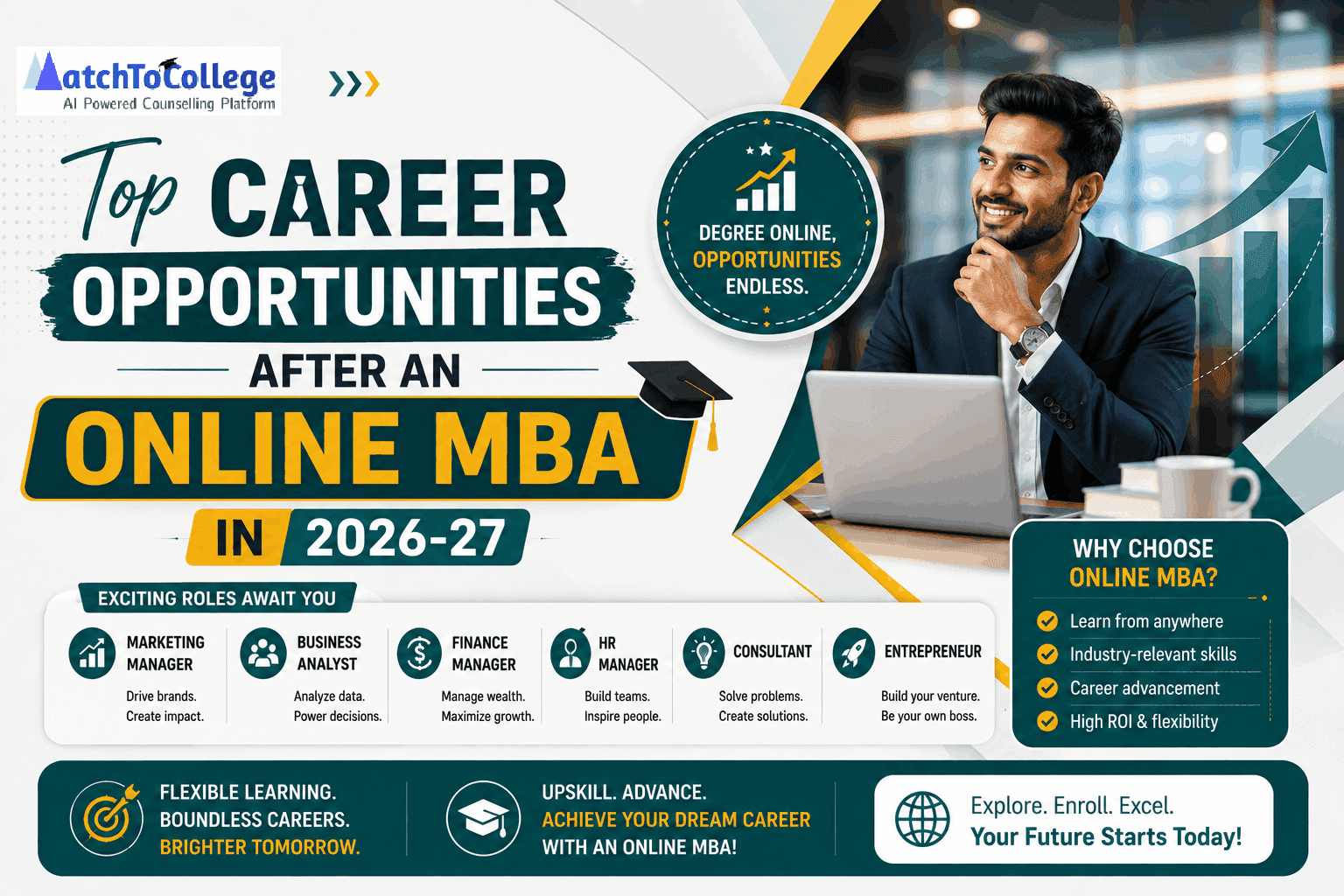
Top Career Opportunities After an Online MBA in 2026-27
Discover high-paying career paths and roles after an online MBA in 2026-27. Explore salary trends, ROI, and tools to navigate your future professional success.
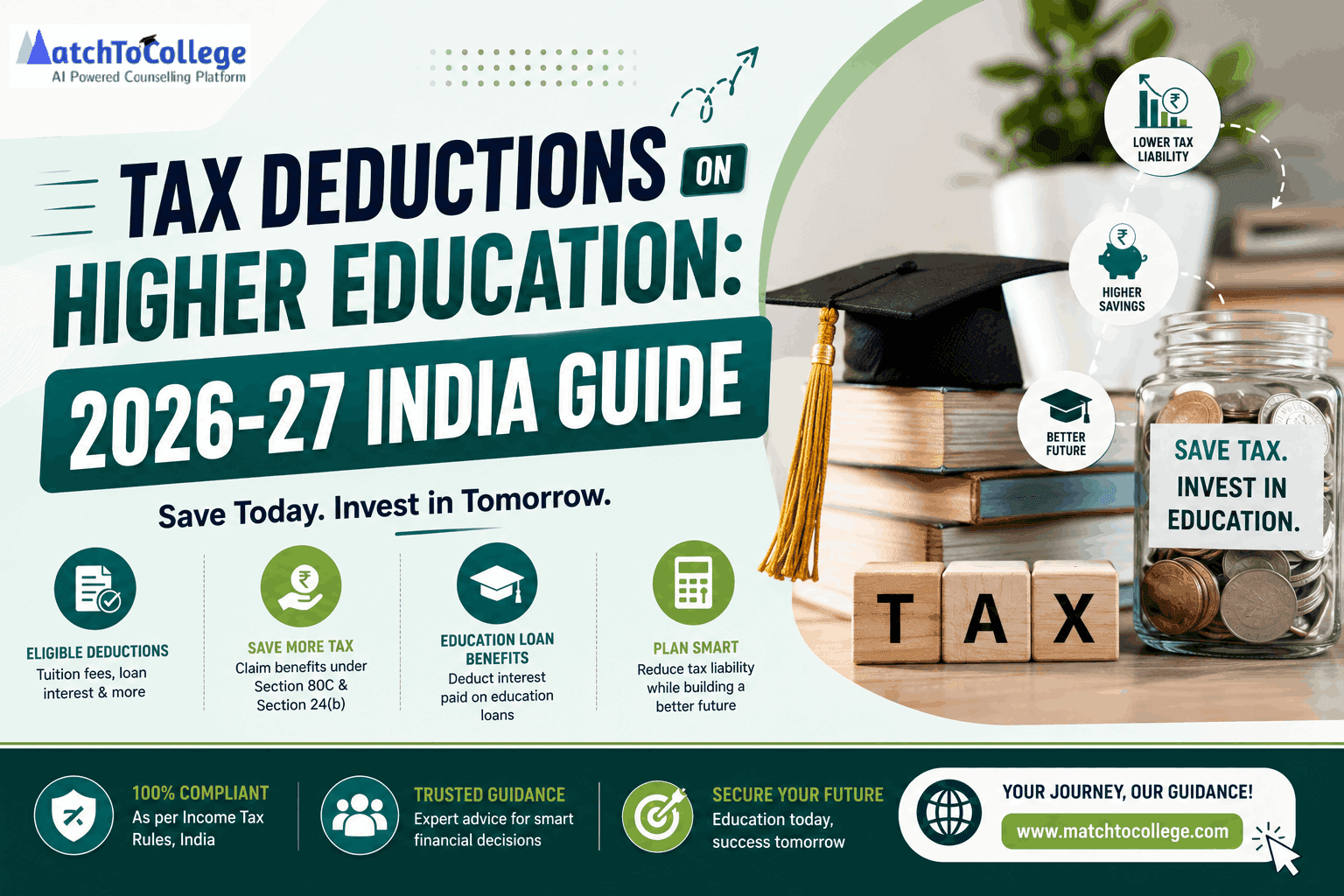
Tax Deductions on Higher Education: 2026-27 India Guide
Maximize your savings with our guide on tax deductions for higher education fees in India for FY 2026-27. Learn about Section 80C, 80E, and upskilling benefits.