

JEE Main Preparation: Your Evergreen Guide to Mastering the Exam
Admission & Info Tools
Need Expert Assistance?
Our counselors can help you with fee structures, eligibility guidelines, and upcoming admission cutoffs instantly.
Direct Application Tools
🎯 MatchToCollege AI Recommendation: Planning your counselling or choice filling? Check your seat allotment probability across premier colleges using the JEE Main College Predictor.
Key Highlights & Program Overview
JEE Main stands as the gateway to premier engineering institutions across India, including NITs, IIITs, and GFTIs. Conducted by the National Testing Agency (NTA), it assesses a candidate's proficiency in Physics, Chemistry, and Mathematics. Understanding the core structure and key aspects of this examination is the first step towards a well-informed preparation.
| Parameter | Details |
| Exam Name | Joint Entrance Examination (Main) |
| Conducting Body | National Testing Agency (NTA) |
| Exam Frequency | Twice a year (January & April) |
| Exam Mode | Computer-Based Test (CBT) |
| Subjects | Physics, Chemistry, Mathematics |
| Total Questions | 90 (30 per subject) |
| Total Marks | 300 |
| Marking Scheme | +4 for correct, -1 for incorrect |
| Official Website | jeemain.nta.ac.in |
Eligibility Criteria & Selection Process
To sit for JEE Main, candidates must meet specific eligibility requirements set by the NTA. It's crucial to review these carefully to ensure your application is valid.
Eligibility Criteria:
- Age Limit: There is no age limit for appearing in JEE Main.
- Educational Qualification: Candidates must have passed Class 12th or equivalent examination in 2022, 2023, or be appearing in 2024.
- Subjects in Class 12th: Must have studied Physics, Chemistry, and Mathematics as compulsory subjects.
- Number of Attempts: A candidate can appear for JEE Main for three consecutive years after passing their Class 12th examination.
Reservation Policy:
The NTA adheres to the Government of India's reservation policy for admissions to NITs, IIITs, and GFTIs:
- SC: 15%
- ST: 7.5%
- OBC-NCL: 27%
- EWS: 10%
- PwD: 5% (horizontal reservation)
Selection Stages:
The selection process primarily involves:
- JEE Main Examination: Candidates appear for the CBT in either the January or April session (or both).
- Result Declaration: NTA releases the scores and All India Ranks.
- JEE Advanced Eligibility: Top 2,50,000 candidates (including all categories) from JEE Main are eligible to appear for JEE Advanced for IIT admissions.
- Counselling (JoSAA/CSAB): Based on JEE Main ranks, candidates participate in joint seat allocation (JoSAA) and subsequent special rounds (CSAB) for admissions to NITs, IIITs, and GFTIs.
Top Colleges & Fee Comparison
Securing a good rank in JEE Main opens doors to some of India's most prestigious engineering colleges. While IITs require JEE Advanced, NITs, IIITs, and GFTIs are directly accessible through JEE Main scores. Here's a glimpse at some top institutions and their approximate fee structures:
| Institution Type | Examples |
| National Institutes of Technology (NITs) | NIT Warangal, NIT Trichy, NIT Surathkal, NIT Rourkela |
| Indian Institutes of Information Technology (IIITs) | IIIT Hyderabad, IIIT Delhi, IIIT Allahabad, IIIT Bangalore |
| Government Funded Technical Institutes (GFTIs) | PEC Chandigarh, DTU Delhi, NSUT Delhi, BIT Mesra |
| Estimated Annual Fees (B.Tech) | ₹1.2 Lakhs - ₹2.5 Lakhs (varies by institution & category) |
| Return on Investment (ROI) | Excellent, with strong placement records and career growth |
For a personalized prediction of which colleges you might get based on your JEE Main performance, I highly recommend utilizing the MatchToCollege JEE Main College Predictor. It's an invaluable tool to assess your admission probability and explore your options.
Admissions Checklist & Important Tips
A structured approach is key to conquering JEE Main. Here’s a comprehensive strategy, with a special focus on leveraging past papers like the JEE Main 2023 January 24 Shift 2 paper, to optimize your preparation:
1. Master the Syllabus:
- Thoroughly understand the JEE Main syllabus for Physics, Chemistry, and Mathematics. Prioritize high-weightage topics.
- Ensure conceptual clarity. Rote learning will not suffice; focus on understanding the 'why' behind every formula and principle.
2. Strategic Study Plan:
- Create a realistic study timetable. Allocate dedicated time for each subject and topic.
- Balance theory with problem-solving. Consistent practice is non-negotiable.
3. The Power of Previous Year Papers:
- Solving past papers, such as the JEE Main 2023 January 24 Shift 2, is perhaps the most effective preparation strategy. It familiarizes you with the exam pattern, question types, difficulty level, and time constraints.
- Treat each past paper as a mock test. Sit in an exam-like environment, adhere to the time limit, and then rigorously analyze your performance.
- Identify your strengths and weaknesses. Which topics are you consistently getting wrong? Which sections take up too much time?
- Understand the NTA's question-setting trends. Are certain concepts frequently tested? Are there recurring numerical patterns?
4. Mock Tests & Analysis:
- Beyond past papers, take full-length mock tests regularly. This builds stamina and refines your test-taking strategy.
- Post-mock test analysis is crucial. Don't just check answers; understand the solutions, learn alternative approaches, and revise the underlying concepts.
5. Time Management:
- Practice solving questions within strict time limits. Learn to prioritize questions and manage your time effectively during the actual exam.
- Develop a strategy for attempting the paper – which section to start with, how much time to allocate to each, and when to move on from a difficult question.
6. Revision & Short Notes:
- Regular revision is vital to retain information. Create concise short notes for quick review of formulas, key concepts, and important reactions.
- Focus on areas where you frequently make mistakes.
7. Maintain Well-being:
- Ensure adequate sleep, a balanced diet, and short breaks. A fresh mind performs best.
- Stay positive and confident. Believe in your preparation.
Career Scope, Placements & Expected ROI
An engineering degree from a reputable institution, secured through JEE Main, opens a world of opportunities. The career landscape for engineers in India and globally is dynamic and rewarding.
Diverse Career Paths:
- Core Engineering Roles: Mechanical, Civil, Electrical, Chemical, etc., in manufacturing, infrastructure, energy, and process industries.
- Information Technology & Software: Software Development, Data Science, AI/ML, Cybersecurity, Cloud Computing, IT Consulting.
- Emerging Fields: Robotics, Mechatronics, Biotechnology, Renewable Energy, Aerospace, Nanotechnology.
- Research & Development: Opportunities in R&D labs, academia, and government organizations.
- Management & Entrepreneurship: Many engineers transition into management roles or start their own ventures, leveraging their problem-solving skills.
Placement Insights & Average Packages:
Top NITs, IIITs, and GFTIs boast impressive placement records, with leading national and international companies recruiting on campus. While specific figures vary by institution, branch, and economic climate, here's a general outlook:
| Parameter | Details |
| Average Package (NITs/IIITs) | ₹8 LPA - ₹15 LPA (for B.Tech graduates) |
| Highest Package (NITs/IIITs) | Can range from ₹30 LPA to ₹60+ LPA (domestic & international) |
| Recruiting Sectors | IT & Software, Core Engineering, Consulting, Finance, Analytics, Startups |
| Key Recruiters | Microsoft, Google, Amazon, TCS, Infosys, Wipro, L&T, Tata Motors, Reliance, Samsung, Intel, etc. |
Return on Investment (ROI):
The ROI for an engineering degree from a top-tier institution is generally excellent. The initial investment in fees is often recouped within a few years due to competitive salaries and rapid career progression. Beyond financial returns, the quality of education, networking opportunities, and skill development provide long-term benefits that are invaluable for personal and professional growth.
🏛️ Looking for Admissions & College Cutoffs? Explore verified fee structures, seat matrices, and real student reviews across top institutions on the MatchToCollege Top Colleges & Universities in India Directory.
Frequently Asked Questions
Q: How important are previous year JEE Main papers for preparation?
Previous year papers are incredibly important. They offer a realistic simulation of the actual exam, helping you understand the question patterns, marking scheme, time management, and the overall difficulty level. Solving them rigorously helps identify your weak areas and build confidence.
Q: Can I appear for both JEE Main sessions in a year?
Yes, absolutely. NTA conducts JEE Main twice a year (January and April). You can appear for both sessions, and your best score out of the two will be considered for your All India Rank. This provides a valuable opportunity to improve your performance.
Q: What is the difference between JEE Main and JEE Advanced?
JEE Main is the qualifying examination for admissions to NITs, IIITs, and GFTIs. It also serves as the eligibility test for JEE Advanced. JEE Advanced, on the other hand, is the exclusive entrance examination for admissions to the prestigious Indian Institutes of Technology (IITs).
Q: Is there an age limit for JEE Main?
No, there is no age limit for candidates appearing for JEE Main. However, there are criteria regarding the year of passing the Class 12th examination (currently 2022, 2023, or appearing in 2024).
Q: How can I predict which college I might get with my JEE Main score?
Predicting colleges based on your JEE Main score or rank can be complex due to varying cutoffs each year. However, you can use reliable tools like the MatchToCollege JEE Main College Predictor. This tool analyzes past year data and your performance to give you a realistic estimate of your admission chances in various institutions.
Key Highlights & Program Overview
JEE Main stands as the gateway to premier engineering institutions across India, including NITs, IIITs, and GFTIs. Conducted by the National Testing Agency (NTA), it assesses a candidate's proficiency in Physics, Chemistry, and Mathematics. Understanding the core structure and key aspects of this examination is the first step towards a well-informed preparation.
| Parameter | Details |
| Exam Name | Joint Entrance Examination (Main) |
| Conducting Body | National Testing Agency (NTA) |
| Exam Frequency | Twice a year (January & April) |
| Exam Mode | Computer-Based Test (CBT) |
| Subjects | Physics, Chemistry, Mathematics |
| Total Questions | 90 (30 per subject) |
| Total Marks | 300 |
| Marking Scheme | +4 for correct, -1 for incorrect |
| Official Website | jeemain.nta.ac.in |
Eligibility Criteria & Selection Process
To sit for JEE Main, candidates must meet specific eligibility requirements set by the NTA. It's crucial to review these carefully to ensure your application is valid.
Eligibility Criteria:
- Age Limit: There is no age limit for appearing in JEE Main.
- Educational Qualification: Candidates must have passed Class 12th or equivalent examination in 2022, 2023, or be appearing in 2024.
- Subjects in Class 12th: Must have studied Physics, Chemistry, and Mathematics as compulsory subjects.
- Number of Attempts: A candidate can appear for JEE Main for three consecutive years after passing their Class 12th examination.
Reservation Policy:
The NTA adheres to the Government of India's reservation policy for admissions to NITs, IIITs, and GFTIs:
- SC: 15%
- ST: 7.5%
- OBC-NCL: 27%
- EWS: 10%
- PwD: 5% (horizontal reservation)
Selection Stages:
The selection process primarily involves:
- JEE Main Examination: Candidates appear for the CBT in either the January or April session (or both).
- Result Declaration: NTA releases the scores and All India Ranks.
- JEE Advanced Eligibility: Top 2,50,000 candidates (including all categories) from JEE Main are eligible to appear for JEE Advanced for IIT admissions.
- Counselling (JoSAA/CSAB): Based on JEE Main ranks, candidates participate in joint seat allocation (JoSAA) and subsequent special rounds (CSAB) for admissions to NITs, IIITs, and GFTIs.
Top Colleges & Fee Comparison
Securing a good rank in JEE Main opens doors to some of India's most prestigious engineering colleges. While IITs require JEE Advanced, NITs, IIITs, and GFTIs are directly accessible through JEE Main scores. Here's a glimpse at some top institutions and their approximate fee structures:
| Institution Type | Examples |
| National Institutes of Technology (NITs) | NIT Warangal, NIT Trichy, NIT Surathkal, NIT Rourkela |
| Indian Institutes of Information Technology (IIITs) | IIIT Hyderabad, IIIT Delhi, IIIT Allahabad, IIIT Bangalore |
| Government Funded Technical Institutes (GFTIs) | PEC Chandigarh, DTU Delhi, NSUT Delhi, BIT Mesra |
| Estimated Annual Fees (B.Tech) | ₹1.2 Lakhs - ₹2.5 Lakhs (varies by institution & category) |
| Return on Investment (ROI) | Excellent, with strong placement records and career growth |
For a personalized prediction of which colleges you might get based on your JEE Main performance, I highly recommend utilizing the MatchToCollege JEE Main College Predictor. It's an invaluable tool to assess your admission probability and explore your options.
Admissions Checklist & Important Tips
A structured approach is key to conquering JEE Main. Here’s a comprehensive strategy, with a special focus on leveraging past papers like the JEE Main 2023 January 24 Shift 2 paper, to optimize your preparation:
1. Master the Syllabus:
- Thoroughly understand the JEE Main syllabus for Physics, Chemistry, and Mathematics. Prioritize high-weightage topics.
- Ensure conceptual clarity. Rote learning will not suffice; focus on understanding the 'why' behind every formula and principle.
2. Strategic Study Plan:
- Create a realistic study timetable. Allocate dedicated time for each subject and topic.
- Balance theory with problem-solving. Consistent practice is non-negotiable.
3. The Power of Previous Year Papers:
- Solving past papers, such as the JEE Main 2023 January 24 Shift 2, is perhaps the most effective preparation strategy. It familiarizes you with the exam pattern, question types, difficulty level, and time constraints.
- Treat each past paper as a mock test. Sit in an exam-like environment, adhere to the time limit, and then rigorously analyze your performance.
- Identify your strengths and weaknesses. Which topics are you consistently getting wrong? Which sections take up too much time?
- Understand the NTA's question-setting trends. Are certain concepts frequently tested? Are there recurring numerical patterns?
4. Mock Tests & Analysis:
- Beyond past papers, take full-length mock tests regularly. This builds stamina and refines your test-taking strategy.
- Post-mock test analysis is crucial. Don't just check answers; understand the solutions, learn alternative approaches, and revise the underlying concepts.
5. Time Management:
- Practice solving questions within strict time limits. Learn to prioritize questions and manage your time effectively during the actual exam.
- Develop a strategy for attempting the paper – which section to start with, how much time to allocate to each, and when to move on from a difficult question.
6. Revision & Short Notes:
- Regular revision is vital to retain information. Create concise short notes for quick review of formulas, key concepts, and important reactions.
- Focus on areas where you frequently make mistakes.
7. Maintain Well-being:
- Ensure adequate sleep, a balanced diet, and short breaks. A fresh mind performs best.
- Stay positive and confident. Believe in your preparation.
Career Scope, Placements & Expected ROI
An engineering degree from a reputable institution, secured through JEE Main, opens a world of opportunities. The career landscape for engineers in India and globally is dynamic and rewarding.
Diverse Career Paths:
- Core Engineering Roles: Mechanical, Civil, Electrical, Chemical, etc., in manufacturing, infrastructure, energy, and process industries.
- Information Technology & Software: Software Development, Data Science, AI/ML, Cybersecurity, Cloud Computing, IT Consulting.
- Emerging Fields: Robotics, Mechatronics, Biotechnology, Renewable Energy, Aerospace, Nanotechnology.
- Research & Development: Opportunities in R&D labs, academia, and government organizations.
- Management & Entrepreneurship: Many engineers transition into management roles or start their own ventures, leveraging their problem-solving skills.
Placement Insights & Average Packages:
Top NITs, IIITs, and GFTIs boast impressive placement records, with leading national and international companies recruiting on campus. While specific figures vary by institution, branch, and economic climate, here's a general outlook:
| Parameter | Details |
| Average Package (NITs/IIITs) | ₹8 LPA - ₹15 LPA (for B.Tech graduates) |
| Highest Package (NITs/IIITs) | Can range from ₹30 LPA to ₹60+ LPA (domestic & international) |
| Recruiting Sectors | IT & Software, Core Engineering, Consulting, Finance, Analytics, Startups |
| Key Recruiters | Microsoft, Google, Amazon, TCS, Infosys, Wipro, L&T, Tata Motors, Reliance, Samsung, Intel, etc. |
Return on Investment (ROI):
The ROI for an engineering degree from a top-tier institution is generally excellent. The initial investment in fees is often recouped within a few years due to competitive salaries and rapid career progression. Beyond financial returns, the quality of education, networking opportunities, and skill development provide long-term benefits that are invaluable for personal and professional growth.
🏛️ Looking for Admissions & College Cutoffs? Explore verified fee structures, seat matrices, and real student reviews across top institutions on the MatchToCollege Top Colleges & Universities in India Directory.
Share this Article
FAQFrequently Asked Questions
Q: How important are previous year JEE Main papers for preparation?
Previous year papers are incredibly important. They offer a realistic simulation of the actual exam, helping you understand the question patterns, marking scheme, time management, and the overall difficulty level. Solving them rigorously helps identify your weak areas and build confidence.
Q: Can I appear for both JEE Main sessions in a year?
Yes, absolutely. NTA conducts JEE Main twice a year (January and April). You can appear for both sessions, and your best score out of the two will be considered for your All India Rank. This provides a valuable opportunity to improve your performance.
Q: What is the difference between JEE Main and JEE Advanced?
JEE Main is the qualifying examination for admissions to NITs, IIITs, and GFTIs. It also serves as the eligibility test for JEE Advanced. JEE Advanced, on the other hand, is the exclusive entrance examination for admissions to the prestigious Indian Institutes of Technology (IITs).
Q: Is there an age limit for JEE Main?
No, there is no age limit for candidates appearing for JEE Main. However, there are criteria regarding the year of passing the Class 12th examination (currently 2022, 2023, or appearing in 2024).
Q: How can I predict which college I might get with my JEE Main score?
Predicting colleges based on your JEE Main score or rank can be complex due to varying cutoffs each year. However, you can use reliable tools like the <a href="https://matchtocollege.com/tools/jee-college-predictor" target="_blank">MatchToCollege JEE Main College Predictor</a>. This tool analyzes past year data and your performance to give you a realistic estimate of your admission chances in various institutions.
Top Colleges Covered in this Blog
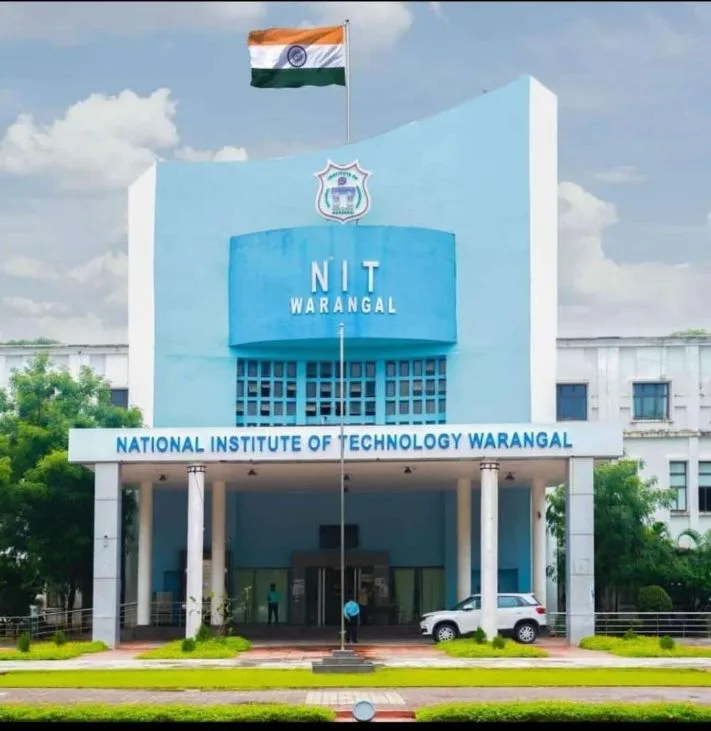

With an educational trajectory spanning 67 years since its inception in 1959, National Institute of Technology, Warangal serves as a prominent seat of learning in Warangal, Telangana. The institution is affiliated with Telangana State University and recognized by All India Council for Technical Education (AICTE), imparting rigorous programs anchored in engineering innovation, applied science, computational systems, and advanced technical research. The campus is equipped with state-of-the-art computational centers, robotics and IoT laboratories, and core engineering workshops, creating an immersive environment for scholarly development and collaborative innovation. Graduates of National Institute of Technology, Warangal emerge as competent, socially conscious professionals poised to assume impactful roles in diverse professional domains.
Total Fees
₹1.4L - ₹21.6L
Total Courses
7


National Institute of Technology Tiruchirappalli (NIT Trichy) is one of India’s premier technical institutions and was established in 1964 as Regional Engineering College, later granted the status of an Institute of National Importance. It offers undergraduate, postgraduate, and doctoral programs in Engineering, Science, Management, and Architecture. The institute is known for academic excellence, strong industry collaborations, and excellent placement records.
Total Fees
₹2.3L - ₹8.1L
Total Courses
9
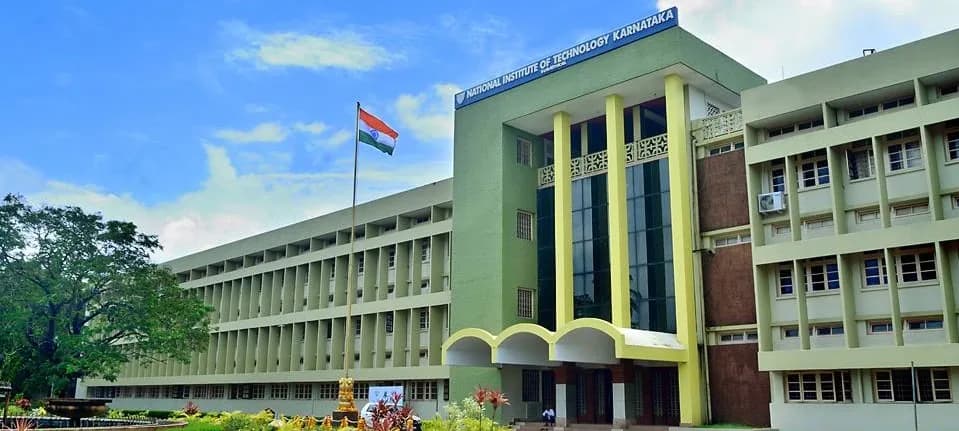

National Institute of Technology Karnataka, Surathkal (NITK) is one of the top engineering institutes in India and an Institute of National Importance. Established in 1960, it is known for its strong academic excellence, research output, and exceptional placement records. Located near the Arabian Sea, NITK offers undergraduate, postgraduate, and doctoral programs in engineering, science, and management.
Total Fees
₹89K - ₹5.7L
Total Courses
6
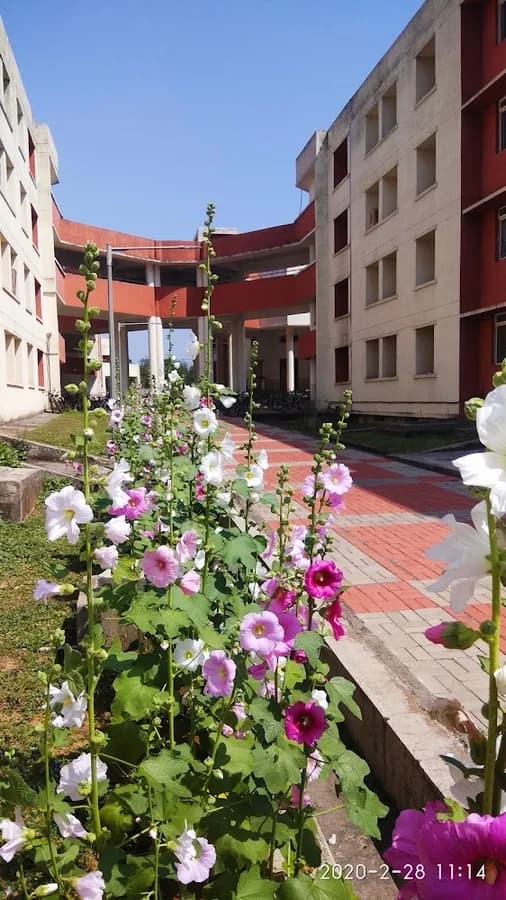

With an educational trajectory spanning 65 years since its inception in 1961, National Institute of Technology, Rourkela serves as a prominent seat of learning in Sundaragada, Odisha. Conforming to regulatory norms of All India Council for Technical Education (AICTE) through its affiliation with Odisha State University, the institution offers students an integrated foundation across engineering innovation, applied science, computational systems, and advanced technical research. The campus is equipped with state-of-the-art computational centers, robotics and IoT laboratories, and core engineering workshops, creating an immersive environment for scholarly development and collaborative innovation. By combining academic discipline with practical exposure, it equips emerging scholars to meet evolving demands in industry, academia, and public service.
Total Fees
₹2.3L - ₹12.4L
Total Courses
6
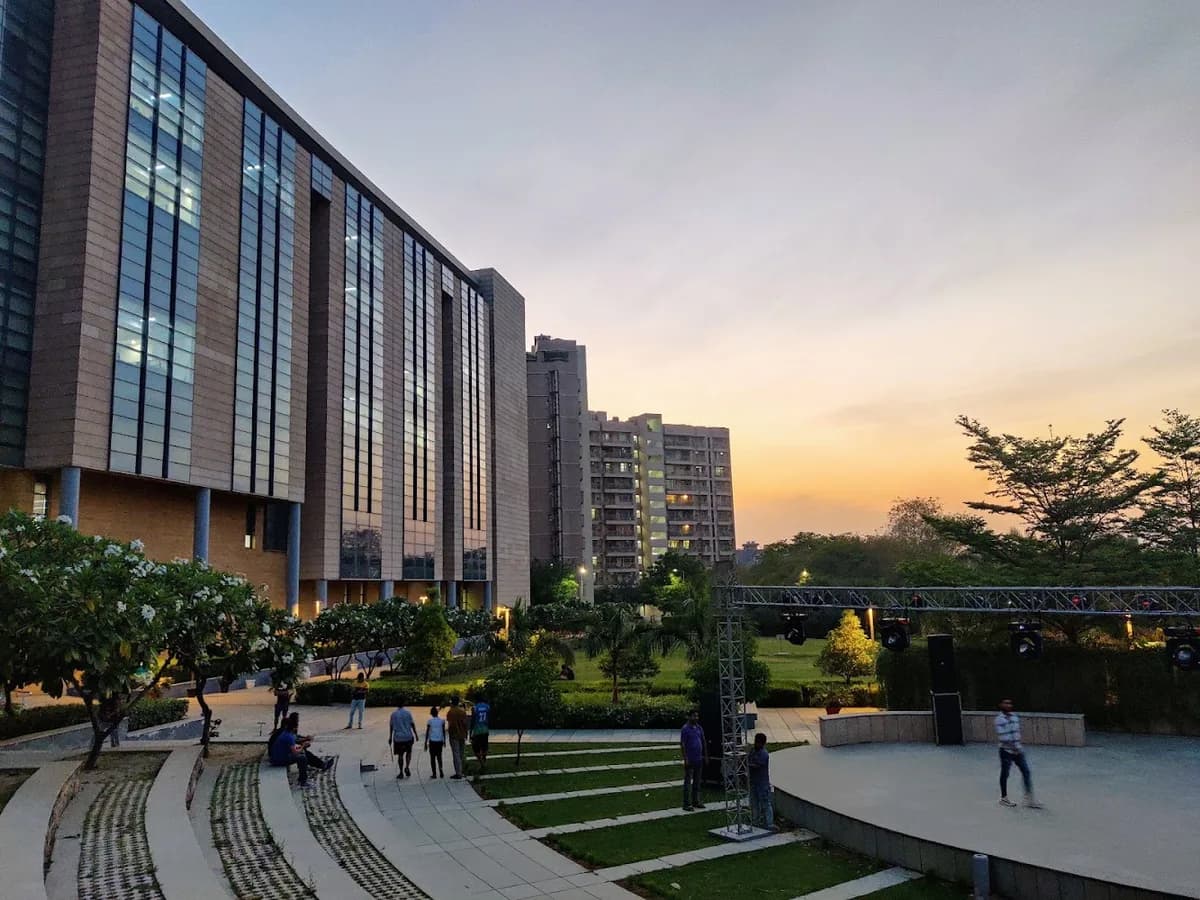

Established in 2008, Indraprastha Institute of Information Technology, Delhi is a distinguished institution situated in South, Delhi. Operating under the academic aegis of Delhi State University and recognized by All India Council for Technical Education (AICTE), it provides structured degree programs emphasizing engineering innovation, applied science, computational systems, and advanced technical research. With modern campus amenities encompassing state-of-the-art computational centers, robotics and IoT laboratories, and core engineering workshops, the institution actively bridges conceptual instruction with empirical application. By combining academic discipline with practical exposure, it equips emerging scholars to meet evolving demands in industry, academia, and public service.
Total Fees
₹4.6L - ₹19.5L
Total Courses
3


Located in the educational landscape of Prayagraj, Uttar Pradesh, Indian Institute of Information Technology, Allahabad was established in 1999 to deliver transformative education. Affiliated with Uttar Pradesh State University and adhering to statutory benchmarks established by All India Council for Technical Education (AICTE), the institution delivers specialized academic curricula centered on engineering innovation, applied science, computational systems, and advanced technical research. Students benefit from contemporary infrastructure featuring state-of-the-art computational centers, robotics and IoT laboratories, and core engineering workshops, designed to support hands-on learning and comprehensive intellectual growth. By combining academic discipline with practical exposure, it equips emerging scholars to meet evolving demands in industry, academia, and public service.
Total Fees
₹4L - ₹11.1L
Total Courses
4
Get More Info About JEE Main Preparation
Recommended Reading

Mastering Your MBA Personal Interview: The Ultimate MatchToCollege Guide
Unlock the secrets to acing your MBA Personal Interview (PI) with this comprehensive guide from MatchToCollege. Learn to articulate your goals, showcase your strengths, and impress admissions panels.
JEE Main Past Papers: Your Ultimate Guide to Mastering Engineering Entrance
Unlock your JEE Main potential by strategically leveraging past year question papers. This comprehensive guide from MatchToCollege provides expert insights, preparation strategies, and crucial analysis to help you excel.

MBA vs. PGDM: Unpacking Your Path to Management Excellence in India
Navigating the choice between an MBA and a PGDM can be a pivotal moment for your management career. This MatchToCollege guide clarifies the distinctions, helping you make an informed decision for your future.