

JEE Main Past Papers: Your Ultimate Guide to Mastering Engineering Entrance
Admission & Info Tools
Need Expert Assistance?
Our counselors can help you with fee structures, eligibility guidelines, and upcoming admission cutoffs instantly.
Direct Application Tools
🎯 MatchToCollege AI Recommendation: Planning your counselling or choice filling? Check your seat allotment probability across premier colleges using the JEE Main College Predictor.
JEE Main: Overview & Key Highlights
The Joint Entrance Examination (JEE) Main is the gateway to undergraduate engineering programs at NITs, IIITs, and other Centrally Funded Technical Institutions (CFTIs), and also serves as the qualifying exam for JEE Advanced. Understanding its structure is the first step towards a winning strategy.
| Parameter | Details |
| Conducting Body | National Testing Agency (NTA) |
| Exam Frequency | Twice a year (January & April sessions) |
| Exam Mode | Computer Based Test (CBT) for Paper 1 (B.E./B.Tech) |
| Subjects | Physics, Chemistry, Mathematics |
| Total Questions | 90 (30 from each subject) |
| Question Type | Multiple Choice Questions (MCQs) & Numerical Value Questions |
| Marking Scheme | +4 for correct, -1 for incorrect, 0 for unattempted |
| Total Marks | 300 |
| Exam Duration | 3 hours |
Eligibility Criteria & Selection Process
To appear for JEE Main, candidates must meet specific eligibility requirements set by the NTA. These criteria ensure a fair and standardized selection process for all aspirants.
- Age Limit: There is no age limit for appearing in JEE Main.
- Educational Qualification: Candidates must have passed Class 12th or an equivalent examination in the preceding two years, or be appearing in Class 12th in the current academic year.
- Subjects in Class 12th: Physics and Mathematics are compulsory subjects. Chemistry, Biology, Biotechnology, or Technical Vocational Subject must be the third subject.
- Number of Attempts: Candidates can attempt JEE Main for three consecutive years.
The selection process primarily involves:
- Appearing for JEE Main: Candidates take the exam in one or both sessions.
- Result Declaration: NTA releases scores and ranks based on the best of the two attempts (if applicable).
- Counselling: Qualified candidates participate in JoSAA (Joint Seat Allocation Authority) counselling for admission to NITs, IIITs, and CFTIs. For IITs, candidates must qualify JEE Advanced after clearing JEE Main.
Top Engineering Colleges & Fee Comparison
JEE Main opens doors to some of India's most prestigious engineering institutions. While IITs require JEE Advanced, NITs, IIITs, and other CFTIs admit students directly through JEE Main scores. Here's a glimpse at some top institutions and their estimated fee ranges:
| Institution Type | Examples |
| National Institutes of Technology (NITs) | NIT Trichy, NIT Warangal, NIT Surathkal, NIT Calicut |
| Indian Institutes of Information Technology (IIITs) | IIIT Hyderabad, IIIT Delhi, IIIT Bangalore, IIIT Allahabad |
| Other CFTIs | Delhi Technological University (DTU), Netaji Subhas University of Technology (NSUT), PEC Chandigarh |
| Estimated Annual Fees (B.Tech) | INR 1.2 Lakhs - 2.5 Lakhs (varies by institute & category) |
Return on Investment (ROI) in these institutions is generally high, given their strong academic reputation, robust placement records, and the quality of education provided. Factors like branch choice, individual performance, and economic conditions also influence ROI.
Strategic Preparation: Mastering JEE Main with Past Papers
Effective preparation for JEE Main goes beyond rote learning; it demands strategic practice and a deep understanding of the exam pattern. Past year question papers are your most valuable resource in this journey. They offer an authentic simulation of the actual exam, allowing you to identify recurring themes, question styles, and difficulty levels.
For instance, analyzing papers like the JEE Main 2023 January 24 Shift 1 provides crucial insights. This particular paper featured a balanced mix of conceptual and application-based questions across Physics, Chemistry, and Mathematics. Students encountered questions on topics such as:
- Mathematics: Complex Numbers, Probability, Relations, Limits, Differential Equations, Area under curves, Matrices, AP/GP.
- Physics: Dimensional Analysis (e.g., Planck's constant, momentum), Modern Physics, Electrostatics, Mechanics.
- Chemistry: Organic Reactions, Inorganic Compounds (e.g., Chlorophyll, Soda ash), Physical Chemistry concepts.
Here’s how to integrate past papers into your study plan:
- Initial Assessment: Attempt a full-length past paper early in your preparation to understand your current standing and identify weak areas.
- Topic-wise Practice: After completing a chapter, solve all related questions from past papers. This reinforces concepts and familiarizes you with exam-style questions.
- Timed Practice: As the exam approaches, solve full papers under strict timed conditions. This is crucial for improving speed and accuracy.
- Detailed Analysis: Don't just solve; analyze! Review every question, especially incorrect ones. Understand why you made a mistake and how to avoid it next time. Pay attention to the time taken for each section.
- Identify High-Weightage Topics: Past papers reveal frequently tested topics, helping you prioritize your study efforts.
To gauge your admission chances based on your performance in these practice papers, utilize the JEE Main College Predictor. This tool can help you understand which colleges and branches you might qualify for, providing a clear roadmap for your aspirations.
Career Scope, Placements & Expected ROI
An engineering degree from a reputable institution, secured through JEE Main, opens a world of diverse career opportunities. The demand for skilled engineers remains consistently high across various sectors.
- Core Engineering Roles: Mechanical, Civil, Electrical, Chemical engineers find roles in manufacturing, infrastructure, energy, and process industries.
- Information Technology & Software: Computer Science and IT engineers are highly sought after in software development, data science, AI/ML, cybersecurity, and cloud computing.
- Emerging Fields: Opportunities are rapidly expanding in areas like Robotics, Mechatronics, Biotechnology, and Renewable Energy.
- Entrepreneurship: Many engineering graduates leverage their problem-solving skills to launch their own startups.
- Further Studies: An engineering degree is an excellent foundation for pursuing M.Tech, MBA, or even research-oriented PhD programs.
Placements at top NITs and IIITs are robust, with leading companies from IT, consulting, finance, and core engineering sectors recruiting extensively. Average packages typically range from INR 8 LPA to 15 LPA, with top offers often exceeding INR 30-40 LPA. The long-term career growth and earning potential make an engineering degree a valuable investment.
🏛️ Looking for Admissions & College Cutoffs? Explore verified fee structures, seat matrices, and real student reviews across top institutions on the MatchToCollege Top Colleges & Universities in India Directory.
Frequently Asked Questions
Q: Why is solving JEE Main past papers crucial for preparation?
Solving past papers is indispensable because it familiarizes you with the actual exam pattern, question types, marking scheme, and time constraints. It helps identify high-weightage topics, gauge your preparation level, improve speed and accuracy, and build confidence for the main examination.
Q: How many JEE Main attempts are allowed?
Candidates are allowed to appear for JEE Main for three consecutive years. Within each year, there are two sessions (January and April), and candidates can appear in one or both sessions. The best score out of all attempts is considered for ranking.
Q: What was the general difficulty level of JEE Main 2023 January 24 Shift 1?
The JEE Main 2023 January 24 Shift 1 paper was generally considered to be of moderate difficulty. Mathematics was often rated as lengthy and challenging, while Physics and Chemistry sections were typically found to be easier to moderate, with a good balance of conceptual and application-based questions.
Q: Can I get into IITs with just JEE Main scores?
No, JEE Main scores are a prerequisite to qualify for JEE Advanced. To gain admission into the prestigious Indian Institutes of Technology (IITs), candidates must first clear JEE Main and then appear for and qualify in JEE Advanced. JEE Main scores are directly used for admissions to NITs, IIITs, and other CFTIs.
Q: How can I effectively analyze a JEE Main past paper?
After attempting a past paper, review every question. For correct answers, ensure you used the most efficient method. For incorrect or unattempted questions, identify the conceptual gap or calculation error. Categorize mistakes by subject and topic to pinpoint weak areas. Track your time management for each section to optimize your strategy.
Q: Where can I find reliable JEE Main study resources and guidance?
MatchToCollege offers a wealth of reliable study resources, expert guidance, and personalized counseling for JEE Main aspirants. Our platform provides comprehensive preparation strategies, detailed analysis of past papers, and tools like the JEE Main College Predictor to assist you at every step of your admissions journey.
JEE Main: Overview & Key Highlights
The Joint Entrance Examination (JEE) Main is the gateway to undergraduate engineering programs at NITs, IIITs, and other Centrally Funded Technical Institutions (CFTIs), and also serves as the qualifying exam for JEE Advanced. Understanding its structure is the first step towards a winning strategy.
| Parameter | Details |
| Conducting Body | National Testing Agency (NTA) |
| Exam Frequency | Twice a year (January & April sessions) |
| Exam Mode | Computer Based Test (CBT) for Paper 1 (B.E./B.Tech) |
| Subjects | Physics, Chemistry, Mathematics |
| Total Questions | 90 (30 from each subject) |
| Question Type | Multiple Choice Questions (MCQs) & Numerical Value Questions |
| Marking Scheme | +4 for correct, -1 for incorrect, 0 for unattempted |
| Total Marks | 300 |
| Exam Duration | 3 hours |
Eligibility Criteria & Selection Process
To appear for JEE Main, candidates must meet specific eligibility requirements set by the NTA. These criteria ensure a fair and standardized selection process for all aspirants.
- Age Limit: There is no age limit for appearing in JEE Main.
- Educational Qualification: Candidates must have passed Class 12th or an equivalent examination in the preceding two years, or be appearing in Class 12th in the current academic year.
- Subjects in Class 12th: Physics and Mathematics are compulsory subjects. Chemistry, Biology, Biotechnology, or Technical Vocational Subject must be the third subject.
- Number of Attempts: Candidates can attempt JEE Main for three consecutive years.
The selection process primarily involves:
- Appearing for JEE Main: Candidates take the exam in one or both sessions.
- Result Declaration: NTA releases scores and ranks based on the best of the two attempts (if applicable).
- Counselling: Qualified candidates participate in JoSAA (Joint Seat Allocation Authority) counselling for admission to NITs, IIITs, and CFTIs. For IITs, candidates must qualify JEE Advanced after clearing JEE Main.
Top Engineering Colleges & Fee Comparison
JEE Main opens doors to some of India's most prestigious engineering institutions. While IITs require JEE Advanced, NITs, IIITs, and other CFTIs admit students directly through JEE Main scores. Here's a glimpse at some top institutions and their estimated fee ranges:
| Institution Type | Examples |
| National Institutes of Technology (NITs) | NIT Trichy, NIT Warangal, NIT Surathkal, NIT Calicut |
| Indian Institutes of Information Technology (IIITs) | IIIT Hyderabad, IIIT Delhi, IIIT Bangalore, IIIT Allahabad |
| Other CFTIs | Delhi Technological University (DTU), Netaji Subhas University of Technology (NSUT), PEC Chandigarh |
| Estimated Annual Fees (B.Tech) | INR 1.2 Lakhs - 2.5 Lakhs (varies by institute & category) |
Return on Investment (ROI) in these institutions is generally high, given their strong academic reputation, robust placement records, and the quality of education provided. Factors like branch choice, individual performance, and economic conditions also influence ROI.
Strategic Preparation: Mastering JEE Main with Past Papers
Effective preparation for JEE Main goes beyond rote learning; it demands strategic practice and a deep understanding of the exam pattern. Past year question papers are your most valuable resource in this journey. They offer an authentic simulation of the actual exam, allowing you to identify recurring themes, question styles, and difficulty levels.
For instance, analyzing papers like the JEE Main 2023 January 24 Shift 1 provides crucial insights. This particular paper featured a balanced mix of conceptual and application-based questions across Physics, Chemistry, and Mathematics. Students encountered questions on topics such as:
- Mathematics: Complex Numbers, Probability, Relations, Limits, Differential Equations, Area under curves, Matrices, AP/GP.
- Physics: Dimensional Analysis (e.g., Planck's constant, momentum), Modern Physics, Electrostatics, Mechanics.
- Chemistry: Organic Reactions, Inorganic Compounds (e.g., Chlorophyll, Soda ash), Physical Chemistry concepts.
Here’s how to integrate past papers into your study plan:
- Initial Assessment: Attempt a full-length past paper early in your preparation to understand your current standing and identify weak areas.
- Topic-wise Practice: After completing a chapter, solve all related questions from past papers. This reinforces concepts and familiarizes you with exam-style questions.
- Timed Practice: As the exam approaches, solve full papers under strict timed conditions. This is crucial for improving speed and accuracy.
- Detailed Analysis: Don't just solve; analyze! Review every question, especially incorrect ones. Understand why you made a mistake and how to avoid it next time. Pay attention to the time taken for each section.
- Identify High-Weightage Topics: Past papers reveal frequently tested topics, helping you prioritize your study efforts.
To gauge your admission chances based on your performance in these practice papers, utilize the JEE Main College Predictor. This tool can help you understand which colleges and branches you might qualify for, providing a clear roadmap for your aspirations.
Career Scope, Placements & Expected ROI
An engineering degree from a reputable institution, secured through JEE Main, opens a world of diverse career opportunities. The demand for skilled engineers remains consistently high across various sectors.
- Core Engineering Roles: Mechanical, Civil, Electrical, Chemical engineers find roles in manufacturing, infrastructure, energy, and process industries.
- Information Technology & Software: Computer Science and IT engineers are highly sought after in software development, data science, AI/ML, cybersecurity, and cloud computing.
- Emerging Fields: Opportunities are rapidly expanding in areas like Robotics, Mechatronics, Biotechnology, and Renewable Energy.
- Entrepreneurship: Many engineering graduates leverage their problem-solving skills to launch their own startups.
- Further Studies: An engineering degree is an excellent foundation for pursuing M.Tech, MBA, or even research-oriented PhD programs.
Placements at top NITs and IIITs are robust, with leading companies from IT, consulting, finance, and core engineering sectors recruiting extensively. Average packages typically range from INR 8 LPA to 15 LPA, with top offers often exceeding INR 30-40 LPA. The long-term career growth and earning potential make an engineering degree a valuable investment.
🏛️ Looking for Admissions & College Cutoffs? Explore verified fee structures, seat matrices, and real student reviews across top institutions on the MatchToCollege Top Colleges & Universities in India Directory.
Share this Article
FAQFrequently Asked Questions
Q: Why is solving JEE Main past papers crucial for preparation?
Solving past papers is indispensable because it familiarizes you with the actual exam pattern, question types, marking scheme, and time constraints. It helps identify high-weightage topics, gauge your preparation level, improve speed and accuracy, and build confidence for the main examination.
Q: How many JEE Main attempts are allowed?
Candidates are allowed to appear for JEE Main for three consecutive years. Within each year, there are two sessions (January and April), and candidates can appear in one or both sessions. The best score out of all attempts is considered for ranking.
Q: What was the general difficulty level of JEE Main 2023 January 24 Shift 1?
The JEE Main 2023 January 24 Shift 1 paper was generally considered to be of moderate difficulty. Mathematics was often rated as lengthy and challenging, while Physics and Chemistry sections were typically found to be easier to moderate, with a good balance of conceptual and application-based questions.
Q: Can I get into IITs with just JEE Main scores?
No, JEE Main scores are a prerequisite to qualify for JEE Advanced. To gain admission into the prestigious Indian Institutes of Technology (IITs), candidates must first clear JEE Main and then appear for and qualify in JEE Advanced. JEE Main scores are directly used for admissions to NITs, IIITs, and other CFTIs.
Q: How can I effectively analyze a JEE Main past paper?
After attempting a past paper, review every question. For correct answers, ensure you used the most efficient method. For incorrect or unattempted questions, identify the conceptual gap or calculation error. Categorize mistakes by subject and topic to pinpoint weak areas. Track your time management for each section to optimize your strategy.
Q: Where can I find reliable JEE Main study resources and guidance?
MatchToCollege offers a wealth of reliable study resources, expert guidance, and personalized counseling for JEE Main aspirants. Our platform provides comprehensive preparation strategies, detailed analysis of past papers, and tools like the <a href="https://matchtocollege.com/tools/jee-college-predictor" target="_blank">JEE Main College Predictor</a> to assist you at every step of your admissions journey.
Top Colleges Covered in this Blog
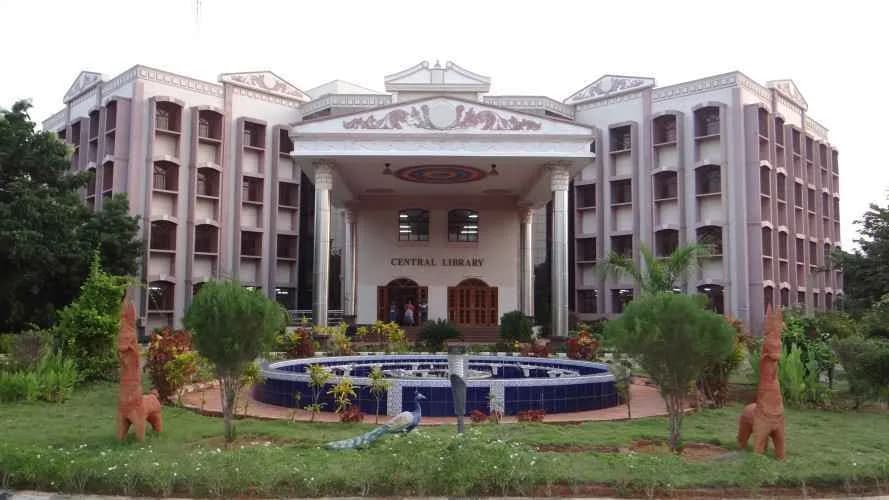

National Institute of Technology Tiruchirappalli (NIT Trichy) is one of India’s premier technical institutions and was established in 1964 as Regional Engineering College, later granted the status of an Institute of National Importance. It offers undergraduate, postgraduate, and doctoral programs in Engineering, Science, Management, and Architecture. The institute is known for academic excellence, strong industry collaborations, and excellent placement records.
Total Fees
₹2.3L - ₹8.1L
Total Courses
9
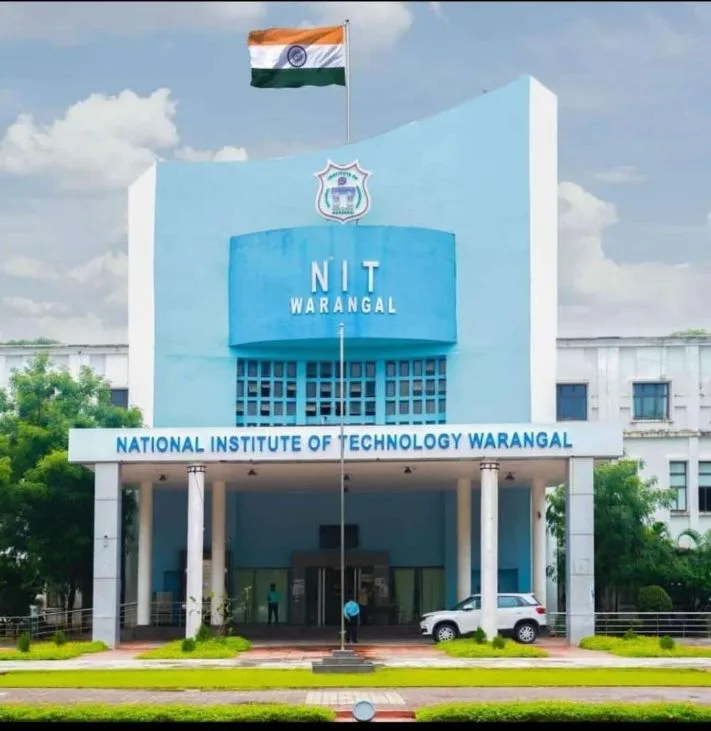

With an educational trajectory spanning 67 years since its inception in 1959, National Institute of Technology, Warangal serves as a prominent seat of learning in Warangal, Telangana. The institution is affiliated with Telangana State University and recognized by All India Council for Technical Education (AICTE), imparting rigorous programs anchored in engineering innovation, applied science, computational systems, and advanced technical research. The campus is equipped with state-of-the-art computational centers, robotics and IoT laboratories, and core engineering workshops, creating an immersive environment for scholarly development and collaborative innovation. Graduates of National Institute of Technology, Warangal emerge as competent, socially conscious professionals poised to assume impactful roles in diverse professional domains.
Total Fees
₹1.4L - ₹21.6L
Total Courses
7
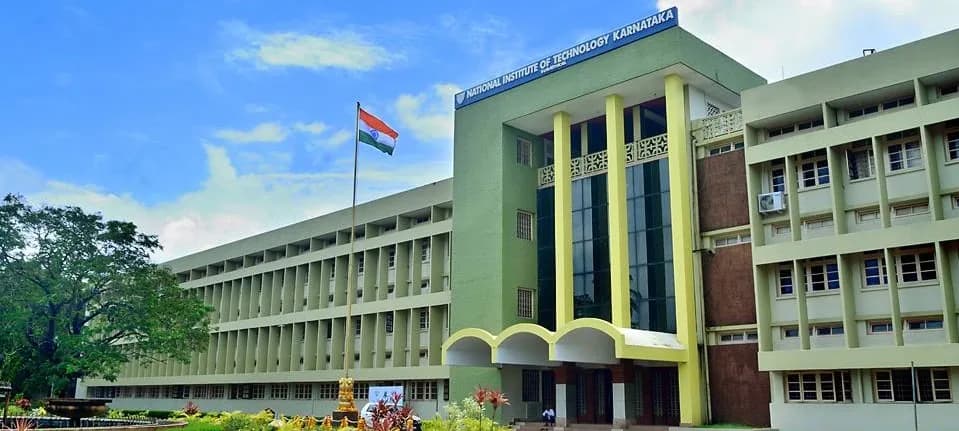

National Institute of Technology Karnataka, Surathkal (NITK) is one of the top engineering institutes in India and an Institute of National Importance. Established in 1960, it is known for its strong academic excellence, research output, and exceptional placement records. Located near the Arabian Sea, NITK offers undergraduate, postgraduate, and doctoral programs in engineering, science, and management.
Total Fees
₹89K - ₹5.7L
Total Courses
6

The National Institute of Technology Calicut (NITC) is one of the 31 institutions of national importance set up by an Act of Parliament, namely the ‘National Institute of Technology Act 2007,' and is fully funded by the Government of India. The mandate of the institute is to provide higher technical education and conduct research in the various branches of engineering, science, technology, and management. Originally established in 1961 as a Regional Engineering College (REC), it was transformed into a National Institute of Technology in 2002. The institute offers bachelor's, master's, and doctoral degree programs in engineering, science, technology, and management. With its proactive collaborations with a multitude of research organizations, academic institutions and industries, the institute has set a new style for its functioning under the NIT regime.
Total Fees
₹2.1L - ₹8.7L
Total Courses
9
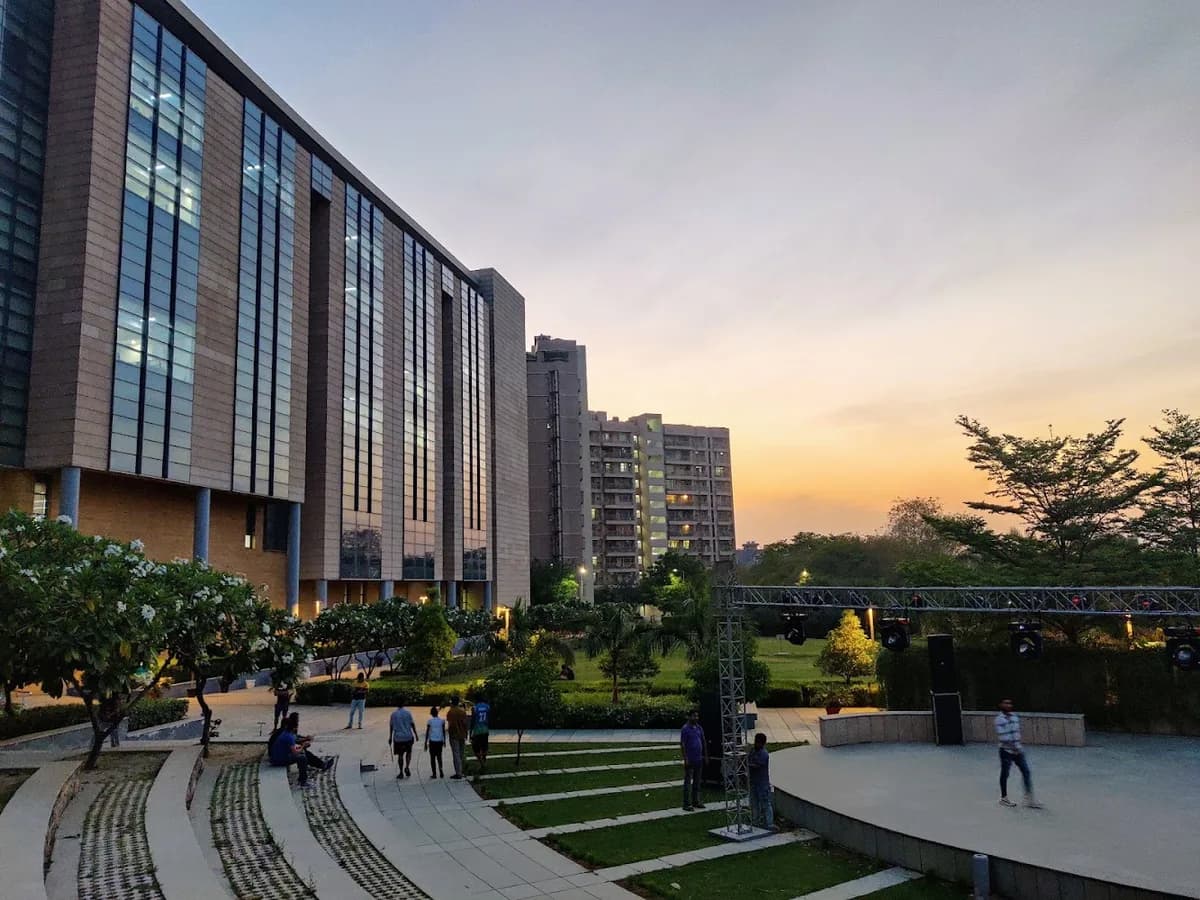

Established in 2008, Indraprastha Institute of Information Technology, Delhi is a distinguished institution situated in South, Delhi. Operating under the academic aegis of Delhi State University and recognized by All India Council for Technical Education (AICTE), it provides structured degree programs emphasizing engineering innovation, applied science, computational systems, and advanced technical research. With modern campus amenities encompassing state-of-the-art computational centers, robotics and IoT laboratories, and core engineering workshops, the institution actively bridges conceptual instruction with empirical application. By combining academic discipline with practical exposure, it equips emerging scholars to meet evolving demands in industry, academia, and public service.
Total Fees
₹4.6L - ₹19.5L
Total Courses
3


Located in the educational landscape of Prayagraj, Uttar Pradesh, Indian Institute of Information Technology, Allahabad was established in 1999 to deliver transformative education. Affiliated with Uttar Pradesh State University and adhering to statutory benchmarks established by All India Council for Technical Education (AICTE), the institution delivers specialized academic curricula centered on engineering innovation, applied science, computational systems, and advanced technical research. Students benefit from contemporary infrastructure featuring state-of-the-art computational centers, robotics and IoT laboratories, and core engineering workshops, designed to support hands-on learning and comprehensive intellectual growth. By combining academic discipline with practical exposure, it equips emerging scholars to meet evolving demands in industry, academia, and public service.
Total Fees
₹4L - ₹11.1L
Total Courses
4
Get More Info About JEE Main Past Papers
Recommended Reading

Mastering Your MBA Personal Interview: The Ultimate MatchToCollege Guide
Unlock the secrets to acing your MBA Personal Interview (PI) with this comprehensive guide from MatchToCollege. Learn to articulate your goals, showcase your strengths, and impress admissions panels.
JEE Main Preparation: Your Evergreen Guide to Mastering the Exam
Unlock your potential for JEE Main with this comprehensive guide. Learn how to leverage past papers, understand exam patterns, and strategize for top engineering admissions.

MBA vs. PGDM: Unpacking Your Path to Management Excellence in India
Navigating the choice between an MBA and a PGDM can be a pivotal moment for your management career. This MatchToCollege guide clarifies the distinctions, helping you make an informed decision for your future.