

JEE Main: Your Definitive Guide to India's Premier Engineering Entrance Exam
Admission & Info Tools
Need Expert Assistance?
Our counselors can help you with fee structures, eligibility guidelines, and upcoming admission cutoffs instantly.
Direct Application Tools
🎯 MatchToCollege AI Recommendation: Planning your counselling or choice filling? Check your seat allotment probability across premier colleges using the JEE Main College Predictor.
Key Highlights & Program Overview
The Joint Entrance Examination (JEE) Main stands as the gateway to India's most esteemed engineering colleges, including the National Institutes of Technology (NITs), Indian Institutes of Information Technology (IIITs), and various Government Funded Technical Institutes (GFTIs). Its journey began in 2002 as the All India Engineering Entrance Examination (AIEEE), an initiative by the Central Board of Secondary Education (CBSE) to streamline admissions into non-IIT engineering programs across the nation. This move aimed to alleviate the burden on students who previously had to appear for multiple state and institutional entrance tests.
In a significant reform announced in 2012 and implemented from 2013, the Indian government transitioned AIEEE into JEE Main, aligning with the vision of 'one nation, one exam' for engineering aspirants. Concurrently, the erstwhile IIT-JEE was rebranded as JEE Advanced, becoming the exclusive entrance for the prestigious Indian Institutes of Technology (IITs). This structural change simplified the admission landscape, offering a unified platform for aspiring engineers.
| Parameter | Details |
| Exam Name | JEE Main (formerly AIEEE) |
| Conducting Body | National Testing Agency (NTA) |
| Exam Frequency | Twice a year (January & April sessions) |
| Courses Offered | B.E./B.Tech, B.Arch, B.Planning |
| Participating Institutes | NITs, IIITs, GFTIs, and numerous state-level engineering colleges |
| Exam Mode | Computer Based Test (CBT) |
| Official Website | nta.ac.in |
Eligibility Criteria & Selection Process
Understanding the eligibility criteria is the first step towards your JEE Main journey. The National Testing Agency (NTA) sets clear guidelines to ensure a fair and standardized selection process for all candidates.
Academic Requirements:
- Candidates must have passed Class 12th or an equivalent examination with Physics, Chemistry, and Mathematics as compulsory subjects.
- For admission to NITs, IIITs, and GFTIs, candidates generally need to have secured at least 75% aggregate marks in their Class 12th board examination or be in the top 20 percentile of their respective board. SC/ST candidates usually require 65% aggregate marks.
Age Limit & Attempts:
- There is no age limit for appearing in JEE Main.
- Candidates are allowed to appear for JEE Main for three consecutive years from the year they pass their Class 12th examination.
Selection Stages:
The selection process for engineering admissions through JEE Main is multi-layered:
- JEE Main Examination: This is the primary screening test. Your performance here determines your eligibility for NITs, IIITs, GFTIs, and also for JEE Advanced.
- JEE Advanced Eligibility: Only the top 2.5 lakh candidates (including all categories) from JEE Main are eligible to appear for JEE Advanced, which is the entrance exam for IITs.
- Counselling Process (JoSAA): After both JEE Main and JEE Advanced results are declared, the Joint Seat Allocation Authority (JoSAA) conducts a centralized counselling process. This is where you'll register your choices for colleges and branches based on your rank and eligibility.
Top Colleges & Fee Comparison
A strong JEE Main performance opens doors to some of India's most reputable engineering institutions. The National Institutes of Technology (NITs), Indian Institutes of Information Technology (IIITs), and various Government Funded Technical Institutes (GFTIs) are highly sought after for their quality education, infrastructure, and robust placement records.
While the Indian Institutes of Technology (IITs) are accessible via JEE Advanced, the NITs and IIITs offer an equally enriching academic experience with competitive career prospects. Institutions like NIT Trichy, NIT Warangal, NIT Surathkal, IIIT Hyderabad, and IIIT Delhi consistently rank among the best, attracting top talent.
Estimated Fees & Return on Investment (ROI):
The fee structure for B.Tech programs in these institutions can vary. Generally, for NITs and IIITs, the annual tuition fees range from approximately ₹1.5 Lakhs to ₹3 Lakhs, excluding hostel and other charges. Private institutions accepting JEE Main scores might have higher fees. However, the return on investment (ROI) from these colleges is exceptionally high, primarily due to their strong placement records and the quality of education provided.
| Institute Type | Estimated Annual Fees (Tuition) |
| National Institutes of Technology (NITs) | ₹1.5 Lakhs - ₹2.5 Lakhs |
| Indian Institutes of Information Technology (IIITs) | ₹2 Lakhs - ₹3 Lakhs |
| Government Funded Technical Institutes (GFTIs) | ₹1 Lakh - ₹2.5 Lakhs |
| Top Private Engineering Colleges (accepting JEE Main) | ₹2.5 Lakhs - ₹5 Lakhs+ |
To gain a clearer perspective on which colleges you might qualify for based on your potential JEE Main score or rank, we strongly recommend utilizing the official MatchToCollege JEE Main College Predictor. This tool is designed to help you strategize your college choices effectively.
Career Scope, Placements & Expected ROI
A B.Tech degree from a premier institution secured through JEE Main is a powerful launchpad for a diverse and rewarding career. The skills and knowledge acquired are highly valued across various industries, leading to excellent placement opportunities and a strong return on your educational investment.
Diverse Career Opportunities:
Graduates from NITs, IIITs, and GFTIs are highly sought after in sectors such as:
- Information Technology & Software Development: Roles like Software Engineer, Data Scientist, AI/ML Engineer, Web Developer, Cybersecurity Analyst.
- Core Engineering: Opportunities in Mechanical, Civil, Electrical, Electronics, and Chemical engineering fields within manufacturing, infrastructure, energy, and automotive industries.
- Consulting & Finance: Many engineers transition into management consulting, financial analysis, and business development roles, leveraging their analytical skills.
- Research & Academia: Pursuing higher studies (M.Tech, MS, PhD) or engaging in research and development.
- Entrepreneurship: The innovative environment often fosters entrepreneurial ventures.
Placement Insights & Average Packages:
Placements at top NITs and IIITs are consistently robust. While specific figures vary by institute, branch, and year, students can generally expect highly competitive packages. Average annual packages from these institutions often range from ₹8 Lakhs to ₹15 Lakhs, with top offers reaching significantly higher, sometimes exceeding ₹30-50 Lakhs per annum, particularly in Computer Science and IT-related branches. The strong industry connections and rigorous curriculum ensure that graduates are well-prepared for the demands of the professional world.
Expected Return on Investment (ROI):
Considering the quality of education, the competitive salaries, and the career growth trajectory, the ROI for a B.Tech degree from a JEE Main-accepting premier institute is excellent. The investment in your education quickly pays off, providing a stable and prosperous career path.
Admissions Checklist & Important Tips
Navigating the JEE Main preparation and admission process requires a structured approach and consistent effort. Here’s a checklist and some essential tips to guide you:
Preparation Strategy:
- Master NCERT Textbooks: These are the foundational books for JEE Main. Ensure you have a crystal-clear understanding of all concepts, theories, and solved examples from Class 11 and 12 NCERTs for Physics, Chemistry, and Mathematics.
- Conceptual Clarity: Focus on understanding the 'why' behind every concept, rather than rote memorization. JEE Main questions often test your application of principles.
- Practice Previous Year Questions (PYQs): Regularly solve JEE Main question papers from the last 5-10 years. This helps you understand the exam pattern, question types, important topics, and time management.
- Take Mock Tests Regularly: Simulate exam conditions by taking full-length mock tests. Analyze your performance to identify weak areas, improve speed, and refine your test-taking strategy.
- Time Management: Develop a study schedule that allocates sufficient time to all three subjects. During the exam, manage your time wisely to attempt all sections effectively.
- Consistent Revision: Regularly revise all topics, especially those you find challenging. Short notes and flashcards can be very helpful.
Application & Admissions Checklist:
- Stay Updated: Keep a close watch on the official NTA website (nta.ac.in) for all important notifications, application dates, and exam schedules for upcoming sessions.
- Gather Documents: Ensure all necessary documents (academic certificates, identity proof, category certificates if applicable) are ready and in the prescribed format for application and counselling.
- Understand JoSAA: Familiarize yourself with the Joint Seat Allocation Authority (JoSAA) counselling process, including choice filling, seat acceptance, and reporting procedures.
- Utilize Resources: Leverage tools like the MatchToCollege JEE Main College Predictor to make informed decisions about college and branch preferences based on your expected rank.
With dedication, a strategic approach, and the right guidance, you can successfully navigate the JEE Main journey and secure your place in a top engineering institution.
🏛️ Looking for Admissions & College Cutoffs? Explore verified fee structures, seat matrices, and real student reviews across top institutions on the MatchToCollege Top Colleges & Universities in India Directory.
Frequently Asked Questions
Q: What is the difficulty level of JEE Main?
JEE Main primarily tests your understanding of the Class 11 and 12 syllabus. While the content aligns with board exams, the questions demand a deeper conceptual grasp and problem-solving skills. Consistent study of NCERTs and rigorous practice of numerical problems are key to performing well. It's designed to assess your analytical abilities rather than just recall.
Q: Is a score of 70 considered good in JEE Main?
For general category students, a score of 70 in JEE Main is typically considered average to below-average. This usually corresponds to a percentile in the range of 88 to 91. While it might secure admission to some state-level colleges, securing a seat in top NITs or IIITs would generally require a significantly higher score, often above 97-98 percentile.
Q: Can I prepare for JEE Main in just one month?
A single month is generally insufficient for comprehensive JEE Main preparation if you're starting from scratch, given the vast syllabus. However, if you're a Class 12 student who has diligently studied your board curriculum, you can achieve a decent score by focusing on intensive revision, solving previous year's papers, and taking mock tests. Prioritize high-weightage topics and strengthen your conceptual understanding.
Q: What are the typical marks needed for admission to top NITs/IIITs?
Admission to top NITs and IIITs through JEE Main requires a very competitive score, often translating to a percentile above 97-98 for general category students. Specific cutoffs vary each year based on factors like exam difficulty, number of applicants, and seat availability. For precise cutoff data and to assess your chances, our JEE Main College Predictor can provide valuable insights.
Q: How should I approach JEE Main preparation from Class 11th and 12th?
Starting early in Class 11 or 12 is ideal. Align your school studies with the JEE Main syllabus, paying special attention to common topics. Build a strong foundation with NCERT textbooks, then supplement with reference books for deeper understanding and problem-solving. Consistent practice, regular mock tests, and dedicated study hours (2-3 hours daily beyond schoolwork) are crucial for success. Focus on conceptual clarity and problem-solving skills from the outset.
Q: What is the difference between JEE Main and JEE Advanced?
JEE Main is the qualifying examination for admission to NITs, IIITs, and GFTIs. It also serves as the eligibility test for JEE Advanced. Only the top 2.5 lakh qualifiers from JEE Main are eligible to appear for JEE Advanced, which is the entrance examination for the prestigious Indian Institutes of Technology (IITs). JEE Advanced is generally considered more challenging, focusing on in-depth application and analytical skills, while JEE Main tests a broader range of concepts.
Key Highlights & Program Overview
The Joint Entrance Examination (JEE) Main stands as the gateway to India's most esteemed engineering colleges, including the National Institutes of Technology (NITs), Indian Institutes of Information Technology (IIITs), and various Government Funded Technical Institutes (GFTIs). Its journey began in 2002 as the All India Engineering Entrance Examination (AIEEE), an initiative by the Central Board of Secondary Education (CBSE) to streamline admissions into non-IIT engineering programs across the nation. This move aimed to alleviate the burden on students who previously had to appear for multiple state and institutional entrance tests.
In a significant reform announced in 2012 and implemented from 2013, the Indian government transitioned AIEEE into JEE Main, aligning with the vision of 'one nation, one exam' for engineering aspirants. Concurrently, the erstwhile IIT-JEE was rebranded as JEE Advanced, becoming the exclusive entrance for the prestigious Indian Institutes of Technology (IITs). This structural change simplified the admission landscape, offering a unified platform for aspiring engineers.
| Parameter | Details |
| Exam Name | JEE Main (formerly AIEEE) |
| Conducting Body | National Testing Agency (NTA) |
| Exam Frequency | Twice a year (January & April sessions) |
| Courses Offered | B.E./B.Tech, B.Arch, B.Planning |
| Participating Institutes | NITs, IIITs, GFTIs, and numerous state-level engineering colleges |
| Exam Mode | Computer Based Test (CBT) |
| Official Website | nta.ac.in |
Eligibility Criteria & Selection Process
Understanding the eligibility criteria is the first step towards your JEE Main journey. The National Testing Agency (NTA) sets clear guidelines to ensure a fair and standardized selection process for all candidates.
Academic Requirements:
- Candidates must have passed Class 12th or an equivalent examination with Physics, Chemistry, and Mathematics as compulsory subjects.
- For admission to NITs, IIITs, and GFTIs, candidates generally need to have secured at least 75% aggregate marks in their Class 12th board examination or be in the top 20 percentile of their respective board. SC/ST candidates usually require 65% aggregate marks.
Age Limit & Attempts:
- There is no age limit for appearing in JEE Main.
- Candidates are allowed to appear for JEE Main for three consecutive years from the year they pass their Class 12th examination.
Selection Stages:
The selection process for engineering admissions through JEE Main is multi-layered:
- JEE Main Examination: This is the primary screening test. Your performance here determines your eligibility for NITs, IIITs, GFTIs, and also for JEE Advanced.
- JEE Advanced Eligibility: Only the top 2.5 lakh candidates (including all categories) from JEE Main are eligible to appear for JEE Advanced, which is the entrance exam for IITs.
- Counselling Process (JoSAA): After both JEE Main and JEE Advanced results are declared, the Joint Seat Allocation Authority (JoSAA) conducts a centralized counselling process. This is where you'll register your choices for colleges and branches based on your rank and eligibility.
Top Colleges & Fee Comparison
A strong JEE Main performance opens doors to some of India's most reputable engineering institutions. The National Institutes of Technology (NITs), Indian Institutes of Information Technology (IIITs), and various Government Funded Technical Institutes (GFTIs) are highly sought after for their quality education, infrastructure, and robust placement records.
While the Indian Institutes of Technology (IITs) are accessible via JEE Advanced, the NITs and IIITs offer an equally enriching academic experience with competitive career prospects. Institutions like NIT Trichy, NIT Warangal, NIT Surathkal, IIIT Hyderabad, and IIIT Delhi consistently rank among the best, attracting top talent.
Estimated Fees & Return on Investment (ROI):
The fee structure for B.Tech programs in these institutions can vary. Generally, for NITs and IIITs, the annual tuition fees range from approximately ₹1.5 Lakhs to ₹3 Lakhs, excluding hostel and other charges. Private institutions accepting JEE Main scores might have higher fees. However, the return on investment (ROI) from these colleges is exceptionally high, primarily due to their strong placement records and the quality of education provided.
| Institute Type | Estimated Annual Fees (Tuition) |
| National Institutes of Technology (NITs) | ₹1.5 Lakhs - ₹2.5 Lakhs |
| Indian Institutes of Information Technology (IIITs) | ₹2 Lakhs - ₹3 Lakhs |
| Government Funded Technical Institutes (GFTIs) | ₹1 Lakh - ₹2.5 Lakhs |
| Top Private Engineering Colleges (accepting JEE Main) | ₹2.5 Lakhs - ₹5 Lakhs+ |
To gain a clearer perspective on which colleges you might qualify for based on your potential JEE Main score or rank, we strongly recommend utilizing the official MatchToCollege JEE Main College Predictor. This tool is designed to help you strategize your college choices effectively.
Career Scope, Placements & Expected ROI
A B.Tech degree from a premier institution secured through JEE Main is a powerful launchpad for a diverse and rewarding career. The skills and knowledge acquired are highly valued across various industries, leading to excellent placement opportunities and a strong return on your educational investment.
Diverse Career Opportunities:
Graduates from NITs, IIITs, and GFTIs are highly sought after in sectors such as:
- Information Technology & Software Development: Roles like Software Engineer, Data Scientist, AI/ML Engineer, Web Developer, Cybersecurity Analyst.
- Core Engineering: Opportunities in Mechanical, Civil, Electrical, Electronics, and Chemical engineering fields within manufacturing, infrastructure, energy, and automotive industries.
- Consulting & Finance: Many engineers transition into management consulting, financial analysis, and business development roles, leveraging their analytical skills.
- Research & Academia: Pursuing higher studies (M.Tech, MS, PhD) or engaging in research and development.
- Entrepreneurship: The innovative environment often fosters entrepreneurial ventures.
Placement Insights & Average Packages:
Placements at top NITs and IIITs are consistently robust. While specific figures vary by institute, branch, and year, students can generally expect highly competitive packages. Average annual packages from these institutions often range from ₹8 Lakhs to ₹15 Lakhs, with top offers reaching significantly higher, sometimes exceeding ₹30-50 Lakhs per annum, particularly in Computer Science and IT-related branches. The strong industry connections and rigorous curriculum ensure that graduates are well-prepared for the demands of the professional world.
Expected Return on Investment (ROI):
Considering the quality of education, the competitive salaries, and the career growth trajectory, the ROI for a B.Tech degree from a JEE Main-accepting premier institute is excellent. The investment in your education quickly pays off, providing a stable and prosperous career path.
Admissions Checklist & Important Tips
Navigating the JEE Main preparation and admission process requires a structured approach and consistent effort. Here’s a checklist and some essential tips to guide you:
Preparation Strategy:
- Master NCERT Textbooks: These are the foundational books for JEE Main. Ensure you have a crystal-clear understanding of all concepts, theories, and solved examples from Class 11 and 12 NCERTs for Physics, Chemistry, and Mathematics.
- Conceptual Clarity: Focus on understanding the 'why' behind every concept, rather than rote memorization. JEE Main questions often test your application of principles.
- Practice Previous Year Questions (PYQs): Regularly solve JEE Main question papers from the last 5-10 years. This helps you understand the exam pattern, question types, important topics, and time management.
- Take Mock Tests Regularly: Simulate exam conditions by taking full-length mock tests. Analyze your performance to identify weak areas, improve speed, and refine your test-taking strategy.
- Time Management: Develop a study schedule that allocates sufficient time to all three subjects. During the exam, manage your time wisely to attempt all sections effectively.
- Consistent Revision: Regularly revise all topics, especially those you find challenging. Short notes and flashcards can be very helpful.
Application & Admissions Checklist:
- Stay Updated: Keep a close watch on the official NTA website (nta.ac.in) for all important notifications, application dates, and exam schedules for upcoming sessions.
- Gather Documents: Ensure all necessary documents (academic certificates, identity proof, category certificates if applicable) are ready and in the prescribed format for application and counselling.
- Understand JoSAA: Familiarize yourself with the Joint Seat Allocation Authority (JoSAA) counselling process, including choice filling, seat acceptance, and reporting procedures.
- Utilize Resources: Leverage tools like the MatchToCollege JEE Main College Predictor to make informed decisions about college and branch preferences based on your expected rank.
With dedication, a strategic approach, and the right guidance, you can successfully navigate the JEE Main journey and secure your place in a top engineering institution.
🏛️ Looking for Admissions & College Cutoffs? Explore verified fee structures, seat matrices, and real student reviews across top institutions on the MatchToCollege Top Colleges & Universities in India Directory.
Share this Article
FAQFrequently Asked Questions
Q: What is the difficulty level of JEE Main?
JEE Main primarily tests your understanding of the Class 11 and 12 syllabus. While the content aligns with board exams, the questions demand a deeper conceptual grasp and problem-solving skills. Consistent study of NCERTs and rigorous practice of numerical problems are key to performing well. It's designed to assess your analytical abilities rather than just recall.
Q: Is a score of 70 considered good in JEE Main?
For general category students, a score of 70 in JEE Main is typically considered average to below-average. This usually corresponds to a percentile in the range of 88 to 91. While it might secure admission to some state-level colleges, securing a seat in top NITs or IIITs would generally require a significantly higher score, often above 97-98 percentile.
Q: Can I prepare for JEE Main in just one month?
A single month is generally insufficient for comprehensive JEE Main preparation if you're starting from scratch, given the vast syllabus. However, if you're a Class 12 student who has diligently studied your board curriculum, you can achieve a decent score by focusing on intensive revision, solving previous year's papers, and taking mock tests. Prioritize high-weightage topics and strengthen your conceptual understanding.
Q: What are the typical marks needed for admission to top NITs/IIITs?
Admission to top NITs and IIITs through JEE Main requires a very competitive score, often translating to a percentile above 97-98 for general category students. Specific cutoffs vary each year based on factors like exam difficulty, number of applicants, and seat availability. For precise cutoff data and to assess your chances, our <a href="https://matchtocollege.com/tools/jee-college-predictor" target="_blank">JEE Main College Predictor</a> can provide valuable insights.
Q: How should I approach JEE Main preparation from Class 11th and 12th?
Starting early in Class 11 or 12 is ideal. Align your school studies with the JEE Main syllabus, paying special attention to common topics. Build a strong foundation with NCERT textbooks, then supplement with reference books for deeper understanding and problem-solving. Consistent practice, regular mock tests, and dedicated study hours (2-3 hours daily beyond schoolwork) are crucial for success. Focus on conceptual clarity and problem-solving skills from the outset.
Q: What is the difference between JEE Main and JEE Advanced?
JEE Main is the qualifying examination for admission to NITs, IIITs, and GFTIs. It also serves as the eligibility test for JEE Advanced. Only the top 2.5 lakh qualifiers from JEE Main are eligible to appear for JEE Advanced, which is the entrance examination for the prestigious Indian Institutes of Technology (IITs). JEE Advanced is generally considered more challenging, focusing on in-depth application and analytical skills, while JEE Main tests a broader range of concepts.
Top Colleges Covered in this Blog


National Institute of Technology Tiruchirappalli (NIT Trichy) is one of India’s premier technical institutions and was established in 1964 as Regional Engineering College, later granted the status of an Institute of National Importance. It offers undergraduate, postgraduate, and doctoral programs in Engineering, Science, Management, and Architecture. The institute is known for academic excellence, strong industry collaborations, and excellent placement records.
Total Fees
₹2.3L - ₹8.1L
Total Courses
9
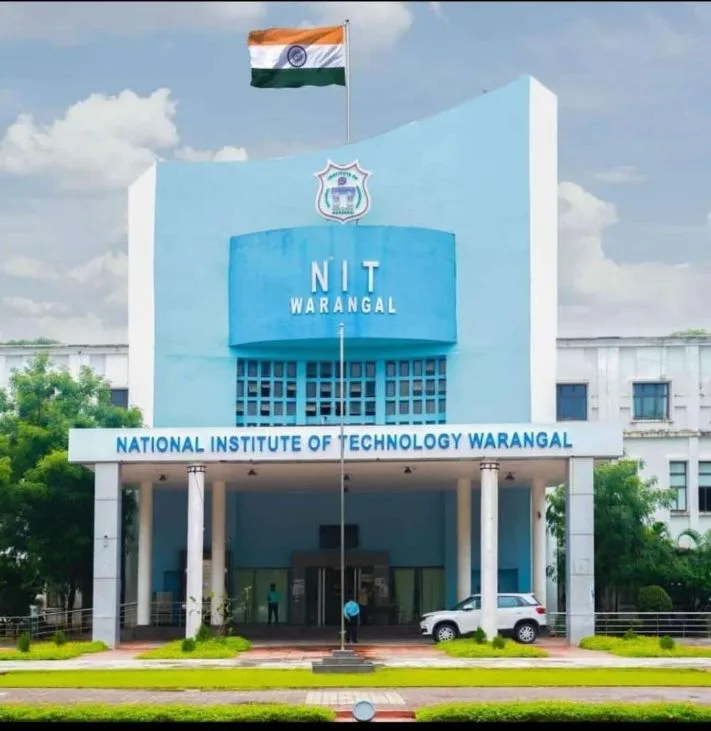

With an educational trajectory spanning 67 years since its inception in 1959, National Institute of Technology, Warangal serves as a prominent seat of learning in Warangal, Telangana. The institution is affiliated with Telangana State University and recognized by All India Council for Technical Education (AICTE), imparting rigorous programs anchored in engineering innovation, applied science, computational systems, and advanced technical research. The campus is equipped with state-of-the-art computational centers, robotics and IoT laboratories, and core engineering workshops, creating an immersive environment for scholarly development and collaborative innovation. Graduates of National Institute of Technology, Warangal emerge as competent, socially conscious professionals poised to assume impactful roles in diverse professional domains.
Total Fees
₹1.4L - ₹21.6L
Total Courses
7


National Institute of Technology Karnataka, Surathkal (NITK) is one of the top engineering institutes in India and an Institute of National Importance. Established in 1960, it is known for its strong academic excellence, research output, and exceptional placement records. Located near the Arabian Sea, NITK offers undergraduate, postgraduate, and doctoral programs in engineering, science, and management.
Total Fees
₹89K - ₹5.7L
Total Courses
6
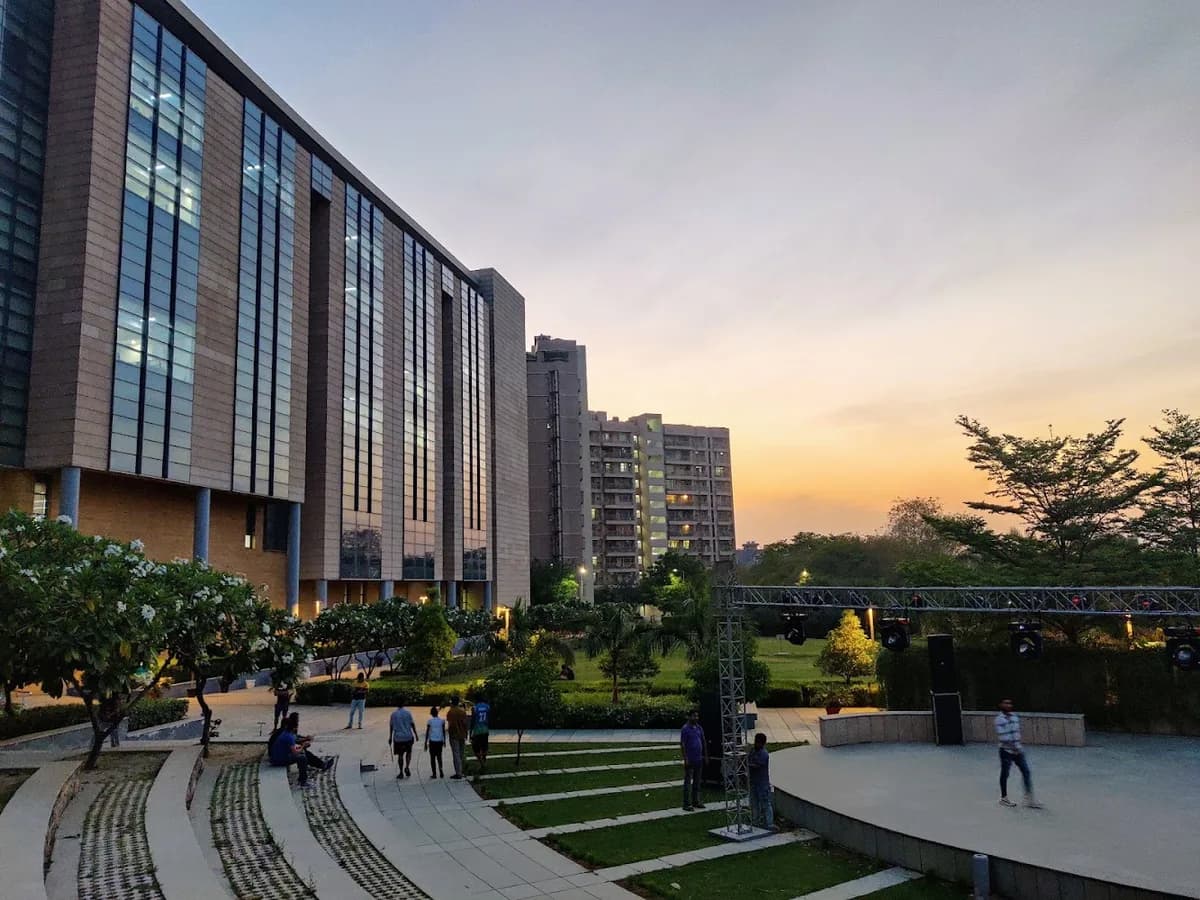

Established in 2008, Indraprastha Institute of Information Technology, Delhi is a distinguished institution situated in South, Delhi. Operating under the academic aegis of Delhi State University and recognized by All India Council for Technical Education (AICTE), it provides structured degree programs emphasizing engineering innovation, applied science, computational systems, and advanced technical research. With modern campus amenities encompassing state-of-the-art computational centers, robotics and IoT laboratories, and core engineering workshops, the institution actively bridges conceptual instruction with empirical application. By combining academic discipline with practical exposure, it equips emerging scholars to meet evolving demands in industry, academia, and public service.
Total Fees
₹4.6L - ₹19.5L
Total Courses
3
Get More Info About JEE Main
Recommended Reading

JEE Main 2027 Registration: Your Definitive Guide to Application Deadlines & Process
Navigate the JEE Main 2027 registration process with confidence. This comprehensive guide covers crucial deadlines, eligibility, step-by-step application, and essential tips for aspiring engineers.
MHT CET: Your Definitive Guide to Maharashtra Engineering Admissions
Navigate the MHT CET exam with confidence. This comprehensive guide from MatchToCollege covers eligibility, exam pattern, top colleges, and expert preparation strategies for aspiring engineers in Maharashtra.
JEE Main Without Calculator: Your Ultimate Guide to Mastering Calculations & Securing Top Ranks
Navigating JEE Main without a calculator demands sharp mental acuity and strategic preparation. This comprehensive guide from MatchToCollege empowers you with proven techniques to ace complex calculations and secure your dream engineering seat.