

JEE Advanced 2027: Your Definitive Guide to IIT Admissions & Preparation
Admission & Info Tools
Need Expert Assistance?
Our counselors can help you with fee structures, eligibility guidelines, and upcoming admission cutoffs instantly.
Direct Application Tools

🎯 MatchToCollege AI Recommendation: Planning your counselling or choice filling? Check your seat allotment probability across premier colleges using the JEE Main College Predictor.
Key Highlights & Program Overview
The JEE Advanced examination is a rigorous test designed to identify the brightest minds for admission into the undergraduate programs at the Indian Institutes of Technology. Here’s a quick overview of what you need to know for JEE Advanced 2027:| Parameter | Details |
| Exam Name | Joint Entrance Examination (Advanced) 2027 (JEE Advanced) |
| Organising IIT | IIT Delhi |
| Exam Date | May 23, 2027 |
| Registration Start (Tentative) | Around last week of April 2027 |
| Official Website | jeeadv.ac.in |
| Exam Mode | Computer-Based Test (CBT) |
| Number of Papers | Two (Paper 1 & Paper 2) |
| Subjects | Physics, Chemistry, Mathematics |
| Purpose | Admission to B.Tech/B.S./B.Arch/Dual Degree programs at IITs |
This examination is not merely a test of knowledge but also assesses your analytical skills, conceptual understanding, and ability to apply scientific principles to real-world problems. It is a crucial step for aspiring engineers aiming for excellence.
Eligibility Criteria & Selection Process
To be eligible for JEE Advanced 2027, candidates must fulfill a set of stringent conditions. It's vital to understand these requirements thoroughly before you embark on your application journey.Eligibility Criteria for JEE Advanced 2027:
- JEE Main Qualification: Candidates must be among the top 2,50,000 successful candidates (including all categories) in JEE Main 2027.
- Age Limit: Candidates should have been born on or after October 1, 1998. A 5-year relaxation in the age limit is provided for SC, ST, and PwD candidates.
- Number of Attempts: A candidate can attempt JEE Advanced a maximum of two times in two consecutive years. For JEE Advanced 2027, this means candidates must have appeared for JEE Advanced in 2026 (if applicable) and will be appearing for the first or second time in 2027.
- Class 12th (or equivalent) Examination: Candidates must have appeared for the Class 12th (or equivalent) examination for the first time in either 2026 or 2027.
- Performance in Class 12th: Candidates must secure at least 75% aggregate marks in the Class 12th (or equivalent) board examination OR be in the top 20 percentile of their respective board. For SC, ST, and PwD candidates, the aggregate marks requirement is 65%.
Selection Process:
The selection process for IIT admissions through JEE Advanced is multi-staged:- Stage 1: Qualify JEE Main: Aspirants must first appear for and qualify in the JEE Main examination, conducted by the National Testing Agency (NTA).
- Stage 2: Appear for JEE Advanced: Eligible candidates from JEE Main then register and appear for the JEE Advanced examination.
- Stage 3: Rank List & Counselling: Based on the performance in JEE Advanced, a rank list is prepared. Admissions to IITs are then facilitated through the Joint Seat Allocation Authority (JoSAA) counselling process, where candidates choose their preferred institutes and branches based on their ranks.
Top Colleges & Fee Comparison
The IITs are not just institutions; they are ecosystems of innovation, academic rigor, and unparalleled opportunities. Securing a seat in an IIT through JEE Advanced is a testament to a student's dedication and intellectual prowess, opening doors to a future filled with growth and impact. While specific fee structures vary slightly across different IITs and programs, the investment in an IIT education is widely recognized for its exceptional return on investment (ROI) due to world-class faculty, state-of-the-art infrastructure, and robust placement records.The average annual tuition fees at IITs can range from approximately INR 2 Lakhs to INR 2.5 Lakhs, excluding hostel and mess charges. However, various scholarships and fee waivers are available based on economic background and academic performance, making IIT education accessible to a wider range of students. The long-term career benefits and global recognition of an IIT degree significantly outweigh the initial investment.
To gain a clearer perspective on which IITs or other premier engineering colleges you might qualify for based on your JEE Main performance, we strongly recommend utilizing our official JEE Main College Predictor. This invaluable tool helps you assess your admission probability and explore potential options by analyzing previous year's cutoffs and your expected rank.
Career Scope, Placements & Expected ROI
An engineering degree from an Indian Institute of Technology is a highly coveted qualification that opens doors to a multitude of career opportunities, both in India and globally. IIT graduates are known for their strong foundational knowledge, problem-solving abilities, and adaptability, making them highly sought after by top companies across various sectors.Career Opportunities:
- Core Engineering Roles: Graduates find roles in their specialized fields such as Software Development, Data Science, Mechanical Design, Chemical Engineering, Civil Infrastructure, and Electrical Systems.
- Tech & IT Sector: A significant portion of IIT graduates are recruited by leading tech giants, startups, and IT services companies for roles in software development, AI/ML, cybersecurity, and product management.
- Consulting & Finance: Many also venture into management consulting, investment banking, and financial analysis, leveraging their analytical skills.
- Research & Academia: For those inclined towards higher studies, IITs provide excellent platforms for advanced research, leading to M.Tech, MS, or PhD degrees, and careers in academia or R&D.
- Entrepreneurship: IITs foster a strong entrepreneurial ecosystem, with many alumni successfully launching their own ventures and contributing to innovation.
Placements & Expected ROI:
IITs consistently boast impressive placement records, with a high percentage of students securing jobs even before graduation. The average placement packages vary based on the institute, branch, and economic climate, but they are consistently among the highest in the country.| Parameter | Details |
| Average Package | Typically ranges from INR 15-25 LPA for B.Tech graduates. |
| Highest Package | Can go up to INR 1 Crore+ (domestic) and significantly higher for international offers. |
| Recruiting Sectors | IT & Software, Consulting, Finance, Core Engineering, Manufacturing, Analytics, R&D. |
| Return on Investment (ROI) | Excellent, given the relatively moderate fees compared to the high earning potential and global recognition. The skills acquired and network built at an IIT provide lifelong value. |
The demand for IIT graduates remains robust, reflecting the quality of education and the rigorous training they receive. An IIT degree is not just a qualification; it's a brand that signifies excellence and opens pathways to impactful careers.
Admissions Checklist & Important Tips
The path to cracking JEE Advanced is demanding but achievable with a structured approach and unwavering dedication. Here's a comprehensive checklist and expert tips to guide your preparation and application:Preparation Strategy:
- Syllabus Mastery: Thoroughly cover the Class 11 and 12 Physics, Chemistry, and Mathematics syllabi. The JEE Advanced syllabus is comprehensive and requires in-depth understanding.
- Conceptual Clarity: Focus on understanding core concepts rather than rote learning. JEE Advanced questions often test the application of multiple concepts simultaneously.
- Problem-Solving Practice: Solve a vast array of problems, including numerical, analytical, and multi-conceptual questions. Practice from standard textbooks and reference materials.
- Previous Year Papers: Regularly practice JEE Advanced previous year papers. This is crucial to understand the exam pattern, question types, marking schemes, and difficulty level.
- Mock Tests: Take full-length mock tests under timed conditions to improve speed, accuracy, and time management. Analyze your performance to identify weak areas.
- Revision Strategy: Implement a systematic revision plan for all subjects and topics. Short notes and flashcards can be highly effective.
- Health & Well-being: Maintain a balanced lifestyle with adequate sleep, nutrition, and breaks to avoid burnout. A healthy mind and body are essential for sustained performance.
Application Process Checklist:
- Qualify JEE Main: Ensure you meet the cutoff for JEE Advanced eligibility in JEE Main 2027.
- Online Registration: Visit the official website jeeadv.ac.in during the registration window (tentative April 2027).
- Fill Application Form: Accurately fill in all personal and academic details. Double-check for any errors.
- Upload Documents: Prepare and upload required documents such as photograph, signature, and category certificates (if applicable) in the specified format and size.
- Pay Examination Fee: Complete the application by paying the JEE Advanced 2027 examination fee online.
- Choose Exam Cities: Carefully select your preferred exam cities.
- Print Confirmation Page: After successful submission, download and print the confirmation page for your records.
Remember, consistency and a positive mindset are your greatest assets in this journey. Stay focused, work smart, and believe in your abilities.
🏛️ Looking for Admissions & College Cutoffs? Explore verified fee structures, seat matrices, and real student reviews across top institutions on the MatchToCollege Accredited Online & Distance Colleges Directory.
Frequently Asked Questions
Q: What is the JEE Advanced 2027 exam pattern?
The JEE Advanced exam pattern is known for its dynamic nature, often changing slightly each year in terms of marking scheme and question types. However, some core aspects remain consistent: there are two papers (Paper 1 and Paper 2), both conducted in a computer-based test (CBT) mode, each lasting 3 hours. Both papers feature questions from Physics, Chemistry, and Mathematics. Question types can include Multiple Choice Questions (MCQs) with single or multiple correct answers, matching type questions, fill-in-the-blanks, and numerical answer type questions. Negative marking is typically applied for incorrect answers.
Q: Which subjects are covered in the JEE Advanced exam?
The JEE Advanced examination comprehensively covers three core subjects: Physics, Chemistry, and Mathematics. Questions in both Paper 1 and Paper 2 are drawn from the Class 11 and Class 12 syllabi of these subjects. A strong grasp of fundamental concepts across all three is essential for success.
Q: When does JEE Advanced 2027 registration typically begin?
JEE Advanced 2027 registration is tentatively expected to begin around the last week of April 2027. The application process is entirely online and usually remains open for approximately 15 days. Candidates must apply within this specified timeline on the official website, jeeadv.ac.in. The exact dates will be announced by the organizing IIT.
Q: What is the highest score ever achieved in JEE Advanced?
Historically, Kalpit Veerwal holds the record for the highest score in JEE Advanced, achieving a perfect 360 out of 360 in 2017, securing AIR 1. More recently, Ved Lahoti scored 355 in JEE Advanced 2024, also securing AIR 1, demonstrating exceptional performance in this challenging examination.
Q: How can I access the official JEE Advanced 2027 syllabus?
The official syllabus for JEE Advanced 2027 will be released by IIT Delhi on the official website, jeeadv.ac.in. While the exact syllabus for a specific year might have minor tweaks, the core topics from Class 11 and 12 Physics, Chemistry, and Mathematics generally remain consistent with previous years. Students can refer to the previous year's syllabus as a strong foundation while awaiting the official 2027 release.
Q: Is it possible to crack JEE Advanced 2027 with six months of preparation?
Yes, it is certainly possible to crack JEE Advanced 2027 with six months of dedicated preparation, provided you have strong fundamental concepts in Physics, Chemistry, and Mathematics. This would require an intensive and disciplined approach, including regular study, thorough revision, consistent practice with previous year questions, and taking mock tests to identify and improve upon weak areas. It demands unwavering focus and smart study techniques.
Key Highlights & Program Overview
| Parameter | Details |
| Exam Name | Joint Entrance Examination (Advanced) 2027 (JEE Advanced) |
| Organising IIT | IIT Delhi |
| Exam Date | May 23, 2027 |
| Registration Start (Tentative) | Around last week of April 2027 |
| Official Website | jeeadv.ac.in |
| Exam Mode | Computer-Based Test (CBT) |
| Number of Papers | Two (Paper 1 & Paper 2) |
| Subjects | Physics, Chemistry, Mathematics |
| Purpose | Admission to B.Tech/B.S./B.Arch/Dual Degree programs at IITs |
This examination is not merely a test of knowledge but also assesses your analytical skills, conceptual understanding, and ability to apply scientific principles to real-world problems. It is a crucial step for aspiring engineers aiming for excellence.
Eligibility Criteria & Selection Process
Eligibility Criteria for JEE Advanced 2027:
- JEE Main Qualification: Candidates must be among the top 2,50,000 successful candidates (including all categories) in JEE Main 2027.
- Age Limit: Candidates should have been born on or after October 1, 1998. A 5-year relaxation in the age limit is provided for SC, ST, and PwD candidates.
- Number of Attempts: A candidate can attempt JEE Advanced a maximum of two times in two consecutive years. For JEE Advanced 2027, this means candidates must have appeared for JEE Advanced in 2026 (if applicable) and will be appearing for the first or second time in 2027.
- Class 12th (or equivalent) Examination: Candidates must have appeared for the Class 12th (or equivalent) examination for the first time in either 2026 or 2027.
- Performance in Class 12th: Candidates must secure at least 75% aggregate marks in the Class 12th (or equivalent) board examination OR be in the top 20 percentile of their respective board. For SC, ST, and PwD candidates, the aggregate marks requirement is 65%.
Selection Process:
The selection process for IIT admissions through JEE Advanced is multi-staged:- Stage 1: Qualify JEE Main: Aspirants must first appear for and qualify in the JEE Main examination, conducted by the National Testing Agency (NTA).
- Stage 2: Appear for JEE Advanced: Eligible candidates from JEE Main then register and appear for the JEE Advanced examination.
- Stage 3: Rank List & Counselling: Based on the performance in JEE Advanced, a rank list is prepared. Admissions to IITs are then facilitated through the Joint Seat Allocation Authority (JoSAA) counselling process, where candidates choose their preferred institutes and branches based on their ranks.
Top Colleges & Fee Comparison
The average annual tuition fees at IITs can range from approximately INR 2 Lakhs to INR 2.5 Lakhs, excluding hostel and mess charges. However, various scholarships and fee waivers are available based on economic background and academic performance, making IIT education accessible to a wider range of students. The long-term career benefits and global recognition of an IIT degree significantly outweigh the initial investment.
To gain a clearer perspective on which IITs or other premier engineering colleges you might qualify for based on your JEE Main performance, we strongly recommend utilizing our official JEE Main College Predictor. This invaluable tool helps you assess your admission probability and explore potential options by analyzing previous year's cutoffs and your expected rank.
Career Scope, Placements & Expected ROI
Career Opportunities:
- Core Engineering Roles: Graduates find roles in their specialized fields such as Software Development, Data Science, Mechanical Design, Chemical Engineering, Civil Infrastructure, and Electrical Systems.
- Tech & IT Sector: A significant portion of IIT graduates are recruited by leading tech giants, startups, and IT services companies for roles in software development, AI/ML, cybersecurity, and product management.
- Consulting & Finance: Many also venture into management consulting, investment banking, and financial analysis, leveraging their analytical skills.
- Research & Academia: For those inclined towards higher studies, IITs provide excellent platforms for advanced research, leading to M.Tech, MS, or PhD degrees, and careers in academia or R&D.
- Entrepreneurship: IITs foster a strong entrepreneurial ecosystem, with many alumni successfully launching their own ventures and contributing to innovation.
Placements & Expected ROI:
IITs consistently boast impressive placement records, with a high percentage of students securing jobs even before graduation. The average placement packages vary based on the institute, branch, and economic climate, but they are consistently among the highest in the country.| Parameter | Details |
| Average Package | Typically ranges from INR 15-25 LPA for B.Tech graduates. |
| Highest Package | Can go up to INR 1 Crore+ (domestic) and significantly higher for international offers. |
| Recruiting Sectors | IT & Software, Consulting, Finance, Core Engineering, Manufacturing, Analytics, R&D. |
| Return on Investment (ROI) | Excellent, given the relatively moderate fees compared to the high earning potential and global recognition. The skills acquired and network built at an IIT provide lifelong value. |
The demand for IIT graduates remains robust, reflecting the quality of education and the rigorous training they receive. An IIT degree is not just a qualification; it's a brand that signifies excellence and opens pathways to impactful careers.
Admissions Checklist & Important Tips
Preparation Strategy:
- Syllabus Mastery: Thoroughly cover the Class 11 and 12 Physics, Chemistry, and Mathematics syllabi. The JEE Advanced syllabus is comprehensive and requires in-depth understanding.
- Conceptual Clarity: Focus on understanding core concepts rather than rote learning. JEE Advanced questions often test the application of multiple concepts simultaneously.
- Problem-Solving Practice: Solve a vast array of problems, including numerical, analytical, and multi-conceptual questions. Practice from standard textbooks and reference materials.
- Previous Year Papers: Regularly practice JEE Advanced previous year papers. This is crucial to understand the exam pattern, question types, marking schemes, and difficulty level.
- Mock Tests: Take full-length mock tests under timed conditions to improve speed, accuracy, and time management. Analyze your performance to identify weak areas.
- Revision Strategy: Implement a systematic revision plan for all subjects and topics. Short notes and flashcards can be highly effective.
- Health & Well-being: Maintain a balanced lifestyle with adequate sleep, nutrition, and breaks to avoid burnout. A healthy mind and body are essential for sustained performance.
Application Process Checklist:
- Qualify JEE Main: Ensure you meet the cutoff for JEE Advanced eligibility in JEE Main 2027.
- Online Registration: Visit the official website jeeadv.ac.in during the registration window (tentative April 2027).
- Fill Application Form: Accurately fill in all personal and academic details. Double-check for any errors.
- Upload Documents: Prepare and upload required documents such as photograph, signature, and category certificates (if applicable) in the specified format and size.
- Pay Examination Fee: Complete the application by paying the JEE Advanced 2027 examination fee online.
- Choose Exam Cities: Carefully select your preferred exam cities.
- Print Confirmation Page: After successful submission, download and print the confirmation page for your records.
Remember, consistency and a positive mindset are your greatest assets in this journey. Stay focused, work smart, and believe in your abilities.
🏛️ Looking for Admissions & College Cutoffs? Explore verified fee structures, seat matrices, and real student reviews across top institutions on the MatchToCollege Accredited Online & Distance Colleges Directory.
Share this Article
FAQFrequently Asked Questions
Q: What is the JEE Advanced 2027 exam pattern?
The JEE Advanced exam pattern is known for its dynamic nature, often changing slightly each year in terms of marking scheme and question types. However, some core aspects remain consistent: there are two papers (Paper 1 and Paper 2), both conducted in a computer-based test (CBT) mode, each lasting 3 hours. Both papers feature questions from Physics, Chemistry, and Mathematics. Question types can include Multiple Choice Questions (MCQs) with single or multiple correct answers, matching type questions, fill-in-the-blanks, and numerical answer type questions. Negative marking is typically applied for incorrect answers.
Q: Which subjects are covered in the JEE Advanced exam?
The JEE Advanced examination comprehensively covers three core subjects: Physics, Chemistry, and Mathematics. Questions in both Paper 1 and Paper 2 are drawn from the Class 11 and Class 12 syllabi of these subjects. A strong grasp of fundamental concepts across all three is essential for success.
Q: When does JEE Advanced 2027 registration typically begin?
JEE Advanced 2027 registration is tentatively expected to begin around the last week of April 2027. The application process is entirely online and usually remains open for approximately 15 days. Candidates must apply within this specified timeline on the official website, jeeadv.ac.in. The exact dates will be announced by the organizing IIT.
Q: What is the highest score ever achieved in JEE Advanced?
Historically, Kalpit Veerwal holds the record for the highest score in JEE Advanced, achieving a perfect 360 out of 360 in 2017, securing AIR 1. More recently, Ved Lahoti scored 355 in JEE Advanced 2024, also securing AIR 1, demonstrating exceptional performance in this challenging examination.
Q: How can I access the official JEE Advanced 2027 syllabus?
The official syllabus for JEE Advanced 2027 will be released by IIT Delhi on the official website, jeeadv.ac.in. While the exact syllabus for a specific year might have minor tweaks, the core topics from Class 11 and 12 Physics, Chemistry, and Mathematics generally remain consistent with previous years. Students can refer to the previous year's syllabus as a strong foundation while awaiting the official 2027 release.
Q: Is it possible to crack JEE Advanced 2027 with six months of preparation?
Yes, it is certainly possible to crack JEE Advanced 2027 with six months of dedicated preparation, provided you have strong fundamental concepts in Physics, Chemistry, and Mathematics. This would require an intensive and disciplined approach, including regular study, thorough revision, consistent practice with previous year questions, and taking mock tests to identify and improve upon weak areas. It demands unwavering focus and smart study techniques.
Top Colleges Covered in this Blog
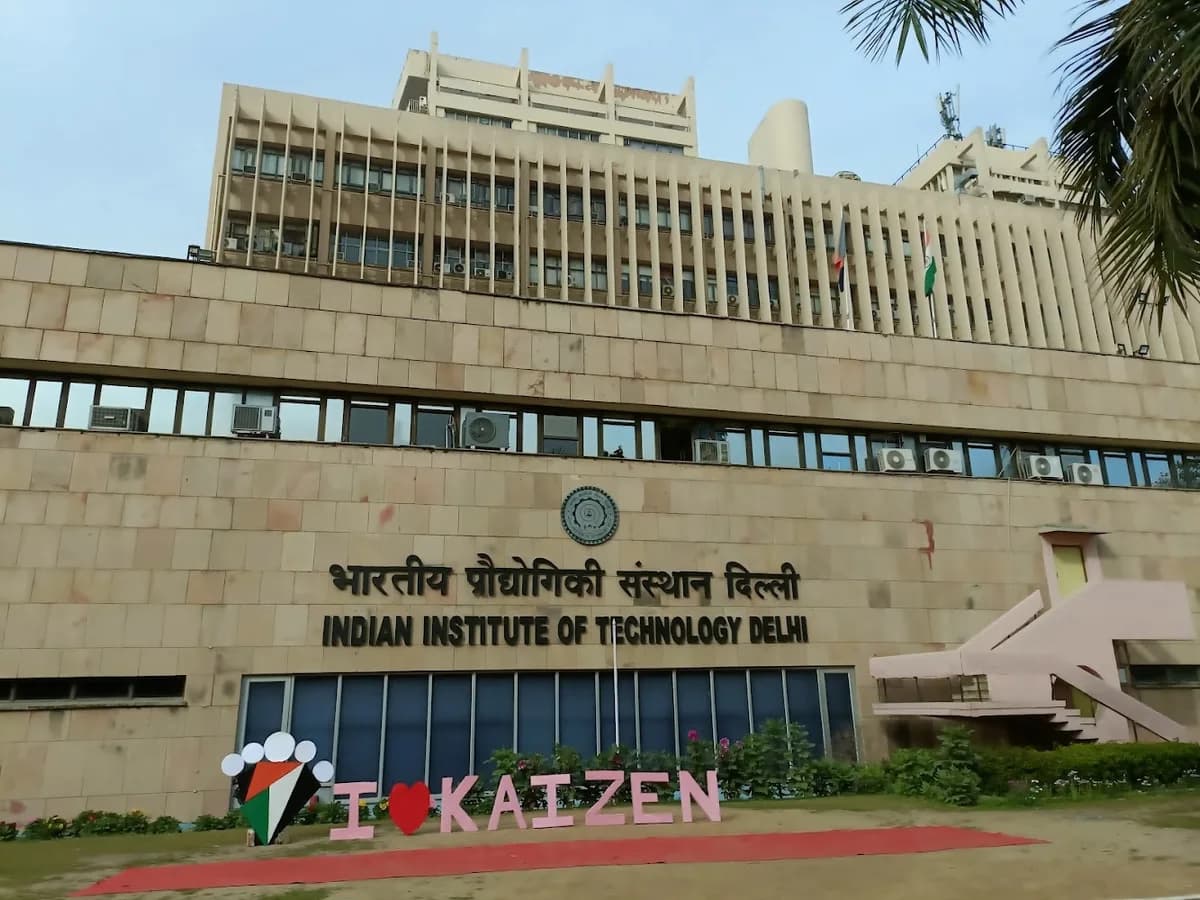

Indian Institute of Technology, Delhi, founded in 1961 in South, Delhi, is a premier academic institution dedicated to higher learning. Conforming to regulatory norms of All India Council for Technical Education (AICTE) through its affiliation with Delhi State University, the institution offers students an integrated foundation across engineering innovation, applied science, computational systems, and advanced technical research. The institution maintains robust academic resources including state-of-the-art computational centers, robotics and IoT laboratories, and core engineering workshops, fostering an active student life and practical competencies. Dedicated to holistic student empowerment, the institution prepares ethical and career-ready professionals who contribute meaningfully to societal and industrial growth.
Total Fees
₹93K - ₹18L
Total Courses
10
Get More Info About JEE Advanced 2027
Recommended Reading

JEE Main 2027 Registration: Your Definitive Guide to Application Deadlines & Process
Navigate the JEE Main 2027 registration process with confidence. This comprehensive guide covers crucial deadlines, eligibility, step-by-step application, and essential tips for aspiring engineers.
MHT CET: Your Definitive Guide to Maharashtra Engineering Admissions
Navigate the MHT CET exam with confidence. This comprehensive guide from MatchToCollege covers eligibility, exam pattern, top colleges, and expert preparation strategies for aspiring engineers in Maharashtra.
JEE Main Without Calculator: Your Ultimate Guide to Mastering Calculations & Securing Top Ranks
Navigating JEE Main without a calculator demands sharp mental acuity and strategic preparation. This comprehensive guide from MatchToCollege empowers you with proven techniques to ace complex calculations and secure your dream engineering seat.