

Internship vs. Certification: What Boosts Your Career?
Admission & Info Tools
Need Expert Assistance?
Our counselors can help you with fee structures, eligibility guidelines, and upcoming admission cutoffs instantly.
Direct Application Tools
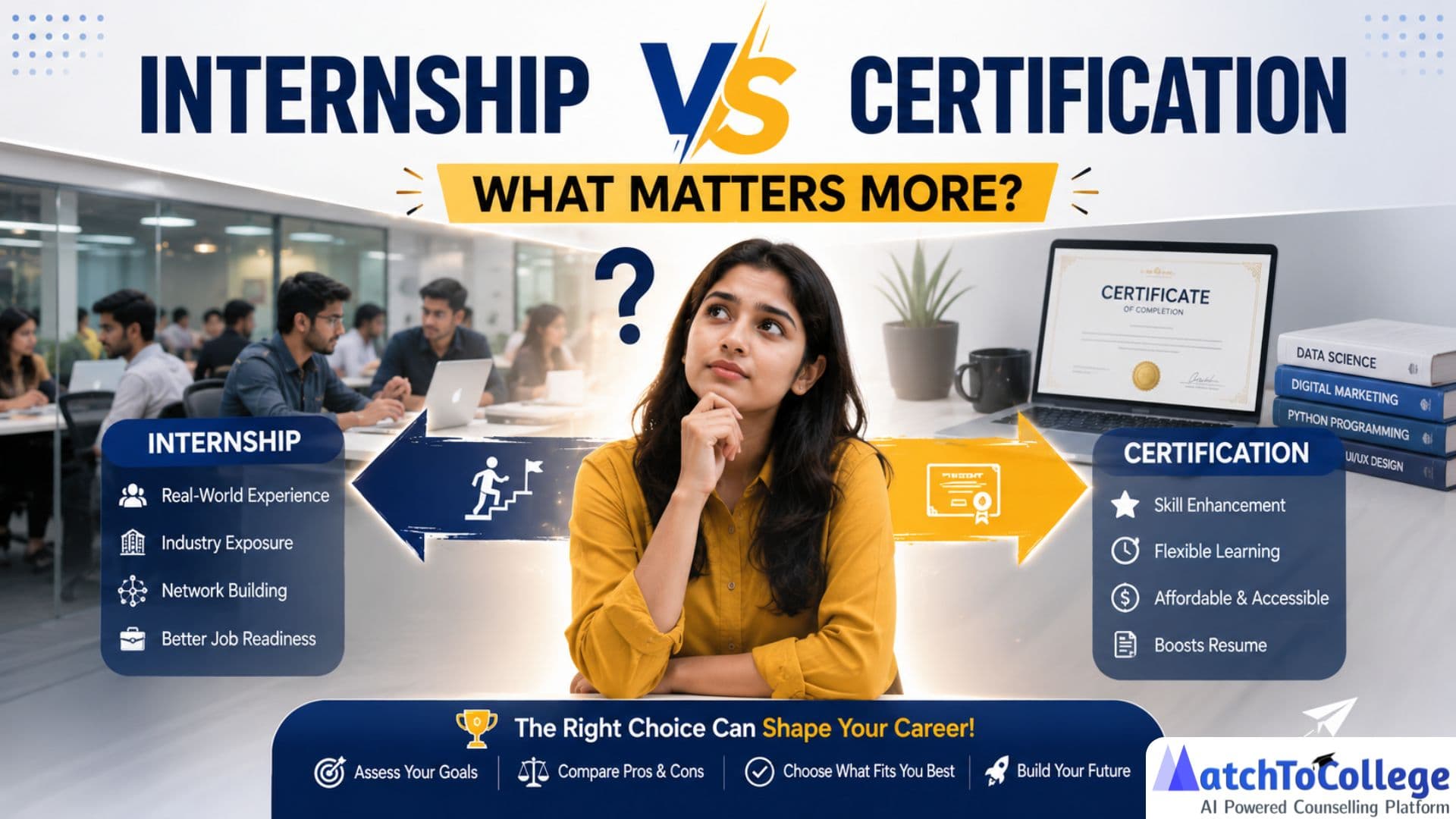
Internship vs certification: what's best for you?
In today's competitive job market, having a degree alone isn't enough. Employers look for candidates who have practical experience and job-ready skills. That's why many students wonder whether they should choose an internship or a professional certification.
The answer depends on your career goals—but both can play an important role in building a strong profile for higher education and future jobs.
Whether you're preparing for UG admission, an MBA, Engineering, Medical studies, or studying abroad, understanding the value of internships and certifications can help you make smarter career decisions.
Why This Matters
- Employers prefer candidates with practical skills.
- Universities value students who show initiative beyond academics.
- Both internships and certifications strengthen your resume.
- The right combination can improve your employability and career prospects.
Internship vs Certification at a Glance
| Internship | Certification |
| Provides real-world work experience | Validates technical or professional skills |
| Builds practical and workplace skills | Enhances subject knowledge |
| Helps develop professional networks | Demonstrates continuous learning |
| Improves communication and teamwork | Strengthens your resume and LinkedIn profile |
| Increases job readiness | Helps meet industry-specific skill requirements |
The Best Strategy
Instead of choosing one over the other, try to combine both. A certification helps you learn new skills, while an internship allows you to apply those skills in a real work environment.
MatchToCollege helps students identify the right certifications, internship opportunities, and career pathways based on their academic background and future goals, making it easier to build a profile that stands out to universities and employers alike.
The Power of Internships: Gaining Real-World Experience
Internships connect classroom learning with real-world work experience. They help students understand how industries actually function and build practical skills for future careers.
Key Benefits of Internships
- Practical Skill Development
- Gain hands-on technical skills along with essential soft skills like communication, teamwork, problem-solving, and time management.
- Career Exploration
- Try out different career paths before making long-term academic or job decisions.
- Professional Networking
- Build connections with industry experts that can lead to mentorship, recommendations, and job opportunities.
- Stronger Resume / Profile
- Internship experience improves your CV, helping in college admissions (MBA, medical, etc.) and entry-level job applications.
- Real Industry Exposure
- Work on actual projects and understand how companies and industries operate in real life.
Types of Internships
| Type | Description |
| Paid Internship | Offers stipend along with experience |
| Unpaid Internship | Focuses mainly on learning and exposure |
| Virtual Internship | Work remotely from anywhere |
| In-person Internship | On-site experience in an organization |
Internships give students a competitive edge by building skills, clarity, confidence, and real-world experience that cannot be gained through textbooks alone.
The Value of Certifications: Specialized Skills and Industry Recognition
Certifications are formal credentials that validate your skills in a specific subject, tool, or technology. They are widely recognized by industries and help prove your expertise quickly and effectively.
Key Benefits of Certifications
| Key Area | Description |
| Specialized Skill Development | Focused training in areas like project management, data analytics, IT tools, and languages. |
| Industry Recognition | Widely accepted credentials (e.g., PMP, AWS, Cisco, IELTS, TOEFL) that prove verified competence. |
| Better Job & Salary Opportunities | Improves employability and increases chances of higher salary packages. |
| Fast Skill Validation | Can be completed in a shorter time compared to degrees, enabling quick upskilling. |
| Flexible Learning Options | Available online and accessible from anywhere, making learning convenient. |
Common Certification Areas
| Field | Examples |
| Project Management | PMP, CAPM |
| IT & Cloud | AWS, Cisco, Microsoft Azure |
| Language Proficiency | IELTS, TOEFL |
| Data & Analytics | Google Data Analytics, Excel, SQL |
| Finance | Financial Modeling, CFA (foundation level skills) |
Certifications are a fast and effective way to prove expertise in a specific field. They improve employability, increase earning potential, and help learners quickly gain job-ready, industry-relevant skills.
Key Factors to Consider: Making Your Strategic Choice
There is no single best choice between internships and certifications. The right option depends on your goals, industry, and current situation.
Key Factors to Consider
| Factor | Internship | Certification |
| Career Goal | Best for career exploration, networking, and overall exposure | Best for skill specialization and focused learning |
| Industry Demand | Preferred in management, creative fields, and roles needing experience | Highly valued in tech, IT, data, and tool-based roles |
| Time & Cost | May take longer; sometimes unpaid or requires relocation | Usually shorter and may require exam/course fees |
| Skill Level | Ideal for beginners to gain foundational experience | Ideal for upskilling or validating existing knowledge |
Strategic Insight
- It’s not always either/or—both can complement each other.
- Combining both gives a stronger career profile.
Examples
- Engineering Student
- Internship for industry exposure + certification in tools like AWS or AutoCAD.
- MBA Aspirant
- Internship in finance or marketing + certification in financial modeling or analytics.
Internships build real-world experience and career direction, while certifications validate specific skills. The best approach is often a combination of both, aligned with your career goals.
Share this Article
FAQFrequently Asked Questions
Q: When is the best time to pursue an internship?
The best time often depends on your academic program. Many undergraduates pursue internships during summer breaks between their junior and senior years. Graduate students may seek them at any point that aligns with their curriculum or thesis work. Early internships can help with career exploration, while later ones can lead directly to job offers.
Q: Are certifications worth it for undergraduates?
Yes, absolutely! For undergraduates, certifications can be a quick and effective way to gain specialized skills that complement their degree, especially in fields like tech or digital marketing. They can make your resume stand out to potential employers and admissions committees, showing initiative and specific technical prowess.
Q: Can I do both an internship and pursue a certification?
Yes, combining both an internship and a certification is often the most powerful strategy. An internship provides practical experience and networking, while a certification validates specialized skills. Together, they create a highly competitive profile, demonstrating both breadth of experience and depth of expertise. MatchToCollege can help you strategize the best timeline to pursue both.
Q: How do internships and certifications impact college admissions?
Both significantly enhance your college application. Internships demonstrate practical experience, leadership potential, and real-world engagement. Certifications showcase specialized knowledge, initiative, and a clear interest in a particular field. Both tell admissions committees that you are a proactive, dedicated, and well-rounded candidate prepared for higher-level studies and future career success.
Get More Info About Internship vs. Certification
Recommended Reading
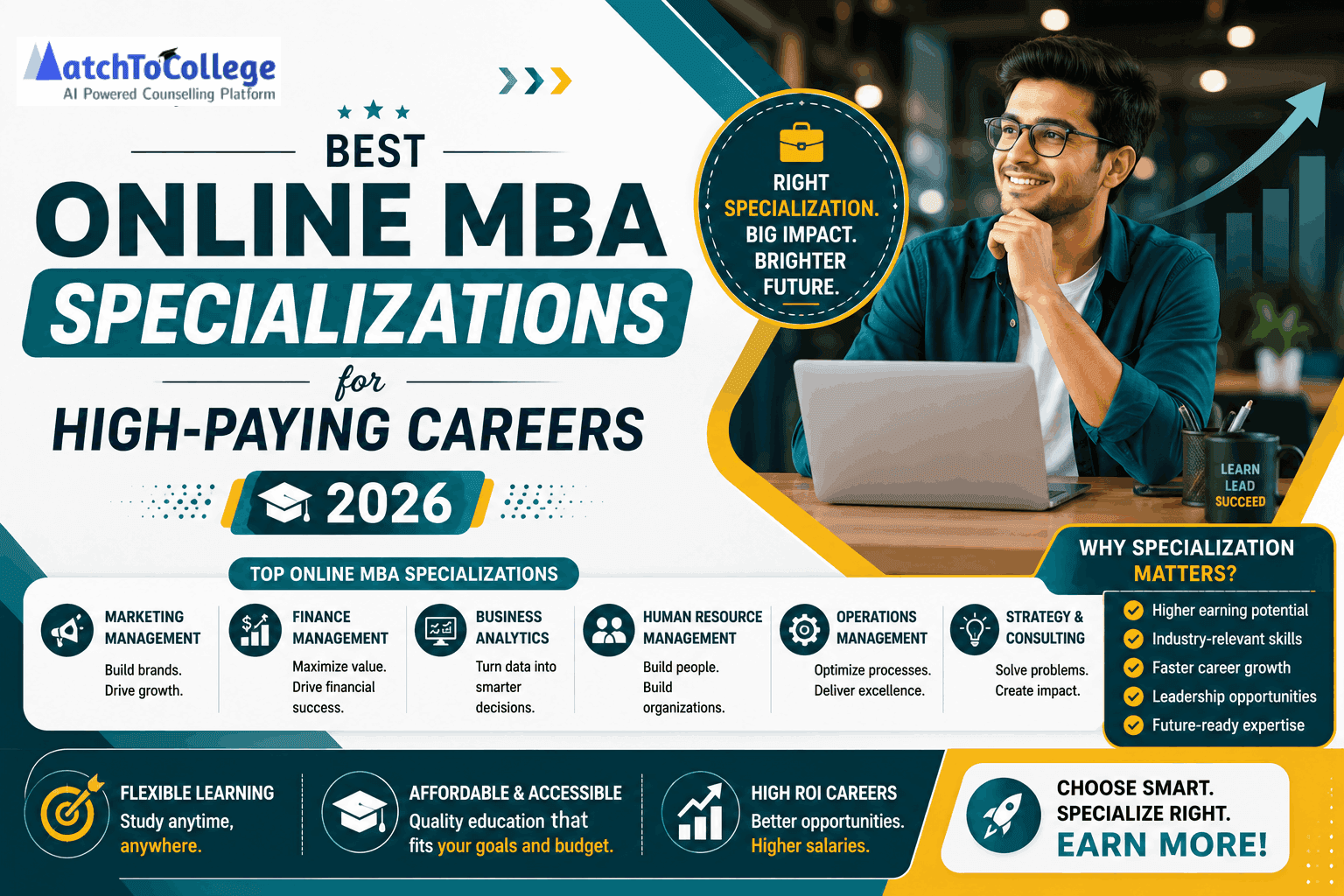
Best Online MBA Specializations for High-Paying Careers 2026
Discover the most lucrative online MBA specializations for 2026-27. Compare ROI, career growth, and use our AI tools to find your perfect management path.

Top Career Opportunities After an Online MBA in 2026-27
Discover high-paying career paths and roles after an online MBA in 2026-27. Explore salary trends, ROI, and tools to navigate your future professional success.

Tax Deductions on Higher Education: 2026-27 India Guide
Maximize your savings with our guide on tax deductions for higher education fees in India for FY 2026-27. Learn about Section 80C, 80E, and upskilling benefits.