

Indian Students MBBS Abroad: Overcoming Key Challenges
Admission & Info Tools
Need Expert Assistance?
Our counselors can help you with fee structures, eligibility guidelines, and upcoming admission cutoffs instantly.
Direct Application Tools
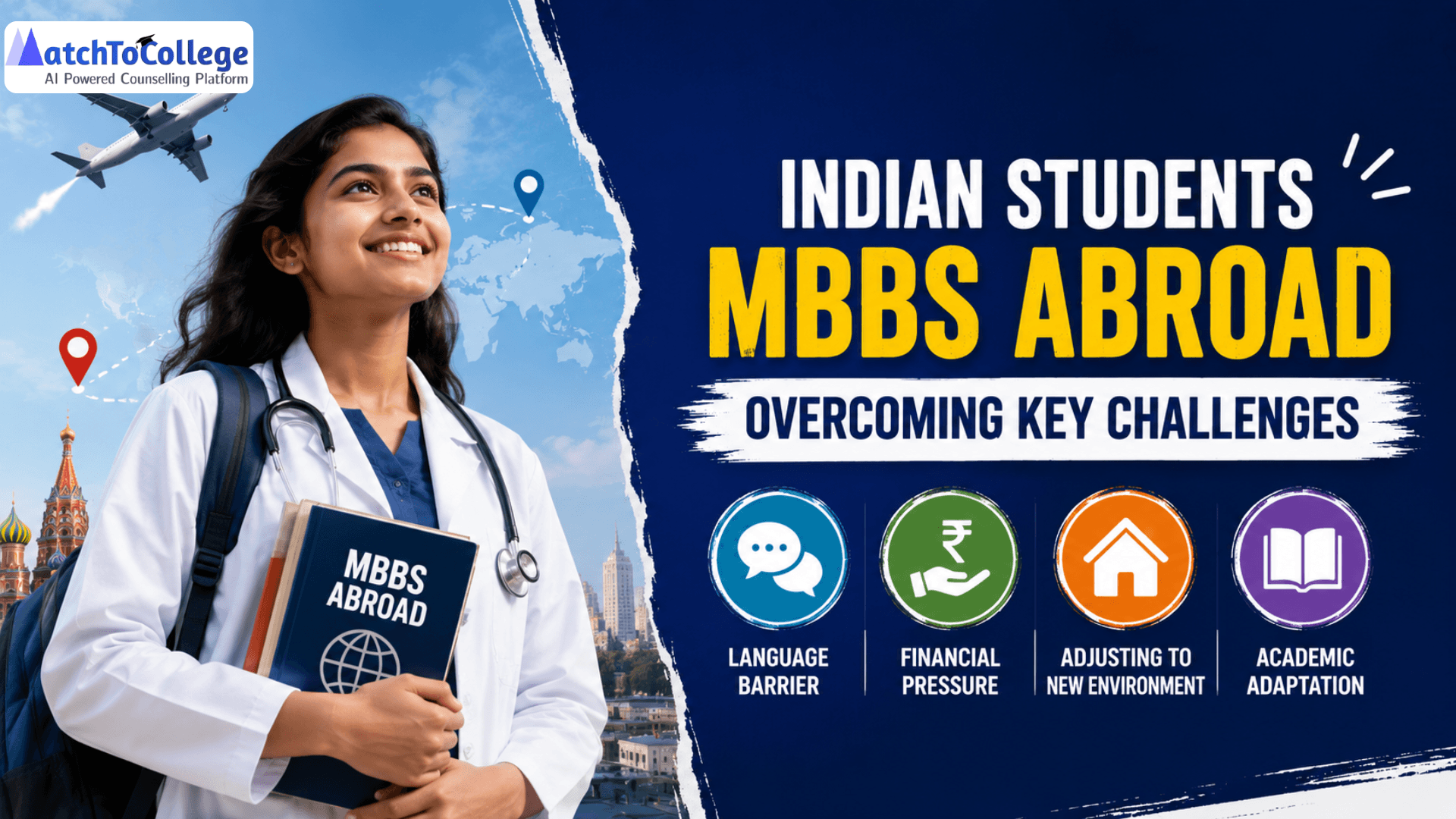
Indian Students MBBS Abroad
The dream of becoming a doctor is a powerful aspiration for countless Indian students. With intense competition for limited seats in Indian medical colleges, many bright minds turn their gaze towards pursuing MBBS abroad. This path offers a world of opportunities, from diverse learning environments to global exposure, yet it also presents a unique set of challenges.
While foreign medical universities promise excellent education, Indian students often encounter hurdles that can impact their academic journey and future career prospects. From adapting to new cultures and languages to understanding complex accreditation requirements like the FMGE or NEXT, preparing for this journey requires more than just academic excellence. It demands thorough research, strategic planning, and resilient problem-solving.
At MatchToCollege, an AI-powered higher education counselling platform, we understand the intricate landscape of international medical education. We're dedicated to guiding students and parents through every step, ensuring they are well-prepared to not only secure admission but also thrive in their chosen foreign university. This blog post delves into the most common challenges faced by Indian students studying MBBS abroad and offers insights on how to overcome them effectively, paving the way for a successful medical career back home or internationally.
Navigating Cultural & Linguistic Landscapes Abroad
One of the immediate and most pervasive challenges for Indian students studying MBBS abroad is adapting to a new cultural environment and overcoming language barriers. The cultural shock can manifest in various forms: unfamiliar social customs, different dietary habits, varying communication styles, and even diverse academic expectations. While English might be the medium of instruction, daily life, local interactions, and even patient communication in clinical settings can be predominantly in the local language, making integration difficult.
For medical students, this isn't just a social hurdle; it can impact clinical understanding and patient interaction. Building a strong support network, actively participating in university activities, and making an effort to learn basic local phrases can significantly ease this transition. Universities often offer language courses and cultural orientation programs, which students should leverage. Embracing the new culture rather than resisting it is key to a fulfilling international experience.
The Crucial Hurdle: Accreditation, Licensing & FMGE/NEXT
Perhaps the most significant challenge for Indian students returning home after completing their medical degree abroad is the requirement to clear the Foreign Medical Graduate Examination (FMGE) or the upcoming National Exit Test (NEXT) to practice medicine in India. The FMGE has historically had a low pass rate, highlighting the disparity between some foreign curricula and Indian medical standards, or the lack of specific preparation during study abroad.
Prospective students must meticulously research universities to ensure they are recognized by the National Medical Commission (NMC) in India. Furthermore, preparation for the FMGE/NEXT should ideally begin during their study abroad. This involves focusing on core clinical subjects, understanding the exam pattern, and potentially enrolling in specialized coaching classes. MatchToCollege assists students in selecting NMC-approved institutions and connects them with resources to prepare for these vital licensing exams, ensuring their medical degree abroad translates into a successful career in India.
Financial Management & Cost of Living Realities
Beyond tuition fees, the cost of living abroad presents a substantial financial challenge for many Indian students. Expenses like accommodation, food, transportation, health insurance, and personal allowances can quickly add up and vary significantly by country and city. Fluctuating currency exchange rates can further complicate budgeting, often increasing the actual cost of education and living.
Many foreign countries also have strict regulations regarding part-time work for international students, making it difficult to supplement income. Therefore, comprehensive financial planning is paramount. Students and parents should create a detailed budget, explore available scholarships for MBBS abroad, and understand all associated costs before embarking on the journey. Having a contingency fund is also advisable to handle unforeseen expenses. MatchToCollege provides guidance on estimating costs and exploring financial aid options, helping families plan realistically for the long term.
Academic Differences & Mental Well-being
While medical education abroad can be high quality, the academic structure and teaching methodologies might differ significantly from what Indian students are accustomed to. This could include a greater emphasis on self-study, practical application, research, or different examination formats. Adapting to these new learning styles can be stressful, especially when coupled with the demands of a rigorous MBBS curriculum.
Furthermore, homesickness, isolation, and academic pressure can take a toll on a student's mental health. Being away from family and familiar support systems can lead to feelings of loneliness and anxiety. Universities typically offer counselling services and student support groups, which are crucial resources. Prioritizing mental well-being, maintaining connections with family, and finding a balance between academics and personal life are vital for thriving in a foreign environment. MatchToCollege emphasizes holistic preparation, including mental readiness, for students pursuing foreign medical universities.
Share this Article
FAQFrequently Asked Questions
Q: Is pursuing MBBS abroad a good option for Indian students despite the challenges?
Yes, for many, it offers quality education, global exposure, and practical experience. With proper planning, diligent study, and dedicated preparation for licensing exams like FMGE/NEXT, it can lead to a highly successful medical career in India or internationally. MatchToCollege helps mitigate these challenges through expert guidance.
Q: How can Indian students prepare for FMGE/NEXT while studying MBBS in a foreign country?
Early and consistent preparation is key. Focus on thoroughly understanding core medical concepts, utilize online resources and question banks specific to FMGE/NEXT, join coaching classes if available, and regularly review high-yield topics. It's also crucial to ensure your foreign university's curriculum aligns well with Indian medical standards.
Q: What are the most common non-academic challenges faced by Indian students studying MBBS abroad?
The most common non-academic challenges include cultural adaptation, language barriers, managing living costs effectively, homesickness, and navigating social integration in a new country. Building local support networks, engaging in university activities, and maintaining strong family connections can help overcome these hurdles.
Get More Info About Indian Students MBBS Abroad
Recommended Reading

Best Online MBA Specializations for High-Paying Careers 2026
Discover the most lucrative online MBA specializations for 2026-27. Compare ROI, career growth, and use our AI tools to find your perfect management path.

Top Career Opportunities After an Online MBA in 2026-27
Discover high-paying career paths and roles after an online MBA in 2026-27. Explore salary trends, ROI, and tools to navigate your future professional success.
Tax Deductions on Higher Education: 2026-27 India Guide
Maximize your savings with our guide on tax deductions for higher education fees in India for FY 2026-27. Learn about Section 80C, 80E, and upskilling benefits.