

Essential Skills for Future Managers & Tomorrow's Leaders
Admission & Info Tools
Need Expert Assistance?
Our counselors can help you with fee structures, eligibility guidelines, and upcoming admission cutoffs instantly.
Direct Application Tools

Essential Skills for Future Managers & Tomorrow's Leaders
In today's rapidly evolving professional landscape, the definition of a successful manager is constantly being rewritten. The days of purely hierarchical leadership and rigid structures are fading, replaced by a demand for agile, empathetic, and technologically astute leaders. For students and parents navigating the complex choices of higher education, understanding the best skills for future managers is paramount.
Whether you're aspiring to an MBA, an engineering management role, a medical leadership position, or planning to study abroad to broaden your horizons, the foundational competencies remain universally critical. The workforce of tomorrow will demand leaders who can not only navigate change but also inspire innovation, foster collaboration, and make data-driven decisions in an increasingly interconnected global market. This isn't just about technical expertise; it's about a blend of soft skills, strategic thinking, and digital literacy that will define effective management.
At MatchToCollege, our AI-powered higher education counselling platform understands these shifting paradigms. We empower students to identify academic paths and programs that will cultivate these essential leadership qualities and management competencies. Our goal is to help you select colleges and courses that don't just teach theory, but actively build the practical, forward-thinking skills crucial for any aspiring manager. From identifying top programs in business analytics that build data literacy to finding institutions renowned for their leadership development tracks, MatchToCollege is your trusted partner.
This blog post will delve into the core competencies that will future-proof your career, offering insights into what universities and real-world experiences can provide. By focusing on these critical areas, you can strategically plan your education to emerge as a highly sought-after leader, ready to tackle the challenges and opportunities of the future workforce. Let's explore the attributes that will define the next generation of successful managers and how you can start cultivating them today.
Adaptability & Digital Fluency in a Changing World
The pace of technological advancement, from artificial intelligence (AI) and machine learning to automation and big data, demands that future managers are not just digitally aware but genuinely digitally fluent. This means more than just using software; it's about understanding how technology can drive efficiency, enhance decision-making, and create new opportunities. Future leaders must possess a high degree of adaptability in management, embracing new tools and methodologies rather than resisting them. Continuous learning is no longer a perk but a necessity, as new technologies emerge and reshape industries. Developing innovation skills and a proactive approach to technology integration will set successful managers apart.
Students looking to build these skills should seek programs that emphasize data analytics, digital strategy, and even introductory coding or AI applications. Courses that integrate real-world case studies involving digital transformation and allow for hands-on experience with emerging technologies will be invaluable. This blend of technical acumen and a growth mindset forms the bedrock of modern leadership.
Emotional Intelligence & Transformative Communication
While technical skills are important, the ability to lead and motivate people remains at the heart of effective management. Emotional intelligence in leadership — encompassing self-awareness, empathy, motivation, and social skills — is becoming increasingly critical. Future managers will lead diverse teams, often remotely, requiring exceptional abilities to understand, relate to, and inspire individuals from different backgrounds. Strong communication strategies are vital, moving beyond simple instruction to fostering open dialogue, constructive feedback, and active listening.
Transformative communication is about building trust, resolving conflicts effectively, and clearly articulating vision and goals. Programs focusing on organizational behavior, human resource management, psychology, and public speaking can significantly enhance these soft skills. Participating in group projects, leadership roles in student organizations, and internships that involve team management are practical ways to develop and hone your emotional intelligence and communication prowess before entering the professional world.
Strategic Thinking & Agile Problem-Solving
In a volatile, uncertain, complex, and ambiguous (VUCA) world, managers must be more than just operational overseers; they must be strategic thinkers and agile problem-solvers. This involves the capacity to analyze complex situations, foresee potential challenges, and develop innovative, sustainable solutions. Strategic planning and a strong sense of business acumen are essential for navigating market shifts, competitive pressures, and economic fluctuations. Furthermore, the ability to make data-driven decision-making under pressure, coupled with an agile approach to execution, is paramount. This means being able to iterate, learn from failures quickly, and pivot strategies when necessary.
Higher education institutions that offer robust curricula in critical thinking, business strategy, operations management, and project management can significantly contribute to these skills. Engaging in simulations, case competitions, and entrepreneurial ventures during your studies can provide invaluable experience in applying theoretical knowledge to practical, high-stakes scenarios, fostering the kind of rigorous thought processes required for effective problem-solving techniques in future leadership roles.
Share this Article
FAQFrequently Asked Questions
Q: What are the most important skills for future managers?
The most important skills for future managers include adaptability and digital fluency, strong emotional intelligence, transformative communication, strategic thinking, agile problem-solving, and cultivating a global mindset with ethical leadership. These competencies enable leaders to navigate technological advancements, inspire diverse teams, and make impactful decisions.
Q: How can I develop these management skills during my studies?
You can develop these crucial management skills by choosing higher education programs that emphasize data analytics, digital strategy, organizational behavior, critical thinking, and project management. Actively participate in group projects, student leadership roles, internships, and case competitions to gain practical experience and hone your leadership and communication abilities. MatchToCollege can help you find suitable programs and institutions.
Get More Info About Essential Skills for Future Managers & Tomorrow's Leaders
Recommended Reading
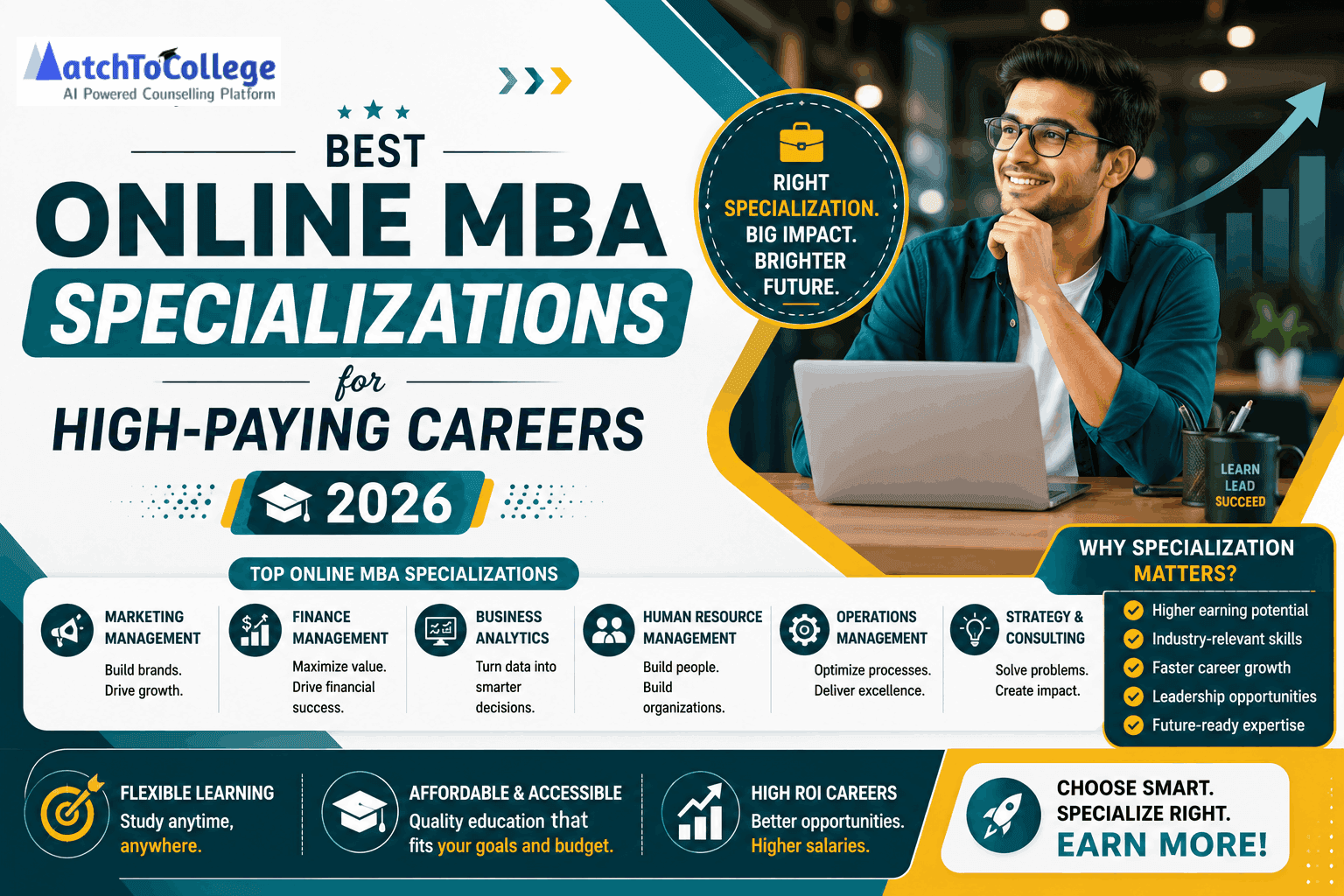
Best Online MBA Specializations for High-Paying Careers 2026
Discover the most lucrative online MBA specializations for 2026-27. Compare ROI, career growth, and use our AI tools to find your perfect management path.

Top Career Opportunities After an Online MBA in 2026-27
Discover high-paying career paths and roles after an online MBA in 2026-27. Explore salary trends, ROI, and tools to navigate your future professional success.

Tax Deductions on Higher Education: 2026-27 India Guide
Maximize your savings with our guide on tax deductions for higher education fees in India for FY 2026-27. Learn about Section 80C, 80E, and upskilling benefits.