

The decline of physical textbooks: Top Digital Libraries for 2026.
Admission & Info Tools
Need Expert Assistance?
Our counselors can help you with fee structures, eligibility guidelines, and upcoming admission cutoffs instantly.
Direct Application Tools
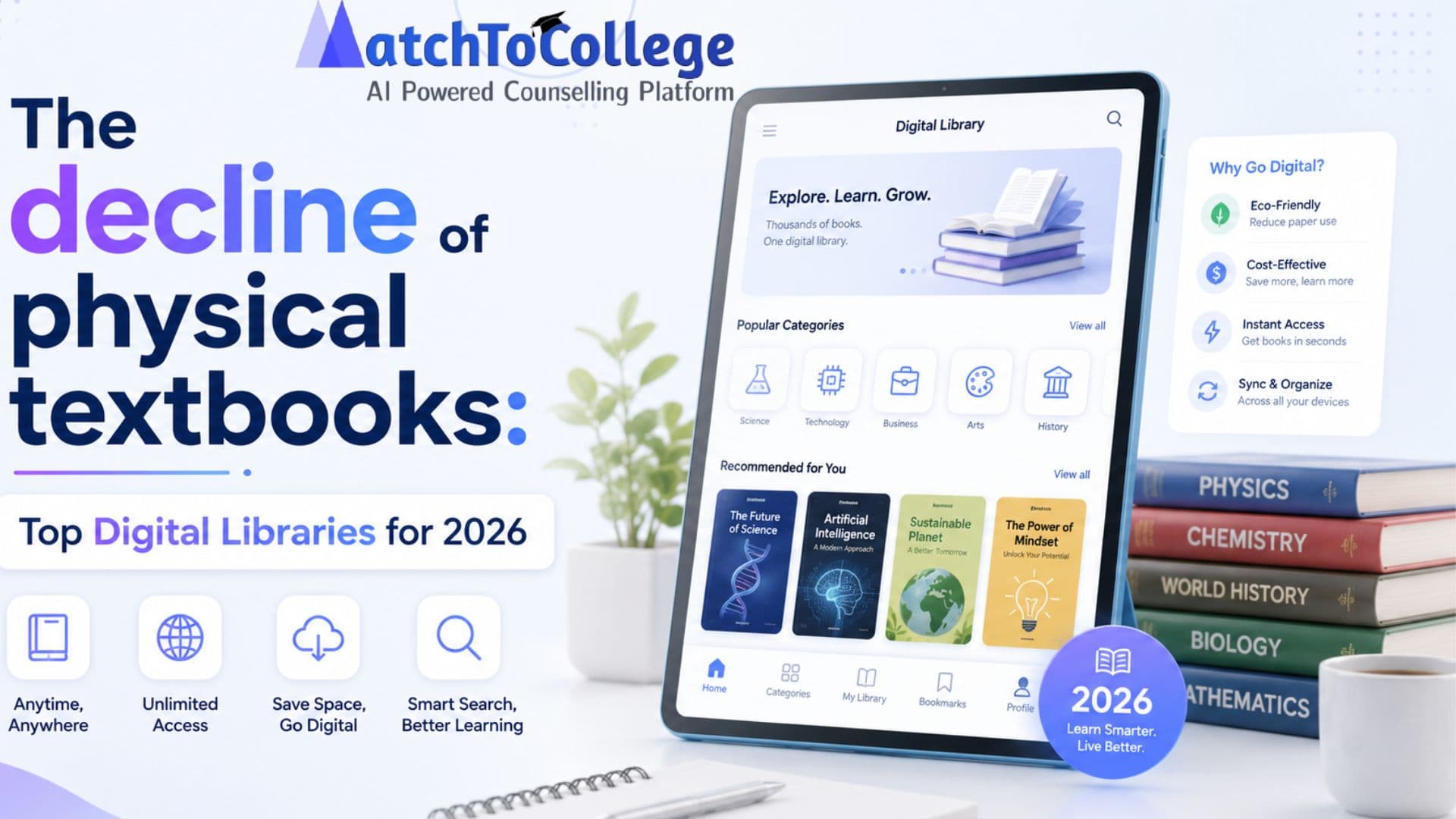
From Bookshelves to Digital Shelves
Remember the days of lugging heavy backpacks filled with textbooks? The spine-cracking sound of a new volume, the smell of fresh paper – these nostalgic memories are quickly becoming relics of a bygone era. We are standing at the precipice of a significant educational revolution, one where the physical textbook is steadily, but surely, fading into obscurity. As we march towards 2026 and beyond, the academic world is embracing a more accessible, sustainable, and dynamic alternative: digital libraries and e-learning platforms.
For students and parents navigating the complex landscape of higher education – be it engineering, medicine, an MBA, or studying abroad – staying ahead means adapting to these technological shifts. The traditional model, burdened by high costs, limited accessibility, and rapid obsolescence, can no longer keep pace with the demands of modern learning. Imagine spending hundreds of dollars on a textbook that becomes outdated within a semester, or the sheer inconvenience of sourcing specialized materials for an advanced research project. These challenges are not just minor inconveniences; they represent significant barriers to effective and equitable education.
Enter the era of digital libraries. These virtual repositories are transforming how knowledge is accessed, shared, and consumed. They offer unparalleled advantages: instant access to millions of scholarly articles, journals, e-books, and multimedia resources from anywhere in the world, often at a fraction of the cost, or even free. This shift isn't merely about convenience; it's about democratizing education, making cutting-edge information available to a wider audience, and fostering a more interactive and personalized learning experience.
As physical textbooks decline, understanding and utilizing the premier digital libraries for 2026 will be paramount for any student aiming for academic excellence. This article will delve into why physical textbooks are fading, the undeniable rise of digital alternatives, and spotlight the top digital libraries poised to define the future of higher education.
The Fading Era of Physical Textbooks
For generations, physical textbooks were the undisputed cornerstone of education. However, their limitations have become increasingly glaring in our fast-paced, digitally-driven world. One of the most significant drawbacks is the exorbitant cost. University textbooks can drain a student's budget, often running into hundreds of dollars per course, placing an immense financial burden on students and their families. This cost is compounded by the fact that many textbooks have a short shelf-life, with new editions rendering old ones obsolete within a year or two, forcing students to repurchase materials.
Beyond the financial strain, physical textbooks pose logistical and environmental challenges. Their sheer weight contributes to back problems for students and requires extensive resources for production, printing, and transportation, contributing to a substantial carbon footprint. Furthermore, accessing specific information within a physical book can be time-consuming, lacking the instant search capabilities that digital formats offer. The static nature of printed materials also means they can't be easily updated, leading to students using outdated information in rapidly evolving fields. For students considering study abroad or those with specialized academic interests, the availability of niche physical textbooks can be highly restrictive. These factors collectively illustrate why the traditional textbook model is increasingly unsustainable and why the pivot to digital is not just a trend but a necessity for modern education.
Why Digital Libraries Are the Future of Learning
The ascendancy of digital libraries is fundamentally reshaping the educational landscape. Unlike their physical counterparts, digital libraries offer unparalleled accessibility. Students can access a vast repository of knowledge – from peer-reviewed journals and academic papers to e-books and multimedia content – anytime, anywhere, with just an internet connection. This global reach is particularly beneficial for students engaged in international studies or specialized research, breaking down geographical barriers to information.
Digital resources also boast powerful search functionalities, allowing students to quickly pinpoint specific keywords, concepts, or authors across vast collections, significantly enhancing research efficiency. Interactivity is another key advantage; many digital platforms offer features like highlighting, note-taking, translation tools, and even collaborative workspaces, transforming passive reading into an active learning experience. The environmental benefits are also substantial: reduced paper consumption, printing, and transportation contribute to a greener planet. Moreover, digital content can be updated instantaneously, ensuring students always have access to the most current information and research. This dynamic nature means that learning materials remain relevant, accurate, and aligned with the latest academic developments, a crucial aspect for fields like medicine and engineering where knowledge evolves rapidly. For parents and students planning higher education, understanding these advantages is key to preparing for a future-forward academic journey.
Top Digital Libraries & Platforms for 2026
As we look towards 2026, several digital libraries and platforms stand out as essential tools for students aiming for academic excellence. Each offers unique strengths tailored to diverse academic needs:
| Platform | Best For |
| JSTOR | Humanities, social sciences, research-intensive degrees |
| ProQuest | Dissertations, theses, historical newspapers |
| EBSCOhost | General and multidisciplinary academic research |
| Google Scholar | Fast discovery of scholarly articles and legal opinions |
| Perlego | "Spotify for textbooks" – unlimited academic e-books |
| Open Library | Free classic and out-of-print texts |
These platforms, among others, represent the backbone of modern academic research and study, offering a breadth and depth of resources unmatched by traditional methods. Integrating them into your study routine is crucial for navigating higher education effectively.
Why Digital Libraries Win
Digital libraries offer what physical books cannot:
- Access anywhere: Research from any country, anytime.
- Instant search: Find keywords across millions of documents in seconds.
- Lower cost: Often free or subscription-based.
- Always updated: No more outdated editions.
- Eco-friendly: No paper, no shipping.
Navigating Your Digital Resources with MatchToCollege
Understanding the vast landscape of digital libraries is one thing; leveraging them effectively for your specific academic journey is another. Identify which digital libraries and resources are most relevant to your chosen field, optimize your research strategies, and even connect you with tutorials on maximizing the features of these platforms. From identifying cost-effective e-textbook options to pinpointing specialized databases for your dissertation,
Share this Article
FAQFrequently Asked Questions
Q: Are digital textbooks truly cheaper in the long run?
Yes, generally. While some individual e-books might seem comparably priced to physical copies, digital subscriptions to platforms like Perlego or institutional access through university digital libraries often provide access to a vast collection of resources for a fixed, often lower, cost over time compared to buying multiple physical textbooks annually. They also eliminate shipping costs and the need for physical storage.
Q: How can I ensure I'm using reliable digital academic sources?
Stick to reputable academic digital libraries and databases like JSTOR, ProQuest, EBSCOhost, and Google Scholar (when filtering results). Always prioritize peer-reviewed journals, university press publications, and well-known academic publishers. MatchToCollege can also guide you in identifying and validating reliable sources pertinent to your specific field of study, ensuring your research is based on credible information.
Get More Info About The decline of physical textbooks
Recommended Reading
Best Online MBA Specializations for High-Paying Careers 2026
Discover the most lucrative online MBA specializations for 2026-27. Compare ROI, career growth, and use our AI tools to find your perfect management path.
Top Career Opportunities After an Online MBA in 2026-27
Discover high-paying career paths and roles after an online MBA in 2026-27. Explore salary trends, ROI, and tools to navigate your future professional success.
Tax Deductions on Higher Education: 2026-27 India Guide
Maximize your savings with our guide on tax deductions for higher education fees in India for FY 2026-27. Learn about Section 80C, 80E, and upskilling benefits.