

CUET Counselling: Key Factors Before Accepting a Seat
Admission & Info Tools
Need Expert Assistance?
Our counselors can help you with fee structures, eligibility guidelines, and upcoming admission cutoffs instantly.
Direct Application Tools
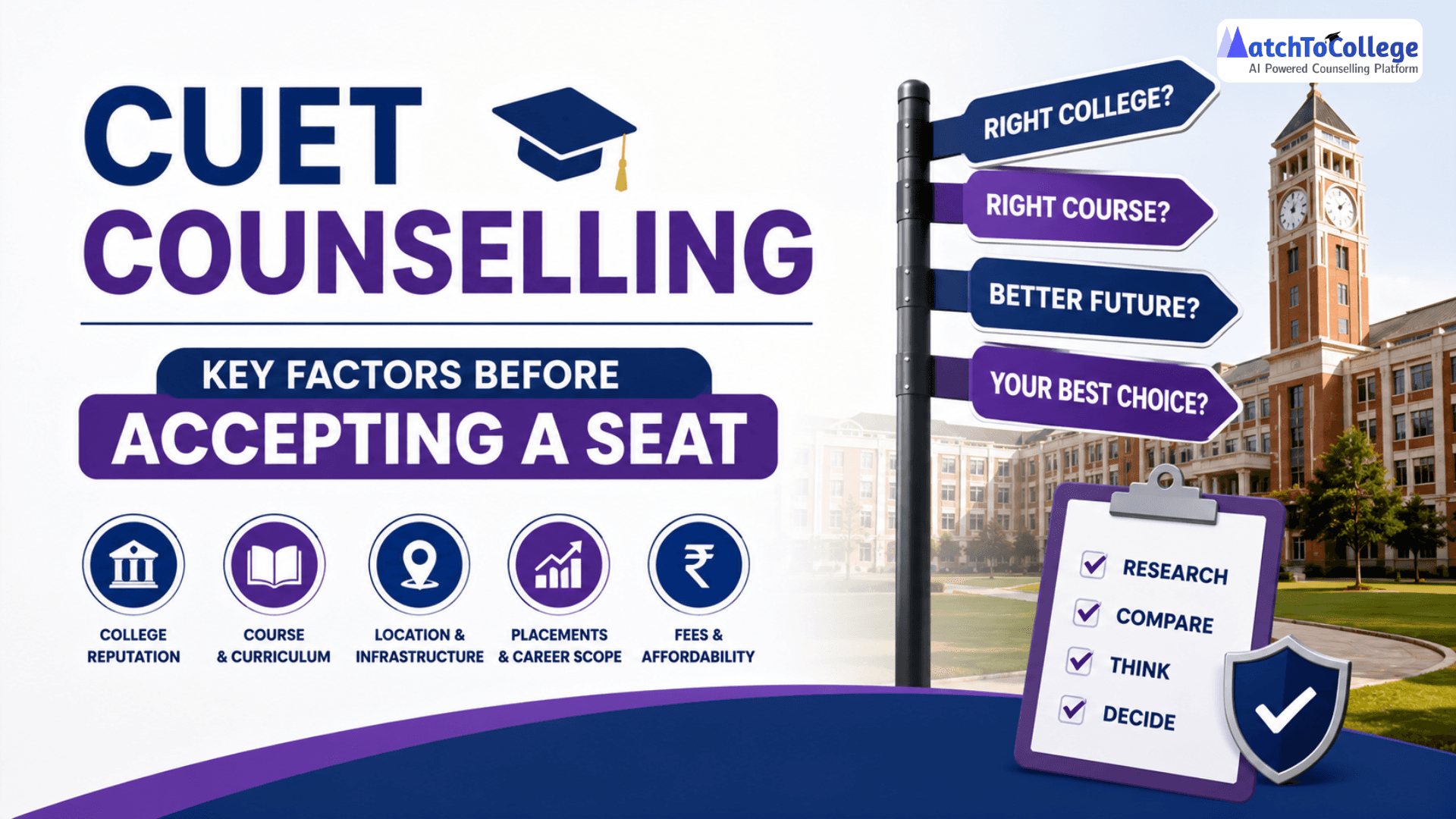
The excitement of seeing your CUET results can quickly turn into the daunting task of making one of the most significant decisions of your academic life: accepting a seat in CUET counselling. With multiple options and a future hanging in the balance, it's natural to feel overwhelmed. Many students rush into accepting the first seat they are offered, only to regret it later. This pivotal moment requires careful consideration, deep research, and a clear understanding of what you truly want.
Accepting a college seat isn't just about getting into an institution; it's about committing to an environment, a curriculum, a community, and a potential future career path for the next few crucial years. It’s imperative to look beyond just the college name or its immediate ranking. A well-thought-out decision can set the stage for a fulfilling and successful academic journey, while a hasty one might lead to dissatisfaction and missed opportunities.
At MatchToCollege, our AI-powered platform is designed to simplify this complex process, helping you evaluate your choices based on a comprehensive set of parameters tailored to your aspirations. Before you click that 'accept' button, let's explore the essential factors you absolutely must consider to ensure you're making the best possible choice for your higher education journey through CUET counselling.
Beyond Rankings: Deep Dive into College Specifics
While rankings like NIRF provide a helpful starting point, they don't tell the whole story. It's crucial to look beyond numerical positions and delve into the specifics of the institution. Consider the college's location—is it in a metropolitan area offering industry exposure or a quieter setting conducive to focused study? Evaluate the infrastructure and facilities: are there well-equipped labs, a comprehensive library, robust sports facilities, and adequate medical support? The quality of the faculty is paramount; research their experience, academic backgrounds, industry connections, and student-faculty ratio. Look into the accreditation and recognition by bodies like UGC, AICTE, and NAAC, ensuring the degree you earn is valued. An active alumni network and strong industry tie-ups can significantly boost your post-graduation prospects. Don't underestimate the importance of campus culture and student support services, which contribute immensely to your overall college experience.
Course Alignment & Future Career Pathways
Your chosen course should align not just with your interests but also with your long-term career aspirations. Investigate the curriculum's depth and modernity—is it regularly updated to reflect industry trends? Are there opportunities for specializations and electives that allow you to tailor your learning? Crucially, examine the placement records and internship opportunities. Don't just rely on advertised numbers; try to find verifiable data on average salaries, top recruiting companies, and the percentage of students placed. If you're considering higher education post-graduation, assess how well the course prepares you for advanced studies. A clear understanding of the future career pathways associated with your degree will empower you to make an informed decision that truly serves your professional growth. Remember, an ideal course fosters critical thinking, problem-solving skills, and practical experience.
Financial Viability and Support Systems
Higher education is a significant financial investment, and it's vital to have a clear picture of the costs involved. Beyond tuition fees, factor in hostel fees, mess charges, examination fees, and other miscellaneous expenses. Explore the various scholarship opportunities offered by the college, government, or private bodies – these could be merit-based, need-based, or specific to certain categories. Research available education loan options, their interest rates, and repayment plans. Consider the Return on Investment (ROI)—how does the potential future earning compare to the total cost of education? Additionally, look into the student support services provided, such as academic mentoring, career counseling, mental health support, and grievance redressal cells. These non-academic support systems can be invaluable in ensuring a smooth and successful college life, especially when you're away from home.
Share this Article
FAQFrequently Asked Questions
Q: What if I don't like my allotted college or course after accepting the seat in CUET counselling?
Accepting a seat often involves a commitment, and withdrawing later might lead to forfeiture of fees or specific penalties, depending on the college and counselling body's rules. It's crucial to understand the withdrawal policy before accepting. This is precisely why thorough research and considering all factors beforehand are vital. Our platform, MatchToCollege, aims to help you avoid such situations by guiding you to make the right choice initially.
Q: How important are NIRF rankings in CUET college selection, and should I solely rely on them?
NIRF rankings provide a good general indicator of a college's performance across various parameters like teaching, research, and outreach. However, they should not be the sole deciding factor. While useful, they don't capture subjective aspects like campus culture, specific departmental strengths, or your personal fit. It's best to use them as one of many data points, combining them with your own research into faculty expertise, course curriculum, placement statistics, and student reviews for a holistic view.
Get More Info About CUET Counselling
Recommended Reading

Best Online MBA Specializations for High-Paying Careers 2026
Discover the most lucrative online MBA specializations for 2026-27. Compare ROI, career growth, and use our AI tools to find your perfect management path.

Top Career Opportunities After an Online MBA in 2026-27
Discover high-paying career paths and roles after an online MBA in 2026-27. Explore salary trends, ROI, and tools to navigate your future professional success.

Tax Deductions on Higher Education: 2026-27 India Guide
Maximize your savings with our guide on tax deductions for higher education fees in India for FY 2026-27. Learn about Section 80C, 80E, and upskilling benefits.