

MBBS Abroad: 7 Common Mistakes to Avoid When Choosing
Admission & Info Tools
Need Expert Assistance?
Our counselors can help you with fee structures, eligibility guidelines, and upcoming admission cutoffs instantly.
Direct Application Tools
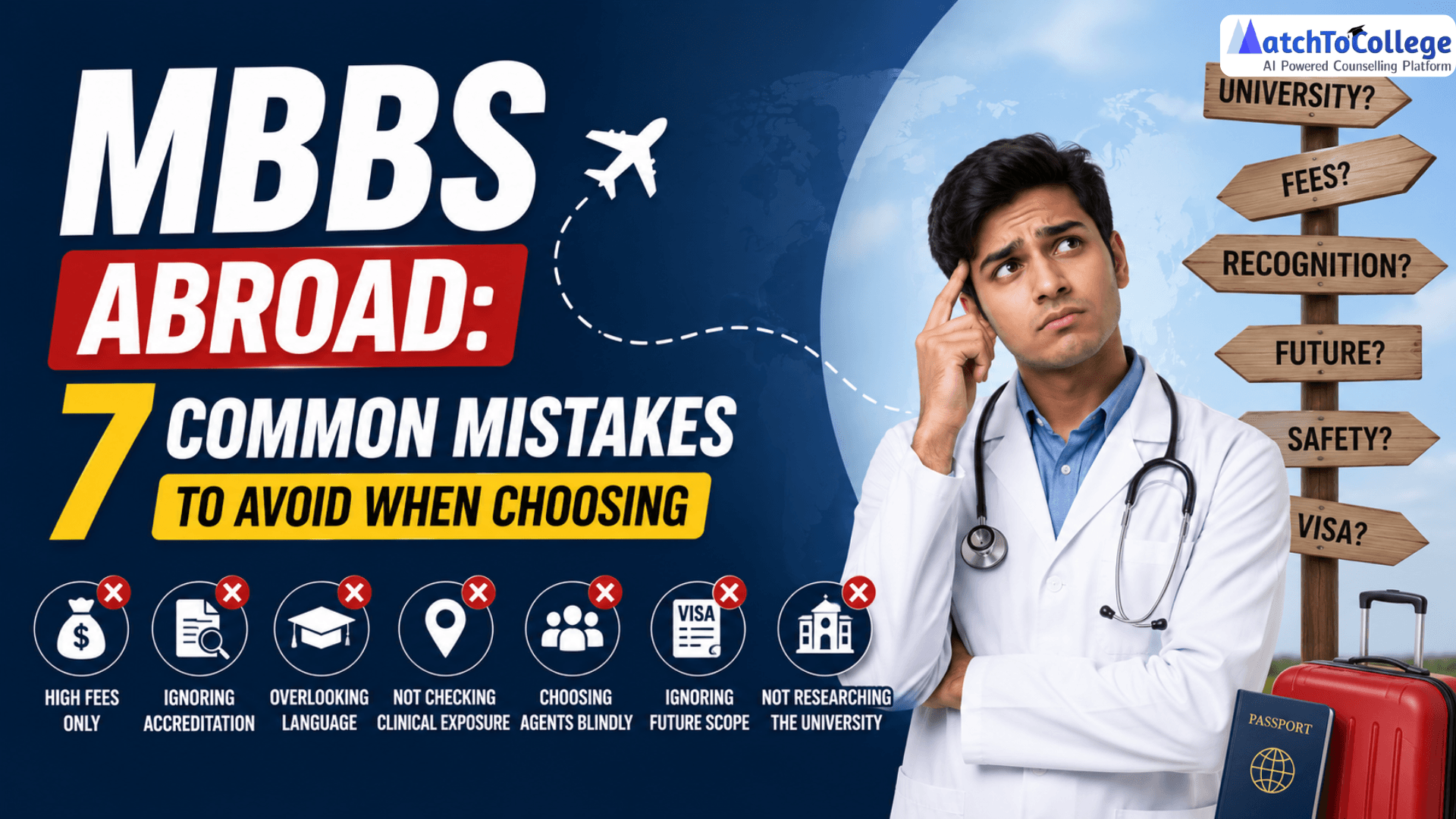
7 Common Mistakes to Avoid When Choosing
The dream of becoming a doctor is a noble pursuit, and for many aspiring medical professionals in India and beyond, studying MBBS abroad offers an attractive pathway. With competitive entrance exams, limited seats, and soaring tuition fees in domestic institutions, overseas medical education presents a viable and often more affordable alternative. Countries like Russia, Ukraine, Georgia, Kazakhstan, Kyrgyzstan, China, and various European nations have become popular destinations for Indian students seeking a foreign medical degree.
However, the journey to securing an MBBS admission abroad is fraught with potential pitfalls. What initially appears as a straightforward decision can quickly turn into a nightmare if not approached with meticulous research and a keen understanding of the nuances involved. The landscape of international medical education is vast and varied, with universities differing significantly in their accreditation, academic standards, recognition, and post-graduation opportunities. A single misstep in choosing your university can have profound long-term consequences, impacting your career prospects, financial investment, and even your eligibility to practice medicine back home or in other desired countries.
Many students and parents, driven by urgency or lured by seemingly attractive packages, often overlook critical factors, leading to regrets and wasted resources. From unknowingly enrolling in an unrecognised institution to misjudging the actual cost of living, the errors can be diverse and impactful. This is where expert guidance becomes invaluable. At MatchToCollege, our AI-powered higher education counselling platform is designed precisely to navigate these complexities, offering personalised insights and objective data to help you make informed decisions about your MBBS abroad journey. We understand that this isn't just about admission; it's about building a foundation for a successful medical career.
This comprehensive guide aims to shed light on the most common and critical mistakes students make when selecting an MBBS abroad university. By understanding these potential blunders, you can equip yourself with the knowledge needed to make a choice that aligns with your academic aspirations, financial realities, and long-term career goals. Let's delve into these crucial missteps and empower you to make a smart, strategic decision for your medical future.
Don't make a mistake for choosing a right MBBS College, use NEET 2026 MBBS and BDS College Predictor. Find out exactly which medical colleges you can secure with your NEET score.
1. The Peril of Unrecognized Degrees: Accreditation & Affiliation Blunders
One of the gravest mistakes aspiring doctors make is failing to thoroughly check the accreditation and recognition of the MBBS abroad university. A medical degree from an unrecognised institution can render you ineligible to practice medicine in India or any other country. Ensure the university is recognised by the National Medical Commission (NMC, formerly MCI) in India, the World Health Organization (WHO), and the relevant medical councils of other countries where you might wish to practice (e.g., ECFMG for the USA, GMC for the UK). Many consultancies might highlight a university's local accreditation, but without international and home-country recognition, your foreign medical degree may prove useless. Always verify recognition status directly through official websites of these regulatory bodies, not just through agents.
2. Falling for "Too Good to Be True" Low Fees: The Hidden Costs of MBBS Abroad
While affordability is a significant draw for studying MBBS abroad, focusing solely on the advertised low tuition fees is a common trap. Many institutions or agents might present a seemingly low fee structure, but this often doesn't encompass the full financial burden. Students frequently overlook hidden costs such as visa application fees, flight tickets, medical insurance, accommodation expenses, food, transportation, study materials, practical training charges, and local administrative fees. The cost of living varies significantly by country and city, and a low tuition fee in a high cost-of-living city can negate any savings. Always demand a detailed breakdown of all expected expenses for the entire duration of the course to avoid financial shocks later.
3. Overlooking Academic Rigor & Language of Instruction
The quality of education and the medium of instruction are paramount. Some universities, especially those with very low fees, might compromise on academic rigor, faculty expertise, or access to modern facilities. Ensure the curriculum is comprehensive, up-to-date, and aligns with international medical standards. Crucially, verify the language of instruction. While many universities offer an 'English Medium' program, the reality on the ground might differ, with local language instruction for clinical rotations or patient interaction. This language barrier can severely hinder your learning and practical experience. Seek feedback from current students and alumni regarding the actual language environment and the quality of practical clinical exposure offered by the affiliated hospitals.
4. Neglecting Campus Safety, Student Support, and Living Conditions
Your well-being and adaptation to a new country are critical for academic success. Students often neglect to research the safety of the campus and surrounding areas, the quality of hostel accommodation, and the availability of student support services. Factors like crime rates, access to medical facilities, availability of Indian food, and the overall cultural environment can significantly impact your experience. A good university will have robust international student support systems, including orientation programs, counselling services, and assistance with local integration. Don't underestimate the importance of a comfortable and secure living environment for your focus and mental health throughout your demanding medical studies.
5. The Post-Graduation Maze: Future Opportunities and Licensing Exams
Choosing an MBBS abroad university without a clear understanding of your post-graduation options is a major oversight. Graduating with a foreign medical degree often requires passing specific licensing examinations to practice in your desired country. For example, Indian students must clear the Foreign Medical Graduate Examination (FMGE) or the upcoming National Exit Test (NEXT) to practice in India. Similarly, if you aspire to work in the USA, you'll need to pass the USMLE; for the UK, it's PLAB. Research the university's track record and support for these exams. A good institution will not only provide quality education but also prepare you for these crucial steps, offering guidance and resources to ensure a smooth transition from student to practicing physician.
6. Dodging Visa & Documentation Nightmares
The student visa application process for studying MBBS abroad can be complex and requires meticulous attention to detail. Many students underestimate the importance of correct documentation, timely application, and understanding visa interview requirements. Mistakes in this area can lead to visa rejection, delaying your studies or even forfeiting your admission. Furthermore, local regulations regarding residency permits, police registration, and annual renewals are often overlooked. Relying solely on agents without understanding the process yourself is risky. Always stay informed about the latest visa guidelines, gather all necessary documents well in advance, and prepare thoroughly for any interviews. MatchToCollege provides resources to simplify this daunting process.
7. The Lure of Exaggerated Claims: Choosing the Right Guidance
The market for MBBS abroad counselling is unfortunately rife with unscrupulous agents who make exaggerated claims, promise guaranteed admissions to top universities regardless of eligibility, or push specific institutions for higher commissions. These agents often provide incomplete or misleading information about fees, recognition, and living conditions. Blindly trusting such claims without independent verification is a critical mistake. Instead, seek guidance from reputable, transparent, and objective platforms like MatchToCollege. We use AI to match you with suitable universities based on your profile and preferences, providing unbiased data and expert advice to empower you to make the best decision for your medical career, free from vested interests.
Making the Right Choice with MatchToCollege
Embarking on an MBBS journey abroad is a monumental decision that requires careful planning, thorough research, and objective guidance. Avoiding these common mistakes can save you from significant financial loss, career setbacks, and emotional distress. By prioritising factors like university recognition, transparent financial planning, academic quality, student support, and post-graduation pathways, you can set yourself up for success. Remember, a dream medical career deserves a solid foundation.
MatchToCollege is your trusted partner in this journey. Our AI-powered platform cuts through the noise, providing you with data-driven insights, verified information, and personalised recommendations for top MBBS abroad universities. Let us help you navigate the complexities and make an informed decision that secures your future in medicine. Don't leave your medical career to chance; choose wisely with MatchToCollege.
Share this Article
FAQFrequently Asked Questions
Q: What is the most critical factor to check for an MBBS abroad university?
The most critical factor is the university's accreditation and recognition. Ensure it's recognised by your home country's medical council (e.g., NMC in India), WHO, and any other relevant international medical bodies to ensure your degree is valid for practice.
Q: How can I verify the actual cost of studying MBBS abroad beyond tuition fees?
Always request a detailed breakdown of all expenses, including tuition, accommodation, food, travel, visa, insurance, local transportation, and study materials, for the entire duration of the course. Don't hesitate to contact the university's international office or speak to current students for an accurate picture.
Q: What if the 'English Medium' MBBS program has local language instruction for clinicals?
This is a significant issue. If clinical rotations and patient interaction are in a local language you don't speak, your practical learning will be severely hampered. Always verify with current students or university officials if the entire program, including clinical exposure, is genuinely conducted in English. Consider learning basic local phrases if unavoidable.
Q: Are all MBBS abroad degrees automatically valid in my home country?
No, not automatically. Most countries require graduates with foreign medical degrees to pass a licensing examination to be eligible to practice. For Indian students, this is the FMGE or the upcoming NEXT. Research these requirements for your home country and any other country where you plan to work.
Get More Info About MBBS Abroad
Recommended Reading

Best Online MBA Specializations for High-Paying Careers 2026
Discover the most lucrative online MBA specializations for 2026-27. Compare ROI, career growth, and use our AI tools to find your perfect management path.

Top Career Opportunities After an Online MBA in 2026-27
Discover high-paying career paths and roles after an online MBA in 2026-27. Explore salary trends, ROI, and tools to navigate your future professional success.

Tax Deductions on Higher Education: 2026-27 India Guide
Maximize your savings with our guide on tax deductions for higher education fees in India for FY 2026-27. Learn about Section 80C, 80E, and upskilling benefits.