

Choose Your UG Course: Aligning Education with Career
Admission & Info Tools
Need Expert Assistance?
Our counselors can help you with fee structures, eligibility guidelines, and upcoming admission cutoffs instantly.
Direct Application Tools
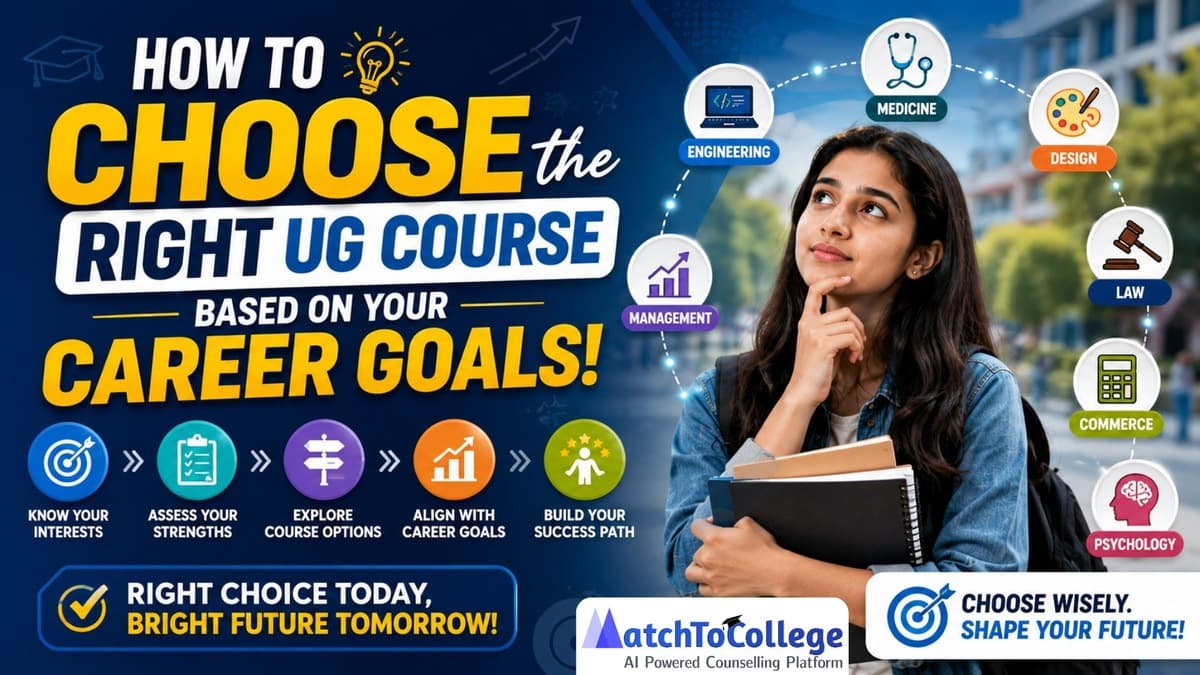
Choose Smart Shape Your Future
Choosing the right undergraduate (UG) course is one of the most important decisions after Class 12. Your course should match not only your interests but also your long-term career goals. A well-informed decision can help you build the right skills, improve your career opportunities, and achieve your professional ambitions.
Instead of choosing a course based on trends or peer pressure, focus on what suits your strengths, interests, and future plans.
Why Choosing the Right UG Course Matters
The right course helps you:
- Build relevant knowledge and skills.
- Prepare for your dream career.
- Improve employability and higher education opportunities.
- Save time, money, and unnecessary career changes.
How to Choose the Right UG Course
| Step | What You Should Do |
| Know Your Interests | Identify the subjects and activities you genuinely enjoy. |
| Assess Your Strengths | Choose a course that matches your academic abilities and skills. |
| Research Career Options | Explore careers, job roles, salary prospects, and future demand before selecting a course. |
| Compare UG Courses | Review the curriculum, specializations, internships, and placement opportunities offered by different colleges. |
| Set Career Goals | Select a course that supports your long-term education and career plans. |
Things to Consider Before Choosing a Course
- Your interests and passion
- Academic strengths
- Career opportunities
- Industry demand
- Placement record
- Higher education options
- College reputation
- Course curriculum and practical exposure
Common Mistakes to Avoid
- Choosing a course because of friends or family pressure.
- Following popular trends without proper research.
- Ignoring career prospects and industry demand.
- Selecting a college without checking placements and accreditation.
- Making decisions based only on salary expectations.
How MatchToCollege Can Help
MatchToCollege helps students make smarter admission decisions through AI-powered career guidance.
Our platform helps you:
- Discover the best UG courses based on your interests.
- Compare colleges and career opportunities.
- Get personalized course recommendations.
- Explore future career and higher education options.
Choosing the right UG course is the first step toward a successful career. Take time to understand your interests, research career opportunities, compare courses, and make an informed decision. The right choice today can open the door to a rewarding future.
Start planning your career early and choose a UG course that aligns with your goals and aspirations.
1. Self-Assessment: Unearthing Your Core Strengths & Passions
Before you even begin to research academic programs, the first critical step is an honest and thorough self-assessment. This isn't just about what subjects you enjoy, but a deeper dive into your innate abilities, personality traits, and core values. Ask yourself:
- What are my true interests? Beyond school subjects, what topics genuinely excite you? Do you love problem-solving, creating, analyzing data, helping people, or understanding complex systems?
- What are my natural strengths? Are you a strong communicator, a critical thinker, detail-oriented, a natural leader, or exceptionally creative? Consider what comes easily to you.
- What values drive me? Do you prioritize innovation, social impact, financial stability, work-life balance, or continuous learning? Your values will significantly influence job satisfaction.
- What kind of work environment do I thrive in? Do you prefer collaborative teams, independent work, dynamic fast-paced settings, or structured environments?
Tools like aptitude tests, personality assessments (e.g., Myers-Briggs, Holland Codes), and career quizzes can provide valuable insights. Don't underestimate the power of reflection and discussing these points with trusted mentors, teachers, or parents. Understanding yourself is the bedrock upon which all subsequent course selection decisions should be built.
2. Researching Career Paths and Future Job Market Trends
Once you have a clearer picture of yourself, it's time to connect those insights to the world of work. Researching potential career paths is crucial for choosing the right undergraduate course. The job market is constantly evolving, with new roles emerging and existing ones transforming.
Focus on understanding:
- Growth Industries: Identify sectors projected for significant growth in the coming decades (e.g., AI and Machine Learning, Renewable Energy, Cybersecurity, Healthcare Technology, Digital Marketing).
- Required Skills: What specific technical and soft skills are in demand for careers that align with your interests? (e.g., data analysis, coding, project management, emotional intelligence, critical thinking).
- Job Descriptions & Responsibilities: Look at entry-level job postings in your desired fields to understand daily tasks, required qualifications, and educational backgrounds.
- Future Outlook: Research the long-term prospects for these careers, including salary expectations, work-life balance, and opportunities for advancement.
Informational interviews with professionals in fields that interest you can offer invaluable firsthand perspectives. LinkedIn, industry reports, and government labor statistics websites are excellent resources for this research phase. This proactive approach ensures you're preparing for careers that are both personally fulfilling and economically viable.
3. Mapping Career Aspirations to Undergraduate Programs
With a solid understanding of yourself and the career landscape, the next step is to bridge the gap between your career goals and the vast array of undergraduate courses available. This involves identifying specific degree programs that serve as direct pathways to your desired professions.
How to Connect Your Goals with Academic Programs:
- Direct Pathways: For careers like engineering, medicine, law, or architecture, the undergraduate degree is often a direct prerequisite (e.g., B.Tech for Engineering, MBBS for Medicine).
- Broad Foundations: For careers in business, humanities, social sciences, or arts, many different majors can lead to similar outcomes. For instance, a career in marketing could stem from degrees in Business Administration, Communications, or even Psychology. Focus on programs that develop transferrable skills relevant to your chosen field.
- Interdisciplinary Options: Don't limit yourself. Many modern careers benefit from interdisciplinary knowledge. Explore programs that combine fields, like 'Business Analytics,' 'Environmental Science,' or 'Digital Humanities.'
- Program Curriculum: Dive into the curriculum of specific courses. Do the modules align with the skills you need to develop for your career? Look at specialization options, practical components (internships, projects), and faculty expertise.
- University Resources: Beyond the course itself, consider the university's career services, alumni network, industry connections, and opportunities for extracurricular activities that enhance your profile.
Remember, the goal is to find a program that not only teaches you the necessary subject matter but also equips you with the critical thinking, problem-solving, and adaptability skills essential for navigating any career path.
The MatchToCollege Advantage: AI-Powered Course Selection
Navigating these complex choices alone can be daunting. This is where MatchToCollege truly shines. Our advanced AI platform takes your unique profile—including your academic record, interests, strengths, personality, and explicit career goals—and matches it with an extensive database of undergraduate courses and universities worldwide.
Instead of generic lists, our AI provides personalized recommendations, highlighting programs that offer the strongest alignment with your aspirations. It considers factors like:
- Curriculum Relevance: How well a course's modules prepare you for specific career competencies.
- Job Market Data: Success rates and career outcomes of graduates from various programs.
- University Specializations: Institutions known for excellence in your target fields.
- Future-Proofing: Programs that emphasize skills relevant for emerging industries.
With MatchToCollege, you gain access to data-driven insights and expert guidance, transforming the often-stressful process of course selection into an empowering journey toward your ideal future. Let our AI be your compass in choosing an undergraduate course perfectly tailored to your career goals.
Share this Article
FAQFrequently Asked Questions
Q: How important is it to link my UG course to my career goals?
It is critically important. Aligning your undergraduate course with your career goals ensures that the education you receive directly contributes to your professional development, provides relevant skills, and gives you a competitive edge in the job market. It also leads to greater job satisfaction and a clearer career path.
Q: What if my career goals change after choosing a course?
It's common for career goals to evolve. While it's best to start with a clear direction, many undergraduate degrees offer transferable skills. For example, a Business degree can lead to various roles beyond initial expectations. If your goals shift significantly, consider minors, electives, internships in new areas, or even postgraduate studies that realign you. MatchToCollege can help you explore new pathways based on evolving interests.
Q: Can AI really help me choose the right course?
Absolutely. AI platforms like MatchToCollege use sophisticated algorithms to analyze vast amounts of data, including your academic profile, interests, strengths, and career aspirations, against a global database of courses, universities, and job market trends. This allows for highly personalized recommendations that human counselors might miss, identifying optimal matches and future-proof pathways.
Q: What resources are available if I'm unsure about my career path?
Numerous resources can help. Start with self-assessment tools (personality tests, aptitude tests), career counseling services (both online and in-person), informational interviews with professionals, and exploring career guides. Platforms like MatchToCollege are designed precisely for this, offering structured guidance and AI-powered insights to help clarify your path and match it to suitable educational programs.
Get More Info About Choose Your UG Course
Recommended Reading
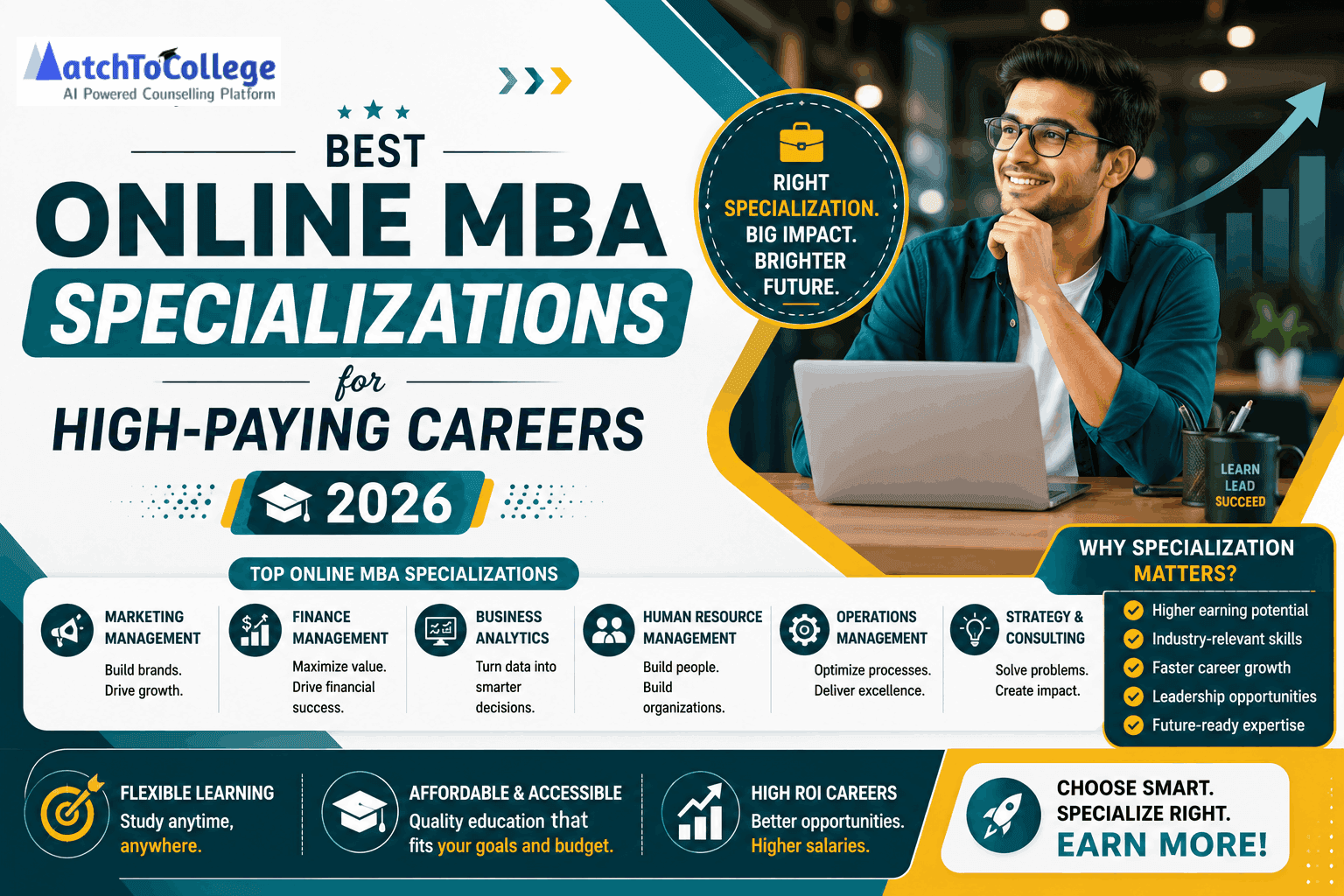
Best Online MBA Specializations for High-Paying Careers 2026
Discover the most lucrative online MBA specializations for 2026-27. Compare ROI, career growth, and use our AI tools to find your perfect management path.
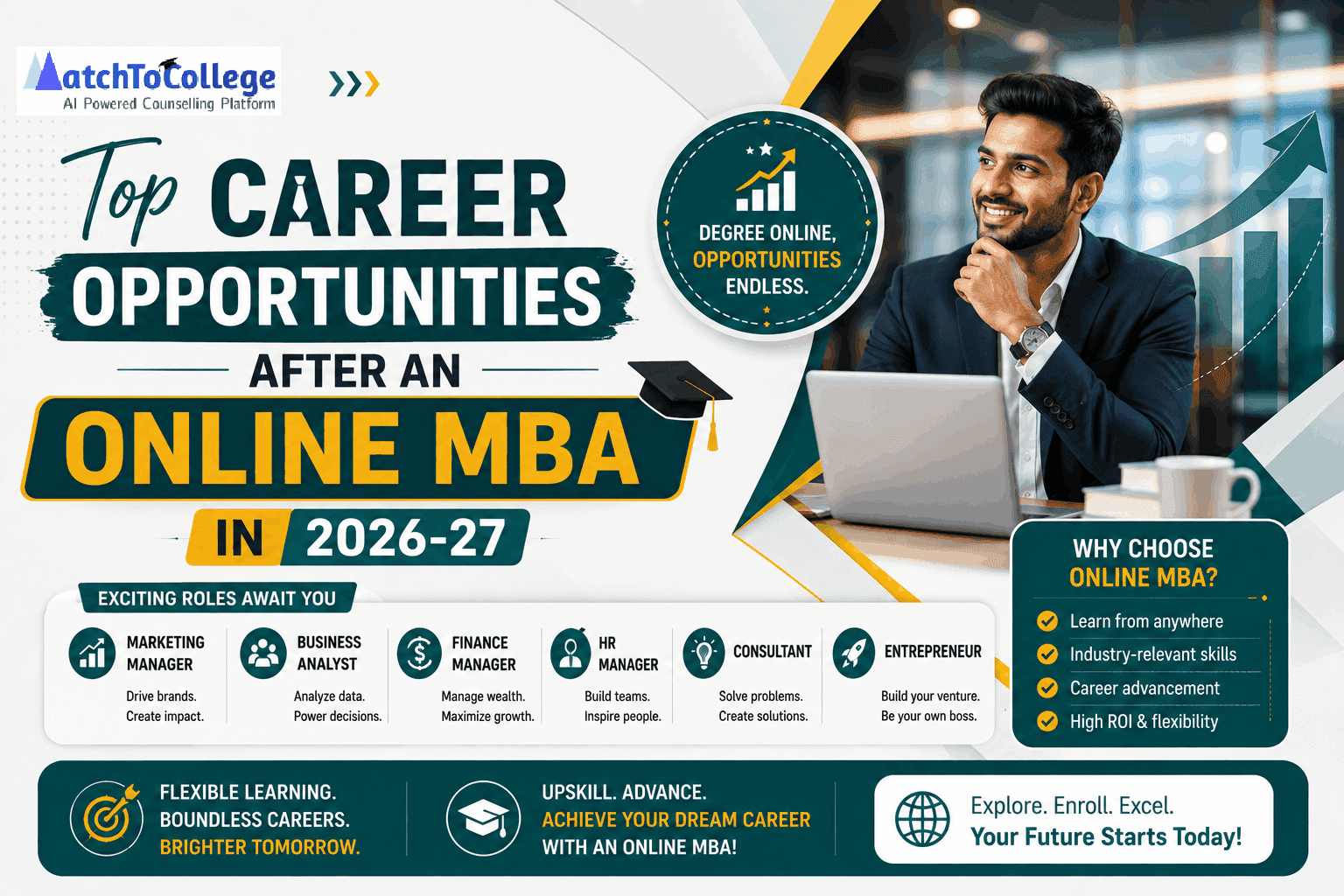
Top Career Opportunities After an Online MBA in 2026-27
Discover high-paying career paths and roles after an online MBA in 2026-27. Explore salary trends, ROI, and tools to navigate your future professional success.
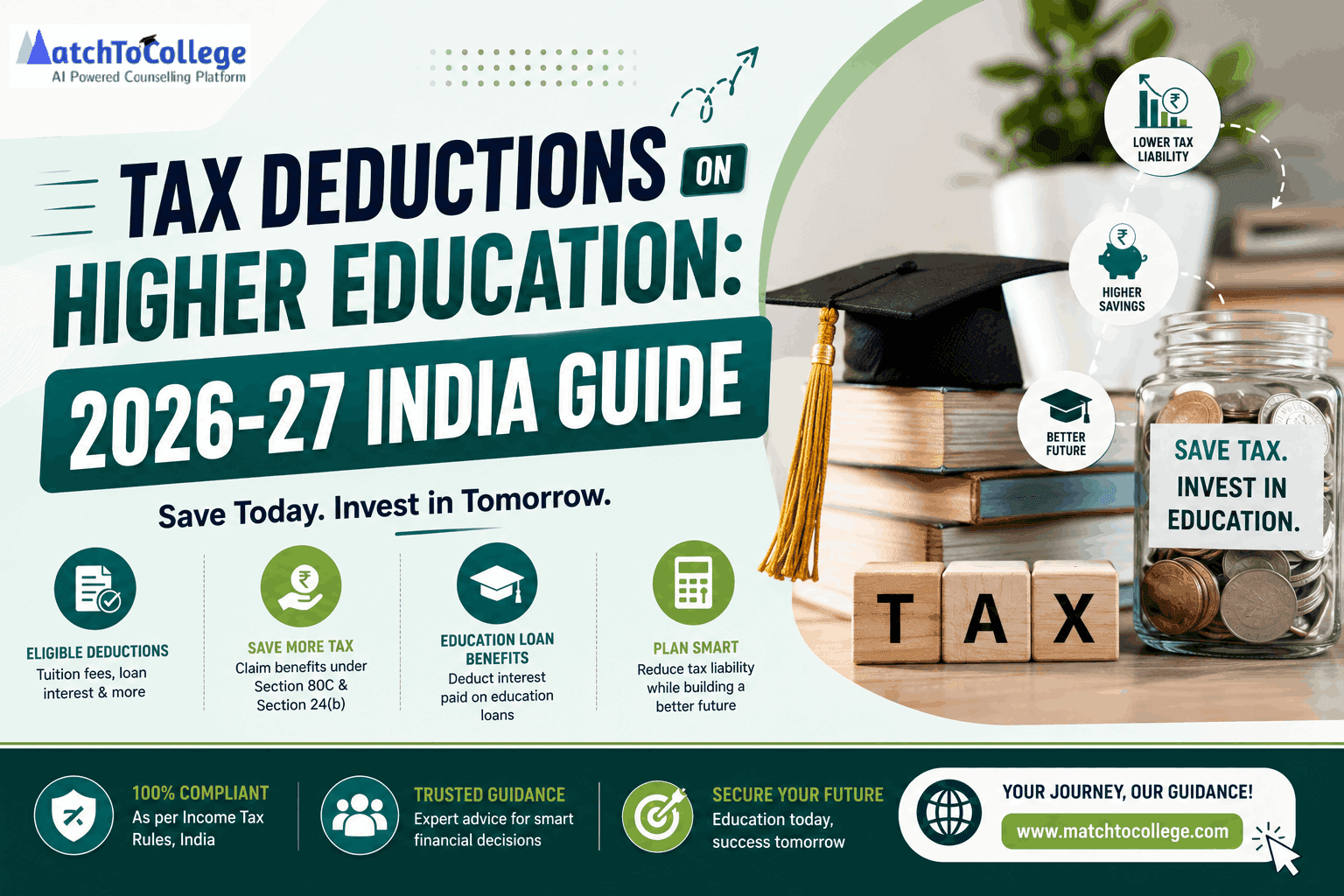
Tax Deductions on Higher Education: 2026-27 India Guide
Maximize your savings with our guide on tax deductions for higher education fees in India for FY 2026-27. Learn about Section 80C, 80E, and upskilling benefits.