

Choose the Right Master's Program Abroad: 2026 Expert Guide
Admission & Info Tools
Need Expert Assistance?
Our counselors can help you with fee structures, eligibility guidelines, and upcoming admission cutoffs instantly.
Direct Application Tools
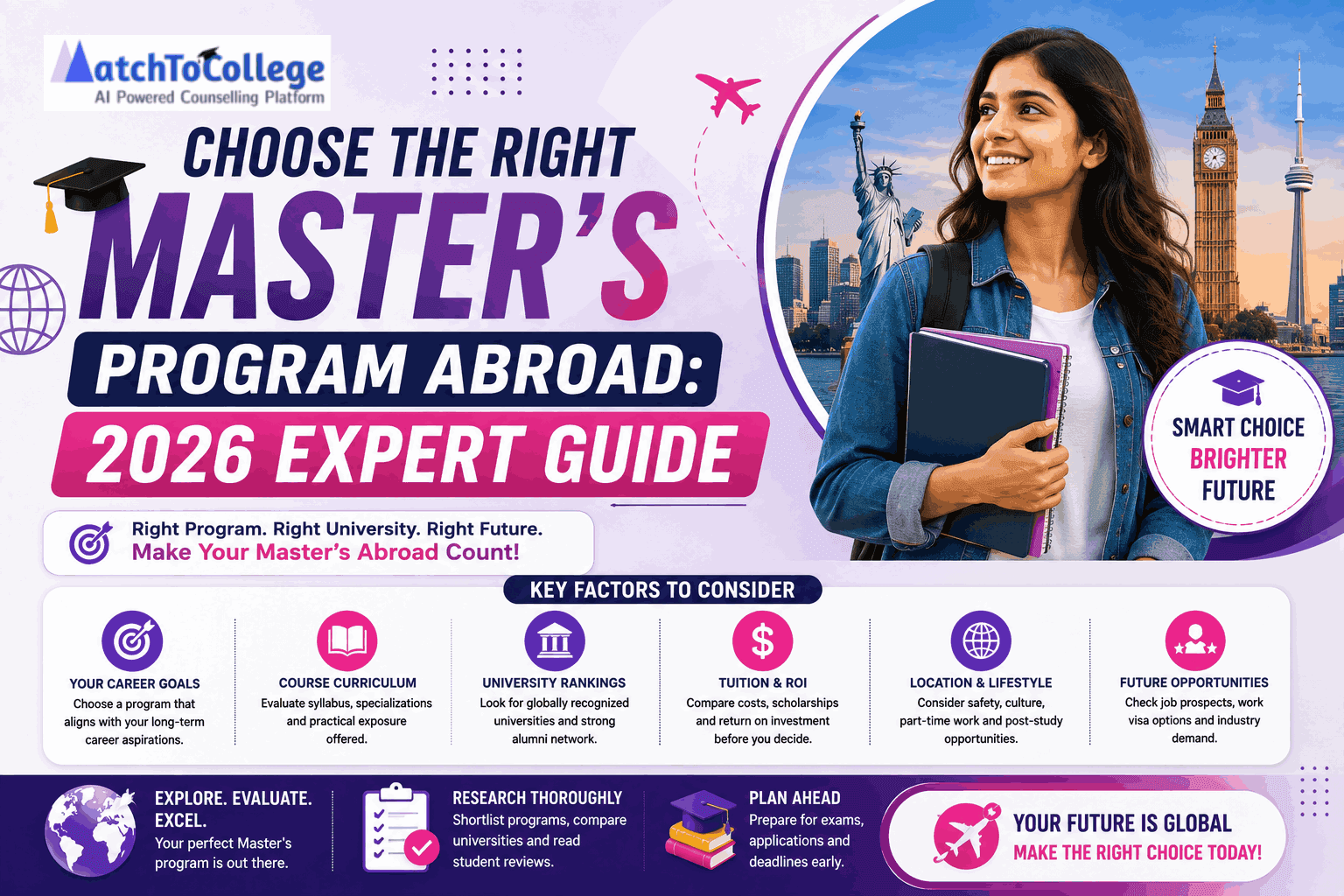
Embarking on a Master's degree journey abroad is a transformative decision that extends far beyond the walls of a classroom. It is a strategic move designed to elevate your professional trajectory, broaden your cultural horizons, and provide a competitive edge in an increasingly globalized workforce.
However, the sheer volume of choices—spanning different continents, specializations, and university rankings—can be overwhelming for even the most dedicated student. In 2026, the landscape of higher education has shifted towards data-driven decision-making, where AI-powered platforms like MatchToCollege play a pivotal role in bridging the gap between ambition and reality. Whether you are looking at Study Abroad opportunities in the USA, UK, Canada, or Germany, the process requires a meticulous evaluation of academic fit, financial feasibility, and long-term career outcomes.
Before diving into applications, it is essential to ask yourself: 'What is the ultimate goal of my postgraduate education?' For some, it is the pursuit of niche research; for others, it is the lure of high-paying jobs in tech or management. To ensure you are heading in the right direction, start by assessing your internal motivations and external possibilities. Are you looking for specialized online courses to supplement your learning, or a full-time immersive experience?
This guide will break down the complex selection process into manageable steps, utilizing advanced tools to help you compare domestic colleges against international prestige. As you navigate this path, remember that the 'best' program isn't necessarily the one at the top of a general ranking list; it's the one that aligns most closely with your personal and professional evolution.
The first step in this journey often starts with a self-assessment of your current academic standing. If you are coming from an Indian curriculum background, you might find that international admissions committees require specific conversions for your scores. Tools like the CGPA to Percentage Calculator are invaluable for accurately filling out international application forms.
Furthermore, if you are currently deciding between continuing your medical studies at home or looking elsewhere, exploring MBBS Abroad options can provide a wider perspective on global healthcare education. In the following sections, we will delve deeper into the criteria that define a successful Master's application strategy, from financial planning to career mapping.
Evaluating Academic Alignment and Career Pathways
Choosing a Master's program is not just about the subject; it's about the specific sub-discipline and its relevance to the current industry trends. A Master's in Computer Science in 2026 is vastly different from one in 2016, with heavy emphasis now placed on AI, ethics, and quantum computing.
To ensure your chosen field has longevity, you must use data to validate your choice. Are you wondering if your current interests align with your future goals? The Career Pathway Matcher tool is specifically designed to help students identify which degree programs lead to their dream roles. This AI-driven insight prevents the common mistake of choosing a program based on prestige alone while ignoring the actual curriculum relevance.
Furthermore, academic rigor varies significantly across borders. You need to ensure that your undergraduate preparation meets the prerequisites of your target institution. If your background is in engineering and you are eyeing a top-tier global program, you might want to see how your competitive exam scores stack up as a benchmark.
For instance, comparing your domestic performance using the GATE College Predictor can give you a baseline of your technical standing relative to your peers. Similarly, understanding your potential in standardized tests is crucial. If you have taken or are preparing for entrance exams, tools like the JEE Rank Predictor or the CAT College Predictor help you gauge the level of competitiveness you are currently capable of handling, which is a great indicator of your readiness for high-intensity international programs.
Don't forget to look at the faculty's research output and industry connections. A Master's program is often a gateway to a professional network. If a university has strong ties with Silicon Valley or the European tech hub, your chances of landing a high-impact internship increase exponentially. Use the platform to research the alumni outcomes of specific departments to see where graduates are five years down the line. This long-term view is essential for a successful transition from student to professional.
Financial Planning: ROI, Loans, and Currency Conversion
One of the most significant barriers to studying abroad is the cost. It is not just about the tuition fees; you must account for the cost of living, insurance, travel, and miscellaneous expenses. A Master's degree is a major investment, and like any investment, it requires a clear understanding of the Return on Investment (ROI). Before committing to a program, use the Online Courses and University ROI Calculator to see if the projected salary post-graduation justifies the initial debt. This tool helps you visualize the break-even point of your education costs.
For many students, an education loan is a necessity. However, taking on debt without a plan is a recipe for financial stress. It is vital to calculate your future monthly obligations accurately. The Education Loan EMI Calculator allows you to input various interest rates and tenures to see what your repayment schedule will look like once you enter the workforce.
This foresight is critical when choosing between a more expensive private university and a subsidized public university in Europe. Additionally, when you are looking at international salaries, the numbers can seem abstract. Use the Million to Rupees Calculator or the Million to Lakhs Calculator to understand exactly what those international paychecks mean in your home currency. This helps in setting a realistic budget for both your lifestyle abroad and your loan repayments back home.
Budgeting also requires an understanding of day-to-day conversions. If you are comparing stipends or part-time job earnings, tools like the Inch to Centimeter Calculator for physical requirements or simple unit converters become surprisingly handy when navigating a new country's standards. Financial literacy is the foundation of a stress-free study abroad experience; ensure you have utilized every resource to map out your finances from day one to graduation.
Navigating Admission Requirements and GPA Conversions
Each country has its own set of academic standards and grading systems. For an Indian student, converting marks to the 4.0 GPA scale used in the US or the ECTS system in Europe can be confusing. Accuracy here is paramount, as even a small error can lead to a rejection.
Use the GPA to Percentage Calculator and the SGPA to Percentage Calculator to ensure your transcript evaluations are flawless. These tools are tailored to help you present your academic achievements in a format that international admissions officers can easily understand and appreciate.
Beyond grades, standardized tests remain a cornerstone of the application process. While some universities are becoming 'test-optional,' a high score in the GRE, GMAT, or specialized exams still provides a significant advantage. If you are pivoting from a medical or technical background in India, you might already have scores from domestic exams.
While these aren't always directly applicable, they serve as proof of your competitive stamina. For example, if you performed well on the NEET, you can check your standing using the NEET College Predictor to understand your percentile rank, which can be mentioned in your Statement of Purpose (SOP) to demonstrate your academic caliber. Likewise, if you've recently taken domestic entrance exams, checking results through the NEET Result Checker ensures you have the official data points ready for your portfolio.
The application process also involves a 'soft' side: the Statement of Purpose, Letters of Recommendation (LORs), and your CV. AI tools can now help you analyze the tone and content of your SOP to ensure it aligns with the university's values. However, no amount of AI can replace the authenticity of your personal story. Focus on why you want this specific program and how your unique background—be it your performance in the JEE Advanced or your internship experience—has prepared you for the challenges of an international Master's degree.
Location and Lifestyle: More Than Just a Campus
When choosing a Master's program, the city or country you live in is just as important as the university itself. Different regions offer different post-study work opportunities. For instance, the UK offers a Graduate Route visa, while the US has the OPT (Optional Practical Training) extension for STEM students. Your choice of location should be a strategic decision based on where the industry for your specific field is thriving.
If you are pursuing an MBA, being near a financial hub like London, New York, or Singapore is a massive advantage. If you are into automotive engineering, Germany is the place to be.
Lifestyle factors such as climate, culture, and safety also play a role in your success as a student. You will be spending at least one to two years in this environment, so it needs to be somewhere you can thrive.
Interestingly, even small details like understanding local metrics can affect your transition. While it might seem trivial, knowing how to convert units using the Inch to Centimeter Calculator or checking your health metrics with a BMI Calculator can be part of preparing for international health insurance requirements. Staying healthy and adaptable is key to maintaining the focus needed for a rigorous Master's curriculum.
Finally, consider the international student community at the university. A diverse campus provides a richer learning experience and a broader global network. Reach out to current students or alumni through LinkedIn or the MatchToCollege community to get an unfiltered view of the student life. Ask about the 'hidden' costs, the quality of the campus facilities, and the accessibility of the professors. This first-hand information is the final piece of the puzzle in choosing the right Master's program abroad.
Share this Article
FAQFrequently Asked Questions
Q: How do I calculate the ROI of a Master's abroad?
You can calculate ROI by comparing the total cost of the program (tuition + living expenses) against the average starting salary of graduates in that field. Use the MatchToCollege Online Courses ROI Calculator for a detailed analysis.
Q: Which country is best for a Master's in 2026?
The best country depends on your field. The US remains top for STEM and Business, Germany for Engineering, and the UK for Finance and Humanities. Always check post-study work visa regulations before applying.
Q: How can I convert my Indian CGPA to a US GPA scale?
You can use the CGPA to Percentage and GPA to Percentage calculators on MatchToCollege to get accurate conversions required for international applications.
Q: What is the importance of a Career Pathway Matcher?
A Career Pathway Matcher helps you ensure that the Master's program you choose actually leads to the job roles you desire, preventing academic misalignment.
Get More Info About Choose the Right Master's Program Abroad

Recommended Reading

LBSIM Delhi & GIBS 2027 Admissions Open: Apply Online Now
LBSIM Delhi and GIBS Bangalore open 2027 admissions. Explore PGDM, MBA, and BBA application details, early bird offers, and WBJEE/TNEA 2026 counseling updates.
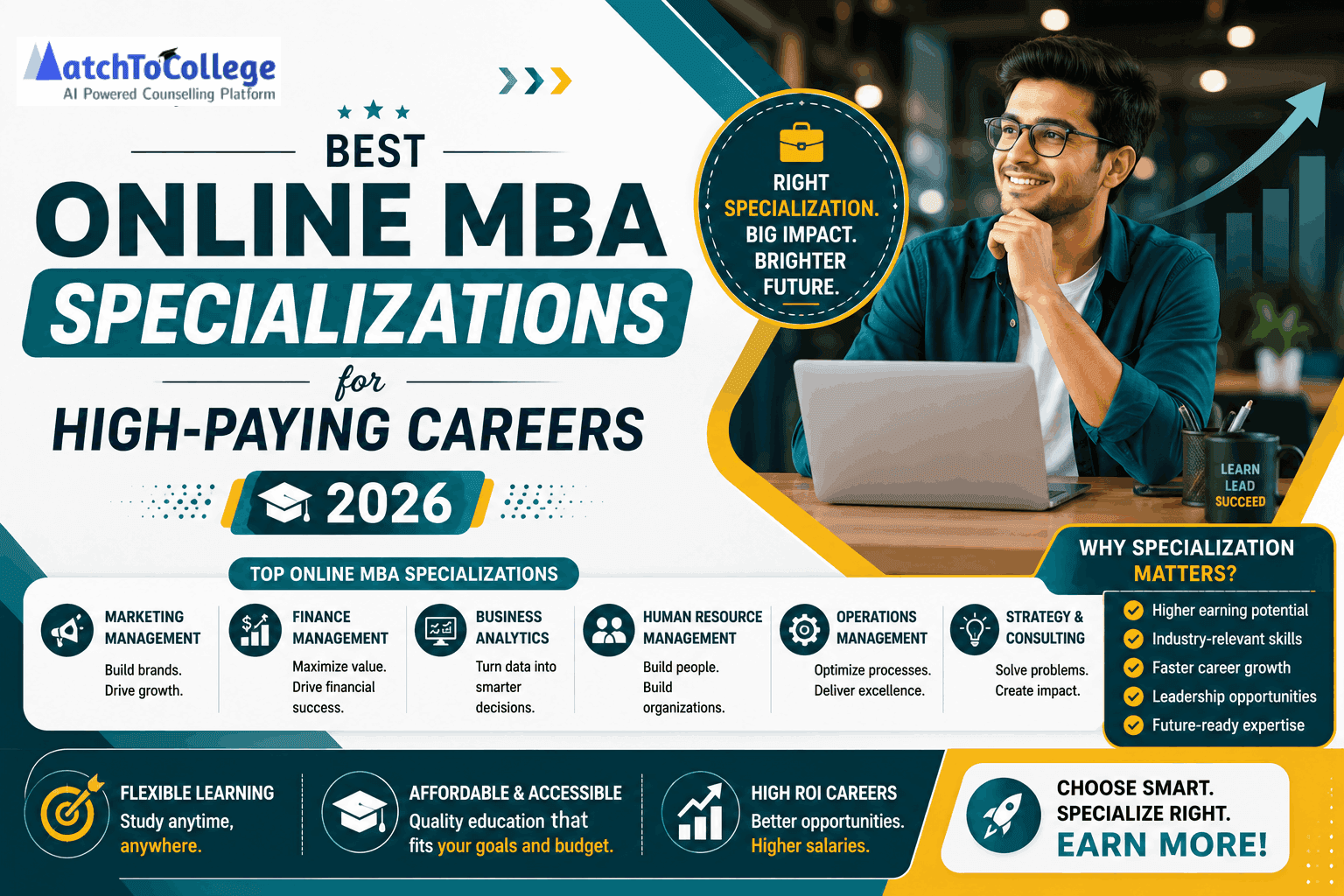
Best Online MBA Specializations for High-Paying Careers 2026
Discover the most lucrative online MBA specializations for 2026-27. Compare ROI, career growth, and use our AI tools to find your perfect management path.
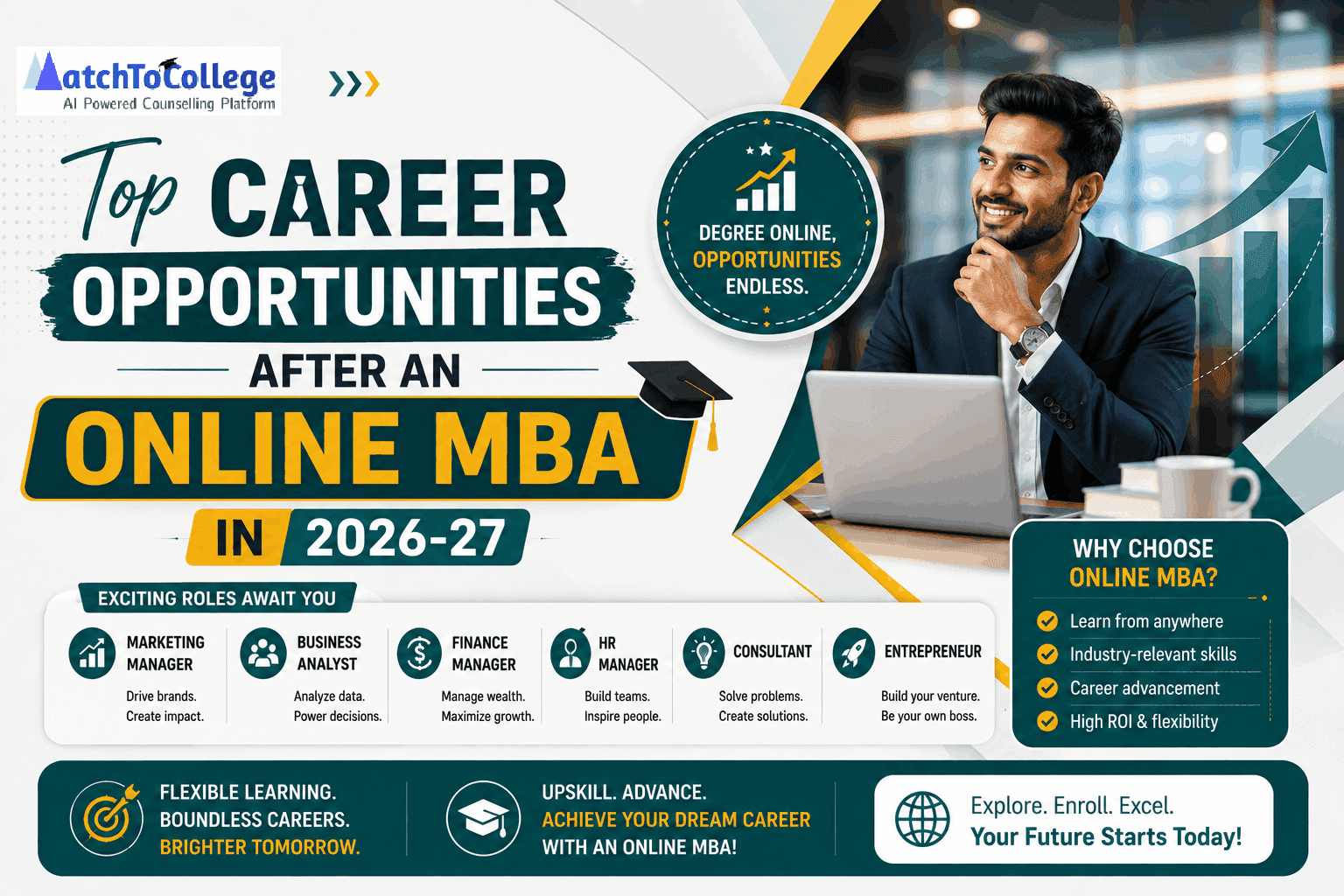
Top Career Opportunities After an Online MBA in 2026-27
Discover high-paying career paths and roles after an online MBA in 2026-27. Explore salary trends, ROI, and tools to navigate your future professional success.