

Certifications: Do They Boost Your UG & PG Career?
Admission & Info Tools
Need Expert Assistance?
Our counselors can help you with fee structures, eligibility guidelines, and upcoming admission cutoffs instantly.
Direct Application Tools
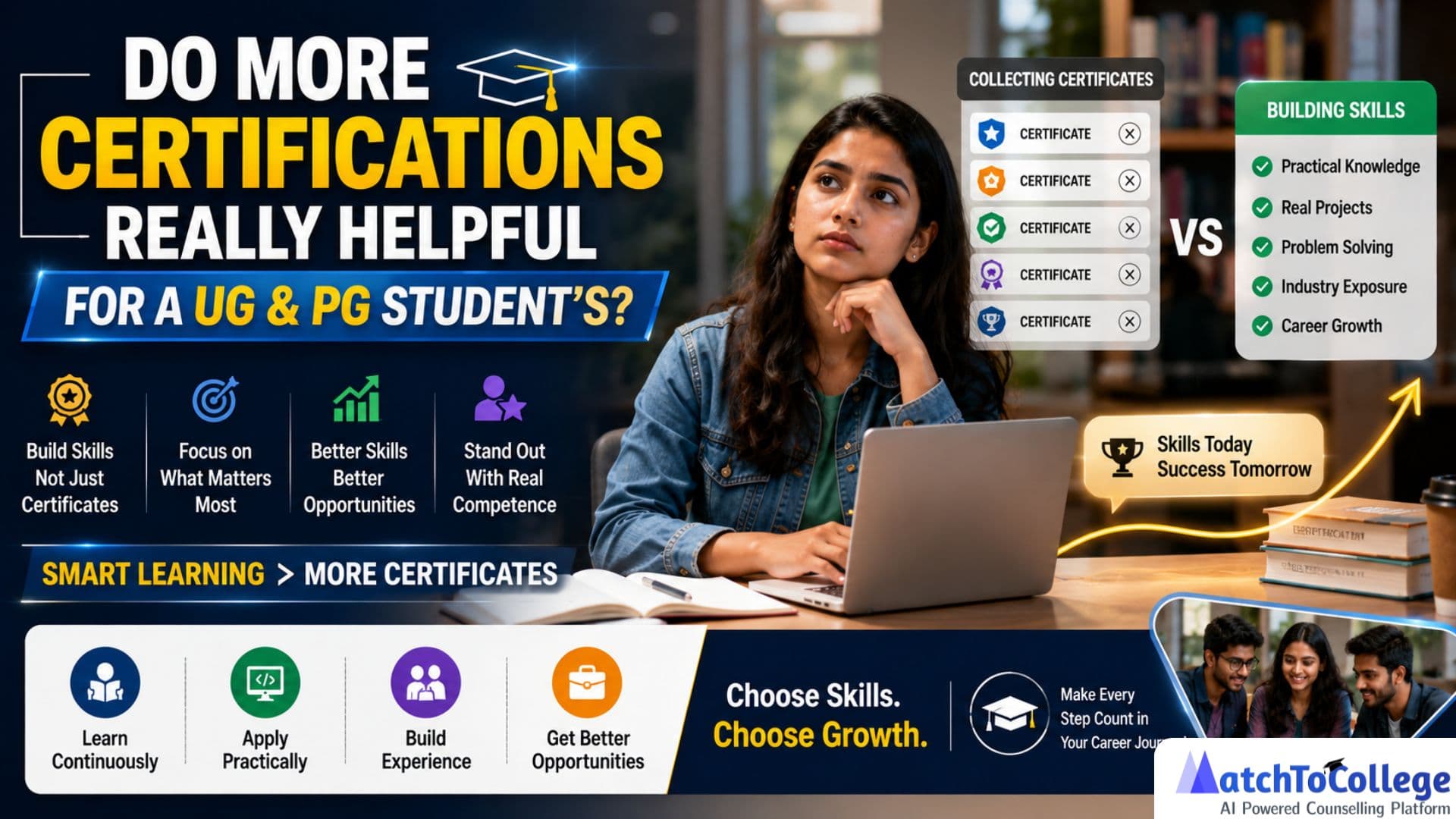
Smart learning vs certificates for growth
In today's competitive academic and job market, many UG and PG students earn multiple certifications to strengthen their profiles. But do more certificates always lead to better opportunities? Not necessarily. What matters most is choosing certifications that match your career goals and help you develop practical, in-demand skills.
The right certification can improve your college application, resume, and employability. However, collecting random certificates without a clear purpose can waste time and add little value.
When Certifications Add Value
| Benefit | How It Helps |
| Builds Relevant Skills | Develops practical knowledge required for your chosen career. |
| Strengthens Your Resume | Demonstrates initiative and continuous learning. |
| Improves Career Readiness | Makes you better prepared for internships and job roles. |
| Supports Higher Education | Enhances your profile for UG, PG, or study abroad applications. |
| Shows Industry Interest | Reflects your commitment to a specific field or specialization. |
Quality vs. Quantity
| Quality Certifications | Too Many Random Certifications |
| Relevant to your career goals | Unrelated to your field of study |
| Recognized by employers or universities | Low-value or unknown providers |
| Focus on practical, job-ready skills | Mostly theoretical with little application |
| Improve employability and career growth | Add clutter to your resume |
More certifications don't always mean better opportunities. Focus on quality over quantity by choosing certifications that align with your academic interests, career goals, and industry demand. A few relevant, recognized certifications combined with strong skills and practical experience will have a greater impact than collecting dozens of unrelated certificates.
The True Value of Certifications: Beyond the Resume Stuffing
With thousands of online certification courses available, many students end up collecting certificates just to fill their resumes. However, employers and universities value quality over quantity. A certification is useful only if it helps you build relevant skills and supports your academic or career goals.
Instead of focusing on the number of certificates, choose certifications that demonstrate practical knowledge, industry relevance, and continuous learning.
What Makes a Certification Valuable?
| Factor | Why It Matters |
| Relevant to Your Career | Matches your academic field and future career goals. |
| Recognized by Industry | Accepted and valued by employers or universities. |
| Practical Skills | Helps you gain hands-on, job-ready experience. |
| Supports Your Resume | Strengthens your profile with meaningful achievements. |
| Shows Initiative | Demonstrates a commitment to learning and professional growth. |
Quality vs. Resume Stuffing
| Smart Certification Strategy | Resume Stuffing |
| Choose certifications related to your field. | Collect random certificates without a clear purpose. |
| Focus on practical, in-demand skills. | Prioritize quantity over quality. |
| Apply what you learn through projects or internships. | Complete courses without using the skills. |
| Build a strong academic and career profile. | Create a long but less impactful resume. |
A certification adds real value only when it is relevant, recognized, and backed by practical skills. Instead of collecting multiple certificates, invest in learning that strengthens your expertise, improves your employability, and prepares you for higher education or your future career.
Tailoring Your Certification Strategy: UG vs. PG Perspectives
The right certification strategy depends on your academic level and career goals. UG students should focus on exploring new skills and building a strong foundation, while PG students should choose certifications that enhance their specialization and improve career opportunities.
UG vs PG Certification Strategy
| Factor | UG Students | PG Students |
| Primary Goal | Explore interests and build foundational skills. | Gain advanced expertise and specialize in your field. |
| Best Certifications | Coding, communication, language, graphic design, data fundamentals, soft skills. | Project Management (PMP), Data Analytics, AI, Cybersecurity, Digital Marketing, Cloud Computing, Advanced Excel, Python, CAD, industry-specific certifications. |
| Purpose | Improve academic profile, discover career interests, and prepare for internships. | Increase employability, bridge skill gaps, and accelerate career growth. |
| Career Impact | Demonstrates curiosity, initiative, and willingness to learn. | Validates professional expertise and job-ready skills. |
| Ideal Outcome | Build a strong foundation for higher education and entry-level roles. | Stand out for specialized roles, promotions, and leadership opportunities. |
How Certifications Help
For UG Students
- Explore different career options.
- Build practical and soft skills.
- Strengthen college applications and resumes.
- Improve internship opportunities.
- Develop a habit of continuous learning.
For PG Students
- Deepen knowledge in your specialization.
- Learn industry-relevant, job-ready skills.
- Enhance your resume for competitive roles.
- Improve placement and salary prospects.
- Stay updated with industry trends and technologies.
UG students should focus on learning and exploration, while PG students should prioritize specialization and career-focused certifications. Regardless of your academic level, choose certifications that are relevant, recognized, and aligned with your long-term career goals rather than collecting certificates simply to increase the number on your resume.
Smart Choices with MatchToCollege: Your AI-Powered Guide
Navigating the vast ocean of certifications can be overwhelming, but MatchToCollege is here to simplify the process. Our AI-powered platform helps you make smart, strategic choices that truly benefit your academic and professional future. When evaluating a certification, consider its:
- Relevance: Does it align with your long-term career goals or desired college programs?
- Accreditation & Reputation: Is it recognized and respected by industry professionals and educational institutions?
- Skill Development: Does it teach practical, in-demand skills that you can demonstrate?
- Cost-Benefit Analysis: Is the time and financial investment justified by the potential returns?
MatchToCollege goes beyond generic advice. By analyzing your unique profile, academic performance, aspirations, and target institutions, our platform can recommend certifications that will have the maximum impact on your college applications and career readiness.
Whether you're aiming for an MBA, an engineering degree, medical school, or studying abroad, we provide personalized insights to help you build a compelling profile that stands out. Leverage our expertise to choose certifications that genuinely enhance your journey, rather than just adding lines to a resume.
Share this Article
FAQFrequently Asked Questions
Q: Do colleges care about certifications during the admissions process?
Yes, but strategically. Colleges value certifications that demonstrate genuine interest, initiative, and the acquisition of relevant skills, especially if they align with your intended major or add unique value to your profile. Quality and relevance are key; a well-chosen certification can strengthen your application by showcasing your commitment to learning beyond the standard curriculum.
Q: How do I choose the right certifications for my career goals?
Choosing the right certification involves aligning it with your long-term career aspirations, the requirements of your target industries, and the skills sought by your desired colleges. Research reputable providers, ensure the skills taught are in-demand, and consider the practical application of the knowledge. MatchToCollege's AI-powered platform can provide personalized recommendations based on your specific profile and goals, helping you make informed decisions.
Q: Are free certifications as valuable as paid ones?
The value of a certification isn't solely tied to its cost. Many free or low-cost certifications from reputable platforms (like Coursera, edX, Google Digital Garage) offer significant value by providing access to high-quality content and industry-recognized skills. However, paid certifications often come with more in-depth content, professional accreditation, and hands-on projects, which can be more impactful for specialized fields. Always prioritize content quality, industry recognition, and relevance over the price tag.
Get More Info About Certifications
Recommended Reading
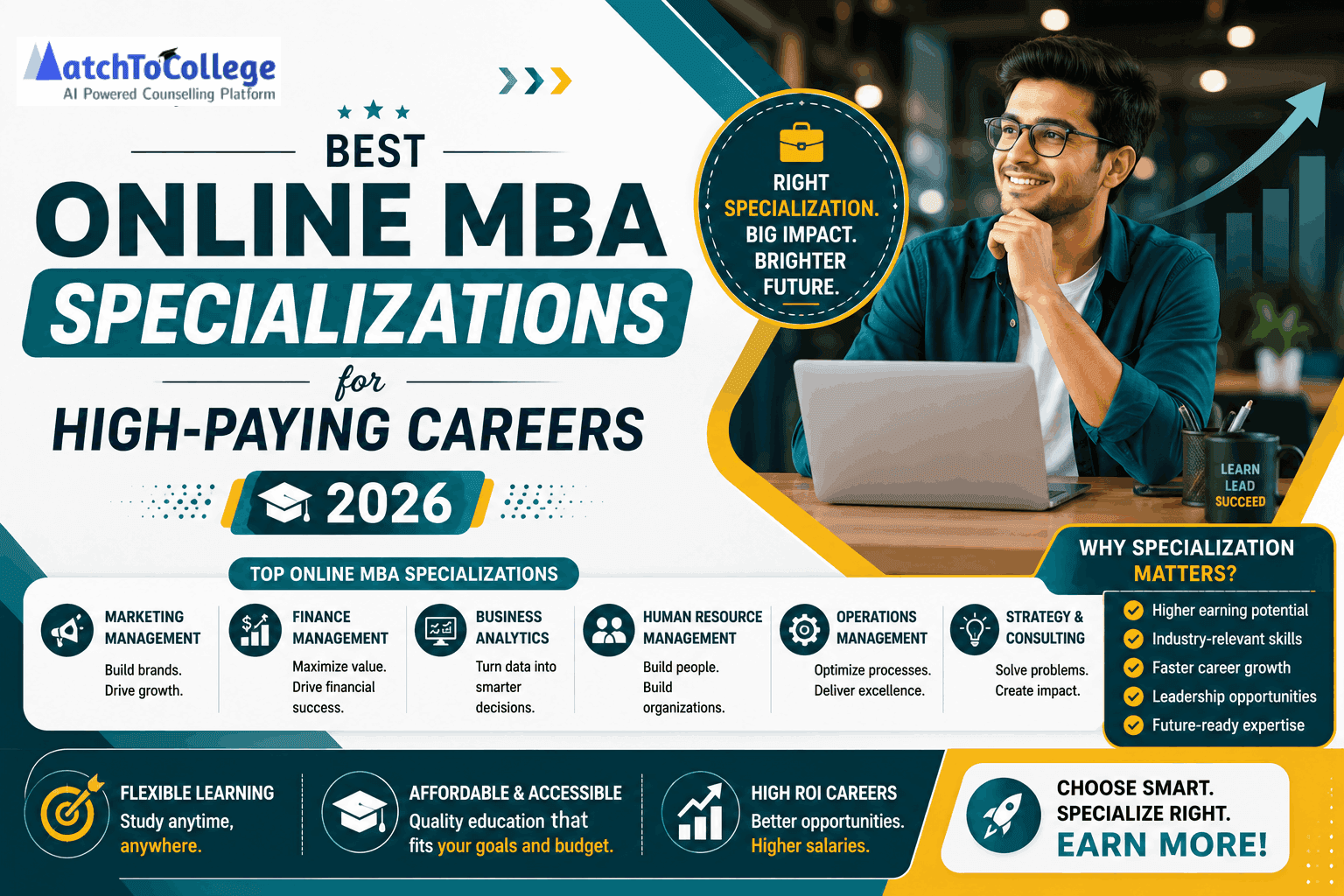
Best Online MBA Specializations for High-Paying Careers 2026
Discover the most lucrative online MBA specializations for 2026-27. Compare ROI, career growth, and use our AI tools to find your perfect management path.

Top Career Opportunities After an Online MBA in 2026-27
Discover high-paying career paths and roles after an online MBA in 2026-27. Explore salary trends, ROI, and tools to navigate your future professional success.
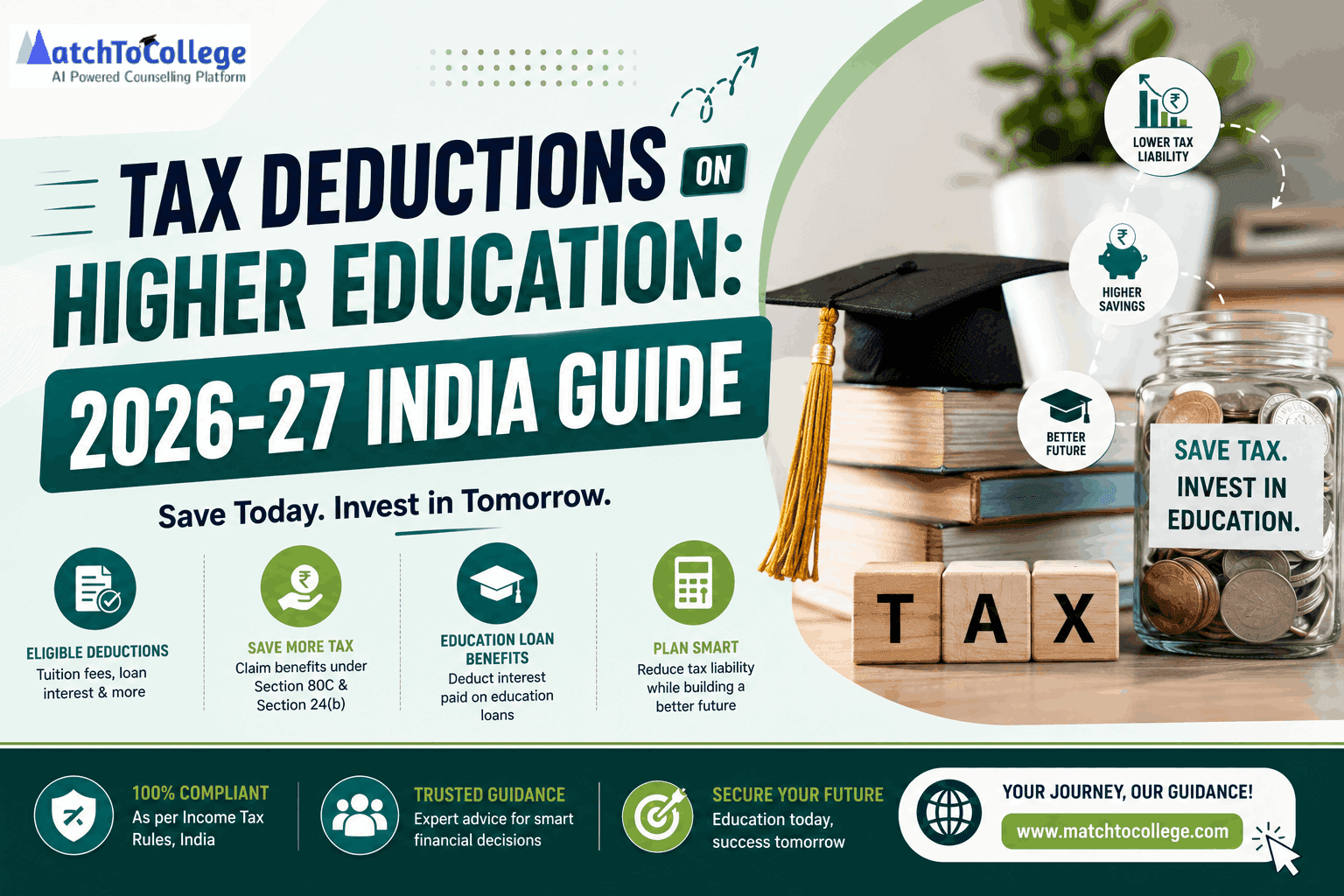
Tax Deductions on Higher Education: 2026-27 India Guide
Maximize your savings with our guide on tax deductions for higher education fees in India for FY 2026-27. Learn about Section 80C, 80E, and upskilling benefits.