

CAT 2026 Exam Analysis: Overall Difficulty Level, Slot-Wise Review and Good Attempt
Admission & Info Tools
Need Expert Assistance?
Our counselors can help you with fee structures, eligibility guidelines, and upcoming admission cutoffs instantly.
Direct Application Tools

The CAT 2026 examination is scheduled for 29 November 2026, and thousands of MBA aspirants across India will appear for the test to secure admission to the Indian Institutes of Management (IIMs) and other leading business schools.
Once the examination is over, one of the first things candidates will search for is the CAT 2026 exam analysis. Students want to know whether the paper was easy, moderate or difficult, how each section compared across slots, how many questions could be considered good attempts and what their performance might mean for their expected CAT percentile.
The CAT 2026 paper analysis will cover all three sections: Verbal Ability and Reading Comprehension (VARC), Data Interpretation and Logical Reasoning (DILR), and Quantitative Aptitude (QA). The examination will be conducted in three slots, making slot-wise analysis important when comparing the difficulty of the question papers.
This page will be updated after each CAT 2026 exam slot with student feedback, expert analysis, question trends, difficulty levels and estimated good attempts. Candidates should revisit this page after their examination slot for the latest information.
CAT 2026 Exam Analysis: Latest Updates
As of 28 November 2026, CAT 2026 is yet to be conducted. The actual paper difficulty, good attempts, questions and student reactions will be added after the examination.
| CAT 2026 exam detail | Information |
| Exam date | 29 November 2026 |
| Conducting IIM | IIM Indore |
| Exam mode | Computer-based test |
| Number of slots | 3 |
| Total duration | 120 minutes |
| Number of sections | 3 |
| Sectional time limit | 40 minutes |
| Sections | VARC, DILR and QA |
| Official website | iimcat.ac.in |
The examination is scheduled in three sessions, with 40 minutes allotted to each section. Candidates cannot freely switch between sections during the test.
What will be updated after the examination?
- Overall CAT 2026 difficulty level.
- Slot 1, Slot 2 and Slot 3 analysis.
- Section-wise difficulty for VARC, DILR and QA.
- Important topics and question types.
- Estimated good attempts.
- Student reactions from examination centres.
- Expert review and expected score insights.
- CAT 2026 score vs percentile estimates.
CAT 2026 Overall Difficulty Level
The overall difficulty level of CAT 2026 will be determined after reviewing feedback from candidates across all three slots and analysing the question papers.
A paper may feel difficult because of lengthy reading passages, complicated DILR sets, calculation-heavy Quantitative Aptitude questions or a combination of these factors.
However, the overall difficulty level should not be decided only by a few students' reactions. The analysis should consider the number of questions, their complexity, time required and the accuracy possible within the examination duration.
CAT 2026 overall difficulty level — update after the examination
| Section | Difficulty level | Analysis |
| VARC | To be updated | To be updated after exam |
| DILR | To be updated | To be updated after exam |
| Quantitative Aptitude | To be updated | To be updated after exam |
| Overall paper | To be updated | To be updated after all slots |
The final assessment will be added after reviewing all three examination sessions.
CAT 2026 Slot-Wise Exam Analysis
CAT 2026 will be conducted in three slots. Each slot will have the same broad examination structure, but the questions and their difficulty may differ.
Students should not compare their raw scores across slots without considering the normalisation process.
CAT 2026 Slot 1 Analysis
To be updated after Slot 1
The CAT 2026 Slot 1 analysis will include feedback from students who appear in the morning session.
| Parameter | Slot 1 analysis |
| Overall difficulty | Awaiting exam feedback |
| VARC difficulty | Awaiting exam feedback |
| DILR difficulty | Awaiting exam feedback |
| QA difficulty | Awaiting exam feedback |
| Good attempts | To be estimated |
| Lengthiest section | To be updated |
| Most challenging section | To be updated |
The analysis will be updated with actual student reactions, important question types and expert observations after the first slot.
CAT 2026 Slot 2 Analysis
To be updated after Slot 2
The second slot will be reviewed separately to identify whether the paper was easier, more difficult or similar to Slot 1.
| Parameter | Slot 2 analysis |
| Overall difficulty | Awaiting exam feedback |
| VARC difficulty | Awaiting exam feedback |
| DILR difficulty | Awaiting exam feedback |
| QA difficulty | Awaiting exam feedback |
| Good attempts | To be estimated |
| Most challenging section | To be updated |
| Comparison with Slot 1 | To be updated |
Students should also consider whether any difference in difficulty could affect their expected scaled score after normalisation.
CAT 2026 Slot 3 Analysis
To be updated after Slot 3
The third slot will complete the CAT 2026 examination. Its analysis will help create an overall comparison of all three sessions.
| Parameter | Slot 3 analysis |
| Overall difficulty | Awaiting exam feedback |
| VARC difficulty | Awaiting exam feedback |
| DILR difficulty | Awaiting exam feedback |
| QA difficulty | Awaiting exam feedback |
| Good attempts | To be estimated |
| Most challenging section | To be updated |
| Comparison with Slots 1 and 2 | To be updated |
The final CAT 2026 paper analysis will combine the feedback from all three slots.
CAT 2026 Section-Wise Analysis: VARC, DILR and QA
The CAT question paper is divided into three sections. Each section tests a different set of skills, and students may perform differently depending on their strengths.
VARC — Verbal Ability and Reading Comprehension
The VARC section tests reading comprehension, interpretation, verbal reasoning and the ability to understand written information.
The CAT 2026 VARC analysis will examine:
- Number and length of reading comprehension passages.
- Questions based on the central idea and author's argument.
- Inference-based questions.
- Para summary and para jumbles.
- Verbal reasoning question patterns.
- Overall time required to complete the section.
| VARC analysis parameter | CAT 2026 update |
| Section difficulty | To be updated |
| Reading comprehension passages | To be updated |
| Verbal ability questions | To be updated |
| Time-consuming questions | To be updated |
| Good attempts | To be estimated |
| Expected score range | To be estimated |
The final analysis will help students understand whether VARC was more reading-intensive, reasoning-oriented or comparatively manageable.
DILR — Data Interpretation and Logical Reasoning
DILR is often a challenging section because candidates must identify suitable sets and solve them within a limited time.
The CAT 2026 DILR analysis will examine:
- Number of sets.
- Data interpretation questions.
- Logical reasoning arrangements.
- Tables, charts and caselets.
- Calculation requirements.
- Set selection and difficulty.
| DILR analysis parameter | CAT 2026 update |
| Section difficulty | To be updated |
| Number of sets | To be updated |
| Most manageable sets | To be updated |
| Most difficult sets | To be updated |
| Good attempts | To be estimated |
| Expected score range | To be estimated |
For DILR, the number of correctly solved sets can be more useful than simply counting the number of questions attempted.
QA — Quantitative Aptitude
Quantitative Aptitude tests mathematical understanding, problem-solving ability and calculation accuracy.
The CAT 2026 QA analysis will cover topics such as:
- Arithmetic.
- Algebra.
- Geometry.
- Number Systems.
- Modern Mathematics.
- Other topic-based questions appearing in the paper.
| QA analysis parameter | CAT 2026 update |
| Section difficulty | To be updated |
| Arithmetic questions | To be updated |
| Algebra questions | To be updated |
| Geometry questions | To be updated |
| Other topics | To be updated |
| Good attempts | To be estimated |
| Expected score range | To be estimated |
The final analysis will identify which topics appeared more frequently and which questions required more time or calculations.
CAT 2026 Good Attempts: How Many Questions Should You Have Attempted?
One of the most searched questions immediately after CAT is: How many attempts are considered good in CAT 2026?
The answer depends on the difficulty of the paper, the accuracy of answers and the examination slot.
A candidate attempting fewer questions with high accuracy may score better than someone attempting more questions with several incorrect answers.
Therefore, good attempts should be estimated only after reviewing the actual paper and candidate feedback.
CAT 2026 expected good attempts — to be updated after examination
| Section | Good attempts | Accuracy consideration |
| VARC | To be updated | Correct answers matter more than raw attempts |
| DILR | To be updated | Correctly solved sets are important |
| QA | To be updated | Avoid unnecessary guessing |
| Overall | To be updated | Depends on total accuracy and paper difficulty |
These estimates will be updated after the exam. They should not be interpreted as official CAT cut-offs or guaranteed percentile benchmarks.
CAT 2026 Marking Scheme and Raw Score Calculation
Candidates should understand the CAT marking scheme before estimating their performance.
The published CAT 2026 marking scheme awards three marks for a correct answer and deducts one mark for an incorrect multiple-choice question. No marks are deducted for an incorrect Type In The Answer (TITA) question or an unanswered question.
Careers360
| Response type | Marks |
| Correct answer | +3 |
| Incorrect MCQ | -1 |
| Incorrect TITA | 0 |
| Unanswered question | 0 |
How to calculate your CAT 2026 raw score
Use this simple calculation:
Raw Score = (Correct Answers × 3) − (Incorrect MCQs × 1)
For example, if a student has 45 correct answers, 10 incorrect MCQ answers and 5 incorrect TITA answers:
| Response | Calculation | Marks |
| Correct answers | 45 × 3 | +135 |
| Incorrect MCQs | 10 × -1 | -10 |
| Incorrect TITA | 5 × 0 | 0 |
| Unanswered | 0 | 0 |
| Total raw score | 135 − 10 | 125 |
This is an illustrative calculation, not an estimate of the CAT 2026 paper or percentile.
Students can use the CAT College Predictor to explore possible MBA college options after estimating their performance.
CAT 2026 Score vs Percentile: What Happens After the Exam?
After CAT 2026, students will begin searching for their expected percentile based on their raw scores.
However, raw score and percentile are not the same.
The CAT examination is conducted in multiple sessions. The normalisation process is used to account for differences in difficulty across slots. Candidates should therefore avoid using a single raw-score estimate as a guaranteed percentile.
| CAT performance measure | Meaning |
| Raw score | Marks calculated from correct and incorrect responses |
| Scaled score | Score adjusted through the normalisation process |
| Percentile | Relative position of a candidate compared with other test-takers |
| Sectional percentile | Relative performance in an individual section |
| Overall percentile | Relative performance across the complete examination |
A reliable CAT 2026 score vs percentile analysis should be updated after the examination using expert estimates and later refined when official response sheets and answer keys become available.
What Should You Do After CAT 2026? MBA Admission Planning
Completing CAT is only the first step towards MBA admission. Students should start preparing their college shortlist instead of waiting until the official result.
The next stage involves identifying institutes that match the candidate's expected percentile, category, academic profile, budget and preferred location.
Some students may focus on IIMs, while others may consider established non-IIM business schools.
MBA colleges to explore after CAT 2026
| College / institute | Location | Admission route to check |
| IIM Ahmedabad | Ahmedabad | CAT |
| IIM Bangalore | Bengaluru | CAT |
| IIM Calcutta | Kolkata | CAT |
| IIM Lucknow | Lucknow | CAT |
| IIM Kozhikode | Kozhikode | CAT |
| FMS Delhi | Delhi | CAT |
| MDI Gurgaon | Gurugram | CAT |
| SPJIMR | Mumbai | CAT and programme-specific selection |
| IMT Ghaziabad | Ghaziabad | CAT / XAT and applicable criteria |
| IIT Bombay – SJMSOM | Mumbai | CAT |
This is a starting list, not a confirmed shortlist for any particular percentile. Each institution uses its own eligibility, shortlisting and final selection criteria.
Find MBA colleges according to your CAT performance
Your college shortlist should consider:
- Expected overall percentile.
- Sectional performance.
- Reservation category.
- Class 10 and Class 12 marks.
- Graduation percentage.
- Work experience.
- Total MBA fee budget.
- Preferred study location.
Use the following MatchToCollege tools:
MBA College Finder: https://matchtocollege.com/tools/mba-university-finder
CAT Composite Score Calculator: https://matchtocollege.com/tools/cat-composite-score-calculator
CAT College Predictor: https://matchtocollege.com/tools/cat-college-predictor
These can help students explore universities and colleges based on their admission preferences.
CAT 2026 Answer Key and Response Sheet: What Happens Next?
After the examination, candidates will wait for the official CAT 2026 response sheet and answer key.
The response sheet will allow candidates to review the answers they submitted during the examination. The provisional answer key will help them compare their responses with the official answers.
Candidates should use the official CAT website to check announcements, download available documents and follow the instructions for raising objections, if the objection window is provided.
| Event | Status |
| CAT 2026 examination | Scheduled for 29 November 2026 |
| Candidate response sheet | Official release awaited |
| Provisional answer key | Official release awaited |
| Answer key objection window | Details awaited |
| Final answer key | Details awaited |
| CAT 2026 result | Expected in January 2027; check official notification |
The exact dates should be updated only after an official announcement. The CAT website is the primary source for examination updates.
CAT 2026 Student Reactions and Expert Review
Student reactions can provide useful insight into how candidates experienced the paper. However, feedback from one examination centre or one group of students should not be treated as representative of every slot.
After CAT 2026, this section will include:
- Feedback from candidates across the three slots.
- Which section students found most challenging.
- Whether the paper was lengthy or calculation-intensive.
- Questions that students found manageable.
- Expert observations on section-wise difficulty.
- Differences in the experience across slots.
The final review will separate student opinions from expert analysis and will identify the source of any reported question or observation.
Share this Article
FAQFrequently Asked Questions
Q: When will the CAT 2026 exam analysis be released?
CAT 2026 exam analysis will be available after the examination on 29 November 2026. Slot-wise analysis will be updated after each session.
Q: What is the difficulty level of CAT 2026?
The actual difficulty level will be known only after the examination. This page will be updated with the overall and section-wise difficulty after reviewing candidate feedback and the question paper.
Q: How many slots are there in CAT 2026?
CAT 2026 will be conducted in three slots on 29 November 2026.
Q: What are good attempts in CAT 2026?
Good attempts depend on the difficulty level of the paper and answer accuracy. Section-wise estimates will be updated after the examination.
Q: Is there negative marking in CAT 2026?
Yes. An incorrect MCQ attracts a deduction of one mark. Incorrect TITA responses and unanswered questions do not attract negative marks under the published marking scheme.
Q: When will the CAT 2026 answer key be released?
The official release date has not been confirmed in the information available as of 28 November 2026. Candidates should monitor the official CAT website.
Q: How can I calculate my CAT 2026 score?
Calculate three marks for every correct answer and deduct one mark for each incorrect MCQ. There is no negative marking for incorrect TITA responses or unanswered questions.
Q: Which MBA colleges can I apply to after CAT 2026?
Candidates can explore IIMs, FMS Delhi, MDI Gurgaon, SPJIMR, IMT Ghaziabad, IIT management departments and other CAT-accepting institutes, subject to their eligibility and admission criteria.
Top Colleges Covered in this Blog
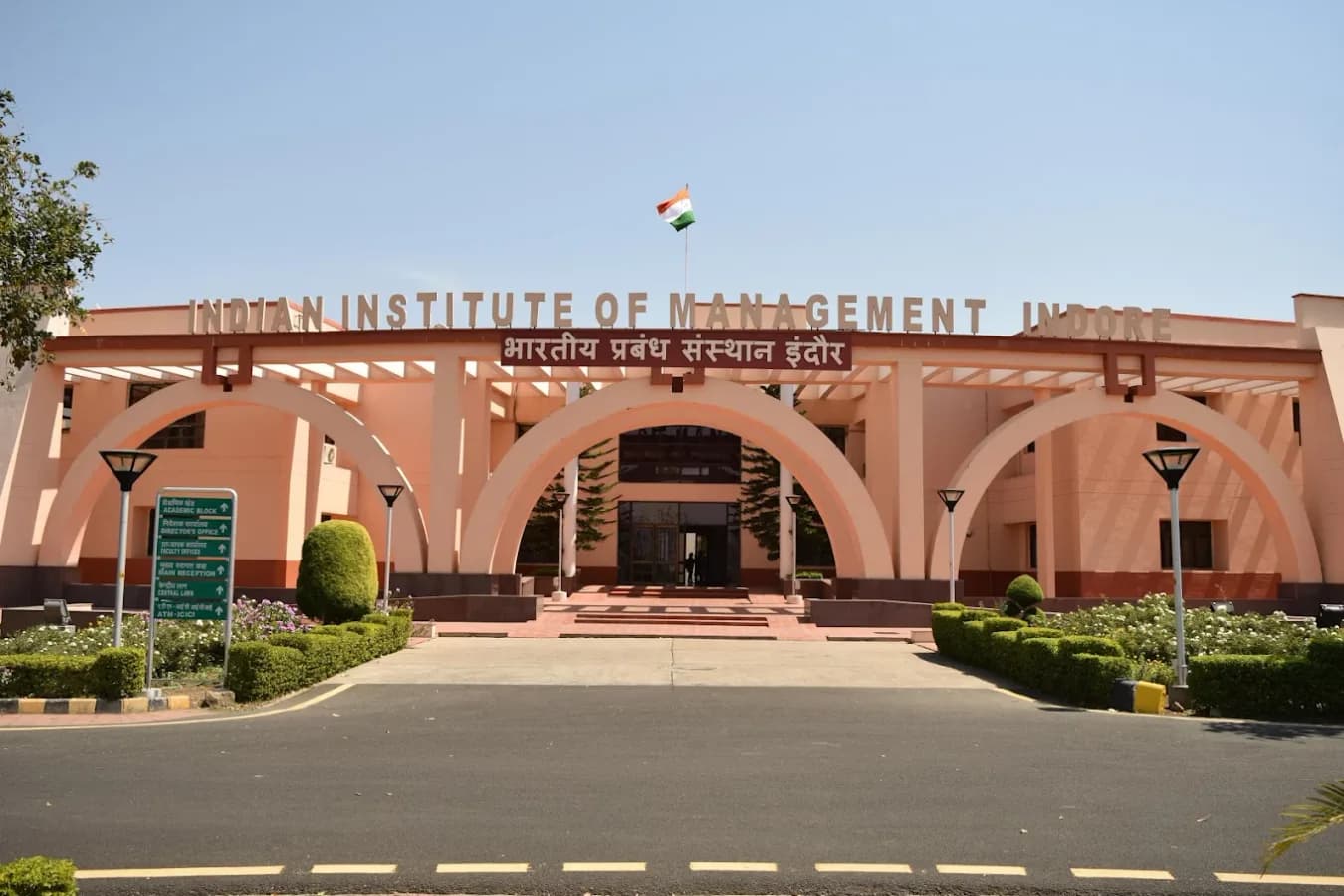

An Institution of Excellence With the objectives of imparting high-quality management education and training, the Department of Higher Education, Ministry of Education, Government of India, established the Indian Institute of Management Indore as an institution of excellence. These institutions are recognized as premier management institutions, comparable to the best in the world for teaching, research, and interaction with industries. Established in 1996, the Indian Institute of Management Indore (IIM Indore) has been a leader in the field of management education, interfacing with the industry, government, and PSUs. It is promoted and nurtured by the Ministry of Education, Government of India, and is an institute of national importance under the Indian Institutes of Management Act 2017. Situated atop a scenic hillock, the 193-acre campus of IIM Indore provides an ideal backdrop for contemplative learning. IIM Indore has the latest in teaching aids, rich learning resources, a strong IT backbone, state-of-the-art sports complex and hostels, and contemporary infrastructure.
Total Fees
₹54K - ₹44.8L
Total Courses
17
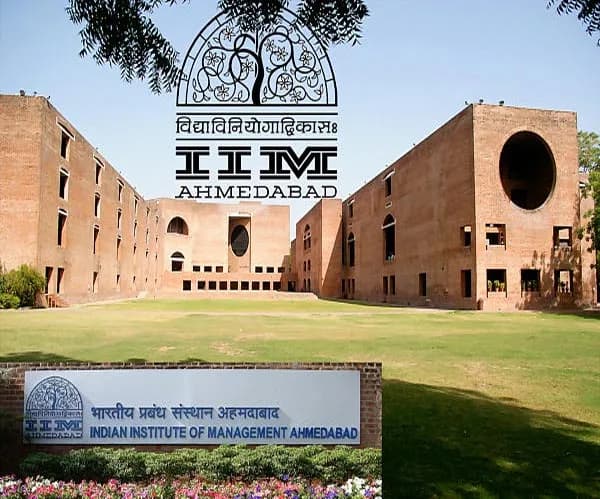

Located in the educational landscape of Ahmedabad, Gujarat, Indian Institute of Management Ahmedabad was established in 1961 to deliver transformative education. Conforming to regulatory norms of All India Council for Technical Education (AICTE) / UGC through its affiliation with Gujarat State University, the institution offers students an integrated foundation across business strategy, financial analytics, corporate governance, and entrepreneurial leadership. The campus is equipped with management simulation suites, modern boardroom presentation centers, and incubation hubs, creating an immersive environment for scholarly development and collaborative innovation. Dedicated to holistic student empowerment, the institution prepares ethical and career-ready professionals who contribute meaningfully to societal and industrial growth.
Total Fees
₹20L - ₹34.1L
Total Courses
6


Fostiima Business School is a private institute established in 2007 by alumni of the Indian Institute of Management, Ahmedabad (IIM-A) in New Delhi. It is AICTE-approved by the Ministry of Education, Government of India, and is affiliated to Guru Gobind Singh Indraprastha University, New Delhi (GGSIPU). The institute has been ranked 149 by Outlook under the Management Category in 2026. The institute offers PGDM as its flagship programme in 5 different specializations. To be eligible for admission to the MBA program, the candidate must pass graduation or equivalent from a recognised university with 50% marks in aggregate. Fostiima Business School Admission to the PGDM program is based on CAT/ XAT/ CMAT/ GMAT or FEAT (Fostiima Eligibility and Aptitude Test) Test score followed by a Group Discussion (GD) & Personal Interview (PI). In 2024, CAT overall cutoff percentile is 75 for the general category. The Total Tuition fee for the PGDM program is INR 11.5 Lakhs.
Total Fees
₹11.5L
Total Courses
1


Established in 1973, Indian Institute of Management Bangalore is a distinguished institution situated in Bengaluru Urban, Karnataka. Conforming to regulatory norms of All India Council for Technical Education (AICTE) / UGC through its affiliation with Karnataka State University, the institution offers students an integrated foundation across business strategy, financial analytics, corporate governance, and entrepreneurial leadership. The campus is equipped with management simulation suites, modern boardroom presentation centers, and incubation hubs, creating an immersive environment for scholarly development and collaborative innovation. By combining academic discipline with practical exposure, it equips emerging scholars to meet evolving demands in industry, academia, and public service.
Total Fees
₹4.5L - ₹34L
Total Courses
15


The Indian Institute of Management Calcutta (IIMC) was established as the first national institute for postgraduate studies and research in management by the Government of India in November 1961 in collaboration with the Alfred P. Sloan School of Management (MIT), the Government of West Bengal, the Ford Foundation, and Indian industry. During its initial years, several prominent faculty formed part of its nucleus, including Jagdish Sheth, J. K. Sengupta, and others. Over the years, IIMC has grown into a mature institution with a global reputation, imparting high-quality management education. It has been playing a pioneering role in professionalizing Indian management through its postgraduate and doctoral-level programs, executive training programs, and research and consulting activities. Today, the institute serves as an autonomous body, continually evolving to meet its goals in an ever-changing business environment.
Total Fees
₹40K - ₹33.5L
Total Courses
11


With an educational trajectory spanning 42 years since its inception in 1984, Indian Institute of Management Lucknow serves as a prominent seat of learning in Lucknow, Uttar Pradesh. The institution is affiliated with Uttar Pradesh State University and recognized by All India Council for Technical Education (AICTE) / UGC, imparting rigorous programs anchored in business strategy, financial analytics, corporate governance, and entrepreneurial leadership. The institution maintains robust academic resources including management simulation suites, modern boardroom presentation centers, and incubation hubs, fostering an active student life and practical competencies. Graduates of Indian Institute of Management Lucknow emerge as competent, socially conscious professionals poised to assume impactful roles in diverse professional domains.
Total Fees
₹10L - ₹26.3L
Total Courses
13
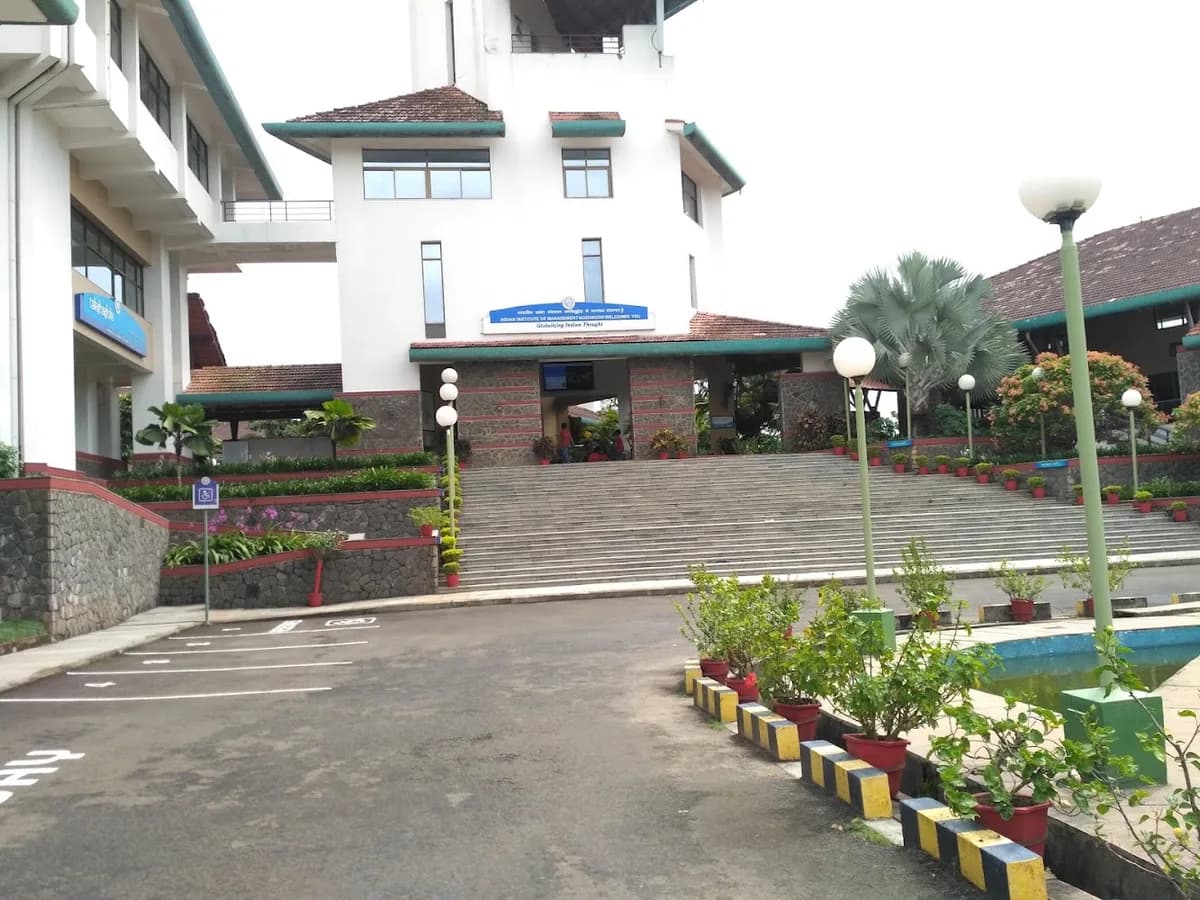

Established in 1996, Indian Institute of Management Kozhikode is a distinguished institution situated in Kozhikode, Kerala. Operating under the academic aegis of Kerala State University and recognized by All India Council for Technical Education (AICTE) / UGC, it provides structured degree programs emphasizing business strategy, financial analytics, corporate governance, and entrepreneurial leadership. The institution maintains robust academic resources including management simulation suites, modern boardroom presentation centers, and incubation hubs, fostering an active student life and practical competencies. Dedicated to holistic student empowerment, the institution prepares ethical and career-ready professionals who contribute meaningfully to societal and industrial growth.
Total Fees
₹83K - ₹29.9L
Total Courses
12
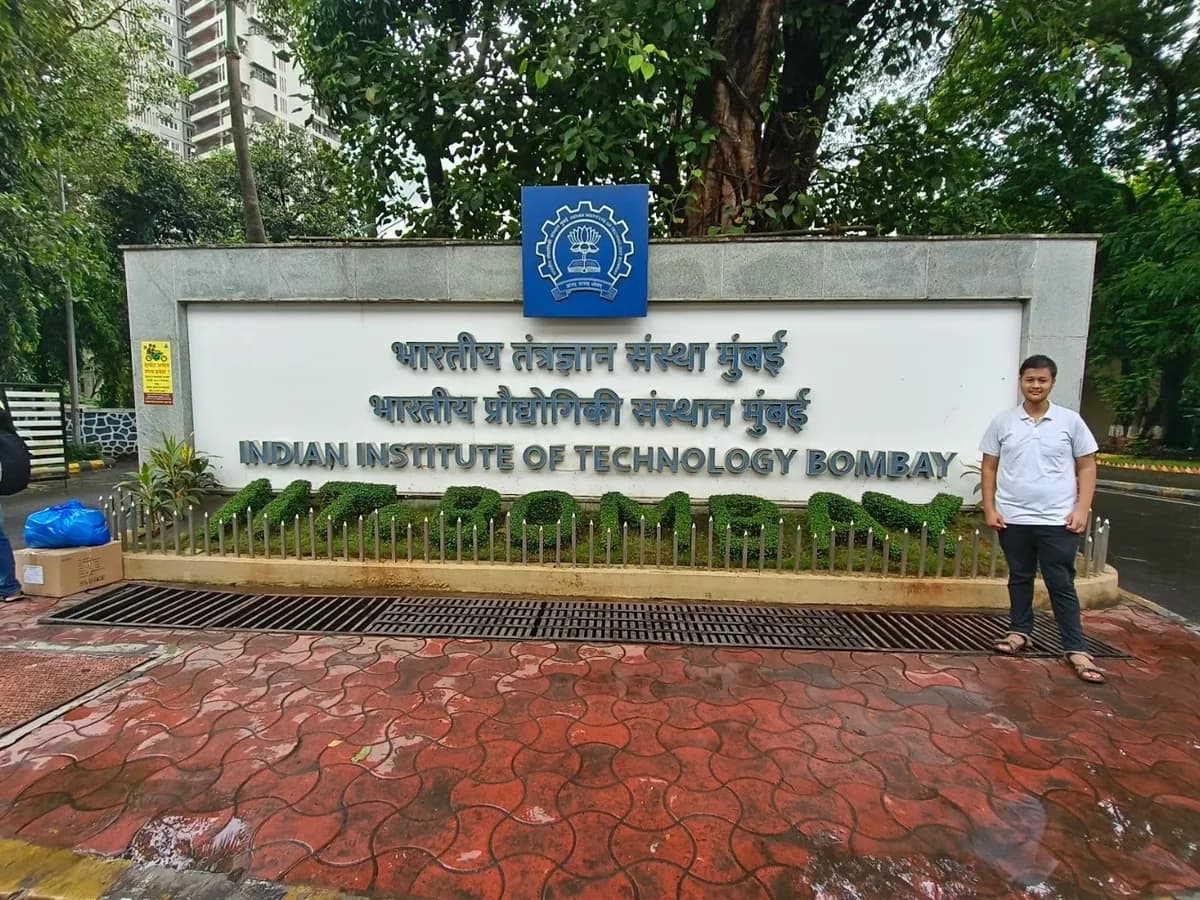

The Indian Institute of Technology Bombay (IIT Bombay or IITB) is a public research university and technical institute located in Mumbai, Maharashtra, India. Established in 1958, it is one of the 23 Indian Institutes of Technology, designated as an Institution of Eminence in 2018. IIT Bombay serves as a Centre of Excellence for India's training, research, and development in science, engineering, and technology. The institute comprises 17 academic departments, 35 additional academic centers, and three schools.
Total Fees
₹81K - ₹15.2L
Total Courses
9
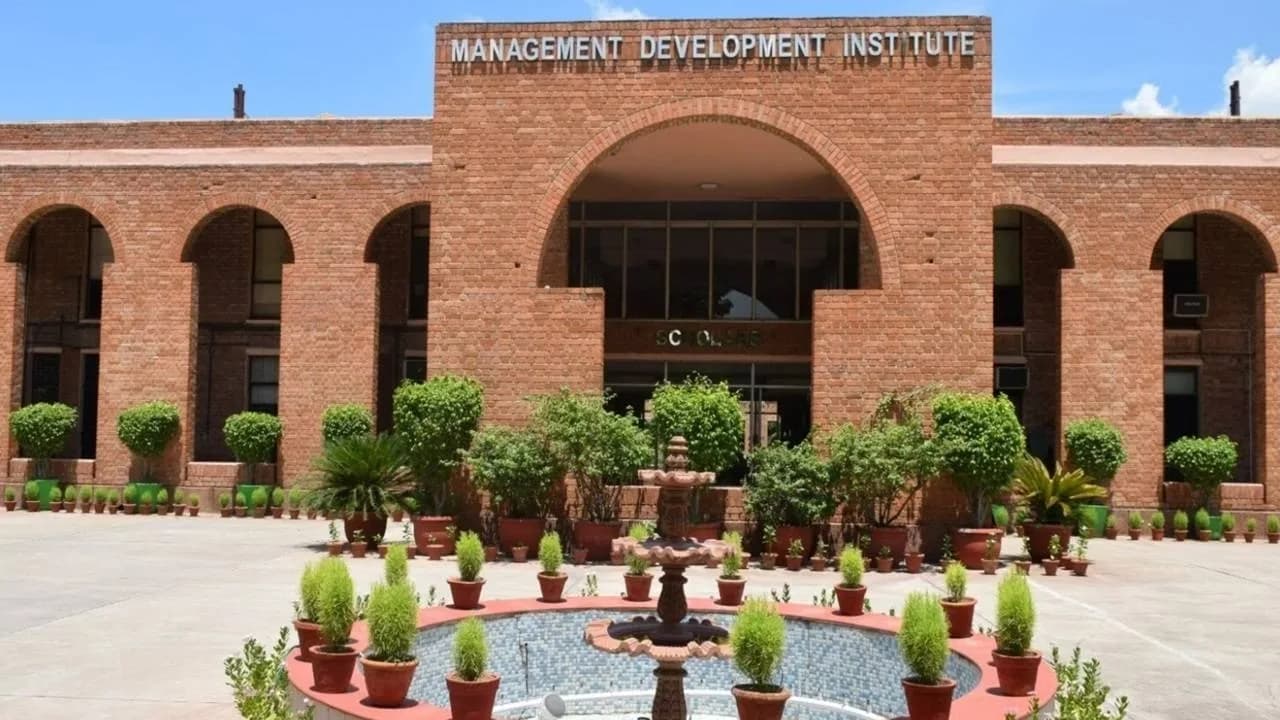

MDI Gurgaon is home to the leading management education programmes in India. Located in the heart of corporate hub Gurugram, MDI Gurgaon will transform you into a thought leader. Our programmes are about leadership, fresh thinking, and positive impact. Studying at MDI Gurgaon means being in the midst of a talented and collaborative community. It leads to building a lifelong network. We welcome diversity and encourage developing a global mindset.
Total Fees
₹11.5L - ₹26.6L
Total Courses
2


With an educational trajectory spanning 11 years since its inception in 2015, FACULTY OF MANAGEMENT STUDIES serves as a prominent seat of learning in Rajkot, Gujarat. Affiliated with Marwadi University and adhering to statutory benchmarks established by All India Council for Technical Education (AICTE) / UGC, the institution delivers specialized academic curricula centered on business strategy, financial analytics, corporate governance, and entrepreneurial leadership. Students benefit from contemporary infrastructure featuring management simulation suites, modern boardroom presentation centers, and incubation hubs, designed to support hands-on learning and comprehensive intellectual growth. By combining academic discipline with practical exposure, it equips emerging scholars to meet evolving demands in industry, academia, and public service.
Total Fees
₹75K - ₹2.3L
Total Courses
3

SP Jain college of Pharmacy and Research, Palaskheda, founded in 2018 in Jalgaon, Maharashtra, is a premier academic institution dedicated to higher learning. Affiliated with Dr. Babasaheb Ambedkar Technological University, Lonere and adhering to statutory benchmarks established by Pharmacy Council of India (PCI), the institution delivers specialized academic curricula centered on pharmaceutical formulation, pharmacology, clinical drug research, and medicinal chemistry. The institution maintains robust academic resources including instrumental analysis laboratories, pilot plant formulation suites, and pharmacognosy research units, fostering an active student life and practical competencies. Graduates of SP Jain college of Pharmacy and Research, Palaskheda emerge as competent, socially conscious professionals poised to assume impactful roles in diverse professional domains.
Total Fees
Contact for fees
Total Courses
5
Get More Info About CAT 2026 Exam Analysis
Recommended Reading

Best MBA College Predictor Tools in India 2027: Compare Features and Accuracy
Discover how MBA college predictors work, calculate your IIM composite score and explore MatchToCollege tools to shortlist suitable MBA universities in India.
CAT 2026 Answer Key and Response Sheet: Expected Release Date, Download Link and Objection Process
The CAT 2026 answer key and candidate response sheet are expected in early December after the November 29 examination. Check the expected release timeline, official website, download instructions, score calculation method and process for challenging incorrect answers.

B.Com, BBA or BA Economics at SAGE University Indore: Which Degree Fits Your Goals?
Students interested in business, finance, commerce or management may compare B.Com, BBA and BA Economics. These degrees can lead to overlapping career areas, but their academic emphasis differs. SAGE University Indore’s published