

Career Growth Paths: Marketing, Finance, HR, Operations & Analytics
Admission & Info Tools
Need Expert Assistance?
Our counselors can help you with fee structures, eligibility guidelines, and upcoming admission cutoffs instantly.
Direct Application Tools
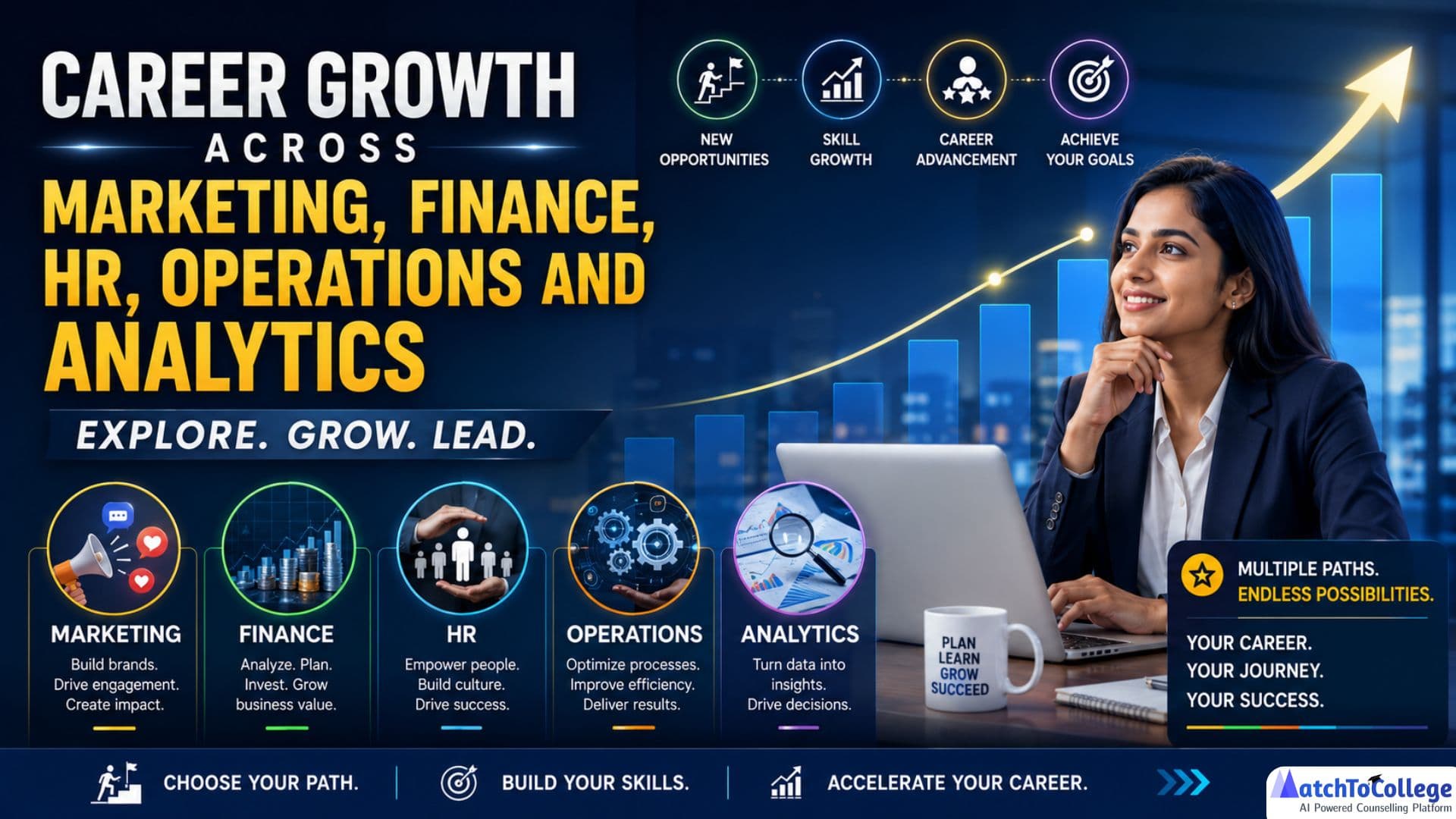
Career growth and professional development
Choosing the right career path can be challenging in today’s fast-changing job market. Industries are evolving, new roles are emerging, and employers are looking for professionals with specialized and adaptable skills.
To build a successful career, students need more than academic knowledge—they need a clear understanding of industry trends, future opportunities, and the skills required to succeed.
At MatchToCollege, we help students make informed education choices by connecting their interests, skills, and career goals with the right programs and opportunities.
Key Career Fields and Opportunities
| Field | Career Focus | Future Opportunities |
| Marketing | Customer insights, branding, digital strategies, and communication. | Digital marketing, AI-powered marketing, customer experience, growth strategy. |
| Finance | Financial planning, investments, risk management, and business decisions. | FinTech, financial analytics, investment management, digital finance. |
| Human Resources (HR) | Talent management, employee experience, and organizational development. | People analytics, AI-driven hiring, workforce strategy. |
| Operations | Improving efficiency, supply chains, and business processes. | Automation, supply chain technology, operational excellence. |
| Analytics | Data interpretation, insights, and decision-making. | Data science, business intelligence, AI analytics. |
Skills Needed for Future Success
| Skill | Why It Matters |
| Adaptability | Helps professionals adjust to changing industries and technologies. |
| Technology Skills | Supports digital transformation across all fields. |
| Problem-Solving | Enables better business decisions and innovation. |
| Communication | Helps professionals collaborate and lead effectively. |
| Analytical Thinking | Turns information into valuable insights. |
| Leadership | Prepares professionals for management and growth opportunities. |
How Industries Are Changing
| Industry | Major Transformation |
| Marketing | Moving toward digital platforms, personalization, and AI-driven customer insights. |
| Finance | Growing through fintech, automation, and advanced analytics. |
| HR | Shifting from administration to strategic workforce planning. |
| Operations | Using automation and technology to improve efficiency. |
| Analytics | Becoming central to business strategy and decision-making. |
Choosing the Right Education Path
Whether you are considering an MBA, engineering degree, or studying abroad, your education should align with:
- Your interests and strengths.
- Future industry demands.
- Career growth opportunities.
- Skills needed by employers.
How MatchToCollege Helps
| Support | Benefit |
| AI-Powered Guidance | Identify programs matching your goals and abilities. |
| Career Insights | Understand industry trends and future opportunities. |
| Personalized Recommendations | Choose courses aligned with your career vision. |
| Future Planning | Build a roadmap for long-term career success. |
Marketing, Finance, HR, Operations, and Analytics all offer exciting career opportunities, but success depends on choosing the right path and developing future-ready skills.
By understanding industry trends and aligning your education with your ambitions, you can build a career that is both rewarding and sustainable. With MatchToCollege, you can confidently plan your higher education journey and take the first step toward a successful future.
Navigating Dynamic Marketing & Analytics Careers
Marketing and Analytics are two powerful fields driving modern business growth. While Marketing focuses on understanding customers and creating impactful brand strategies, Analytics uses data to uncover insights and support smarter business decisions.
Both fields offer exciting career opportunities for professionals who combine creativity, technology, and problem-solving skills.
Marketing vs. Analytics Careers
| Field | Career Focus | Key Roles |
| Marketing | Building brands, engaging customers, and driving business growth. | Digital Marketing Specialist, Brand Manager, SEO Specialist, Content Strategist, Social Media Manager, PR Specialist. |
| Analytics | Using data to identify trends, solve problems, and improve decisions. | Data Analyst, Business Intelligence Specialist, Data Scientist, Marketing Analyst. |
Skills Needed for Success
| Marketing Skills | Analytics Skills |
| Creativity and storytelling | Statistical analysis |
| Communication skills | Data interpretation |
| Consumer behavior understanding | Programming (Python, R) |
| Digital marketing knowledge | Data visualization |
| Brand strategy | Machine learning basics |
| Trend awareness | Problem-solving |
How These Fields Are Evolving
| Area | Future Trends |
| Marketing | AI-powered personalization, influencer marketing, digital campaigns, and customer experience strategies. |
| Analytics | Predictive analytics, artificial intelligence, machine learning, and data-driven business decisions. |
Career Growth Opportunities
| Field | Growth Path |
| Marketing | Digital Marketing Specialist → Marketing Manager → Brand Director → Chief Marketing Officer (CMO). |
| Analytics | Data Analyst → Data Scientist → Analytics Manager → Chief Data Officer (CDO). |
Marketing and Analytics offer strong career opportunities for people with different strengths. Marketing rewards creativity, communication, and customer understanding, while Analytics suits those who enjoy data, technology, and problem-solving.
By continuously learning and developing specialized skills, professionals in both fields can build successful and future-ready careers.
Unlocking Potential in Finance & Operations
Finance and Operations are two essential functions that drive business success. While Finance focuses on managing money, investments, and financial decisions, Operations ensures businesses run efficiently through better processes, resource management, and execution.
Both fields offer strong career growth opportunities for professionals with analytical thinking, problem-solving abilities, and strategic decision-making skills.
Finance vs. Operations Careers
| Field | Career Focus | Key Roles |
| Finance | Managing financial resources, investments, risks, and business growth. | Financial Analyst, Investment Banker, Portfolio Manager, Risk Specialist, Auditor, FinTech Professional. |
| Operations | Improving processes, managing resources, and increasing business efficiency. | Operations Manager, Supply Chain Analyst, Project Manager, Quality Manager, Process Improvement Specialist. |
Skills Needed for Success
| Finance Skills | Operations Skills |
| Financial analysis | Process optimization |
| Market understanding | Strategic planning |
| Risk management | Supply chain management |
| Attention to detail | Project management |
| Ethical decision-making | Problem-solving |
| Data and technology skills | Organizational skills |
How These Fields Are Evolving
| Area | Future Trends |
| Finance | Growth of FinTech, digital payments, blockchain, algorithmic trading, and financial analytics. |
| Operations | Focus on automation, sustainable supply chains, global logistics, and operational excellence. |
Career Growth Opportunities
| Field | Growth Path |
| Finance | Financial Analyst → Finance Manager → Investment/Strategy Leader → CFO. |
| Operations | Operations Associate → Operations Manager → Supply Chain Leader → COO. |
Professional Development
| Finance | Operations |
| CFA (Chartered Financial Analyst) | Lean Management Certifications |
| CFP (Certified Financial Planner) | Project Management Certifications |
| Financial Technology Skills | Supply Chain Certifications |
| Data Analytics Knowledge | Process Improvement Skills |
Finance and Operations offer rewarding careers for professionals who enjoy strategy, analysis, and improving business performance. Finance professionals help organizations make smart financial decisions, while operations leaders ensure businesses deliver efficiently.
With technology reshaping both fields, professionals who combine industry knowledge with digital skills will have strong opportunities for leadership and long-term career growth.
The Evolving Landscape of HR & People Management
Human Resources (HR) has transformed from a traditional administrative function into a strategic business partner that plays a key role in organizational growth. Today, HR professionals focus on attracting talent, building company culture, improving employee experience, and using data to make smarter workforce decisions.
The future of HR combines human understanding with technology, creating exciting career opportunities for professionals with strong communication, leadership, and analytical skills.
HR vs. People Analytics Careers
| Field | Career Focus | Key Roles |
| Human Resources (HR) | Managing people, culture, talent, and employee development. | HR Business Partner, Talent Acquisition Specialist, Learning & Development Manager, Diversity & Inclusion Officer. |
| People Analytics | Using data to improve workforce decisions and HR strategies. | People Analytics Specialist, Workforce Analyst, HR Data Analyst. |
Skills Needed for Success
| HR Skills | People Analytics Skills |
| Communication skills | Data analysis |
| Emotional intelligence | Data visualization |
| Negotiation abilities | Statistical understanding |
| Employee relationship management | Predictive analytics |
| Organizational psychology | HR technology knowledge |
| Leadership skills | Problem-solving |
How HR Is Evolving
| Area | Future Trends |
| Talent Management | Focus on attracting, developing, and retaining top talent. |
| HR Technology | Increased use of AI tools for hiring, learning, and employee management. |
| Employee Experience | Greater focus on workplace culture, engagement, and well-being. |
| People Analytics | Data-driven decisions for workforce planning and performance improvement. |
Career Growth Opportunities
| Field | Growth Path |
| HR | HR Specialist → HR Manager → HR Business Partner → Chief Human Resources Officer (CHRO). |
| People Analytics | HR Analyst → People Analytics Manager → Workforce Strategy Leader. |
Key Areas of Impact
| HR Function | Business Impact |
| Talent Acquisition | Helps organizations hire the right people. |
| Learning & Development | Builds employee skills and future leaders. |
| Employee Engagement | Improves productivity and retention. |
| People Analytics | Enables smarter, data-driven workforce decisions. |
Modern HR is no longer just about managing employees—it is about building organizations through people, culture, and technology.
Professionals who combine emotional intelligence, HR expertise, and data skills will be well-positioned for future leadership roles. Careers in HR and People Analytics offer strong opportunities for those who want to create meaningful impact by connecting human potential with business success.
Share this Article
FAQFrequently Asked Questions
Q: Which career path (Marketing, Finance, HR, Operations, Analytics) offers the best long-term growth?
The 'best' path depends on individual strengths and interests. However, all five fields offer significant long-term growth potential. Analytics is consistently high-demand due to data's growing importance. Finance remains robust with new fintech opportunities. Marketing is ever-evolving with digital trends. Operations is critical for efficiency, and HR is becoming increasingly strategic with people analytics. Focusing on developing cross-functional skills and adaptability is key for growth in any of these areas.
Q: How important is a specific degree or higher education for these careers?
A relevant degree is highly beneficial and often foundational. For Finance, a degree in finance, economics, or accounting is standard. Marketing often benefits from business, communications, or marketing degrees. HR can stem from psychology, human resources, or business degrees. Operations often requires engineering, supply chain management, or business degrees. Analytics strongly benefits from degrees in statistics, data science, computer science, or mathematics. Many professionals also pursue MBAs or specialized master's degrees to accelerate their career growth and gain leadership skills, especially in competitive fields.
Get More Info About Career Growth Paths
Recommended Reading
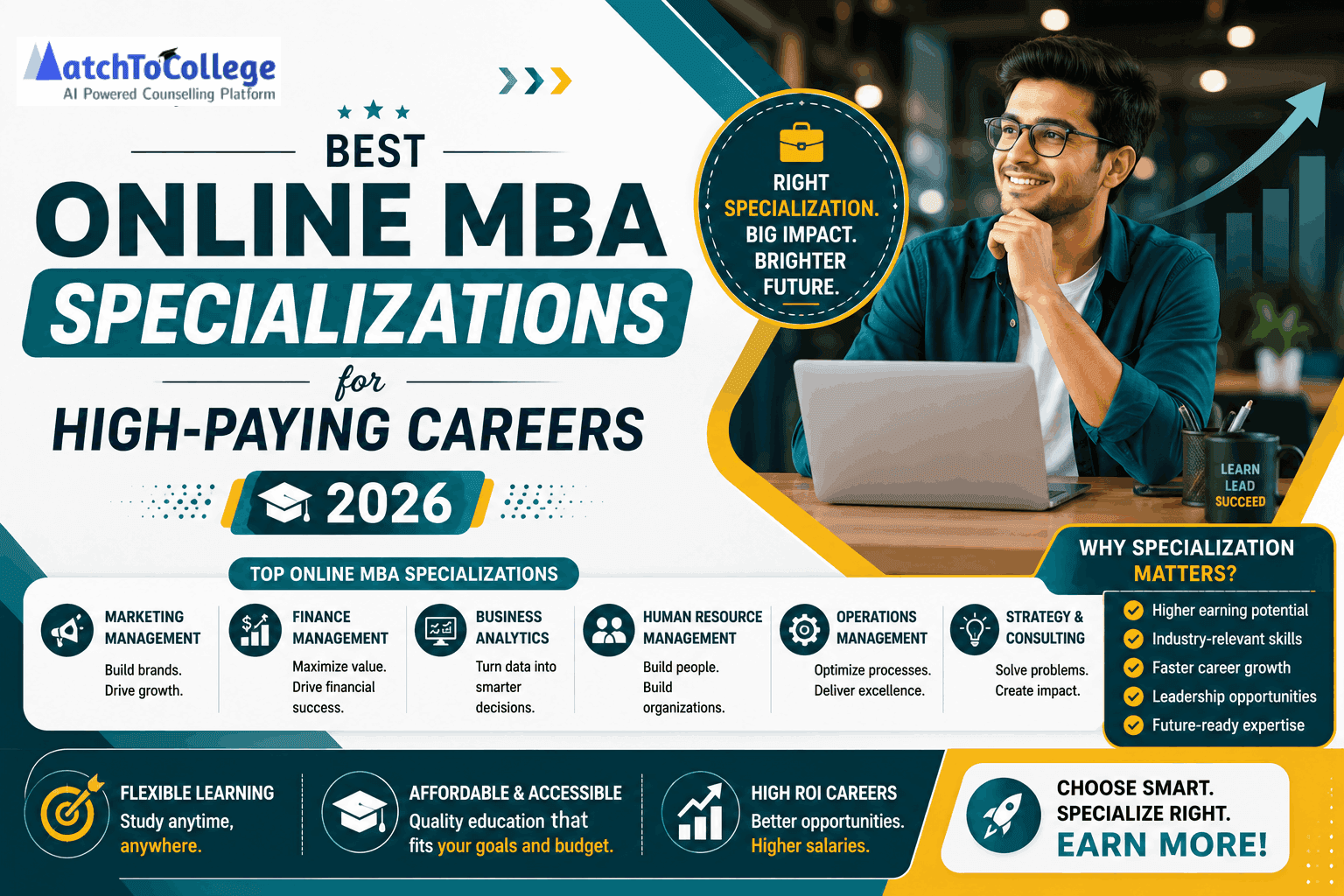
Best Online MBA Specializations for High-Paying Careers 2026
Discover the most lucrative online MBA specializations for 2026-27. Compare ROI, career growth, and use our AI tools to find your perfect management path.

Top Career Opportunities After an Online MBA in 2026-27
Discover high-paying career paths and roles after an online MBA in 2026-27. Explore salary trends, ROI, and tools to navigate your future professional success.

Tax Deductions on Higher Education: 2026-27 India Guide
Maximize your savings with our guide on tax deductions for higher education fees in India for FY 2026-27. Learn about Section 80C, 80E, and upskilling benefits.