

Build a High-Impact R&D Career: Your Ultimate Guide
Admission & Info Tools
Need Expert Assistance?
Our counselors can help you with fee structures, eligibility guidelines, and upcoming admission cutoffs instantly.
Direct Application Tools
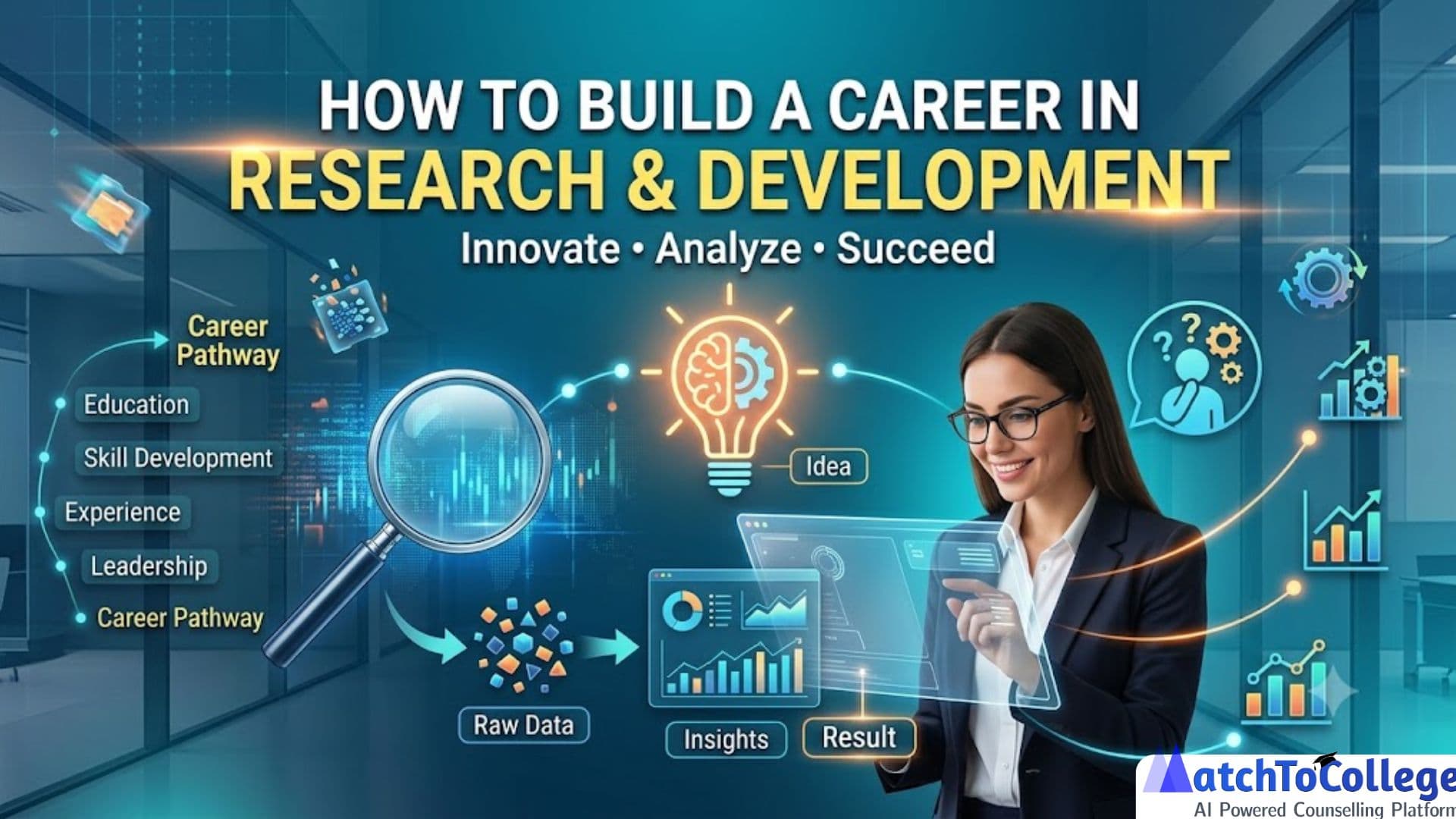
Master Research and Development Success
Research & Development (R&D) is one of the most exciting and rewarding career paths for students passionate about innovation, science, and technology. R&D professionals develop new ideas, improve existing products, solve complex challenges, and drive advancements across industries. From life-saving medicines and sustainable energy solutions to artificial intelligence and next-generation technologies, R&D plays a vital role in shaping the future.
As industries continue to invest in innovation, the demand for skilled R&D professionals is growing rapidly. A career in Research & Development offers excellent opportunities for intellectual growth, global exposure, long-term career stability, and competitive salaries.
However, entering this field requires the right academic foundation, technical skills, and career planning. Understanding the educational pathways, specialization options, and industry expectations is the first step toward building a successful R&D career.
Why Choose a Career in Research & Development?
Research & Development offers opportunities to create innovative solutions that improve lives, industries, and society.
Key Benefits
| Benefit | Description |
| Innovation | Develop new technologies, products, and scientific discoveries. |
| Career Growth | High demand across research organizations and industries. |
| Global Opportunities | Work with leading universities, laboratories, startups, and multinational companies. |
| Competitive Salaries | Attractive compensation with long-term career stability. |
| Meaningful Impact | Contribute to advancements in healthcare, technology, sustainability, and science. |
Industries Hiring R&D Professionals
Research & Development careers are available across multiple sectors.
- Pharmaceuticals
- Biotechnology
- Healthcare
- Artificial Intelligence
- Information Technology
- Aerospace
- Automotive
- Renewable Energy
- Electronics
- Agriculture
- Materials Science
- Environmental Science
Each industry offers opportunities to solve real-world problems through research and innovation.
What You'll Learn in This Guide
This guide will help you understand:
- Educational pathways for an R&D career
- Essential technical and research skills
- Popular R&D specializations
- Career opportunities across industries
- Practical steps to build a successful research career
- How MatchToCollege helps you choose the right academic program
How MatchToCollege Helps You
Choosing the right university and specialization is essential for a successful career in Research & Development.
MatchToCollege's AI-powered higher education counselling platform helps students:
- Discover top universities for research-focused programs.
- Find courses that match their interests and career goals.
- Compare institutions based on research facilities and industry collaborations.
- Receive personalized admission guidance.
- Explore scholarships, internships, and higher education opportunities worldwide.
With the right guidance and academic planning, you can confidently pursue a rewarding career in Research & Development and become part of the next generation of innovators driving global progress.
Educational Foundations: The Academic Path to R&D Excellence
Build a Strong Educational Foundation
A strong educational background is the first step toward a successful career in Research & Development (R&D). Most R&D careers require a solid foundation in STEM (Science, Technology, Engineering, and Mathematics) disciplines, along with hands-on research experience and technical expertise.
Your academic journey should focus on developing analytical thinking, research skills, and subject-specific knowledge that prepare you for innovation-driven careers.
Academic Pathway for an R&D Career
The educational requirements vary depending on your career goals and specialization.
| Degree | Duration | What You'll Learn | Career Opportunities |
| Bachelor's Degree (B.Sc./B.Tech./B.E.) | 3–4 Years | Core scientific and technical knowledge, laboratory skills, research fundamentals | Research Assistant, Junior R&D Engineer, Laboratory Associate |
| Master's Degree (M.Sc./M.Tech./M.Eng.) | 1–2 Years | Advanced specialization, research methodology, thesis/project work | R&D Scientist, Product Development Engineer, Research Associate |
| Ph.D. (Doctorate) | 3–5+ Years | Independent research, innovation, advanced problem-solving, dissertation | Senior Research Scientist, Principal Investigator, R&D Manager, Professor |
Choose the Right Undergraduate Program
Your bachelor's degree builds the foundation for future research opportunities.
Popular undergraduate programs include:
- Physics
- Chemistry
- Biology
- Biotechnology
- Computer Science
- Data Science
- Artificial Intelligence
- Electrical Engineering
- Mechanical Engineering
- Chemical Engineering
- Biomedical Engineering
- Materials Science
- Mathematics
Look for universities that offer:
- Undergraduate research opportunities
- Modern laboratories
- Industry-sponsored projects
- Internship programs
- Faculty-led research initiatives
Advance Your Knowledge with a Master's Degree
A master's degree provides specialized knowledge and practical research experience.
Benefits of a Master's Degree
- Gain expertise in a specialized field.
- Work on industry-based or academic research projects.
- Complete a thesis or capstone project.
- Develop advanced laboratory and analytical skills.
- Improve career opportunities in industrial R&D.
For many research positions in industry, a master's degree is highly preferred.
Pursue a Ph.D. for Research Leadership
A Ph.D. is ideal for students who aspire to become independent researchers, innovation leaders, or university faculty members.
During a doctoral program, you will:
- Conduct original research.
- Publish research papers in academic journals.
- Solve complex scientific or engineering problems.
- Collaborate with researchers worldwide.
- Contribute new knowledge to your field.
A Ph.D. also opens opportunities in academia, government research organizations, multinational companies, and advanced technology sectors.
Tips for Choosing the Right University
When selecting a university for R&D-focused studies, consider:
- Research facilities and laboratories
- Faculty expertise
- Industry collaborations
- Internship opportunities
- Research funding and scholarships
- Publication and patent opportunities
- Placement record in R&D organizations
Choosing the right institution can significantly influence your research experience and future career growth.
How MatchToCollege Can Help
Finding the right university is a crucial step toward a successful R&D career.
MatchToCollege's AI-powered higher education counselling platform helps you:
- Discover top universities for research-focused programs.
- Compare institutions based on faculty, laboratories, and research output.
- Find programs aligned with your interests and career goals.
- Receive personalized admission guidance.
- Explore scholarships, internships, and global research opportunities.
With the right education and expert guidance, you can build a strong foundation for a rewarding career in Research & Development and become part of the next generation of innovators.
Essential Skills & Qualities for R&D Success
Academic qualifications provide the foundation for a career in Research & Development (R&D), but employers also look for professionals with strong technical, analytical, and interpersonal skills. Building these competencies will help you solve complex problems, drive innovation, and succeed in research-driven environments.
Key Skills Every R&D Professional Needs
1. Critical Thinking & Problem-Solving
Research is all about finding solutions to complex challenges. Strong critical thinking enables you to analyze problems, evaluate evidence, and develop innovative solutions.
Why It Matters
- Analyze complex research problems
- Identify root causes
- Develop creative and practical solutions
- Make evidence-based decisions
2. Analytical & Data Interpretation Skills
Modern research generates large volumes of data. The ability to analyze, interpret, and visualize data is essential for making accurate conclusions and guiding future research.
Essential Skills
- Data analysis
- Statistical interpretation
- Data visualization
- Experimental evaluation
- Evidence-based decision-making
3. Curiosity & Persistence
Successful researchers are driven by curiosity and a passion for discovery. Since research often involves trial and error, persistence is essential for overcoming setbacks and achieving meaningful results.
Key Qualities
- Passion for learning
- Scientific curiosity
- Resilience during failures
- Patience throughout long-term projects
- Commitment to continuous improvement
4. Collaboration & Communication
Research is a collaborative process that involves working with multidisciplinary teams, industry experts, and academic professionals. Strong communication skills help you share ideas, present findings, and contribute effectively to team projects.
Important Communication Skills
- Technical writing
- Research report preparation
- Presentation skills
- Team collaboration
- Scientific discussions
- Grant proposal writing
5. Continuous Learning & Adaptability
Technology and scientific knowledge evolve rapidly. R&D professionals must stay updated with emerging trends, research tools, and industry advancements.
Ways to Stay Updated
- Attend workshops and conferences
- Read research journals
- Complete online certifications
- Learn new software and laboratory techniques
- Follow advancements in your field
6. Attention to Detail
Accuracy is critical in every stage of research, from experimental design to data collection and reporting. Small errors can significantly impact research outcomes.
Why It Is Important
- Ensure accurate experiments
- Maintain reliable data
- Produce reproducible results
- Improve research quality
- Follow ethical research standards
Essential Skills at a Glance
| Skill | Why It Is Important |
| Critical Thinking | Solves complex research problems and supports innovation. |
| Analytical Skills | Interprets data and generates meaningful insights. |
| Curiosity & Persistence | Drives continuous learning and successful experimentation. |
| Communication | Enables effective collaboration and presentation of research findings. |
| Adaptability | Keeps researchers updated with evolving technologies and methodologies. |
| Attention to Detail | Ensures accuracy, reliability, and research integrity. |
Tips to Build These Skills
- Participate in undergraduate or postgraduate research projects.
- Complete internships in research laboratories or R&D organizations.
- Learn data analysis tools such as Python, R, MATLAB, or Excel.
- Practice scientific writing and presentation skills.
- Join innovation clubs, hackathons, and research competitions.
- Attend seminars, conferences, and technical workshops.
- Work on collaborative academic and industry projects.
A successful career in Research & Development requires much more than academic excellence. Employers seek professionals who combine technical expertise with critical thinking, analytical ability, curiosity, adaptability, collaboration, and strong communication skills. By continuously developing these competencies alongside your education, you'll be well-prepared to contribute to innovation, solve real-world challenges, and build a rewarding career in R&D.
Navigating R&D Sectors: Industry vs. Academia
A career in Research & Development (R&D) offers opportunities across both industry and academia. Each environment has its own objectives, work culture, and career growth prospects. Understanding these differences can help you choose the path that best aligns with your interests, strengths, and long-term career goals.
Industry R&D: Driving Innovation and Product Development
Industry R&D focuses on developing new products, improving existing technologies, and creating innovative solutions that meet market demands. Professionals work in sectors such as pharmaceuticals, biotechnology, engineering, automotive, information technology, electronics, and consumer products.
Key Features of Industry R&D
| Feature | Description |
| Innovation Focus | Develop new products, technologies, and commercial solutions. |
| Fast-Paced Environment | Work on projects with defined timelines and business objectives. |
| Team Collaboration | Collaborate with engineers, scientists, designers, and business professionals. |
| Real-World Impact | Research results are transformed into products and services used by customers. |
| Career Growth | Opportunities for technical leadership, product development, and management roles. |
Common Career Roles
- Research Scientist
- R&D Engineer
- Product Development Scientist
- Innovation Specialist
- Process Development Engineer
- Technology Consultant
Academic R&D: Advancing Knowledge Through Research
Academic R&D focuses on expanding scientific knowledge through original research. Researchers work in universities, research institutes, and government laboratories, contributing to scientific discoveries and educating future professionals.
Key Features of Academic R&D
| Feature | Description |
| Research Freedom | Explore research topics based on scientific interest and societal needs. |
| Long-Term Projects | Conduct in-depth studies over several years. |
| Teaching and Mentorship | Guide undergraduate, postgraduate, and doctoral students. |
| Publications | Publish research findings in peer-reviewed journals and conferences. |
| Knowledge Creation | Contribute new theories, discoveries, and scientific advancements. |
Common Career Roles
- Research Fellow
- University Professor
- Principal Investigator
- Research Associate
- Postdoctoral Researcher
- Government Scientist
Industry R&D vs Academic R&D
| Aspect | Industry R&D | Academic R&D |
| Primary Goal | Product innovation and commercial applications | Scientific discovery and knowledge creation |
| Work Environment | Corporate organizations and private companies | Universities and research institutions |
| Project Duration | Short- to medium-term | Long-term research projects |
| Success Measured By | Product development, patents, business impact | Publications, research impact, grants |
| Collaboration | Cross-functional business and technical teams | Researchers, faculty, and students |
| Career Opportunities | Product development, innovation, management | Teaching, research, academic leadership |
How to Choose the Right Career Path
Consider the following when deciding between industry and academic research:
- Your long-term career goals
- Interest in product development or scientific discovery
- Preferred work environment
- Passion for teaching and mentoring
- Desire to publish research or develop commercial innovations
- Interest in leadership, entrepreneurship, or higher education
Choosing the right path depends on your interests, strengths, and professional aspirations.
Research & Development offers rewarding careers in both industry and academia. Industry R&D focuses on innovation, product development, and commercial impact, while academic R&D emphasizes scientific discovery, research publications, and knowledge creation. Understanding the differences between these career paths will help you make informed decisions and build a successful future in research and innovation.
Strategies for Landing Your Dream R&D Role
A successful career in Research & Development (R&D) requires more than academic qualifications. Employers seek candidates with practical experience, technical expertise, problem-solving abilities, and a genuine passion for innovation. By taking the right steps during your academic journey, you can significantly improve your career prospects in research-focused roles.
1. Gain Hands-On Research Experience
Practical research experience strengthens your technical knowledge and demonstrates your ability to apply classroom learning to real-world challenges.
Opportunities to Build Experience
- Participate in undergraduate or postgraduate research projects.
- Apply for internships in research laboratories or R&D organizations.
- Join faculty-led research as a research assistant.
- Work on industry-sponsored projects.
- Participate in innovation challenges, hackathons, and research competitions.
Practical experience helps you develop laboratory skills, research methodologies, and problem-solving capabilities that employers highly value.
2. Build a Strong Professional Network
Networking helps you discover career opportunities, gain industry insights, and connect with experienced researchers.
Ways to Expand Your Network
- Attend research conferences and seminars.
- Participate in technical workshops and webinars.
- Join professional associations related to your field.
- Connect with researchers and industry experts on LinkedIn.
- Engage with university alumni and faculty members.
Building professional relationships can lead to internships, research collaborations, mentorship, and future job opportunities.
3. Create an Impressive Research Portfolio
A well-organized portfolio showcases your technical expertise, research experience, and academic achievements.
Include the Following
| Portfolio Component | Purpose |
| Research Projects | Demonstrate your practical research experience. |
| Publications | Showcase academic contributions and research impact. |
| Technical Skills | Highlight laboratory techniques, programming languages, and software tools. |
| Patents or Innovations | Display original ideas and technological contributions. |
| Presentations & Certifications | Demonstrate continuous learning and professional development. |
A strong portfolio helps employers evaluate your capabilities beyond your academic qualifications.
4. Customize Every Job Application
Avoid submitting the same resume for every position. Tailor your application to match the employer's requirements.
Before Applying
- Review the job description carefully.
- Highlight relevant research experience.
- Emphasize technical and analytical skills.
- Include publications, projects, and internships.
- Write a personalized cover letter explaining your interest in the role.
A customized application increases your chances of being shortlisted.
5. Prepare for Technical Interviews
R&D interviews often assess your technical knowledge, research methodology, and problem-solving abilities.
Common Interview Topics
- Research projects and practical experience
- Experimental design and methodology
- Data analysis and interpretation
- Technical concepts related to your specialization
- Problem-solving scenarios
- Teamwork and communication skills
Practice explaining your research clearly and confidently while demonstrating logical thinking and scientific reasoning.
Career Preparation Checklist
| Step | Why It Matters |
| Gain Research Experience | Develop practical skills and industry exposure. |
| Build a Professional Network | Access mentorship, collaborations, and career opportunities. |
| Create a Research Portfolio | Showcase your projects, publications, and technical expertise. |
| Customize Job Applications | Improve your chances of securing interviews. |
| Prepare for Interviews | Demonstrate technical knowledge and research capabilities confidently. |
How MatchToCollege Can Support Your Journey
Planning an R&D career begins with choosing the right educational pathway.
MatchToCollege's AI-powered higher education counselling platform helps students:
- Discover top universities with strong research programs.
- Compare institutions based on research facilities, faculty expertise, and industry partnerships.
- Find courses aligned with career goals.
- Receive personalized admission guidance.
- Explore scholarships, internships, and global research opportunities.
With the right education, practical experience, and expert guidance, you can confidently build a successful and rewarding career in Research & Development.
Building a career in Research & Development is a long-term journey that requires continuous learning, practical experience, and strategic career planning. By gaining hands-on research experience, developing a strong professional network, creating an impressive portfolio, preparing thoroughly for interviews, and choosing the right academic pathway, you can position yourself for success in one of the world's most innovative and impactful career fields.
Share this Article
FAQFrequently Asked Questions
Q: What degrees are typically required for an R&D career?
A Bachelor's degree in a STEM field is the minimum, but a Master's or Ph.D. often provides a significant advantage, especially for advanced or leadership roles. A Ph.D. is frequently required for independent research or academic positions.
Q: What are the most important skills for R&D professionals?
Key skills include critical thinking, problem-solving, analytical skills, data interpretation, curiosity, persistence, strong communication (written and verbal), collaboration, and a commitment to continuous learning and adaptability.
Q: How can MatchToCollege help me pursue an R&D career?
MatchToCollege can assist by helping you identify top universities and programs that align with your R&D interests, guiding you through the admissions process, and offering insights into career pathways and skill development necessary for success in the research and development field.
Get More Info About Build a High-Impact R&D Career
Recommended Reading
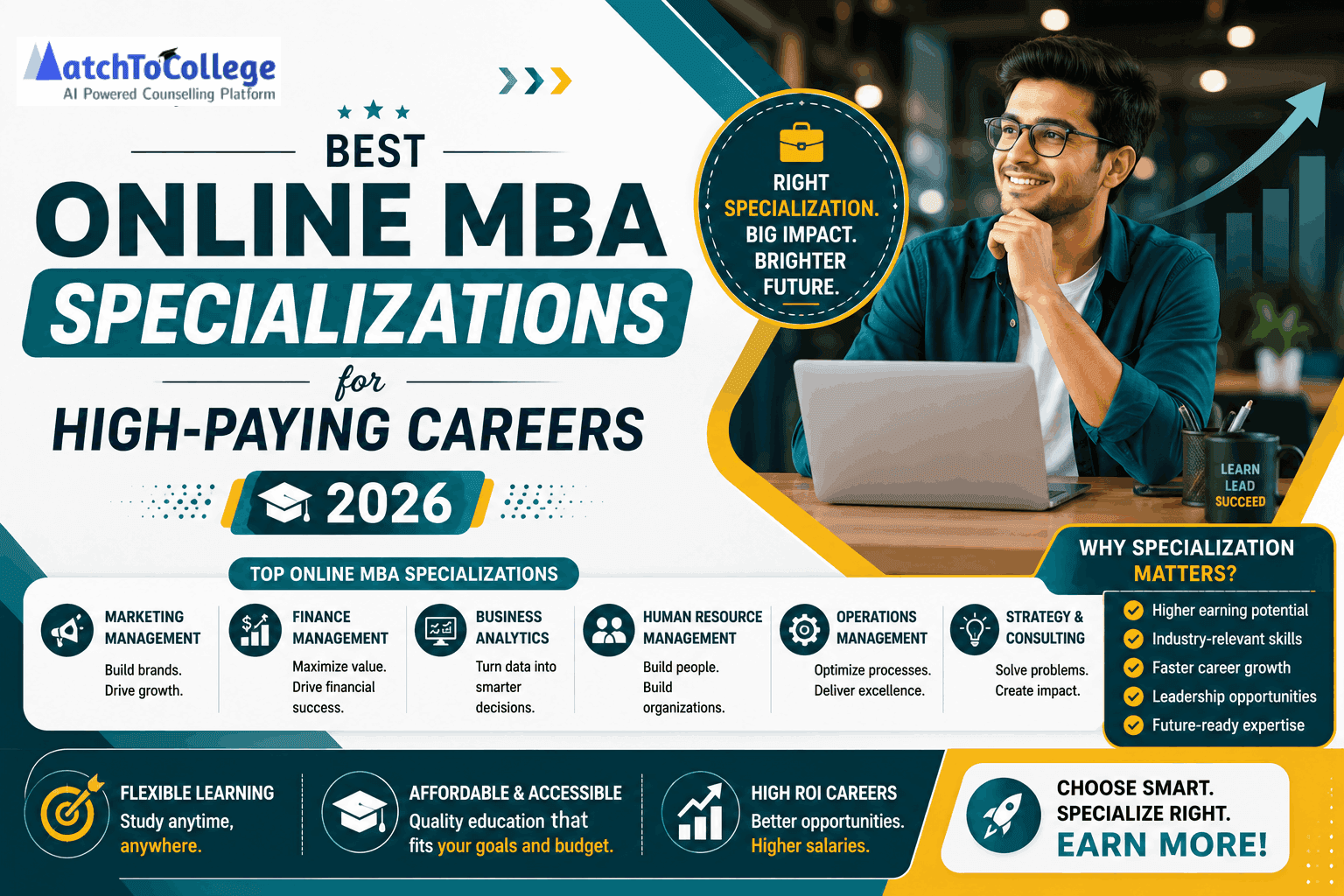
Best Online MBA Specializations for High-Paying Careers 2026
Discover the most lucrative online MBA specializations for 2026-27. Compare ROI, career growth, and use our AI tools to find your perfect management path.

Top Career Opportunities After an Online MBA in 2026-27
Discover high-paying career paths and roles after an online MBA in 2026-27. Explore salary trends, ROI, and tools to navigate your future professional success.

Tax Deductions on Higher Education: 2026-27 India Guide
Maximize your savings with our guide on tax deductions for higher education fees in India for FY 2026-27. Learn about Section 80C, 80E, and upskilling benefits.