

Bio-Hacking for Exams: 5 science-backed ways to improve focus without caffeine
Admission & Info Tools
Need Expert Assistance?
Our counselors can help you with fee structures, eligibility guidelines, and upcoming admission cutoffs instantly.
Direct Application Tools
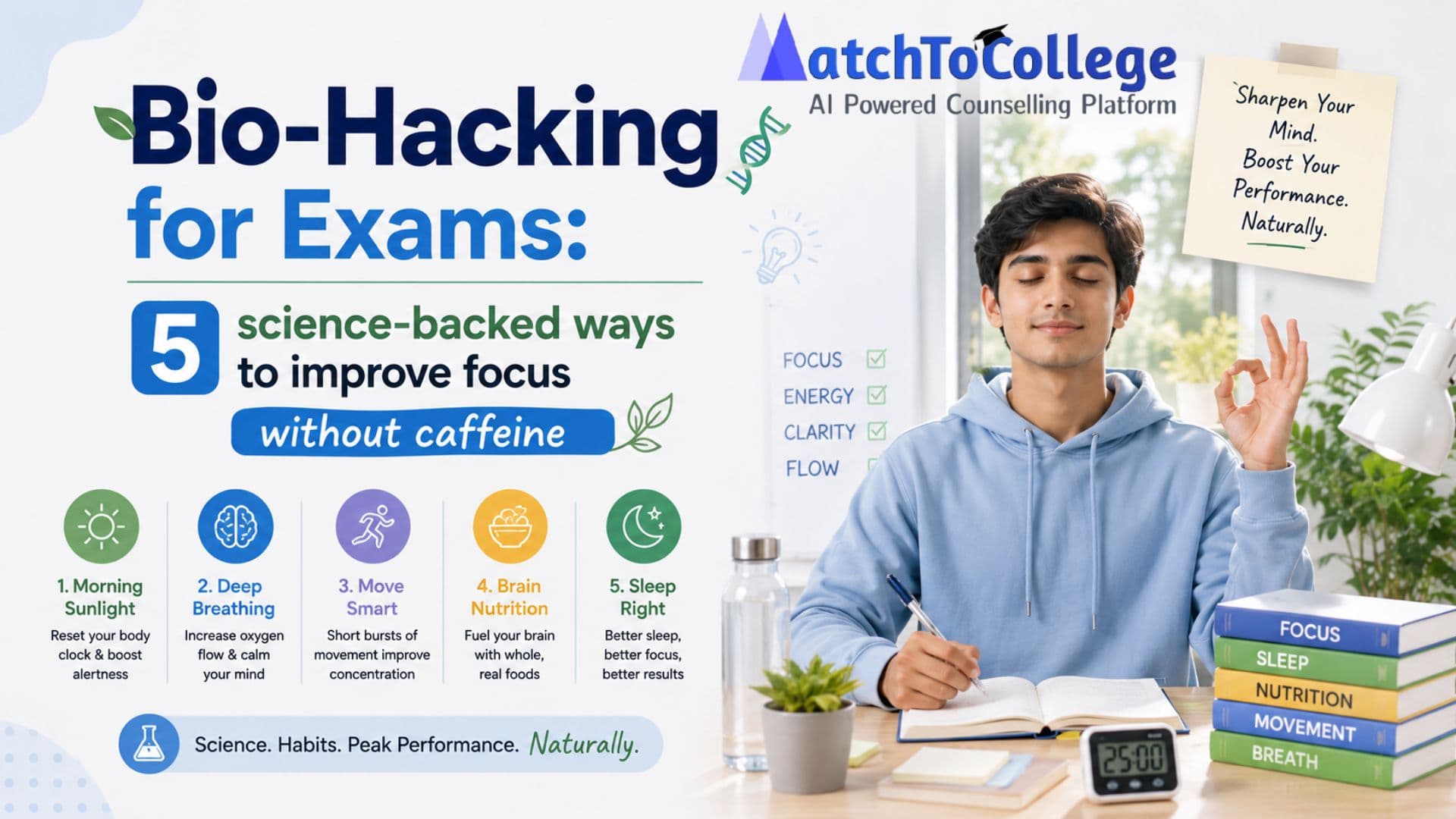
Boost Exam Focus Naturally Daily
The pressure of exams can be overwhelming. Many students instinctively reach for coffee or energy drinks to power through late-night study sessions, hoping for an edge. While caffeine offers a temporary jolt, it often leads to a dreaded crash, jitters, and disrupted sleep – precisely what you don't need when your academic future is on the line. But what if there was a better way? A way to naturally enhance your cognitive function, sharpen your focus, and sustain your energy without the artificial highs and lows?
Welcome to the world of bio-hacking for exams. This isn't about complex gadgets or expensive supplements; it's about leveraging the inherent power of your body and mind through science-backed strategies. This guide will walk you through five actionable, science-backed methods to naturally elevate your concentration, improve your memory, and reduce exam stress. These techniques aren't just for tests; they are invaluable tools for lifelong learning and achieving academic success. Ready to unlock your brain's full potential and conquer your next exam?
1. Master Your Sleep Cycle: The Ultimate Brain Recharge
Sleep is not a luxury; it's a non-negotiable for cognitive performance. During deep sleep and REM cycles, your brain consolidates memories, processes information, and clears metabolic waste. Skimping on sleep directly impairs your attention span, problem-solving skills, and memory recall – essential for exams. To optimize your sleep:
- Stick to a Schedule: Go to bed and wake up at the same time every day, even on weekends, to regulate your circadian rhythm.
- Create a Pre-Sleep Routine: Wind down with reading, gentle stretching, or meditation. Avoid screens (phones, tablets, computers) at least an hour before bed due to blue light emission.
- Optimize Your Environment: Ensure your bedroom is dark, quiet, and cool. Consider blackout curtains or an eye mask.
- Limit Caffeine & Alcohol: Avoid both close to bedtime as they disrupt sleep architecture.
Prioritizing sleep is the most powerful 'hack' for sustained focus and memory improvement.
2. Fuel Your Brain: Nutrition for Sustained Concentration
Your brain consumes a significant portion of your body's energy and nutrient intake. What you eat directly impacts your mental clarity, mood, and cognitive function. Instead of sugary snacks that lead to energy crashes, focus on brain-boosting nutrition:
- Omega-3 Fatty Acids: Found in fatty fish (salmon, mackerel), flaxseeds, and walnuts, these are crucial for brain structure and function, enhancing memory and learning.
- Antioxidant-Rich Foods: Berries, dark leafy greens, and dark chocolate protect brain cells from oxidative stress.
- Complex Carbohydrates: Whole grains, oats, and legumes provide a steady release of glucose, fueling your brain without sugar spikes.
- Stay Hydrated: Even mild dehydration can impair concentration and mood. Carry a water bottle and sip throughout the day.
- Protein Power: Lean proteins (chicken, beans, lentils) support neurotransmitter production, vital for focus and alertness.
A well-nourished brain is a focused brain, capable of optimal performance and memory recall during intense study and exams.
3. Incorporate Strategic Movement & Micro-Breaks
Sitting for long periods is detrimental to both physical and mental health. Short bursts of physical activity improve blood flow to the brain, enhancing oxygen delivery and boosting neurotransmitters like dopamine and serotonin, which are linked to focus and mood. Integrate movement and strategic breaks into your study routine:
- The Pomodoro Technique: Study intensely for 25 minutes, then take a 5-minute break. During the break, stand up, stretch, walk around, or do a few jumping jacks.
- Short Walks: A 10-15 minute walk outdoors can significantly reduce mental fatigue and improve creativity and problem-solving.
- Desk Stretches: Simple neck rolls, shoulder shrugs, and arm stretches can alleviate tension and improve circulation without leaving your study area.
These micro-breaks are essential for maintaining cognitive agility and preventing burnout, ensuring you stay sharp throughout your exam preparation.
4. Harness the Power of Breathwork and Mindfulness
Stress is a major antagonist to focus and memory. High levels of cortisol (the stress hormone) can impair frontal lobe function, making it harder to concentrate and retrieve information. Mindfulness and specific breathing techniques can activate your parasympathetic nervous system, promoting a state of calm and clarity.
- Deep Breathing Exercises: Try 'box breathing' (inhale for 4, hold for 4, exhale for 4, hold for 4). Even 2-5 minutes can significantly reduce anxiety and bring mental clarity.
- Mindful Meditation: Short guided meditations (5-10 minutes) can train your attention span and reduce mind-wandering. Numerous free apps are available.
- Sensory Awareness: Take a moment to notice your surroundings – the sounds, sights, and smells. This brings you into the present moment, pulling you away from distracting thoughts.
Regular practice can improve your ability to focus under pressure and manage exam-related stress more effectively.
5. Optimize Your Study Environment: Digital & Physical Declutter
Your environment plays a colossal role in your ability to focus. A cluttered space, both digital and physical, leads to a cluttered mind, making it difficult to achieve a state of deep concentration. Bio-hack your surroundings for peak productivity:
- Digital Detox: Turn off notifications, put your phone in another room, or use website/app blockers during study periods. Close unnecessary tabs on your computer.
- Dedicated Study Zone: Designate a specific area for studying that is clean, organized, and free from distractions. This primes your brain to enter a 'study mode' when you're there.
- Minimalism: Keep your desk clear of anything unrelated to your current task. Fewer visual stimuli mean less opportunity for your mind to wander.
- Natural Light: Study in a well-lit area, preferably with natural light, which can boost alertness and mood.
By consciously designing an environment conducive to learning, you create the optimal conditions for sustained attention and superior academic performance.
Share this Article
FAQFrequently Asked Questions
Q: How quickly can I see results from these bio-hacking techniques?
While some benefits like improved sleep quality or immediate stress reduction can be felt within days, consistent application of these bio-hacking strategies over weeks will lead to significant, sustained improvements in focus, memory, and overall academic performance. It's about building long-term habits for optimal brain health and cognitive function.
Q: Can these methods replace caffeine entirely if I'm used to it?
Yes, for most individuals, these science-backed techniques can effectively replace the need for caffeine by addressing the root causes of fatigue and poor focus. By optimizing sleep, nutrition, movement, and stress management, you provide your brain with the natural resources it needs for sustained energy and concentration, often surpassing the temporary buzz of caffeine without the crash. Gradual reduction of caffeine while implementing these tips is recommended.
Q: Are these bio-hacking methods only for exam periods?
Absolutely not! While these strategies are particularly powerful during intense study or exam periods, they are designed for holistic well-being and peak cognitive function year-round. Integrating them into your daily routine will benefit your overall health, academic success, and future career prospects, preparing you not just for exams but for life. They are core principles for enhancing mental clarity and productivity in any setting, supporting your journey through higher education and beyond.
Get More Info About Bio-Hacking for Exams
Recommended Reading

Best Online MBA Specializations for High-Paying Careers 2026
Discover the most lucrative online MBA specializations for 2026-27. Compare ROI, career growth, and use our AI tools to find your perfect management path.

Top Career Opportunities After an Online MBA in 2026-27
Discover high-paying career paths and roles after an online MBA in 2026-27. Explore salary trends, ROI, and tools to navigate your future professional success.

Tax Deductions on Higher Education: 2026-27 India Guide
Maximize your savings with our guide on tax deductions for higher education fees in India for FY 2026-27. Learn about Section 80C, 80E, and upskilling benefits.