

Can AI replace entry-level corporate jobs?
Admission & Info Tools
Need Expert Assistance?
Our counselors can help you with fee structures, eligibility guidelines, and upcoming admission cutoffs instantly.
Direct Application Tools

AI vs Entry-Level Jobs Debate
The rise of Artificial Intelligence (AI) has sparked both excitement and apprehension across industries worldwide. One of the most pressing questions on the minds of students, parents, and job seekers is: Can AI replace entry-level corporate jobs? This isn't just a hypothetical scenario; it's a critical discussion shaping the future of work, higher education, and career planning.
For many, entry-level positions have historically served as the essential stepping stones into the professional world, offering foundational experience and crucial learning opportunities. The thought of these roles being automated by sophisticated AI algorithms can understandably trigger anxiety about job displacement and future economic stability. Will the traditional career ladder disappear, or will AI simply reshape the rungs?
While the narrative often swings between doom and utopian promises, the reality of AI's impact on the entry-level job market is far more nuanced. It's a story of transformation, adaptation, and the emergence of entirely new possibilities.
This blog post aims to cut through the noise, providing an authoritative and balanced perspective on how AI is poised to redefine entry-level roles. We'll explore which tasks and jobs are most susceptible to automation, identify the new opportunities AI is creating, and, most importantly, outline the essential skills and strategies students need to thrive in the AI era.
The Shifting Sands: Which Entry-Level Jobs Are Most Vulnerable to AI?
When discussing AI's impact, it's vital to distinguish between automating tasks and eliminating entire job roles. AI excels at performing repetitive, rule-based, and data-intensive tasks with unparalleled speed and accuracy. This means entry-level positions heavy in routine data entry, basic administrative support, transactional customer service, and rudimentary analytical tasks are most susceptible to automation. Think of roles like basic bookkeeping, customer service bots handling common queries, or data processing for report generation.
AI-powered software and robotics can now manage these functions, potentially reducing the need for human input in such areas. However, this doesn't necessarily mean mass unemployment. Instead, it signals a shift where humans are freed from mundane duties to focus on higher-value activities. The key for aspiring professionals is to understand that 'vulnerable' doesn't always mean 'obsolete'; it often means 'transformed'. The emphasis shifts from task execution to oversight, problem-solving, and human interaction that AI cannot replicate.
Beyond Replacement: How AI Creates New Roles and Enhances Productivity
The narrative of AI solely replacing jobs overlooks its immense potential to create new employment categories and augment existing roles, leading to increased human productivity. As AI systems become more prevalent, there's a growing demand for human-in-the-loop oversight, AI trainers, prompt engineers, data ethicists, and AI integration specialists who understand both technology and human needs. These emerging job roles often require a blend of technical skills and uniquely human attributes.
Furthermore, AI acts as a powerful co-pilot, enhancing human capabilities. For instance, in data analysis, AI can rapidly process vast datasets, allowing human analysts to focus on interpretation, strategic insights, and presenting actionable recommendations. In creative fields, AI tools can generate initial drafts or concepts, empowering human creators to refine and innovate. This human-AI collaboration fosters a more efficient and innovative workforce, pushing the boundaries of what's possible and opening doors to previously unimagined career paths.
Future-Proofing Your Career: Skills and Strategies for the AI Era
To thrive in a job market reshaped by AI, students must prioritize developing skills that complement, rather than compete with, artificial intelligence. Critical thinking, creativity, complex problem-solving, and emotional intelligence are paramount. These 'soft skills' or 'power skills' enable strategic decision-making, innovative thinking, and effective human collaboration – areas where AI still lags significantly.
Additionally, digital literacy, data fluency, and adaptability are crucial. Understanding how to leverage AI tools, interpret data insights, and continuously learn new technologies will be invaluable. Embracing an interdisciplinary approach to higher education, combining STEM with humanities or business, can also create a well-rounded skillset.
Share this Article
FAQFrequently Asked Questions
Q: Will AI completely eliminate all entry-level jobs?
No, AI is more likely to transform existing roles by automating routine tasks, allowing humans to focus on more complex and creative work. While some jobs might be significantly impacted, new roles requiring human oversight, AI development, and strategic thinking are emerging.
Q: What skills are most important for students to develop in the age of AI?
Critical thinking, creativity, complex problem-solving, emotional intelligence, communication, and digital literacy are paramount. Adaptability and a commitment to lifelong learning will also be crucial for navigating evolving job markets.
Get More Info About Can AI replace entry-level corporate jobs?
Recommended Reading
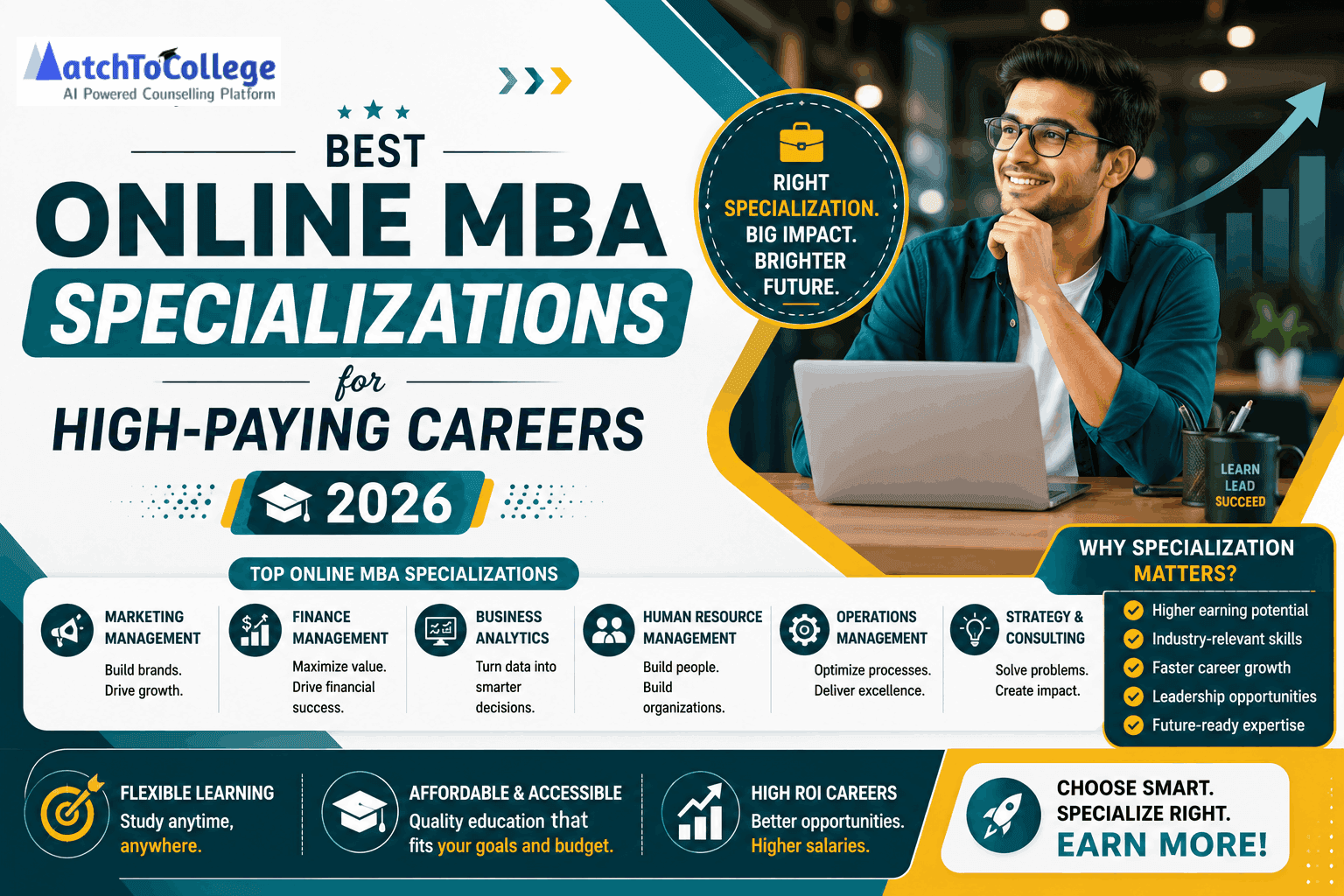
Best Online MBA Specializations for High-Paying Careers 2026
Discover the most lucrative online MBA specializations for 2026-27. Compare ROI, career growth, and use our AI tools to find your perfect management path.

Top Career Opportunities After an Online MBA in 2026-27
Discover high-paying career paths and roles after an online MBA in 2026-27. Explore salary trends, ROI, and tools to navigate your future professional success.

Tax Deductions on Higher Education: 2026-27 India Guide
Maximize your savings with our guide on tax deductions for higher education fees in India for FY 2026-27. Learn about Section 80C, 80E, and upskilling benefits.