

How to Answer the Question: "Why Did You Choose an Online Degree?" in a Job Interview
Admission & Info Tools
Need Expert Assistance?
Our counselors can help you with fee structures, eligibility guidelines, and upcoming admission cutoffs instantly.
Direct Application Tools
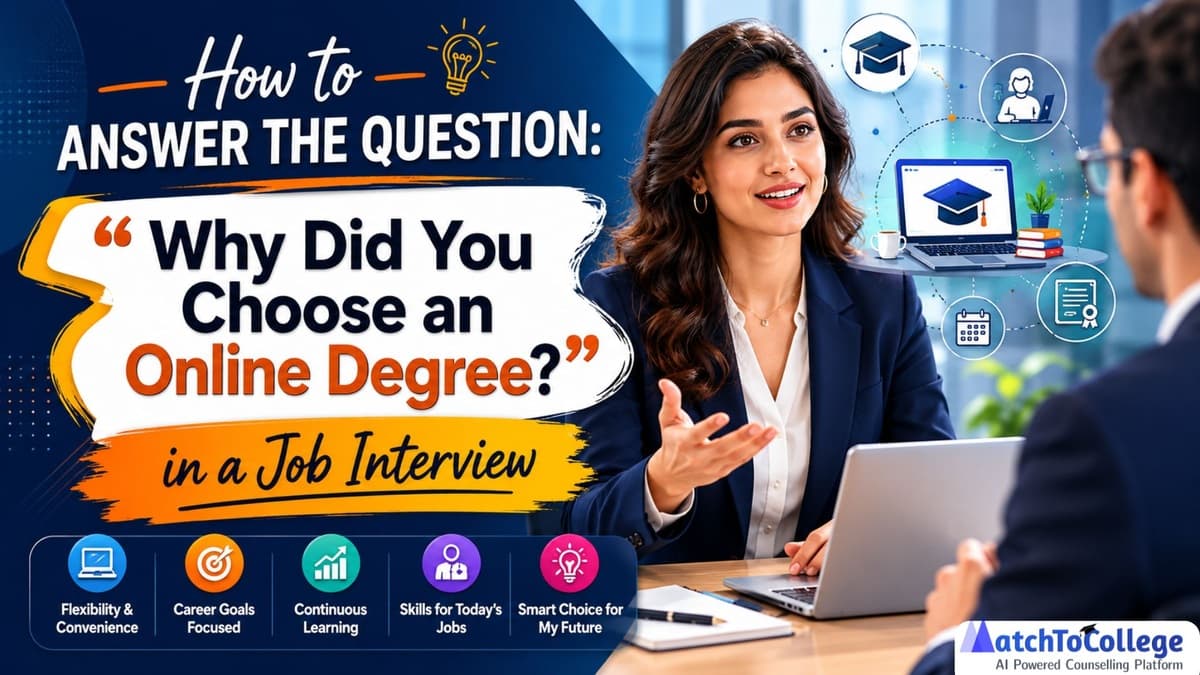
Nail Interview Question with Your Online Degree
The landscape of higher education has transformed dramatically. What was once considered an unconventional path, the online degree, has now cemented its place as a legitimate, highly valuable, and increasingly popular mode of learning. Driven by technological advancements, a demand for flexibility, and often, economic considerations, millions of students globally are opting for virtual classrooms to achieve their academic and career aspirations.
However, despite its growing acceptance, a lingering question might still pop up during your job interviews: "Why did you choose an online degree?" For many graduates, this question can feel like a curveball, stirring a moment of anxiety. Is the interviewer questioning the validity of your education? Are they concerned about your preparedness for a traditional work environment?
At MatchToCollege, an AI-powered higher education counseling platform, we understand these anxieties. Our mission is to empower students and graduates to confidently navigate every step of their academic and professional journey. We believe that an online degree is a testament to unique strengths – self-discipline, adaptability, and digital proficiency – all highly valued in today's workforce. This isn't just a question to be answered; it's an opportunity to shine a spotlight on these very qualities.
This comprehensive guide will equip you with the strategies, insights, and confidence to not only answer this question effectively but to turn it into a compelling advantage. We'll delve into the interviewer's perspective, help you craft a powerful narrative, and highlight the invaluable skills you've gained through your virtual education. By the end, you'll be ready to transform a potentially challenging question into a showcase of your exceptional capabilities, demonstrating why your online degree makes you an outstanding candidate.
Whether you pursued an MBA, an engineering specialization, a medical-related program, or studied abroad virtually, understanding how to articulate your choices is paramount. Let's transform your answer from a mere explanation into a powerful endorsement of your commitment, innovation, and career readiness. Prepare to confidently navigate your next job interview and stand out from the crowd.
Understanding the Interviewer's Intent: Why Do They Ask?
Before you formulate your answer, it's crucial to understand the underlying reasons an interviewer might ask about your online degree choice. They are rarely trying to invalidate your education. More often, their questions stem from a desire to understand:
| What Interviewers Are Assessing | What It Means | Why It Matters in the Workplace |
| Motivation & Self-Discipline | Online learning requires independent study, consistency, and personal accountability. | Employers value professionals who can work without constant supervision. |
| Time Management Skills | Managing coursework alongside personal or professional responsibilities shows strong planning ability. | Effective time management improves productivity and workplace efficiency. |
| Adaptability | Choosing an online degree reflects comfort with modern learning environments and digital platforms. | Companies seek employees who can adapt to changing technologies and work systems. |
| Digital Proficiency | Online education involves using virtual tools, communication platforms, and digital resources regularly. | Digital literacy is essential in today’s technology-driven workplace. |
| Problem-Solving Ability | Online students often troubleshoot issues and find resources independently. | Employers value individuals who can think critically and solve problems proactively. |
| Resourcefulness | Success in online programs often depends on taking initiative and finding solutions independently. | Demonstrates leadership potential and professional maturity. |
| Commitment to Goals | Completing an online degree shows dedication to long-term educational and career objectives. | Indicates perseverance and a strong work ethic. |
| Resilience | Balancing challenges such as work, family, or technical difficulties builds mental strength. | Resilient employees handle workplace pressure and setbacks more effectively. |
| Communication Skills | Online learning often relies heavily on written communication, discussions, and virtual collaboration. | Strong communication improves teamwork and professional relationships. |
| Work-Life Balance Management | Many online learners successfully balance studies with jobs or personal commitments. | Shows the ability to manage multiple responsibilities efficiently. |
| Initiative & Continuous Learning | Pursuing an online degree reflects a proactive approach to self-improvement and skill development. | Employers appreciate candidates committed to lifelong learning. |
| Professional Maturity | Online education often requires higher levels of accountability and independence. | Suggests readiness for professional environments and leadership opportunities. |
Recognizing these underlying concerns allows you to tailor your response to proactively address them, turning potential weaknesses into strengths.
Crafting Your Winning Response: Structure and Strategy
Your answer should be confident, concise, and compelling as well as should feel like a confident career story — not a defense or apology. Employers are less interested in where you studied and more interested in how you approached your education, the skills you developed, and the value you bring to the workplace. Here's a strategic framework to build your response:
1. Start with Your Strategic Decision
Begin by briefly explaining the practical reason behind your choice while framing it positively and professionally.
Examples:
- Balancing work experience with academics
- Managing family responsibilities
- Seeking flexibility without compromising education
- Accessing a specialized program unavailable locally
Example:
While pursuing my degree, I also wanted to gain practical industry exposure. An online program gave me the flexibility to continue working while advancing my education at the same time.
This shows maturity, planning, and long-term thinking.
2. Highlight the Quality of the Program
Make it clear that you selected the program because of its academic value — not just convenience.
You can mention:
- Accreditation
- Reputation of the institution
- Specialized curriculum
- Industry-focused learning
- Experienced faculty
- Practical projects
Example:
I specifically chose the program because of its strong curriculum in business analytics and its emphasis on practical, industry-relevant projects. The university also had experienced faculty and a strong professional network.
This reinforces that your degree was a deliberate investment in your future.
3. Connect Your Experience to Valuable Workplace Skills
This is the most important part of your answer. Explain how online learning helped you build professional skills employers value.
- Self-Discipline & Accountability: Online education requires consistency and self-motivation.
Example: The program strengthened my self-discipline because I had to manage deadlines and stay consistent without constant supervision.
- Time Management & Organization: Balancing multiple responsibilities demonstrates maturity.
Example: Managing coursework alongside other commitments improved my time management, prioritization, and organizational abilities significantly.
- Digital Literacy & Adaptability: Online learning builds confidence with digital tools and remote collaboration.
Example: I became comfortable using virtual collaboration platforms, digital research tools, and online communication systems, which are highly relevant in today’s workplace.
- Problem-Solving & Independence: Online students often solve issues independently.
Example: The experience taught me to be proactive, resourceful, and adaptable when handling challenges or learning new systems.
- Communication Skills: Online learning often strengthens written communication.
Example: Frequent online discussions, reports, and presentations improved my ability to communicate ideas clearly and professionally.
4. End with Confidence and Career Readiness
Finish by connecting your experience to the role you’re applying for.
Example: Overall, my online degree not only provided academic knowledge but also helped me develop independence, adaptability, and strong professional discipline — qualities I believe are highly valuable in this role.
Sample Interview Answer
I chose an online degree because it allowed me to balance my academic goals with gaining practical experience at the same time. I specifically selected the program because of its strong curriculum, industry-focused learning approach, and the reputation of the institution.
The experience taught me a great deal beyond academics. Since online learning requires a high level of self-discipline and accountability, I developed strong time management and organizational skills. I also became comfortable working with digital collaboration tools and communicating effectively in virtual environments.
Most importantly, it made me more independent, adaptable, and proactive in solving problems — qualities that I believe directly translate into the professional workplace.
Remember, the goal isn't just to explain your choice but to frame it as a strategic decision that has equipped you with highly sought-after professional attributes. Practice your answer until it feels natural and flows smoothly.
Delivering Your Answer with Confidence: How to Talk About Your Online Degree in Interviews
Your answer is not just about what you say — it’s also about how you say it. Even a strong response can lose impact if delivered hesitantly or defensively. Employers are evaluating your confidence, communication style, professionalism, and self-awareness as much as your actual words.
Be Positive and Confident
Never present your online degree as a backup option or compromise. Instead, frame it as a strategic and intentional decision that helped you grow academically and professionally.
Your tone should communicate:
- Confidence in your educational journey
- Pride in your achievements
- Enthusiasm for continuous learning
- Professional maturity
Avoid phrases like:
- I couldn’t attend regular college…
- It was my only option…
- I know online degrees are viewed differently…
Instead, use confident language such as:
- I chose an online program because it aligned with my professional goals.
- The flexibility allowed me to gain practical experience while studying.
- It helped me build strong self-management and digital collaboration skills.
Employers respond positively to candidates who own their choices confidently.
Practice Your Response
Preparation improves clarity and confidence. Practice your answer aloud multiple times until it feels natural and conversational.
When practicing:
- Keep the answer concise (60–90 seconds)
- Maintain a calm and professional tone
- Avoid memorizing word-for-word
- Focus on clarity and flow
You can practice:
- In front of a mirror
- With friends or mentors
- By recording yourself
- During mock interviews
The goal is to sound prepared — not robotic.
Connect Your Experience to the Job Role
The strongest interview answers directly connect your experience to the employer’s needs.
For example:
If the role requires independence:
Highlight self-discipline and accountability developed through online learning.
If the role involves remote collaboration:
Talk about virtual teamwork, online presentations, and digital communication tools.
If the role values adaptability:
Explain how online education taught you flexibility and problem-solving.
Example: One thing I value about my online degree is that it strengthened my ability to work independently while collaborating effectively in virtual environments, which I believe is highly relevant for this role.
This makes your answer more relevant and impactful.
Prepare for Follow-Up Questions
Interviewers may ask deeper questions about your online learning experience. Be prepared with clear, positive responses.
Common Follow-Up Questions
1. How did you collaborate with classmates online?
Possible answer: We regularly worked on group assignments using virtual collaboration platforms like Zoom, Google Meet, and shared project tools. It improved my communication and remote teamwork skills.
2. Did you face challenges while studying online?
Possible answer: One challenge was maintaining consistency without a traditional classroom environment, but it helped me develop strong self-discipline, time management, and accountability.
3. Did you ever feel isolated?
Possible answer: There were moments when online learning required more initiative socially, but I actively participated in discussions, group projects, and networking opportunities to stay engaged and connected.
Final Tip: Focus on Growth
Ultimately, employers want to know whether your educational experience helped you become a capable professional. Keep the focus on:
- Skills gained
- Professional growth
- Adaptability
- Initiative
- Career readiness
A confident explanation can transform your online degree from a simple qualification into proof of resilience, discipline, and modern workplace readiness.
MatchToCollege: Your Partner in Career Readiness
At MatchToCollege, we understand that your educational journey, regardless of its format, is a powerful story. Our AI-powered platform helps students like you navigate the complexities of higher education, from choosing the right program to preparing for crucial career milestones like job interviews.
An online degree is a testament to your adaptability, digital fluency, and self-driven nature—qualities that are more valuable than ever in today's rapidly evolving job market. By following the strategies outlined here, you can confidently answer the "Why an online degree?" question, turning it into an opportunity to showcase your exceptional capabilities and commitment to lifelong learning.
Embrace your unique educational path and articulate its strengths. With MatchToCollege, you're not just finding a college; you're building a foundation for a successful and fulfilling career. Leverage your online degree as a symbol of innovation and readiness, and confidently step into your next professional chapter.
Share this Article
FAQFrequently Asked Questions
Q: Is an online degree less respected than a traditional one?
Not inherently. The perception of online degrees has significantly improved, especially with reputable institutions offering robust online programs. Employers primarily value the quality of education, the skills gained, and the accreditation of the institution, regardless of the delivery method. Many employers now view online graduates as highly self-motivated and adaptable due to the nature of their learning.
Q: How can I demonstrate practical experience if my degree was online?
Highlight any internships, volunteer work, personal projects, or freelance work you undertook during your studies. Emphasize group projects and collaborative assignments within your online program. Discuss how you applied theoretical knowledge to real-world scenarios, even if simulated. Your ability to self-start and seek out practical experience while managing online studies is a significant strength.
Q: Should I mention cost or flexibility as reasons for choosing an online degree?
Yes, but be strategic. While cost-effectiveness and flexibility are valid reasons, they shouldn't be your sole focus. Frame them as enabling factors that allowed you to pursue a quality education while also managing other commitments (e.g., working, family responsibilities, specific geographical limitations). Emphasize how this multi-tasking experience enhanced your time management and organizational skills, which are assets in any job.
Get More Info About How to Answer the Question
Recommended Reading
Best Online MBA Specializations for High-Paying Careers 2026
Discover the most lucrative online MBA specializations for 2026-27. Compare ROI, career growth, and use our AI tools to find your perfect management path.
Top Career Opportunities After an Online MBA in 2026-27
Discover high-paying career paths and roles after an online MBA in 2026-27. Explore salary trends, ROI, and tools to navigate your future professional success.
Tax Deductions on Higher Education: 2026-27 India Guide
Maximize your savings with our guide on tax deductions for higher education fees in India for FY 2026-27. Learn about Section 80C, 80E, and upskilling benefits.