

Your Definitive Guide to Top Pharmacy Entrance Exams 2027: Charting Your Path
Admission & Info Tools
Need Expert Assistance?
Our counselors can help you with fee structures, eligibility guidelines, and upcoming admission cutoffs instantly.
Direct Application Tools

Share this Article
🎯 MatchToCollege AI Recommendation: Planning your counselling or choice filling? Check your seat allotment probability across premier colleges using the MHT CET College Predictor.
Key Highlights & Program Overview
The journey into Pharmacy begins with understanding the various entrance examinations that serve as gateways to Bachelor of Pharmacy (B.Pharm) and Master of Pharmacy (M.Pharm) programs across India. These exams are meticulously designed to assess your aptitude and foundational knowledge in science, ensuring that only the most dedicated and capable individuals enter this critical healthcare profession. From national-level benchmarks like GPAT to crucial state-specific tests, each exam has its unique structure and significance. Here’s a snapshot of the prominent exams you should consider:
| Parameter | Details |
| Program Levels | B.Pharm (Undergraduate), M.Pharm (Postgraduate) |
| Key National Exams | GPAT (Graduate Pharmacy Aptitude Test), NIPER JEE |
| Key State-Level Exams | MHT CET (Maharashtra), WBJEE (West Bengal), OJEE-P (Odisha), Delhi CET, Goa CET |
| Courses Offered | Pharmaceutics, Pharmacology, Pharmaceutical Chemistry, Pharmacognosy, Pharmacovigilance, and more. |
| Regulatory Bodies | Pharmacy Council of India (PCI), All India Council of Technical Education (AICTE) |
Eligibility Criteria & Selection Process
Understanding the eligibility requirements is the first critical step in your application journey. While specific criteria may vary slightly between exams and institutions, a general framework applies to both undergraduate and postgraduate pharmacy programs.
B.Pharm Eligibility:
- Educational Qualification: Candidates must have passed 10+2 (or equivalent) with Physics, Chemistry, and either Mathematics or Biology as compulsory subjects.
- Minimum Marks: A minimum aggregate percentage (typically 45-50%) in the qualifying examination is usually required, with relaxations for reserved categories as per government norms.
- Age Limit: Generally, there is no upper age limit for B.Pharm admissions, but some state-level exams might have specific guidelines.
M.Pharm Eligibility:
- Educational Qualification: A Bachelor of Pharmacy (B.Pharm) degree from a PCI-approved institution is mandatory.
- Minimum Marks: A minimum aggregate percentage (typically 50-55%) in B.Pharm is required.
- Entrance Exam: A valid GPAT score is often a prerequisite for M.Pharm admissions in AICTE-approved institutions, including NIPERs (which also conduct NIPER JEE).
Selection Process:
The selection process for both B.Pharm and M.Pharm programs typically involves:
- Entrance Examination: Appearing for and qualifying in the relevant national or state-level entrance exam.
- Merit List: Based on the entrance exam scores, a merit list is prepared.
- Counselling: Qualified candidates participate in a centralized counselling process, where seats are allotted based on rank, preferences, and availability.
- Document Verification: Final admission is subject to successful verification of all academic and personal documents.
Top Pharmacy Colleges & Fee Comparison
India boasts several esteemed institutions offering world-class pharmacy education. Choosing the right college is paramount for your academic and professional growth. These colleges are known for their rigorous curriculum, research opportunities, and strong industry connections. While fees can vary significantly, here’s an overview of some top institutions and their estimated annual fee ranges:
| College Name | Estimated Annual Fees (B.Pharm/M.Pharm) |
| National Institute of Pharmaceutical Education and Research (NIPERs) | ₹80,000 - ₹1,50,000 |
| Institute of Chemical Technology (ICT), Mumbai | ₹85,000 - ₹1,20,000 |
| Jamia Hamdard, New Delhi | ₹1,50,000 - ₹2,50,000 |
| Manipal College of Pharmaceutical Sciences (MCOPS), Manipal | ₹2,00,000 - ₹3,50,000 |
| BITS Pilani (Goa/Hyderabad Campuses) | ₹3,00,000 - ₹4,50,000 |
| Panjab University, Chandigarh | ₹30,000 - ₹60,000 |
| JSS College of Pharmacy, Ooty/Mysuru | ₹1,00,000 - ₹2,00,000 |
Note: These fee ranges are indicative and subject to change. It's always advisable to check the official college websites for the most current fee structures.
Strategic Preparation & Application Roadmap
A well-structured preparation strategy is your strongest ally in cracking these competitive exams. The MatchToCollege Research & Academic Guidance Desk recommends a holistic approach combining conceptual clarity, consistent practice, and effective time management.
Preparation Strategy:
- Understand the Syllabus: For B.Pharm entrance exams, focus on your 11th and 12th-grade Physics, Chemistry, and Biology/Mathematics NCERT textbooks. For GPAT, a thorough understanding of all B.Pharm subjects is crucial.
- Conceptual Clarity: Don't just memorize; strive to understand the underlying principles. This helps in tackling application-based questions.
- Practice Regularly: Solve a wide variety of Multiple Choice Questions (MCQs). This builds speed and accuracy.
- Mock Tests & Previous Year Papers: Regularly attempt full-length mock tests and previous year question papers under timed conditions. Analyze your performance to identify weak areas.
- Revision: Consistent revision of all topics is key to retaining information. Create short notes and flashcards for quick review.
- Time Management: Develop a study schedule that allocates sufficient time to each subject and topic.
Application Roadmap:
- Research Exams: Identify the national and state-level exams relevant to your desired colleges and programs.
- Check Eligibility: Carefully review the eligibility criteria for each exam and institution.
- Online Registration: Complete the application form on the official portal (e.g., nta.ac.in for GPAT) within the stipulated deadlines. Ensure all details are accurate.
- Fee Payment: Pay the application fee online.
- Admit Card Download: Download and print your admit card once released.
- Exam Day: Arrive at the test center well in advance, carrying all necessary documents.
- Result & Counselling: Post-results, participate in the counselling process as per your rank. For state-level exams like MHT CET, you can use our MHT CET College Predictor to estimate your admission chances into top Maharashtra engineering colleges based on your scores.
Career Trajectories & Industry Outlook
A degree in Pharmacy opens doors to a vast and impactful career landscape. The pharmaceutical industry is a cornerstone of global healthcare, constantly evolving with new research and innovations. Graduates can explore diverse roles, contributing significantly to public health.
Key Career Opportunities:
- Pharmaceutical Industry: Roles in Research & Development (R&D), Production & Manufacturing, Quality Control & Assurance, Regulatory Affairs, and Pharmaceutical Marketing.
- Hospitals & Clinics: Clinical Pharmacists, Hospital Pharmacists, responsible for medication management and patient counseling.
- Academia: Teaching and research positions in pharmacy colleges and universities.
- Government Sector: Drug Inspectors, Pharmacists in government hospitals and health departments.
- Research Organizations: Opportunities in drug discovery, clinical trials, and biotechnological research.
- Community Pharmacy: Owning or working in retail pharmacies, providing essential healthcare services.
Average Packages & Growth Prospects:
Entry-level salaries for B.Pharm graduates typically range from ₹2.5 LPA to ₹4.5 LPA, depending on the institution, specialization, and company. M.Pharm graduates, especially those from top NIPERs, can expect starting packages between ₹4 LPA and ₹7 LPA. With experience, specialization, and continuous learning, professionals in R&D, clinical research, and regulatory affairs can command significantly higher salaries, often exceeding ₹10-15 LPA within 5-7 years. The industry's consistent growth, driven by healthcare demands and technological advancements, ensures a stable and rewarding career trajectory for skilled pharmacy professionals.
🏛️ Looking for Admissions & College Cutoffs? Explore verified fee structures, seat matrices, and real student reviews across top institutions on the MatchToCollege Top Colleges & Universities in India Directory.
Frequently Asked Questions
Q: What subjects should I focus on for B.Pharm entrance exams?
For most B.Pharm entrance exams, your primary focus should be on Physics, Chemistry, and either Biology or Mathematics from your 11th and 12th-grade syllabus. A strong grasp of NCERT concepts is generally sufficient. Some exams may also include a section on English or General Aptitude.
Q: Is GPAT mandatory for M.Pharm admission?
While not strictly mandatory for all M.Pharm programs, a valid GPAT score is highly recommended and often a prerequisite for admission to AICTE-approved institutions, including the prestigious NIPERs. Many colleges also offer scholarships or stipends to GPAT-qualified candidates. For NIPERs, you would also need to clear the NIPER JEE.
Q: How difficult is the GPAT exam?
The GPAT exam is generally considered to be of moderate to difficult level. It tests a comprehensive understanding of all B.Pharm subjects. The exam increasingly includes application-based and numerical questions, particularly in Pharmacology, Pharmaceutics, and Pharmaceutical Chemistry. Consistent preparation and mock test practice are key to success.
Q: What are the main branches of M.Pharm I can specialize in?
M.Pharm offers various specializations to cater to different interests within the pharmaceutical field. Some of the main branches include Pharmaceutics (drug formulation and delivery), Pharmacology (drug action and effects), Pharmaceutical Chemistry (drug design and synthesis), Pharmacognosy (natural drug sources), and Pharmacovigilance (drug safety monitoring). Each branch leads to distinct career paths.
Q: How can I improve my speed and accuracy for pharmacy entrance exams?
To enhance speed and accuracy, consistent practice is crucial. Regularly solve previous year papers and take full-length mock tests under timed conditions. Focus on understanding concepts thoroughly to avoid errors. For numerical problems, learn and apply shortcut techniques. Reviewing mistakes and working on weak areas systematically will significantly boost your performance.
Q: What career opportunities are available after completing B.Pharm or M.Pharm?
A Pharmacy degree opens up diverse career opportunities. You can work in the pharmaceutical industry (R&D, manufacturing, quality control, regulatory affairs, marketing), hospitals (clinical or hospital pharmacist), academia (teaching and research), government sectors (drug inspector), or even establish your own community pharmacy. M.Pharm graduates often find roles in specialized research and development or higher-level management positions.
Related Topics
Featured Mentioned Colleges
Explore institutions featured and discussed in this article
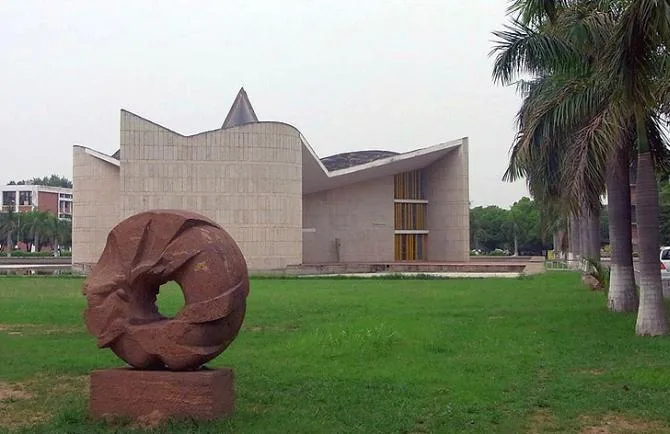

With an educational trajectory spanning 144 years since its inception in 1882, Panjab University,Chandigarh serves as a prominent seat of learning in Chandigarh, Chandigarh. The institution is affiliated with Panjab University,Chandigarh and recognized by University Grants Commission (UGC), imparting rigorous programs anchored in holistic multidisciplinary education, applied research, and professional competence. With modern campus amenities encompassing digital lecture rooms, departmental resource centers, and central library, the institution actively bridges conceptual instruction with empirical application. Graduates of Panjab University,Chandigarh emerge as competent, socially conscious professionals poised to assume impactful roles in diverse professional domains.
Total Fees
Contact for Fees
Total Courses
10
Get More Info About Your Definitive Guide to Top Pharmacy Entrance Exams 2027
Recommended Articles

JEE Main 2027 Registration: Your Definitive Guide to Application Deadlines & Process
Navigate the JEE Main 2027 registration process with confidence. This comprehensive guide covers crucial deadlines, eligibility, step-by-step application, and essential tips for aspiring engineers.

MHT CET: Your Definitive Guide to Maharashtra Engineering Admissions
Navigate the MHT CET exam with confidence. This comprehensive guide from MatchToCollege covers eligibility, exam pattern, top colleges, and expert preparation strategies for aspiring engineers in Maharashtra.

JEE Main Without Calculator: Your Ultimate Guide to Mastering Calculations & Securing Top Ranks
Navigating JEE Main without a calculator demands sharp mental acuity and strategic preparation. This comprehensive guide from MatchToCollege empowers you with proven techniques to ace complex calculations and secure your dream engineering seat.