

JEE Main Paper 2: Your Definitive Guide to B.Arch & B.Planning Admissions
Admission & Info Tools
Need Expert Assistance?
Our counselors can help you with fee structures, eligibility guidelines, and upcoming admission cutoffs instantly.
Direct Application Tools

Share this Article
For aspiring architects and urban planners across India, the journey to a prestigious B.Arch or B.Planning degree begins with a strong performance in JEE Main Paper 2. This specialized examination is your direct gateway to some of the nation's finest institutions, shaping the future of our cities and built environments. Understanding its nuances – from the unique exam pattern to the strategic preparation required – is paramount for success.
This comprehensive MatchToCollege guide, crafted by our seasoned admissions mentors, is designed to equip you with every essential detail. We’ll walk you through the eligibility criteria, decode the selection process, highlight top colleges, and provide an actionable roadmap for your preparation. Consider this your definitive resource to navigate the JEE Main Paper 2 landscape and lay the foundation for a fulfilling career in design and planning.
🎯 MatchToCollege AI Recommendation: Planning your counselling or choice filling? Check your seat allotment probability across premier colleges using the JEE Main College Predictor.
Key Highlights & Program Overview
JEE Main Paper 2 is specifically designed for admission to Bachelor of Architecture (B.Arch) and Bachelor of Planning (B.Planning) programs offered by NITs, IIITs, and other Centrally Funded Technical Institutions (CFTIs). Unlike Paper 1 (for B.Tech), Paper 2 assesses your aptitude for design, spatial reasoning, and architectural awareness. Here’s a quick overview of what to expect:
| Parameter | Details |
| Exam Mode | Online (Computer Based Test) for Mathematics & Aptitude, Offline (Pen and Paper) for Drawing Test (for B.Arch) |
| Paper | B.Arch / B.Planning (Paper 2) |
| Duration | 3 hours (180 minutes) |
| Type of Questions | Multiple Choice Questions (MCQs) and Drawing Questions (for B.Arch) / MCQs only (for B.Planning) |
| Subjects (B.Arch) | Mathematics (Part I), Aptitude Test (Part II), Drawing Test (Part III) |
| Subjects (B.Planning) | Mathematics (Part I), Aptitude Test (Part II), Planning Based Questions (Part III) |
| Total Questions (B.Arch) | 82 questions (Mathematics: 30, Aptitude: 50, Drawing: 2) |
| Total Questions (B.Planning) | 105 questions (Mathematics: 30, Aptitude: 50, Planning: 25) |
| Total Marks | 400 marks (for both B.Arch & B.Planning) |
| Marking Scheme | +4 for correct answer & -1 for incorrect MCQ answer; 0 for unattempted. Drawing questions are marked out of 100. |
Note: The exam pattern provided is based on recent trends. Always refer to the latest official NTA information for the specific academic year you are applying for.
Eligibility Criteria & Selection Process
To be eligible for JEE Main Paper 2, aspirants must meet specific academic and age criteria. Understanding these requirements is your first step towards a successful application:
Academic Eligibility:
- Candidates must have passed their 10+2 (or equivalent) examination with Physics, Chemistry, and Mathematics as compulsory subjects from a recognized board.
- A minimum aggregate percentage (often 75% for General/OBC-NCL/EWS or 65% for SC/ST/PwD, or top 20 percentile in their respective board exams) is usually required for admission to NITs, IIITs, and CFTIs, though this can vary slightly year-on-year.
- Those appearing for their 10+2 final examinations are also eligible to apply provisionally.
Age Limit:
- There is generally no age limit for appearing in JEE Main. However, candidates must have passed their 10+2 examination in the specified year or the preceding year.
Reservation Policy:
The Government of India's reservation policies are strictly adhered to for admissions through JEE Main. This includes:
- SC/ST: 15% for Scheduled Castes and 7.5% for Scheduled Tribes.
- OBC-NCL: 27% for Other Backward Classes (Non-Creamy Layer).
- EWS: 10% for Economically Weaker Sections.
- PwD: 5% horizontal reservation for Persons with Disabilities across all categories.
Selection Stages:
Your journey from appearing for JEE Main Paper 2 to securing a seat involves these key stages:
- JEE Main Paper 2 Examination: Appear for the exam in one or both sessions. Your best score will be considered.
- Result & Rank Declaration: NTA declares the results and All India Ranks (AIR) for B.Arch and B.Planning separately.
- JoSAA Counselling: Qualified candidates participate in the Joint Seat Allocation Authority (JoSAA) counselling process. This involves online registration, choice filling (selecting preferred institutes and courses), and seat allocation based on your rank, preferences, and category.
- Document Verification & Admission: Once a seat is allotted, candidates must complete online document verification, pay the seat acceptance fee, and report to the allotted institute for final admission formalities.
To get a clear picture of your admission chances based on your potential JEE Main Paper 2 score, leverage our JEE Main College Predictor. It's an invaluable tool for understanding cutoffs and identifying suitable colleges.
Top Colleges & Fee Comparison
Securing admission to a top institution is crucial for a strong foundation in Architecture or Planning. Here are some of the premier colleges that admit students through JEE Main Paper 2, along with estimated annual fees:
| Institute Name | Estimated Annual Fees (INR) |
| School of Planning and Architecture (SPA), Delhi | ~1,00,000 - 1,50,000 |
| School of Planning and Architecture (SPA), Bhopal | ~1,00,000 - 1,50,000 |
| School of Planning and Architecture (SPA), Vijayawada | ~1,00,000 - 1,50,000 |
| NIT Calicut | ~1,25,000 - 1,75,000 |
| NIT Trichy | ~1,25,000 - 1,75,000 |
| NIT Rourkela | ~1,25,000 - 1,75,000 |
| NIT Hamirpur | ~1,25,000 - 1,75,000 |
| Malaviya National Institute of Technology (MNIT), Jaipur | ~1,25,000 - 1,75,000 |
| Maulana Azad National Institute of Technology (MANIT), Bhopal | ~1,25,000 - 1,75,000 |
Note: Fees are approximate and subject to change. They typically do not include hostel and mess charges. For exact figures, always refer to the official college websites.
Return on Investment (ROI):
A B.Arch or B.Planning degree from a reputable institution offers excellent long-term ROI. While initial salaries might vary, the growth trajectory in these fields is substantial. Graduates from top SPAs and NITs often secure positions in leading architectural firms, urban development agencies, government bodies, and real estate companies, both in India and internationally. The skills acquired are highly specialized and in demand, ensuring a rewarding career path.
Career Scope, Placements & Expected ROI
A degree in Architecture or Planning opens doors to diverse and impactful career opportunities. These professions are at the forefront of shaping our physical world, from designing iconic buildings to strategizing sustainable urban growth.
Career Opportunities for B.Arch Graduates:
- Architect: Design and oversee the construction of buildings.
- Urban Designer: Focus on the design and management of public spaces and urban areas.
- Landscape Architect: Design outdoor spaces, parks, and recreational areas.
- Interior Designer: Specialize in the design of interior spaces.
- Conservation Architect: Work on the preservation and restoration of historical buildings.
- Project Manager: Oversee construction projects from conception to completion.
- Architectural Journalist/Critic: Write about architecture and design.
Career Opportunities for B.Planning Graduates:
- Urban Planner: Develop plans for the growth and development of cities and regions.
- Regional Planner: Focus on larger geographical areas, addressing issues like infrastructure, environment, and economic development.
- Transport Planner: Design and manage transportation systems.
- Environmental Planner: Integrate environmental considerations into planning processes.
- GIS Specialist: Utilize Geographic Information Systems for spatial analysis and planning.
- Housing Planner: Address housing needs and develop affordable housing strategies.
- Real Estate Developer: Involved in the planning and execution of real estate projects.
Placement Insights & Average Packages:
Graduates from top B.Arch and B.Planning programs often receive competitive placement offers. While specific figures vary by institution and economic climate, here's a general outlook:
| Parameter | Details |
| Average Starting Package (B.Arch) | INR 3.5 - 6 LPA |
| Average Starting Package (B.Planning) | INR 4 - 7 LPA |
| Top Recruiters (Architecture) | Architectural firms (e.g., Hafeez Contractor, CP Kukreja Architects), Construction companies, Design studios, Government agencies. |
| Top Recruiters (Planning) | Urban Development Authorities, Municipal Corporations, Consulting firms (e.g., PwC, Deloitte in urban advisory), Real Estate developers, NGOs. |
| Long-term Growth | Significant, with experienced professionals earning upwards of INR 10-20+ LPA, especially with specialization or entrepreneurial ventures. |
The true value of these degrees extends beyond initial packages. They equip you with critical thinking, problem-solving, and creative skills that are highly valued across various sectors, ensuring sustained career growth and intellectual satisfaction.
Admissions Checklist & Important Tips
A structured approach is key to acing JEE Main Paper 2. Here’s an admissions checklist and some crucial tips from our mentors to guide your preparation:
1. Understand the Syllabus Thoroughly:
- Mathematics: Focus on topics like Algebra, Trigonometry, Coordinate Geometry, Calculus, and 3D Geometry. Practice problem-solving speed and accuracy.
- Aptitude Test: This section tests your spatial reasoning, mental ability, logical deduction, and general architectural awareness. Practice visualizing 3D objects from 2D drawings, identifying patterns, and understanding scale and proportion.
- Drawing Test (for B.Arch): Practice freehand sketching, perspective drawing, composition, and understanding of light and shadow. Focus on drawing everyday objects, scenes, and abstract compositions.
- Planning Based Questions (for B.Planning): Familiarize yourself with general knowledge about urban development, infrastructure, environmental issues, and socio-economic aspects related to planning.
2. Practice with Previous Year Papers:
Solving past question papers is indispensable. It helps you understand the exam pattern, question types, time management, and identify your strengths and weaknesses. Aim to solve papers under timed conditions to simulate the actual exam environment.
3. Develop Your Drawing Skills (for B.Arch):
Drawing is not just about artistic talent; it's about observation and representation. Practice regularly. Focus on neatness, proportion, and conveying your ideas clearly. Experiment with different mediums and techniques.
4. Stay Updated with Current Affairs & Architectural Trends:
For the Aptitude and Planning sections, a general awareness of famous architects, iconic buildings, urban development projects, and environmental issues will be highly beneficial.
5. Time Management & Mock Tests:
Regularly take full-length mock tests. This will help you refine your time management strategy for each section and build stamina for the 3-hour exam.
6. Leverage MatchToCollege Resources:
As you prepare, remember to utilize our JEE Main College Predictor. It's an essential tool to gauge your admission probability based on your mock test scores or expected rank, helping you set realistic goals and refine your college preferences.
7. Maintain a Positive Mindset:
The journey can be challenging, but perseverance and a positive attitude are crucial. Believe in your abilities and stay focused on your goal.
🏛️ Looking for Admissions & College Cutoffs? Explore verified fee structures, seat matrices, and real student reviews across top institutions on the MatchToCollege Top Colleges & Universities in India Directory.
Frequently Asked Questions
Q: What is JEE Main Paper 2, and what courses does it offer admission to?
JEE Main Paper 2 is a specialized examination conducted by the National Testing Agency (NTA) for admission to Bachelor of Architecture (B.Arch) and Bachelor of Planning (B.Planning) programs in NITs, IIITs, SPAs, and other Centrally Funded Technical Institutions (CFTIs) across India. It assesses aptitude for design, spatial reasoning, and architectural/planning awareness.
Q: What is the key difference in the exam pattern for B.Arch and B.Planning in JEE Main Paper 2?
While both B.Arch and B.Planning share common Mathematics and Aptitude Test sections, they differ in the third part. B.Arch aspirants take a Drawing Test (offline, pen-and-paper), which assesses sketching and design skills. B.Planning aspirants, on the other hand, attempt a section with Planning Based Questions (online, MCQs) that focuses on urban development, infrastructure, and socio-economic planning concepts.
Q: Is the Drawing Test still conducted offline for JEE Main Paper 2 B.Arch?
Yes, for the B.Arch program, the Drawing Test (Part III) of JEE Main Paper 2 is still conducted in an offline, pen-and-paper mode. Candidates are required to draw on an A4 size drawing sheet provided at the examination center. The Mathematics and Aptitude Test sections remain computer-based.
Q: How crucial is practicing with previous year question papers for JEE Main Paper 2?
Practicing with previous year question papers is absolutely crucial for JEE Main Paper 2. It helps you understand the unique exam structure, question types (especially for the Aptitude and Drawing/Planning sections), time allocation, and marking scheme. Regularly solving these papers under timed conditions is the best way to refine your strategy and boost your confidence.
Q: What are the typical career prospects after completing a B.Arch or B.Planning degree?
A B.Arch degree leads to careers as an Architect, Urban Designer, Landscape Architect, Interior Designer, or Project Manager, involved in designing and overseeing construction. A B.Planning degree opens doors to roles like Urban Planner, Regional Planner, Transport Planner, or Environmental Planner, focusing on strategic development and management of cities and regions. Both fields offer significant growth and impact.
Q: How does MatchToCollege help with JEE Main Paper 2 admissions?
MatchToCollege provides comprehensive guidance for JEE Main Paper 2 aspirants, including detailed preparation strategies, expert counseling, and access to essential tools. Our JEE Main College Predictor is particularly valuable, allowing you to estimate your admission chances to top B.Arch and B.Planning colleges based on your scores or rank, helping you make informed decisions during counselling.
Related Topics
Featured Mentioned Colleges
Explore institutions featured and discussed in this article
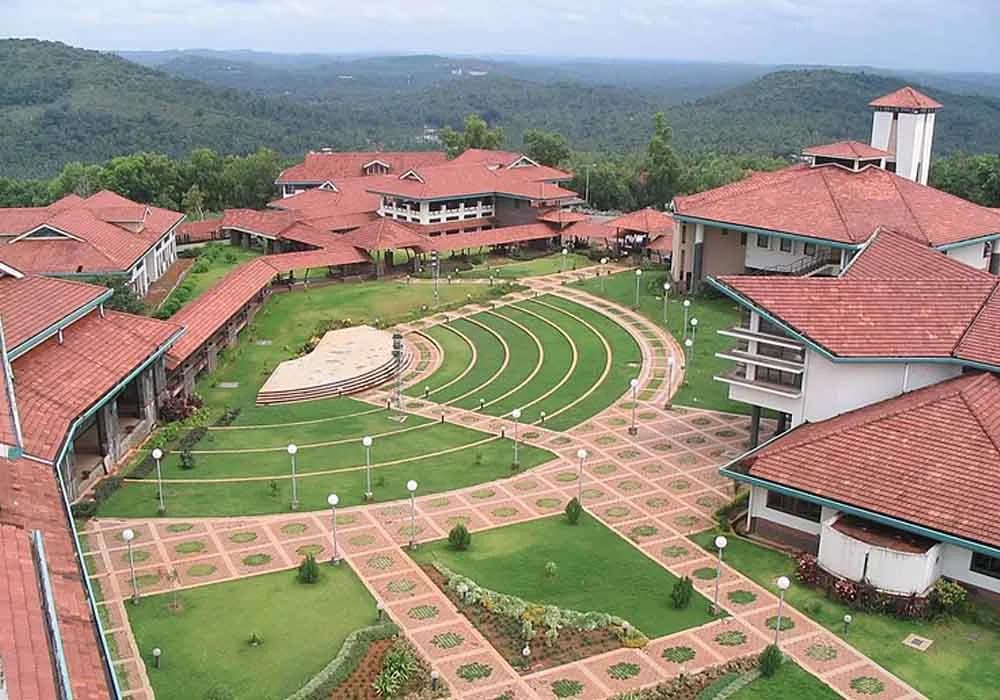

The National Institute of Technology Calicut (NITC) is one of the 31 institutions of national importance set up by an Act of Parliament, namely the ‘National Institute of Technology Act 2007,' and is fully funded by the Government of India. The mandate of the institute is to provide higher technical education and conduct research in the various branches of engineering, science, technology, and management. Originally established in 1961 as a Regional Engineering College (REC), it was transformed into a National Institute of Technology in 2002. The institute offers bachelor's, master's, and doctoral degree programs in engineering, science, technology, and management. With its proactive collaborations with a multitude of research organizations, academic institutions and industries, the institute has set a new style for its functioning under the NIT regime.
Total Fees
Contact for Fees
Total Courses
9
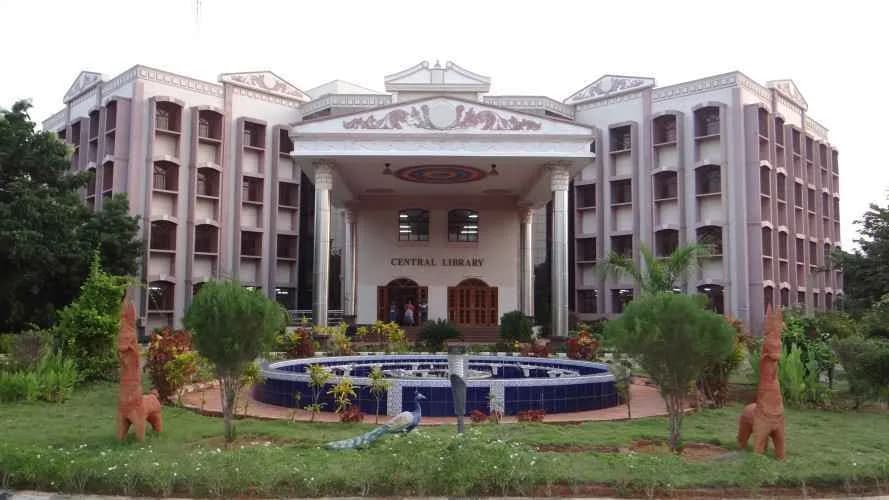

National Institute of Technology Tiruchirappalli (NIT Trichy) is one of India’s premier technical institutions and was established in 1964 as Regional Engineering College, later granted the status of an Institute of National Importance. It offers undergraduate, postgraduate, and doctoral programs in Engineering, Science, Management, and Architecture. The institute is known for academic excellence, strong industry collaborations, and excellent placement records.
Total Fees
Contact for Fees
Total Courses
9
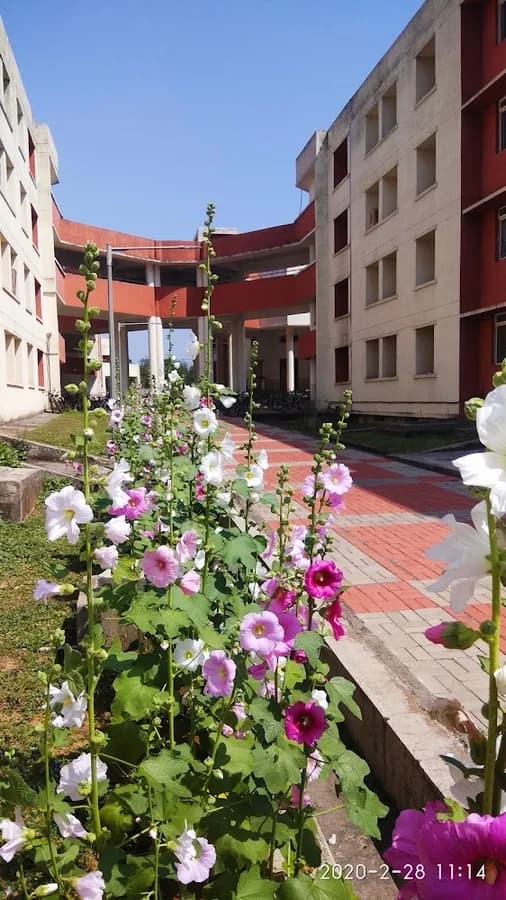

With an educational trajectory spanning 65 years since its inception in 1961, National Institute of Technology, Rourkela serves as a prominent seat of learning in Sundaragada, Odisha. Conforming to regulatory norms of All India Council for Technical Education (AICTE) through its affiliation with Odisha State University, the institution offers students an integrated foundation across engineering innovation, applied science, computational systems, and advanced technical research. The campus is equipped with state-of-the-art computational centers, robotics and IoT laboratories, and core engineering workshops, creating an immersive environment for scholarly development and collaborative innovation. By combining academic discipline with practical exposure, it equips emerging scholars to meet evolving demands in industry, academia, and public service.
Total Fees
Contact for Fees
Total Courses
6
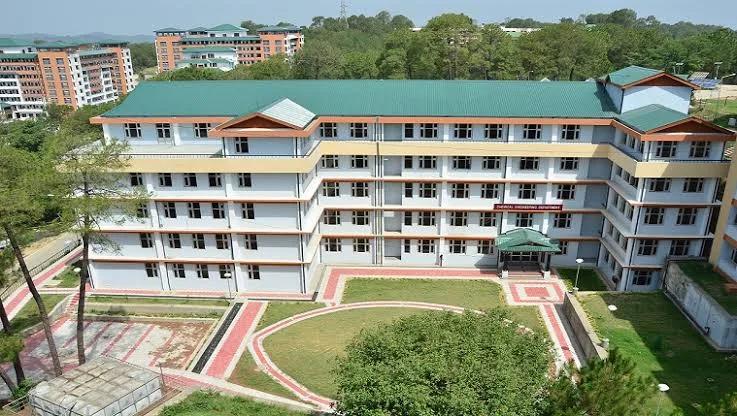

Established in 1986, National Institute of Technology, Hamirpur is a distinguished institution situated in Hamirpur, Uttar Pradesh. Conforming to regulatory norms of All India Council for Technical Education (AICTE) through its affiliation with Uttar Pradesh State University, the institution offers students an integrated foundation across engineering innovation, applied science, computational systems, and advanced technical research. The institution maintains robust academic resources including state-of-the-art computational centers, robotics and IoT laboratories, and core engineering workshops, fostering an active student life and practical competencies. Through structured career placement cells and community outreach, National Institute of Technology, Hamirpur continues to prepare graduates for impactful careers across regional and global sectors.
Total Fees
Contact for Fees
Total Courses
7
Get More Info About JEE Main Paper 2
Recommended Articles

JEE Main 2027 Registration: Your Definitive Guide to Application Deadlines & Process
Navigate the JEE Main 2027 registration process with confidence. This comprehensive guide covers crucial deadlines, eligibility, step-by-step application, and essential tips for aspiring engineers.

MHT CET: Your Definitive Guide to Maharashtra Engineering Admissions
Navigate the MHT CET exam with confidence. This comprehensive guide from MatchToCollege covers eligibility, exam pattern, top colleges, and expert preparation strategies for aspiring engineers in Maharashtra.

JEE Main Without Calculator: Your Ultimate Guide to Mastering Calculations & Securing Top Ranks
Navigating JEE Main without a calculator demands sharp mental acuity and strategic preparation. This comprehensive guide from MatchToCollege empowers you with proven techniques to ace complex calculations and secure your dream engineering seat.