

JEE Main 2027: The Definitive Guide to Registration, Dates & Application
Admission & Info Tools
Need Expert Assistance?
Our counselors can help you with fee structures, eligibility guidelines, and upcoming admission cutoffs instantly.
Direct Application Tools

Share this Article
🎯 MatchToCollege AI Recommendation: Planning your counselling or choice filling? Check your seat allotment probability across premier colleges using the JEE Main College Predictor.
Key Highlights & Program Overview
The Joint Entrance Examination (JEE) Main is a critical national-level entrance examination for admission to undergraduate engineering and architecture programs. Conducted by the National Testing Agency (NTA), it serves as the first stage for entry into IITs (via JEE Advanced) and directly for NITs, IIITs, and GFTIs. Understanding its core aspects is the first step towards a successful application.
| Parameter | Details |
| Exam Name | Joint Entrance Examination (JEE) Main 2027 |
| Conducting Body | National Testing Agency (NTA) |
| Official Website | jeemain.nta.nic.in |
| Application Mode | Online |
| Session 1 Application Start Date | October 24, 2026 |
| Session 1 Application Last Date (without late fee) | November 22, 2026 (11:50 PM) |
| Session 1 Application Last Date (with late fee) | November 26, 2026 |
| Application Correction Window (Session 1) | January 20, 21, 22, 23, 24, 28, 2027 |
| Participating Institutes | NITs, IIITs, GFTIs, and other state-level colleges |
Eligibility Criteria & Selection Process
To be eligible for JEE Main 2027, candidates must meet specific academic and nationality requirements. It's crucial to understand these criteria before initiating your application.
Eligibility Criteria:
- Nationality: Indian Nationals, NRIs, OCIs, PIOs, and Foreign Nationals are eligible.
- Age Limit: There is no age limit for appearing in JEE Main.
- Qualifying Examination: Candidates must have passed their 10+2 (or equivalent) examination in 2025 or 2026, or be appearing in 2027.
- Subjects: For B.E./B.Tech, candidates must have passed with Physics, Mathematics, and one of Chemistry/Biology/Biotechnology/Technical Vocational subject. For B.Arch/B.Planning, specific subject combinations are required as per NTA guidelines.
- Minimum Marks for Admission to NITs, IIITs, GFTIs: Candidates must have secured at least 75% marks in the 12th grade examination or be in the top 20 percentile of their respective board. For SC/ST candidates, the minimum aggregate marks are 65%.
Reservation Policy:
The Government of India's reservation policies are strictly adhered to for admissions to NITs, IIITs, and GFTIs. This includes reservations for Scheduled Castes (SC), Scheduled Tribes (ST), Other Backward Classes (OBC-NCL), Economically Weaker Sections (EWS), and Persons with Disabilities (PwD).
Selection Process:
Admission to B.E./B.Tech and B.Arch/B.Planning programs in NITs, IIITs, and GFTIs is primarily based on the candidate's All India Rank (AIR) in JEE Main. This is followed by a centralized counselling process conducted by the Joint Seat Allocation Authority (JoSAA).
Top Colleges & Fee Comparison
JEE Main opens doors to some of India's most sought-after engineering and architecture institutions. While the IITs require JEE Advanced, a strong JEE Main rank can secure you a seat in premier NITs, IIITs, and other GFTIs. Here's a glimpse at some top institutions and their estimated annual fees.
| College Name | Estimated Annual Fees (INR) |
| National Institute of Technology (NIT) Trichy | 1,50,000 - 2,00,000 |
| National Institute of Technology (NIT) Warangal | 1,50,000 - 2,00,000 |
| Indian Institute of Information Technology (IIIT) Hyderabad | 3,00,000 - 3,50,000 |
| Delhi Technological University (DTU), Delhi | 1,80,000 - 2,20,000 |
| Vellore Institute of Technology (VIT), Vellore (via JEE Main/VITEEE) | 1,98,000 - 5,00,000 |
| Netaji Subhas University of Technology (NSUT), Delhi | 1,80,000 - 2,20,000 |
Note: Fees are estimated and subject to change. They may vary based on category, program, and specific college policies.
Career Scope, Placements & Expected ROI
A degree from a reputable engineering institution, secured through JEE Main, offers a robust foundation for a diverse and rewarding career. The demand for skilled engineers across various sectors remains consistently high, ensuring excellent career prospects and a strong return on investment (ROI).
Diverse Career Opportunities:
Graduates can pursue careers in core engineering fields like Software Development, Data Science, Electronics & Communication, Mechanical Design, Civil Infrastructure, Chemical Engineering, and more. Beyond traditional roles, opportunities abound in emerging areas such as Artificial Intelligence, Machine Learning, Cybersecurity, Robotics, and Renewable Energy.
Placement Insights:
Top NITs, IIITs, and GFTIs boast impressive placement records, with leading national and international companies recruiting on campus. Average annual packages for fresh graduates from these institutions typically range from INR 8-15 Lakhs, with exceptional offers reaching significantly higher, sometimes exceeding INR 40-50 Lakhs per annum for specialized roles or international placements.
Expected Return on Investment (ROI):
The investment in a quality engineering education through JEE Main often yields substantial returns. Beyond attractive starting salaries, graduates benefit from continuous learning opportunities, rapid career progression, and the chance to contribute to impactful projects. The strong alumni networks and industry connections fostered at these institutions further enhance long-term career growth and entrepreneurial ventures.
Admissions Checklist & Important Tips
Navigating the JEE Main 2027 application process requires careful attention to detail and adherence to deadlines. Follow this checklist to ensure a smooth and successful registration.
Step-by-Step Application Process:
- Visit the Official Website: Go to the official NTA JEE Main portal: jeemain.nta.nic.in.
- New Candidate Registration: Click on 'New Candidate Registration' and provide basic details like your name, parent's name, date of birth, mobile number, and email ID to generate your application number and password.
- Fill the Application Form: Log in with your credentials and meticulously fill out the application form. This includes personal details, academic qualifications, preferred exam centers, and other relevant information.
- Upload Scanned Documents: Upload scanned images of your photograph, signature, and any required category certificates (if applicable) as per the specified format and size.
- Pay Application Fee: Proceed to pay the application fee online using a debit card, credit card, or net banking. Ensure the transaction is successful and save the receipt.
- Download Confirmation Page: After successful payment, download and print the confirmation page for your records. This is proof of your application submission.
Important Tips for Applicants:
- Use Official Portal Only: Always use the official NTA website (jeemain.nta.nic.in) to avoid fraudulent websites.
- Accuracy is Key: Double-check all entered information, especially personal details and academic scores, before final submission. Errors can lead to complications later.
- Keep Documents Ready: Have all necessary documents (mark sheets, identity proof, category certificates) scanned and ready in the prescribed format before starting the application.
- Adhere to Deadlines: Submit your application well before the last date to avoid last-minute technical glitches.
- Utilize Correction Window: If you identify any errors after submission, use the designated correction window to rectify them promptly.
Preparation Strategy & Tool Integration:
Effective preparation is paramount. Focus on building strong conceptual understanding from NCERT textbooks for Class 11 and 12. Practice extensively with previous year's question papers and take regular mock tests to simulate exam conditions and manage time effectively. To gauge your admission probability and explore potential colleges based on your expected JEE Main score or rank, we highly recommend using the MatchToCollege JEE Main College Predictor. This tool can provide valuable insights as you plan your applications.
🏛️ Looking for Admissions & College Cutoffs? Explore verified fee structures, seat matrices, and real student reviews across top institutions on the MatchToCollege Accredited Online & Distance Colleges Directory.
Frequently Asked Questions
Q: What does a score of 60 marks in JEE Main typically signify?
For general category students, a score of 60 marks in JEE Main is generally considered insufficient for admission to top NITs or IIITs. This score usually translates to a percentile around 80, placing a candidate within a rank range of approximately 1.5 to 2.5 lakhs. While it might open doors to some private or state-level engineering colleges, securing a seat in premier government institutions would be challenging.
Q: What is the general difficulty level of the JEE Main examination?
The JEE Main examination is designed to assess a student's in-depth understanding of the Class 11 and 12 syllabus, aligning closely with the difficulty level of board exams but with a focus on application and problem-solving. While the syllabus mirrors that of Class 11 and 12, the questions are often tricky and require strong conceptual clarity across Physics, Chemistry, and Mathematics. Students who thoroughly study NCERT textbooks and practice extensively can achieve a decent score.
Q: Can a student effectively prepare for JEE Main in one month?
Preparing for JEE Main in just one month is highly challenging if a student has not built a strong foundation or studied consistently beforehand, given the vast syllabus. However, for Class 12 students who have diligently prepared for their board exams, this period can be used for intensive revision and practice. Focusing on high-weightage topics, solving previous year's papers, and taking mock tests in the final weeks can significantly improve performance, as much of the Class 12 syllabus overlaps with JEE Main.
Q: What is the recommended strategy for JEE Main preparation starting from Class 11th and 12th?
Starting JEE Main preparation from Class 11 or 12 is ideal. Align your school studies with the JEE Main syllabus, giving special attention to common topics. For all three subjects (Physics, Chemistry, Mathematics), master NCERT concepts first, then supplement with reference books for advanced problem-solving. Dedicate at least 2-3 hours daily to JEE preparation beyond schoolwork. Regular practice, solving mock tests, and analyzing previous year's question papers are crucial for evaluating progress and identifying areas for improvement.
Q: What percentile range does a score of 70 marks in JEE Main usually fall into?
A score of 70 marks in JEE Main is typically considered average to below-average for General category students. Historically, this score corresponds to a percentile in the range of approximately 88 to 91. While this percentile might secure admission to some colleges, it generally falls short of the cutoffs for top-tier NITs, IIITs, and other highly sought-after government engineering institutions.
Related Topics
Featured Mentioned Colleges
Explore institutions featured and discussed in this article

With an educational trajectory spanning 62 years since its inception in 1964, National Institute of Technology, Tiruchirapalli serves as a prominent seat of learning in Tiruchirappalli, Tamil Nadu. The institution is affiliated with Tamil Nadu State University and recognized by All India Council for Technical Education (AICTE), imparting rigorous programs anchored in engineering innovation, applied science, computational systems, and advanced technical research. With modern campus amenities encompassing state-of-the-art computational centers, robotics and IoT laboratories, and core engineering workshops, the institution actively bridges conceptual instruction with empirical application. Through structured career placement cells and community outreach, National Institute of Technology, Tiruchirapalli continues to prepare graduates for impactful careers across regional and global sectors.
Total Fees
Contact for Fees
Total Courses
7


With an educational trajectory spanning 67 years since its inception in 1959, National Institute of Technology, Warangal serves as a prominent seat of learning in Warangal, Telangana. The institution is affiliated with Telangana State University and recognized by All India Council for Technical Education (AICTE), imparting rigorous programs anchored in engineering innovation, applied science, computational systems, and advanced technical research. The campus is equipped with state-of-the-art computational centers, robotics and IoT laboratories, and core engineering workshops, creating an immersive environment for scholarly development and collaborative innovation. Graduates of National Institute of Technology, Warangal emerge as competent, socially conscious professionals poised to assume impactful roles in diverse professional domains.
Total Fees
Contact for Fees
Total Courses
7
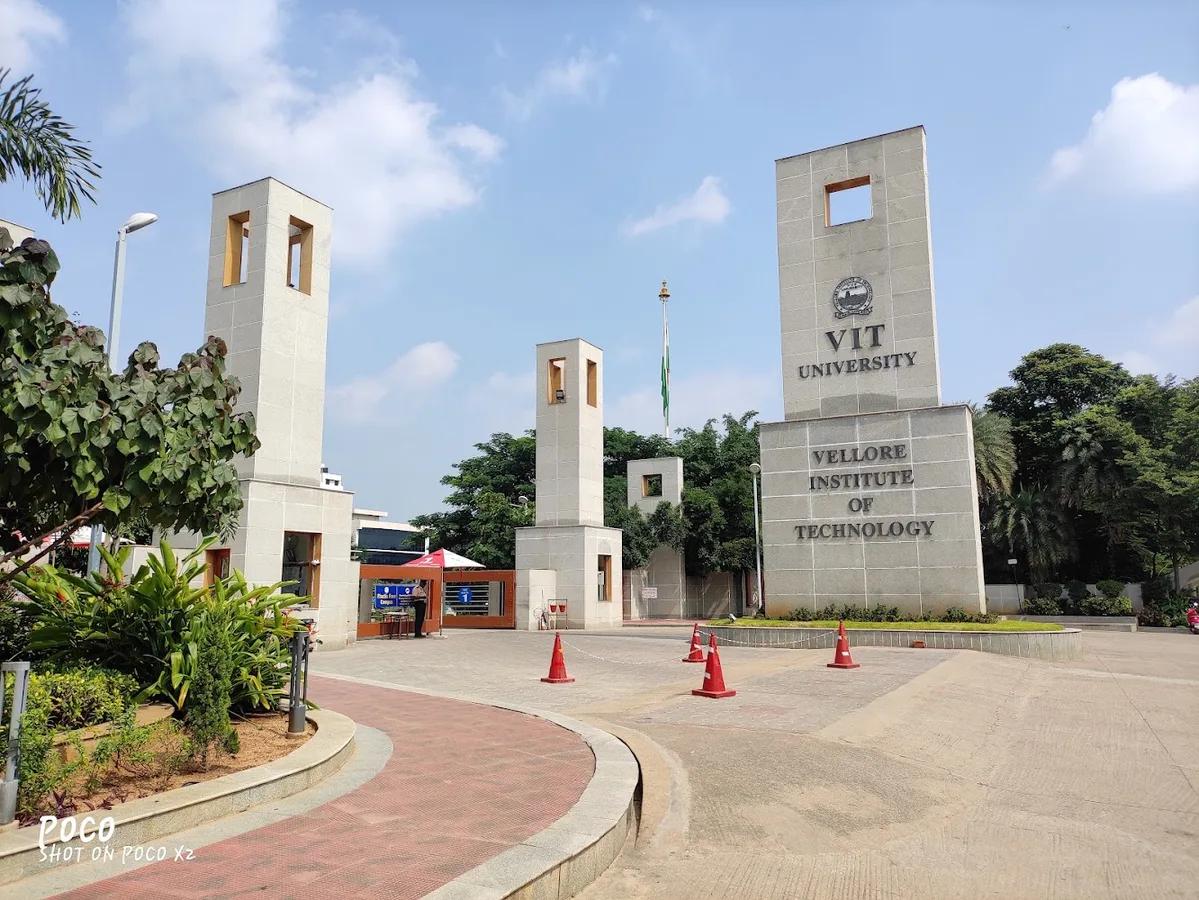

Established in 1984, Vellore Institute of Technology, Vellore is a distinguished institution situated in Vellore, Tamil Nadu. Conforming to regulatory norms of All India Council for Technical Education (AICTE) through its affiliation with Tamil Nadu State University, the institution offers students an integrated foundation across engineering innovation, applied science, computational systems, and advanced technical research. With modern campus amenities encompassing state-of-the-art computational centers, robotics and IoT laboratories, and core engineering workshops, the institution actively bridges conceptual instruction with empirical application. By combining academic discipline with practical exposure, it equips emerging scholars to meet evolving demands in industry, academia, and public service.
Total Fees
Contact for Fees
Total Courses
9
Get More Info About JEE Main 2027
Recommended Articles

Unlocking IIIT Admissions: Your Comprehensive Guide to 95+ Percentile in JEE Main
Achieving a 95+ percentile in JEE Main opens doors to numerous IIITs. This guide offers strategic insights into expected ranks, accessible branches, and effective counselling strategies to secure your dream engineering seat.

IIM Admission with Low Class 10/12 Marks: Your Definitive Guide
Worried about your IIM dream due to past academic scores? This guide from MatchToCollege demystifies how top IIMs evaluate Class 10 and 12 marks, offering a clear roadmap to success. Discover actionable strategies to strengthen your profile and secure your spot.

FMS BHU MBA Admissions 2027-29: Your Definitive Guide to Success
Unlock your potential with an MBA from FMS BHU. This comprehensive guide details the 2027-29 admission process, eligibility, fees, and strategies to secure your seat at this prestigious institution.