

Degrees Employers Value Most: Your Career Edge
Admission & Info Tools
Need Expert Assistance?
Our counselors can help you with fee structures, eligibility guidelines, and upcoming admission cutoffs instantly.
Direct Application Tools
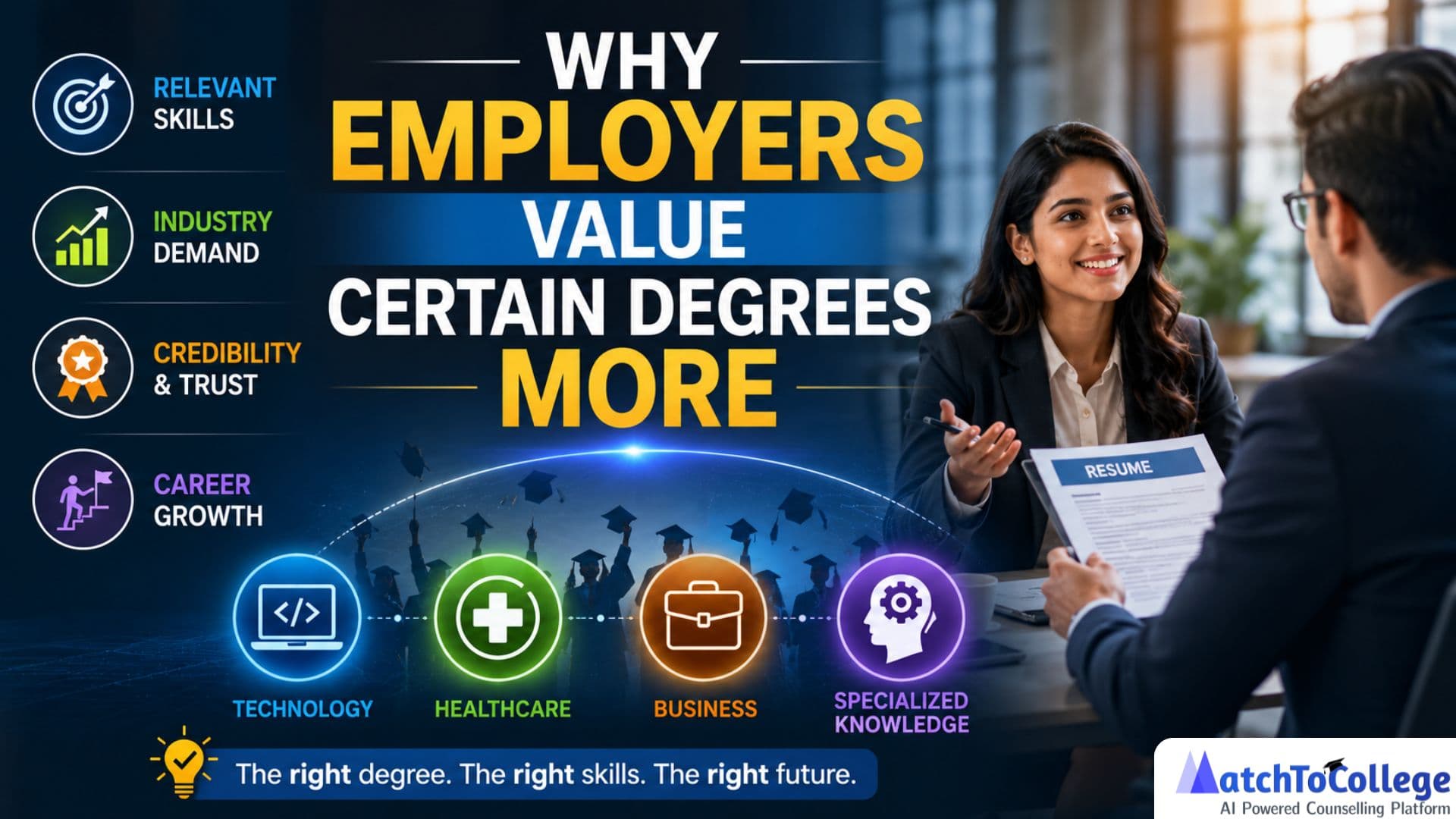
Why employers value certain degrees
Share this Article
Choosing a college major is one of the most important decisions for your future. While following your interests matters, it's equally important to understand what employers are looking for. Some degrees are valued more because they provide the skills and knowledge that industries need today.
Employers don't just hire based on a degree—they look for graduates who can solve problems, adapt to new technologies, communicate effectively, and contribute from day one. That's why degrees in high-demand fields often offer better job opportunities, career growth, and earning potential.
Before selecting a course, consider factors such as industry demand, required skills, salary prospects, and long-term career opportunities. Choosing a degree that aligns with both your interests and market needs can lead to a more rewarding career.
Why Do Employers Prefer Certain Degrees?
| Factor | Why It Matters |
| Industry Demand | Degrees aligned with growing industries have better job opportunities. |
| Relevant Skills | Employers value graduates with practical and job-ready skills. |
| Career Growth | Some degrees offer faster promotions and leadership opportunities. |
| Higher Earning Potential | High-demand qualifications often lead to better salaries. |
| Problem-Solving Ability | Employers seek candidates who can think critically and find solutions. |
| Adaptability | Degrees that develop analytical and technical skills help graduates adapt to changing workplace needs. |
The best degree is one that matches your interests while meeting industry demand. By understanding employer expectations and choosing a career-oriented program, you can improve your chances of securing better job opportunities and long-term career success.
The Driving Forces Behind Employer Preferences
Employers value certain degrees because they align with industry needs, in-demand skills, and future job opportunities. As industries evolve, companies prefer graduates who can contribute immediately and adapt to changing technologies.
| Factor | Why Employers Value It |
| Industry Demand | Degrees linked to fast-growing sectors like technology, healthcare, finance, and engineering offer better employment opportunities. |
| Job-Ready Skills | Employers look for graduates with technical expertise, practical knowledge, and strong communication and problem-solving skills. |
| Technology & Innovation | Fields such as Artificial Intelligence (AI), Cybersecurity, Data Science, Renewable Energy, and Biotechnology are highly valued due to rapid technological advancements. |
| Business Impact | Companies prefer candidates who can add value quickly, improve productivity, and solve real-world business challenges. |
| Return on Investment (ROI) | Degrees that prepare graduates for high-demand careers and faster career growth are often considered more valuable by employers. |
Skills Employers Value Most
- Technical and digital skills
- Critical thinking and problem-solving
- Communication and teamwork
- Adaptability and continuous learning
- Leadership and decision-making
- Analytical and data-driven thinking
The value of a degree depends on how well it matches current and future industry needs. Choosing a program that combines your interests with in-demand skills can improve your employability, career growth, and long-term earning potential.
Degrees That Consistently Outperform in the Job Market
While no degree guarantees success, some fields consistently offer strong job opportunities, higher salaries, and long-term career growth because they align with industry demand.
| Degree/Field | Why Employers Value It | Popular Career Options |
| STEM (Science, Technology, Engineering & Mathematics) | Develops technical, analytical, and problem-solving skills needed across industries. | Software Engineer, Civil Engineer, Data Scientist, Mechanical Engineer |
| Healthcare | High demand due to growing healthcare needs and medical advancements. | Doctor, Nurse, Pharmacist, Public Health Specialist |
| Business Analytics & Finance | Helps organizations make data-driven and financial decisions. | Financial Analyst, Business Analyst, Investment Banker |
| Supply Chain & Logistics | Essential for managing global operations, inventory, and distribution. | Supply Chain Manager, Logistics Analyst, Operations Manager |
| Artificial Intelligence (AI), Machine Learning & Cybersecurity | Supports digital transformation, automation, and data security across industries. | AI Engineer, Machine Learning Engineer, Cybersecurity Analyst |
Why These Degrees Stand Out
- High demand across industries
- Better salary and career growth
- Strong technical and practical skills
- Opportunities in emerging technologies
- Excellent long-term job stability
Degrees in STEM, Healthcare, Business Analytics, Supply Chain, AI, Machine Learning, and Cybersecurity continue to be among the most valued by employers. If you're looking for high employability, competitive salaries, and future-ready careers, these fields offer some of the best opportunities.
Beyond the Major: Skills Employers Truly Seek
A degree can help you get noticed, but your skills often determine whether you get hired and succeed. Today, employers look for candidates who can adapt, solve problems, communicate effectively, and work well with others.
Top Skills Employers Look For
| Skill | Why It Matters |
| Critical Thinking & Problem-Solving | Helps identify challenges and develop effective solutions. |
| Communication Skills | Essential for teamwork, presentations, and client interactions. |
| Adaptability | Enables you to learn new technologies and adjust to changing work environments. |
| Teamwork & Collaboration | Supports working effectively with colleagues and cross-functional teams. |
| Digital Literacy | Demonstrates confidence in using digital tools, software, and online platforms. |
| Emotional Intelligence | Builds stronger relationships, leadership abilities, and workplace collaboration. |
How to Build These Skills
Students can strengthen these skills by participating in:
- Internships and industry training
- Live projects and case studies
- Volunteering and community service
- Student clubs and extracurricular activities
- Leadership roles and team-based assignments
- Online certifications and skill-development courses
A valuable degree combined with strong practical and soft skills makes you more competitive in today's job market. Employers seek candidates who are not only academically qualified but also ready to solve real-world problems, collaborate effectively, and adapt to changing workplace demands. Investing in both your education and skill development is the best way to build a successful, future-ready career.
Related Topics
Get More Info About Degrees Employers Value Most
Recommended Articles

Mastering JEE Main Mathematics: Your Definitive Guide to a 99 Percentile
Unlock your potential in JEE Main Mathematics with this comprehensive guide, focusing on high-weightage chapters and strategic preparation to achieve a coveted 99 percentile score. Discover expert insights and a clear roadmap for success.

FMS BHU MBA: Unpacking Fees, Placements & Your True Return on Investment
Considering an MBA from FMS BHU? This comprehensive guide delves into program fees, placement trends, and the impressive ROI across its MBA, MBA-IB, and MBA-Agribusiness programs. Discover if this esteemed institution aligns with your career aspirations.

CUET UG Difficulty Level 2027: Your Comprehensive Guide to Mastering the Exam
Demystify the CUET UG exam's difficulty level with our expert guide. Understand key factors, preparation strategies, and what it takes to secure admission to India's top universities.