

CAT 2003 Question Paper: Your Strategic Practice Guide for MBA Success
Admission & Info Tools
Need Expert Assistance?
Our counselors can help you with fee structures, eligibility guidelines, and upcoming admission cutoffs instantly.
Direct Application Tools
Share this Article
🎯 MatchToCollege AI Recommendation: Planning your counselling or choice filling? Check your seat allotment probability across premier colleges using the CAT College Predictor.
Key Highlights & CAT 2003 Exam Overview
Understanding the structure of past CAT examinations is crucial for any serious aspirant. The CAT 2003 paper, conducted as a re-test on February 15, 2004, provides a clear snapshot of the exam's format from that era. While the number of questions and sectional divisions have seen changes over the years, the fundamental skills tested – Verbal Ability, Quantitative Ability, and Data Interpretation – remain central to the CAT.
Here’s a quick overview of the CAT 2003 exam structure:
| Parameter | Details |
| Exam Date | February 15, 2004 (Re-test) |
| Total Questions | 150 |
| Sections | Verbal Ability & Reading Comprehension, Quantitative Ability, Data Interpretation |
| Questions per Section | 50 (each) |
| Marking Scheme | +1 for correct answer, -0.25 for incorrect answer |
The Verbal Ability and Reading Comprehension section, for instance, featured passages similar to the one discussing the evolution of jet propulsion and aviation technology, demanding strong comprehension and analytical skills.
Eligibility Criteria for Top MBA Programs
While the CAT 2003 paper is a practice tool, aspiring for an MBA requires meeting specific eligibility criteria set by various B-schools. Generally, the core requirements across most top institutions in India include:
- Educational Qualification: A Bachelor's degree in any discipline from a recognized university.
- Minimum Marks: Typically, a minimum of 50% aggregate marks (or equivalent CGPA) in the Bachelor's degree. For SC/ST/PwD candidates, this often relaxes to 45%.
- Work Experience: While not mandatory for all programs, many top-tier B-schools and Executive MBA programs highly value or require a certain amount of full-time work experience (e.g., 2-5 years).
- Age Limit: There is generally no upper age limit for the CAT exam or most MBA programs, though some executive programs might have specific age or experience bands.
- CAT Score: A valid CAT score is almost universally required for admission to IIMs and many other leading B-schools.
It's vital to check the specific eligibility criteria for each B-school you are targeting, as they can vary. Always refer to the official admission brochures for the most accurate and up-to-date information.
Strategic Approach: Deconstructing CAT 2003 for Preparation
Practicing with past CAT papers like the 2003 edition is more than just solving questions; it's about strategic deconstruction. Here’s how you can effectively use this paper to sharpen your MBA preparation:
- Simulate Exam Conditions: Treat the CAT 2003 paper as a real exam. Set a timer for the actual duration (typically 2 hours for older CATs, though the 2003 paper's exact duration isn't specified in the raw data, it's crucial to maintain a consistent pace). Avoid distractions and attempt all sections.
- Sectional Analysis: Post-attempt, meticulously analyze each section. For Verbal Ability & Reading Comprehension, identify why your answers were right or wrong, especially for RC passages. For Quantitative Ability and Data Interpretation, pinpoint the concepts you struggled with and the types of errors made (conceptual, calculation, or time management).
- Identify Weak Areas: A thorough review will highlight your recurring weak points. Is it a specific topic in Quant, a particular type of RC question, or certain DI-LR sets? Focus your subsequent study on these identified areas.
- Time Management: Observe how you allocated time across sections and questions. Did you spend too much time on a single question? Could you have moved on faster? This insight is crucial for optimizing your pacing in the actual exam.
- Understand Evolution: While the CAT 2003 paper provides a strong base, be aware that the exam pattern and question types have evolved. Use older papers to build fundamentals and newer papers to adapt to current trends.
As you refine your strategy and gauge your performance, remember to utilize tools that can help you understand your standing. You can predict your MBA call chances into IIMs, FMS Delhi, SPJIMR & top B-schools based on your CAT percentile using our official CAT College Predictor.
Top MBA Colleges & Expected ROI
India boasts a vibrant landscape of B-schools offering world-class MBA programs. Securing a high CAT percentile, often honed through rigorous practice with papers like CAT 2003, is your gateway to these institutions. Here’s a glimpse at some of the top B-schools and their approximate fee structures:
| College Name | Estimated Fees (INR Lakhs) |
| IIM Ahmedabad | 23-25 |
| IIM Bangalore | 23-24 |
| IIM Calcutta | 23-25 |
| FMS Delhi | 2-4 |
| SPJIMR Mumbai | 20-22 |
| XLRI Jamshedpur | 23-25 |
| MDI Gurgaon | 20-22 |
| IIFT Delhi/Kolkata | 21-22 |
Note: Fees are approximate and subject to change. Always refer to the official college websites for the latest figures.
The Return on Investment (ROI) from these institutions is generally excellent, with graduates securing lucrative placements and rapid career progression. Factors like average placement packages, industry exposure, alumni network, and faculty expertise contribute significantly to a B-school's ROI.
Placement Insights & Career Trajectories Post-MBA
An MBA from a top Indian B-school opens doors to a multitude of high-growth career opportunities across diverse sectors. The rigorous curriculum, case-study based learning, and industry interactions prepare graduates for leadership roles. Here’s what you can expect:
- Average Packages: Graduates from premier IIMs and other top B-schools often command average annual packages ranging from INR 25-35+ lakhs, with the highest packages sometimes exceeding INR 70-80 lakhs.
- Recruiting Sectors: Key sectors that actively recruit MBA graduates include Consulting (e.g., McKinsey, BCG, Bain), Finance (Investment Banking, Private Equity, Corporate Finance), Technology (Product Management, Business Development), FMCG (Marketing, Sales), and General Management.
- Roles Offered: Common roles include Management Consultant, Financial Analyst, Product Manager, Marketing Manager, Operations Manager, Business Development Manager, and Project Manager.
- Career Progression: An MBA accelerates career growth, often leading to senior management and leadership positions within a few years of graduation. The strong alumni networks of top B-schools also play a crucial role in long-term career support and opportunities.
The skills honed during an MBA – critical thinking, problem-solving, leadership, and strategic planning – are highly valued by employers, ensuring a robust and rewarding career trajectory.
Admissions Checklist & Important Tips
Beyond acing the CAT, a holistic application strategy is key to securing your dream MBA seat. Here’s a checklist and some essential tips:
- Strong Academic Record: Maintain good grades throughout your undergraduate studies.
- Diverse Experiences: Engage in extracurricular activities, volunteering, or leadership roles to showcase a well-rounded profile.
- Craft Compelling Essays (SOP/Application Essays): Articulate your career goals, motivations for an MBA, and how the specific B-school aligns with your aspirations. Be authentic and highlight your unique journey.
- Prepare for Group Discussion (GD) & Personal Interview (PI): These stages are critical. Practice current affairs, business knowledge, and articulate your thoughts clearly and confidently.
- Secure Strong Letters of Recommendation (LORs): Choose recommenders who know you well and can speak to your strengths, work ethic, and potential.
- Research B-schools Thoroughly: Understand each institution's culture, specializations, and faculty. This helps tailor your application and perform better in interviews.
- Network: Connect with alumni and current students to gain insights and build your professional network.
Remember, the admissions committee looks for candidates with not just academic prowess but also leadership potential, communication skills, and a clear vision for their future. Start early, stay persistent, and believe in your capabilities.
🏛️ Looking for Admissions & College Cutoffs? Explore verified fee structures, seat matrices, and real student reviews across top institutions on the MatchToCollege Top Colleges & Universities in India Directory.
Frequently Asked Questions
Q: Why is practicing old CAT papers like CAT 2003 still relevant for MBA aspirants?
Practicing older CAT papers, such as the CAT 2003, is highly relevant because they help you understand the fundamental concepts and question patterns that form the core of the exam. While the format might change, the underlying aptitude tested in Verbal, Quantitative, and Data Interpretation remains consistent. It builds a strong base, improves time management, and helps identify conceptual gaps before moving to newer, more complex patterns.
Q: What was the structure of the CAT 2003 exam?
The CAT 2003 exam, conducted as a re-test on February 15, 2004, consisted of 150 questions divided into three sections: Verbal Ability & Reading Comprehension, Quantitative Ability, and Data Interpretation. Each section had 50 questions. The marking scheme typically awarded +1 for a correct answer and deducted 0.25 for an incorrect one.
Q: How should I effectively use the CAT 2003 question paper for my preparation?
To effectively use the CAT 2003 paper, treat it as a full-length mock test under timed conditions. After completing it, meticulously analyze your performance. Identify your strong and weak areas in each section, understand the types of errors you made, and review the concepts you struggled with. This diagnostic approach helps you tailor your study plan and improve your strategy for future attempts.
Q: Are the eligibility criteria for MBA programs different now compared to 2003?
While the core eligibility for MBA programs (a Bachelor's degree with a minimum percentage) has largely remained consistent, there might be minor variations. Modern programs often place more emphasis on a holistic profile, including work experience, extracurriculars, and communication skills, alongside academic performance and CAT scores. Always check the latest official brochures of your target B-schools.
Q: Where can I find solutions and detailed analysis for the CAT 2003 paper?
While the raw question paper is a great starting point, detailed solutions and analysis are crucial for learning. MatchToCollege's academic guidance desk provides insights into past paper strategies. You can also find various reputable educational platforms and coaching institutes that offer solved papers and video explanations to help you understand the nuances of each question.
Related Topics
Featured Mentioned Colleges
Explore institutions featured and discussed in this article


With an educational trajectory spanning 11 years since its inception in 2015, FACULTY OF MANAGEMENT STUDIES serves as a prominent seat of learning in Rajkot, Gujarat. Affiliated with Marwadi University and adhering to statutory benchmarks established by All India Council for Technical Education (AICTE) / UGC, the institution delivers specialized academic curricula centered on business strategy, financial analytics, corporate governance, and entrepreneurial leadership. Students benefit from contemporary infrastructure featuring management simulation suites, modern boardroom presentation centers, and incubation hubs, designed to support hands-on learning and comprehensive intellectual growth. By combining academic discipline with practical exposure, it equips emerging scholars to meet evolving demands in industry, academia, and public service.
Total Fees
Contact for Fees
Total Courses
3
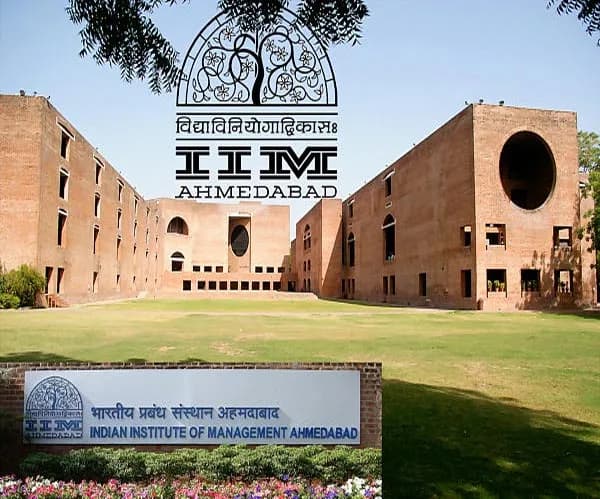

Located in the educational landscape of Ahmedabad, Gujarat, Indian Institute of Management Ahmedabad was established in 1961 to deliver transformative education. Conforming to regulatory norms of All India Council for Technical Education (AICTE) / UGC through its affiliation with Gujarat State University, the institution offers students an integrated foundation across business strategy, financial analytics, corporate governance, and entrepreneurial leadership. The campus is equipped with management simulation suites, modern boardroom presentation centers, and incubation hubs, creating an immersive environment for scholarly development and collaborative innovation. Dedicated to holistic student empowerment, the institution prepares ethical and career-ready professionals who contribute meaningfully to societal and industrial growth.
Total Fees
Contact for Fees
Total Courses
6


Established in 1973, Indian Institute of Management Bangalore is a distinguished institution situated in Bengaluru Urban, Karnataka. Conforming to regulatory norms of All India Council for Technical Education (AICTE) / UGC through its affiliation with Karnataka State University, the institution offers students an integrated foundation across business strategy, financial analytics, corporate governance, and entrepreneurial leadership. The campus is equipped with management simulation suites, modern boardroom presentation centers, and incubation hubs, creating an immersive environment for scholarly development and collaborative innovation. By combining academic discipline with practical exposure, it equips emerging scholars to meet evolving demands in industry, academia, and public service.
Total Fees
Contact for Fees
Total Courses
15


The Indian Institute of Management Calcutta (IIMC) was established as the first national institute for postgraduate studies and research in management by the Government of India in November 1961 in collaboration with the Alfred P. Sloan School of Management (MIT), the Government of West Bengal, the Ford Foundation, and Indian industry. During its initial years, several prominent faculty formed part of its nucleus, including Jagdish Sheth, J. K. Sengupta, and others. Over the years, IIMC has grown into a mature institution with a global reputation, imparting high-quality management education. It has been playing a pioneering role in professionalizing Indian management through its postgraduate and doctoral-level programs, executive training programs, and research and consulting activities. Today, the institute serves as an autonomous body, continually evolving to meet its goals in an ever-changing business environment.
Total Fees
Contact for Fees
Total Courses
11
Get More Info About CAT 2003 Question Paper
Recommended Articles

Mastering JEE Main Maths 2027: Your Ultimate Revision & Strategy Guide
Struggling with JEE Main Mathematics? This comprehensive guide offers a mentor-led roadmap for 2027 aspirants, focusing on high-yield topics, strategic revision, and proven techniques to boost your scores and secure a top percentile.

JEE Main 2027: Your Definitive Guide to Registration, Dates & Success
Navigate JEE Main 2027 with our comprehensive guide. Understand registration, key dates, eligibility, and preparation strategies to secure your dream engineering seat.

CAT 2026 Admit Card: Your Essential Guide to Download, Details & Exam Day Readiness
Secure your CAT 2026 Admit Card with this comprehensive guide from MatchToCollege. Learn step-by-step download instructions, verify crucial details, and prepare for exam day.