


New UGC Guidelines 2026: Are 1-year Master’s degrees finally valid?
Admission & Info Tools
Need Expert Assistance?
Our counselors can help you with fee structures, eligibility guidelines, and upcoming admission cutoffs instantly.
Direct Application Tools

UGC 2026 one-year master’s update
The Indian higher education landscape is in a constant state of evolution, driven by the transformative vision of the National Education Policy (NEP) 2020. One of the most talked-about changes revolves around the duration and structure of postgraduate programs, particularly the widespread anticipation surrounding UGC Guidelines 2026 and their potential impact on 1-year Master's degrees. For ambitious students and concerned parents, this brings a mix of excitement and uncertainty: Will these shorter programs finally gain official, widespread validity, offering new pathways for academic and career growth?
Historically, a Master's degree in India has predominantly been a two-year endeavor. However, with global trends favoring more flexible and specialized postgraduate degrees, the idea of a 1-year Master's is gaining significant traction. This shift promises to align Indian higher education with international standards, potentially enhancing student mobility and career prospects. But what exactly do the proposed UGC Guidelines 2026 mean for this significant change? Are we on the cusp of a major overhaul that redefines academic credit framework, degree recognition, and professional development?
At MatchToCollege, your AI-powered higher education counselling platform, we understand the critical importance of staying informed about these pivotal changes. Our mission is to provide you with authoritative, engaging, and up-to-date information to help you make the best decisions for your future. This blog post delves deep into the heart of the matter, decoding the implications of the upcoming UGC guidelines and assessing the true validity and potential of 1-year Master's degrees for students aspiring for MBA, Engineering, Medical, or even Study Abroad opportunities. Join us as we explore this exciting new chapter in Indian academia and equip you with the insights you need to navigate your higher education journey successfully.
The Evolution of Master's Degrees: From Traditional to Transformative
For decades, a Master's degree in India has largely conformed to a two-year structure, offering in-depth specialization across various disciplines. While this traditional model has served generations of students, the global landscape of higher education is rapidly evolving. The National Education Policy (NEP) 2020 is a powerful catalyst for change, advocating for greater academic flexibility, multidisciplinary approaches, and alignment with international benchmarks. This policy framework explicitly encourages diverse program durations, including the possibility of a 1-year Master's degree for students who have completed a 4-year undergraduate degree with research.
This push towards shorter, more focused postgraduate programs isn't just about reducing study duration; it's about enhancing relevance and employability. Many students, especially those eyeing quick career progression or seeking to upskill in a specific niche, are looking for alternatives to the conventional two-year path. The appeal lies in rapid skill acquisition, reduced time away from the workforce, and often a more concentrated curriculum. As Indian universities strive for global competitiveness, adopting models that reflect international trends in postgraduate education, such as those seen in the UK or parts of Europe, becomes crucial for improving degree recognition and preparing students for a globalized job market.
Demystifying UGC Guidelines 2026: What to Expect for 1-Year Master's
The core of the discussion lies in the upcoming UGC Guidelines 2026, which are expected to provide clarity and formalize the structure for 1-year Master's degrees. While specific official notifications are eagerly awaited, preliminary discussions and the spirit of NEP 2020 suggest a framework that would grant full validity and recognition to these programs, especially for students graduating with a 4-year undergraduate degree with Honours or research components.
Key aspects anticipated in these guidelines include:
- Defined Credit Framework: A standardized Academic Bank of Credits (ABC) system that allows for seamless transferability and recognition of learning.
- Equivalence and Recognition: Explicit provisions ensuring that 1-year Master's degrees are considered equivalent to traditional 2-year programs for employment, further studies (like PhD), and international mobility.
- Program Structure: A focus on intensive, research-oriented, or highly specialized curricula designed to achieve learning outcomes equivalent to a two-year program within a compressed timeframe.
- Accreditation Standards: Stringent quality control and accreditation processes to ensure the academic rigor and value of these shorter programs.
This move is poised to eliminate ambiguities regarding degree validity, paving the way for a more dynamic and globally competitive higher education system in India.
Navigating Your Postgraduate Journey: Is a 1-Year Master's Right for Your Future?
With the potential formalization of 1-year Master's degrees under the new UGC Guidelines 2026, a critical question emerges for every aspiring student: Is this accelerated path the right fit for your academic and career goals? Making this decision requires careful consideration of several factors beyond just the program duration.
- Your Undergraduate Background: If you possess a 4-year undergraduate degree, especially with a strong research component, you might be an ideal candidate. The 1-year Master's is often designed as an advanced continuation of this specialized foundation.
- Career Aspirations: Are you looking for a quick entry into a specialized role, or do you need a broad, foundational understanding? Some industries may prefer the depth of a two-year program, while others value rapid upskilling. Research the specific requirements of your target industry.
- Program Recognition: While UGC guidelines aim for broad recognition, verify the specific recognition and accreditation of your chosen institution and program. This is crucial for both domestic employment and study abroad opportunities.
- Academic Rigor: A 1-year Master's is often intense. Be prepared for a demanding curriculum that requires strong self-discipline and time management skills.
- Future Studies: If a PhD is in your long-term plan, ensure the 1-year Master's program provides the necessary research foundation and recognition for doctoral admissions, especially in international universities.
MatchToCollege’s AI-powered platform can be an invaluable tool in this decision-making process. By analyzing your academic profile, career aspirations, and preferred program types, we can help you identify institutions and programs that align with the anticipated UGC guidelines and your personal objectives, ensuring you make an informed choice for your future.
Share this Article
FAQFrequently Asked Questions
Q: Are 1-year Master's degrees currently recognized in India?
Currently, the widespread recognition of 1-year Master's degrees as equivalent to traditional two-year programs is limited and largely dependent on specific institutional or professional body approvals. However, with the upcoming UGC Guidelines 2026, especially influenced by the NEP 2020, there's a strong move towards formalizing and universally recognizing these shorter postgraduate programs, particularly for students with a 4-year undergraduate degree.
Q: How will the new UGC guidelines impact students planning to study abroad?
The New UGC Guidelines 2026 are expected to significantly enhance the international recognition and mobility of Indian degrees. By aligning the credit framework and program structures (like 1-year Master's) with global standards, these guidelines aim to make Indian qualifications more readily accepted by universities and employers worldwide. This could simplify the application process for further studies or job opportunities abroad for students graduating with a UGC-recognized 1-year Master's degree.
Q: What is the primary difference between a 1-year Master's and a 2-year Master's?
The primary difference lies in the duration and often the target audience. A 1-year Master's, as envisioned by NEP 2020 and potential UGC guidelines, is typically designed for students with a 4-year undergraduate degree, often with a research component, allowing for a more focused and accelerated specialization. A 2-year Master's usually accommodates graduates from 3-year undergraduate programs and provides a broader, more in-depth curriculum over a longer period. Both aim to achieve master's-level learning outcomes, but through different pathways and intensities.
Get More Info About New UGC Guidelines 2026
Recommended Reading
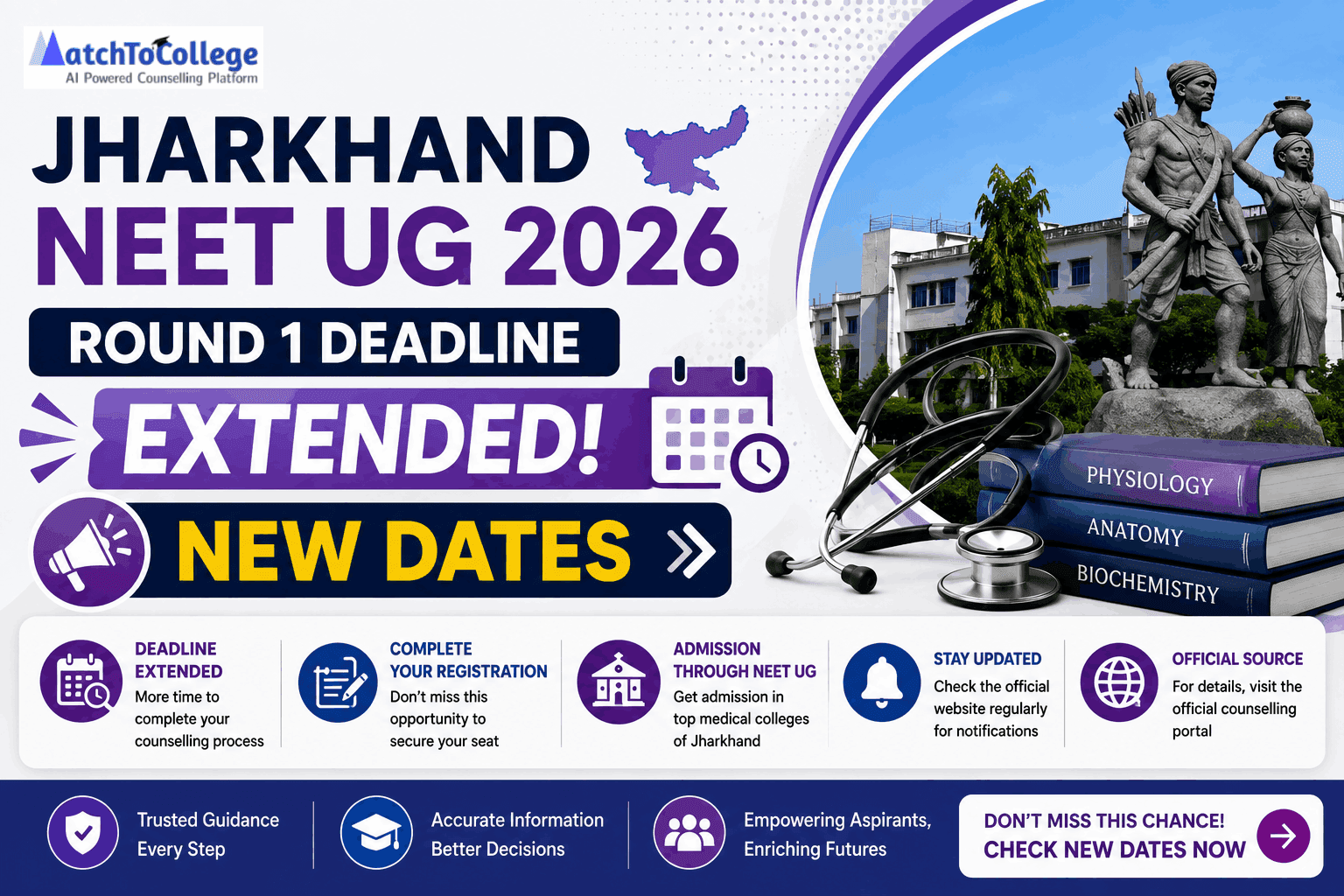
Jharkhand NEET UG 2026 Round 1 Deadline Extended: New Dates
JCECEB has extended the Jharkhand NEET UG 2026 Round 1 registration deadline. Explore the revised schedule, seat allotment dates, and expert counselling tips.
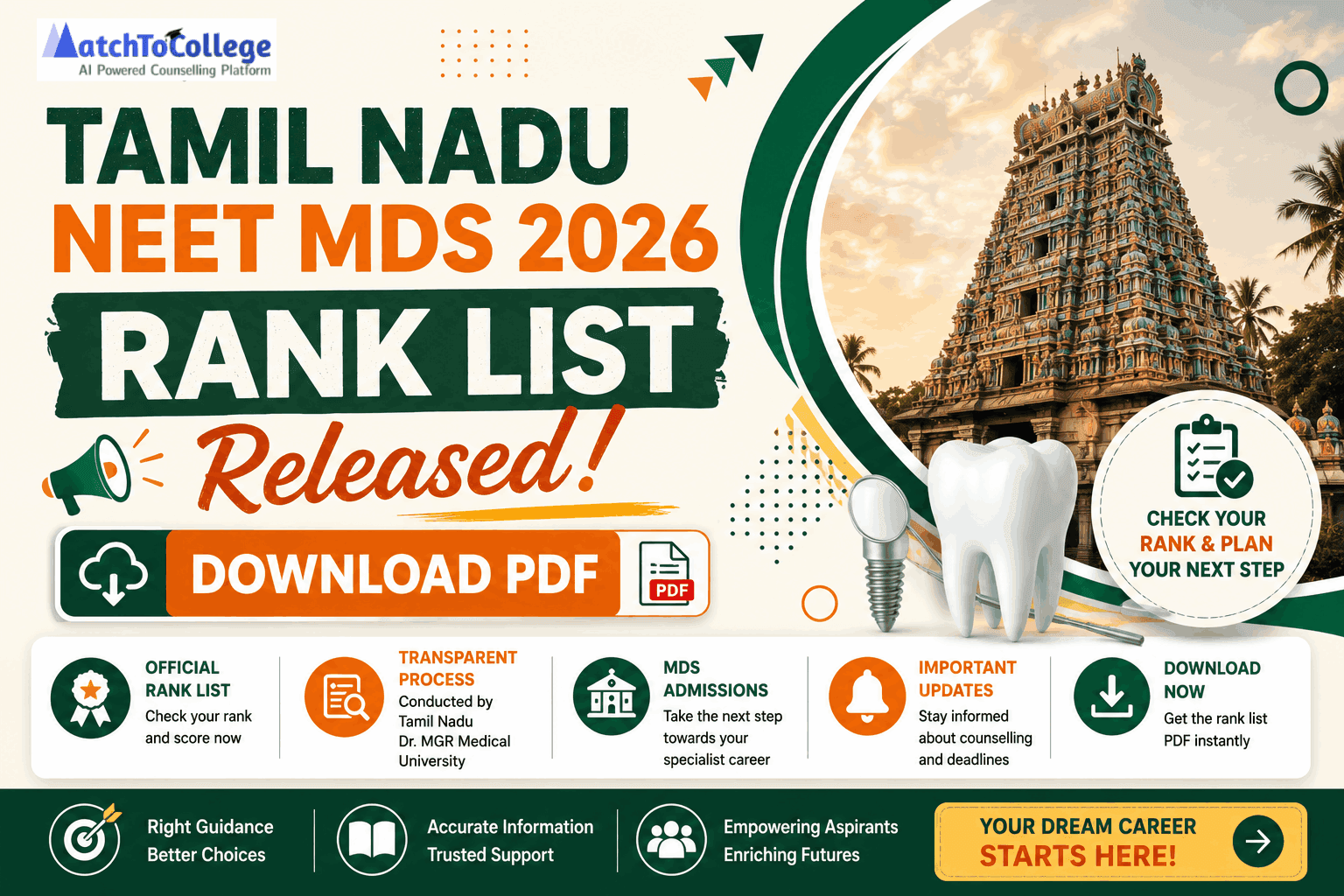
Tamil Nadu NEET MDS 2026 Rank List Released: Download PDF
The Tamil Nadu NEET MDS 2026 Provisional Rank List is officially out! Download the PDF and discover the next steps for TN MDS Counseling 2026-27 here.
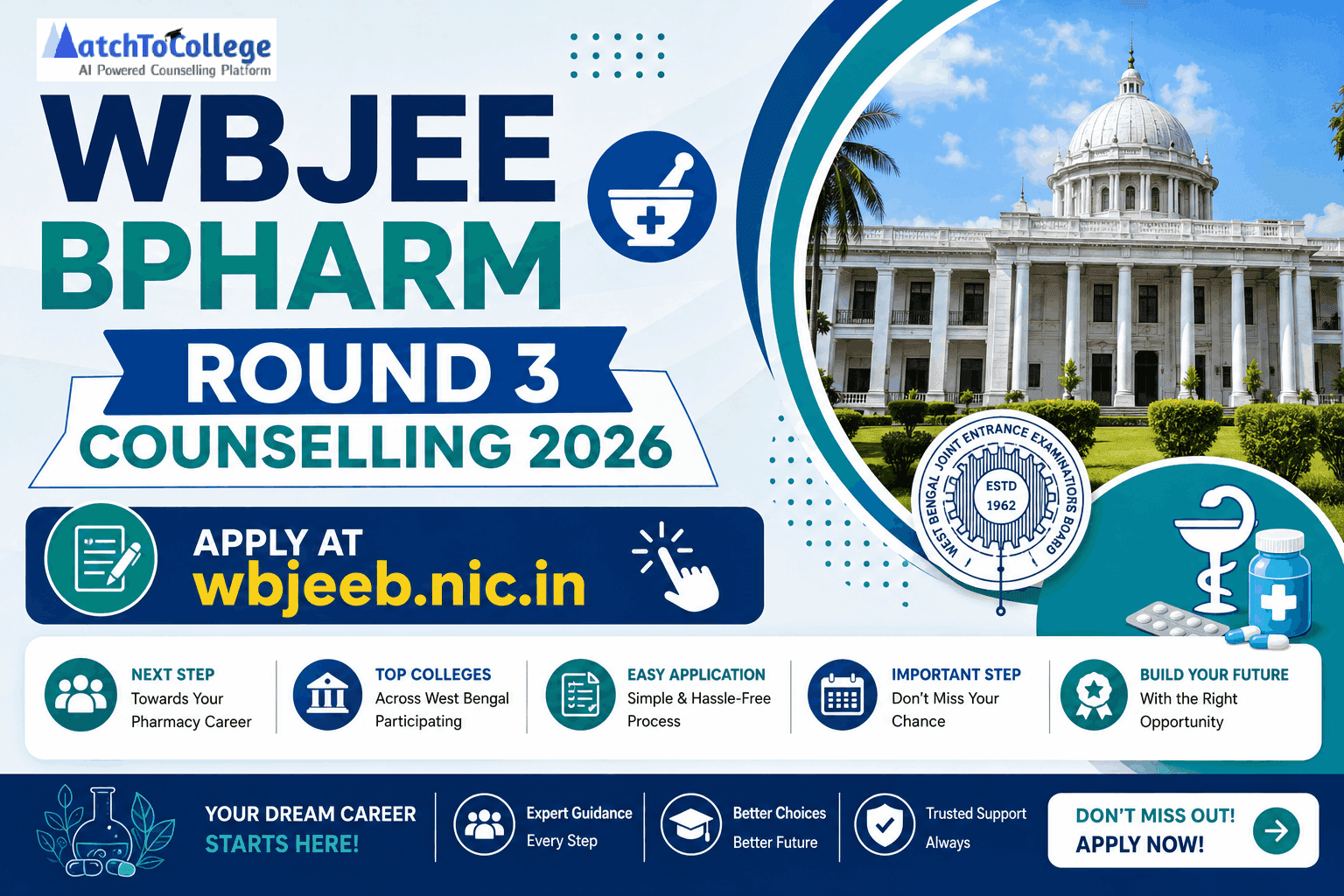
WBJEE BPharm Round 3 Counselling 2026: Apply at wbjeeb.nic.in
WBJEE BPharm Round 3 Counselling 2026 registration begins at wbjeeb.nic.in. Follow our comprehensive guide for choice filling and pharmacy admissions steps.